
Top Subsea Installation Solutions for Greece Operations
Selected high-resilience buoyancy systems engineered for marine pipeline tie-in protocols, providing stability across hydrodynamic Mediterranean conditions.

High-Quality Advanced Pipeline Float System for Secure Subsea Installations Supplier, Factories (Greece Deployment)
Explore Specifications
Best Modular Subsea Pipeline Float – Reliable Deepwater Support Manufacturer, Factories (Aegean & Ionian Marine Grade)
Explore Specifications
Best Heavy-Duty Pipeline Float System for Subsea Installations Manufacturer, Products (Hellenic Port & Energy Applications)
Explore Specifications
OEM Innovative Pipeline Float System for Reliable Deepwater Support Companies, Quotes (Offshore Greece Standard)
Explore SpecificationsSubsea Tie-In Dynamics & Commercial Landscape in Greece
A comprehensive analysis of subsea pipeline tie-in logistics, floating discharge structures, and industrial demand driven by Greece's maritime expansion.
Greece stands at the epicenter of Southern Europe’s expanding maritime logistics and energy transition networks. With its unique archipelago geography encompassing the Aegean and Ionian Seas, underwater engineering projects face complex subsea topography, significant bathymetric depth shifts, dynamic cross-currents, and seismic structural requirements. From the expansion of LNG terminals in Revithoussa and Alexandroupolis to inter-island freshwater supply connections and localized desalination network bypasses, the deployment of reliable pipeline float tie-in systems is critical to operational success.
Subsea tie-in operations represent the most risk-sensitive phase of pipeline engineering. Connecting pre-laid pipeline segments, spool pieces, manifolds, or riser systems demands calculated, uniform uplift to prevent excessive bending moments, plastic deformation, or buckling during lowering and positioning. When contractors operate in Greek waters, high ambient water salinity and prolonged exposure to intense UV radiation require flotation structures manufactured strictly from UV-stabilized, high-density rotomolded polyethylene (HDPE) reinforced with closed-cell polyurethane cores.
Regional Bathymetric Challenges
The Greek seabed transitions steeply from shallow coastal shelves into deep trenches. Our pipeline float tie-in units are engineered with hydrodynamic profiles to minimize drag induced by high Mediterranean bottom currents during spool tie-in and lowering operations.
Capital-Efficient Procurement
Global engineering, procurement, and construction (EPC) contractors in Piraeus and Thessaloniki demand standardized module interchangeable designs. Standardized clamp designs lower inventory carrying costs and reduce offshore installation barge downtime.
Localized Compliance & Standards
Modules comply with rigorous EU environmental directives and maritime safety frameworks, ensuring zero hazardous leaching into Mediterranean ecosystems and adherence to ISO 9001 and API buoyancy calculation protocols.
End-to-End Solutions for Subsea Tie-In Projects
A systematic technical overview addressing global EPC requirements from finite element buoyancy calculation to on-deck mobilization in Greek ports.
Achieving equilibrium during pipeline positioning requires precise mathematical calculations. Floating a pipeline segment too high induces wave fatigue and surface drift instability; inadequate buoyancy increases seabed friction, risking coating damage or connector strain at the subsea manifold tie-in point. Our engineered tie-in modules resolve these macro-engineering challenges through three core dimensions:
Phase 1: Dynamic Load Sizing
We compute effective buoyancy requirements incorporating pipe wall thickness, medium specific gravity, flange accessories, and wave impact factor: Buoyancy Reserve = (W_pipe + W_contents + W_hardware) × 1.25. This ensures consistent trim and controllable descent.
Phase 2: Clamping & Friction Liners
To eliminate axial slippage along coated steel or high-density plastic pipe during high-angle lowering, our tie-in floats feature molded internal ribbed geometries and high-friction elastomeric clamping pads that distribute radial forces evenly.
Phase 3: Controlled Release Mechanism
For subsea seabed tie-ins requiring post-installation retrieval, modules can be configured with diver-operated or ROV-friendly quick-release fasteners, enabling safe, staged surfacing without risking subsea pipeline integrity.
Comprehensive Buoyancy & Marine Flotation Systems
High-durability rotomolded pipeline floats, subsea tie-in products, floating barriers, and fluid transfer systems optimized for industrial deployment in Greece and international waters.
Custom Deepwater Pipeline Support Float – Modular and Reliable Supplier, Manufacturers
View System Details
High-Quality Pipeline Float Tie-In – Modular Buoyancy Solution for Deepwater Pipelines Supplier, Pricelist
View System Details
ODM Deepwater Pipeline Support Floats – Reliable Subsea Buoyancy Solutions Manufacturer, Companies
View System Details
ODM Subsea Tie-In Pipeline Float – Reliable Buoyancy for Underwater Pipelines Products, Pricelist
View System Details
OEM Pipe Floats For Reservoir Intake And Temporary Bypass Lines Quotes, Pricelist (Greece Municipal Engineering)
View System Details
Custom Deepwater Pipeline Support Float – Modular and Reliable Supplier, Manufacturers
View System Details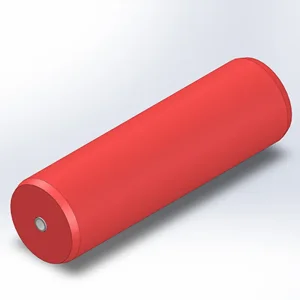
Custom Floating Barrier Systems for Effective Water Safety and Pollution Control Product, Factories
View System Details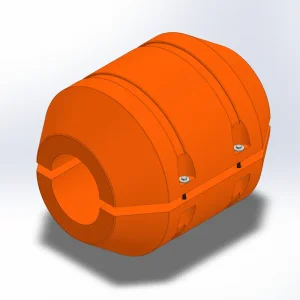
Custom Pipe Floats for Long-Distance Floating Pipelines and Water Transfer Systems Quotes, Pricelist
View System DetailsFuture-Proofing Buoyancy Solutions for Mediterranean Waters
Continuous evolution in composite materials, hydrodynamic modeling, and automated rotational molding technology.
Advanced Polymer Compounding & UV Degradation Resistance
Mediterranean coastal areas experience some of Europe's highest UV index ratings. Our advanced raw polymer blends incorporate UV stabilizers (UV8/UV12 classes) directly during compounding. This prevents cracking, brittleness, and microplastic shedding, ensuring an extended operating lifespan even in shallow, high-solar-irradiance zones around the Greek islands.
Syntactic Foam Cores for Intermediate & Deep Subsea Tie-Ins
While traditional closed-cell PU foams serve well in surface and shallow water deployments, deeper subsea spool installations demand high hydrostatic resistance. Our engineering roadmap integrates low-density syntactic foam formulations capable of withstanding prolonged hydrostatic pressures without water absorption or volume collapse.
Hydrodynamic Profile Optimization via CFD Simulation
Tie-in modules undergo computational fluid dynamics (CFD) analysis to evaluate vortex-induced vibrations (VIV) and drag coefficients under transverse sea currents. This guarantees smooth offshore handling and prevents pipeline twisting during delicate spool alignment operations.
Recyclability and Circular Economy Compliance
Aligned with EU environmental targets, our rotational molding facility utilizes 100% non-toxic, recyclable polyethylene shells. Modules are structured to allow separation of external shells from internal buoyancy foams at end-of-life, supporting decommissioning compliance for Mediterranean projects.
Frequently Asked Questions (FAQ) for Greece & EU Buyers
Direct technical answers regarding procurement, sizing, delivery, and subsea tie-in float deployment.
Why are rotomolded polyethylene floats preferred over fabricated steel buoys for tie-in projects in Greece?
High salinity and warm water temperatures in the Aegean and Ionian Seas accelerate electrolytic corrosion on steel structures. Polyethylene (PE) pipeline floats never rust, do not require protective sacrificial anodes or recoating, and minimize risk to delicate outer pipe coatings during offshore handling.
How do you calculate buoyancy requirements for high-density discharge or slurry tie-ins?
Effective buoyancy is determined by the total dry weight of the pipeline, flange connections, and hardware plus the mass of the displaced internal medium at operational density. We recommend an engineering safety factor of 25% to 30% positive reserve buoyancy to ensure controlled flotation and easy alignment during tie-in positioning.
Can you provide custom inner diameter dimensions and cable channel troughs?
Yes. Our precision molds are designed to accommodate varying pipe outer diameters (OD) including thermal insulation coatings. Modules can also feature integrated cable troughs, enabling concurrent installation of hydraulic control lines, power umbilical cables, or monitoring instrumentation alongside the main line.
What is the export transit timeline to major Greek ports like Piraeus or Thessaloniki?
Our dedicated manufacturing facility provides stable lead times supported by optimized nesting containerization. Standard shipment transit to Port of Piraeus or Thessaloniki typically takes 22 to 28 days following factory QA inspection and dispatch.
Start Your Technical Specification Today
Connect directly with our engineering team for buoyancy calculations, custom mold sizing, CAD drawings, and volume pricing tailored for Greek subsea infrastructure projects.
Send Inquiry Now