
Specialized Flotation & Storage Assets for Severe Environments
Engineered for continuous field service across Arctic, Siberian, and Far Eastern operational sectors.
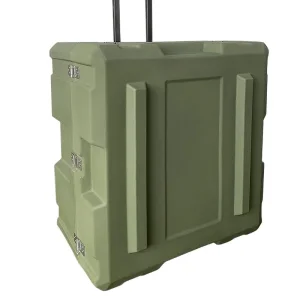
ODM Heavy-Duty Rotomolded Military Airdrop Storage Container Supplier, Factory
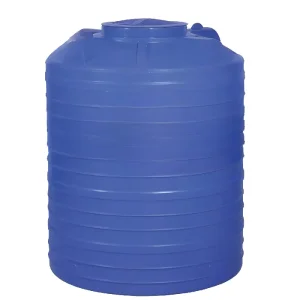
Custom Polyethylene Rotomolded Water Storage Tank – Durable and Safe Liquid Storage Solution Supplier, Factories
ODM Rotomolded Surfboard – Durable, Safe, and Low-Maintenance Water Sports Solution Manufacturers, Pricelist

Best Polyethylene Mooring Buoy – Reliable Floating Solutions for Modern Marine Projects Suppliers, Company
Industrial Landscape: Rotomolding Demands Across the Russian Federation
Analyzing import substitution dynamics, cryogenic mechanical imperatives, and mining dewatering supply lines.
1. The Structural Pivot in Russian Industrial Polymer Procurement
The Russian industrial infrastructure sector is experiencing a profound transformation. Western sanctions and supply-chain realignments have accelerated the domestic mandate for high-performance capital equipment while fundamentally altering sourcing corridors. Rotomolded polyethylene components—traditionally procured from European fabricators in Finland, Germany, and the Netherlands—are now overwhelmingly supplied through verified, tier-one Chinese industrial manufacturing hubs or localized assembly initiatives.
In regions such as the Yamal Peninsula, the Sakha Republic (Yakutia), Krasnoyarsk Krai, and the Kola Bay, operating environments place extraordinary physical stresses on polymer infrastructure. Traditional rotational molding processes that suffice for temperate European climates face catastrophic failure modes in the Russian North: low-temperature brittle fractures, micro-fissuring induced by cyclic freeze-thaw expansions, severe environmental stress cracking (ESCR) under saline ice loading, and extreme abrasion from mineral tailings. Sourcing the right rotomolded product suppliers requires looking beyond catalog dimensions to verify raw material compounding, rheological control during the rotational cycle, and standardized quality management.
2. Cryogenic Engineering: Mitigating Sub-Zero Embrittlement (-40°C to -65°C)
Standard hexene- or butene-based Linear Low-Density Polyethylenes (LLDPE) exhibit a dramatic drop in impact resistance when temperatures dip below -25°C. For Russian Arctic applications, material formulation requires octene-copolymer metallocene catalysts (mLLDPE) combined with high-density polymers (HDPE) boasting a narrow molecular weight distribution (MWD). This molecular architecture ensures that polymer chains retain flexibility, resisting ductile-to-brittle transitions even when subjected to dynamic shock loads, such as a drop-impact on frozen ice sheets or subsea ice scour.
- Impact Modifiers: Compounding with elastomeric polyolefin polymers ensures Charpy notched impact resistance exceeding 18 kJ/m² at -40°C, tested in compliance with GOST 4647 and ISO 179.
- High-Albedo UV Packages: Long polar summer days feature intense, continuous UV radiation reflected off snow and ice surfaces (albedo effect). UV stabilization must achieve a minimum UV20 classification (hindered amine light stabilizers - HALS) to prevent photo-oxidative degradation.
- Closed-Cell Core Integration: Marine floats and pipeline buoyancy modules utilize automated high-pressure in-situ injection of closed-cell polyurethane foam with density controlled to 38–45 kg/m³. Water absorption is maintained below 1.5% by volume after prolonged immersion, preventing internal freeze-expansion bursting during seasonal ice entrapment.
Localized Deployment Scenarios Across Key Russian Sectors
From Norilsk nickel tailings to Arctic LNG port terminals, rotomolded products fulfill critical industrial functions.
Siberian Mining & Tailings Dewatering
Heavy slurry dredging in Kuzbass coal basins, Norilsk nickel plants, and Yakutia diamond deposits demands pipe floats with high abrasion resistance. Clamped over steel or HDPE slurry discharge pipes, our rotomolded shells withstand continuous abrasion from crushed granite, magnetite, and abrasive kimberlite fines without puncture.
Northern Sea Route (NSR) Port Infrastructure
In ports like Murmansk, Sabetta, Arkhangelsk, and Vladivostok, marine navigation buoys and offshore mooring systems mark navigation fairways amid drifting floes. Seamless rotomolded bodies avoid weld-seam embrittlement common to fabricated steel buoys, guaranteeing zero corrosion in high-salinity Barents Sea water.
Arctic Emergency Logistics & Defense
Hermetically sealed rotomolded transit cases engineered with integrated pressure equalization valves are deployed by Russian emergency response (EMERCOM) and Arctic expedition units. These airdrop containers survive 10-meter low-altitude drops onto frozen permafrost, protecting precision electronic instruments.
Russia Market Rotomolded Products: 2025–2026 Pricelist Guide
Indicative pricing matrix based on direct Chinese export parity, multimodal logistics, and raw resin indexing.
| Product Category | Technical Dimensions / Capacity | Shell Spec / Polymer Grade | Core / Structure | FOB China Unit Price | Est. CIF Vladivostok / Vostochny |
|---|---|---|---|---|---|
| Dredging Pipe Floats (Pair) | Fit Pipe OD 250mm – 315mm | 8.0mm Virgin Arctic LLDPE | PU Foam 40 kg/m³ | $65.00 – $98.00 | $78.00 – $118.00 |
| Heavy Slurry Pipe Floats (Pair) | Fit Pipe OD 500mm – 630mm | 12.0mm High-Impact mLLDPE | PU Foam 42 kg/m³ + SS316 Bolts | $210.00 – $340.00 | $255.00 – $395.00 |
| Large Diameter Dredge Floats | Fit Pipe OD 800mm – 1000mm | 15.0mm Cross-linked PE Shell | Dense PU Core + Anti-Skid Ribs | $580.00 – $890.00 | $690.00 – $1,050.00 |
| Navigation Buoy (IALA Standard) | Diameter 1500mm × Height 3000mm | 10.0mm UV20 Stabilized Shell | Internal Steel Ballast + Solar Tower | $1,250.00 – $1,800.00 | $1,480.00 – $2,150.00 |
| Offshore Mooring Buoy | Diameter 2000mm, Buoyancy 5.5T | 14.0mm Seamless Rotomold | Central Mooring Tension Rod (Q345B) | $2,400.00 – $3,600.00 | $2,850.00 – $4,200.00 |
| Chemical / Water Storage Tank | 5,000 Liters Vertical | 10.0mm Chemical Grade HDPE | Integrated Lifting Lugs + Flanges | $420.00 – $650.00 | $540.00 – $810.00 |
| Military Airdrop Transit Case | 800mm × 600mm × 500mm | 6.0mm High-Impact Modified PE | Hermetic O-Ring + Custom Pick Foam | $85.00 – $145.00 | $105.00 – $175.00 |
Key Factors Determining Total Cost of Ownership (TCO) in Russia
When assessing quotations from rotomolded product suppliers for the Russian Federation, engineering procurement specialists must account for more than simple FOB charges:
- Raw Resin Quality: Cheaper suppliers frequently blend up to 30% regrind polymer or calcium carbonate fillers, which catastrophically reduces cryogenic impact strength. Juhua utilizes 100% prime virgin polymers sourced from SABIC, Sinopec, or Borealis, backed by complete mill test certificates (MTC).
- Dimensional Uniformity: The rotomolding cooling phase must be meticulously managed using automated multi-zone air and water cooling cycles to prevent differential shrinkage and wall-thickness tapering. Inconsistent wall thickness causes localized stress concentrations that crack under hydraulic water pressure or freezing cycles.
- Custom Mold Tooling Amortization: For bespoke OEM/ODM projects (custom pipeline diameters, odd-dimension flotation modules), cast aluminum or CNC steel molds represent a capital expenditure of $4,000 to $18,000 depending on geometry. Juhua's in-house mold facility reduces tooling turnaround to 20 days, cutting development costs by up to 45%.
Chinese Manufacturing Resilience & Direct Russian Delivery Routes
Seamless cross-border transit options from Binzhou, Shandong to key industrial hubs across the Russian Federation.
Direct Rail Freight (Trans-Siberian / Trans-Baikal)
Rapid overland container rail via Manzhouli/Zabaikalsk and Suifenhe/Grodekovo border crossings directly to terminal logistics parks in Moscow (Vorsino, Beli Rast), Novosibirsk, and Yekaterinburg within 14–18 transit days.
Maritime Vladivostok & Vostochny Corridors
Short-sea container lines departing Qingdao or Tianjin to Vladivostok Commercial Seaport (VMTP) in just 4–6 days. Ideal for heavy offshore dredging floats destined for Far Eastern port developments and Kamchatka terminals.
Financial & Trade Settlement Resilience
Frictionless direct settlement in Chinese Yuan (RMB) via VTB Shanghai, CIPS channels, or regional interbank clearing mechanisms, entirely bypassing SWIFT obstacles and shielding Russian buyers from FX volatility.
Compliance, Certification & Quality Validation for Russia
Ensuring frictionless Russian customs clearance and verified field compliance under EAEU regulations.
Navigating EAEU Technical Regulations (TR CU) & GOST Standards
Deploying equipment into industrial zones across the Russian Federation requires strict alignment with Eurasian Economic Union (EAEU) technical regulations. Our manufacturing line and rotomolded products are fully configured to satisfy audit parameters:
- TR CU 010/2011 "On Safety of Machinery and Equipment": Flotation modules and pipeline systems utilized in industrial extraction plants undergo mandatory safety declaration assessments.
- GOST-R Impact Toughness & Cryogenic Integrity: Polymer test coupons undergo rigorous cold-impact testing down to -60°C to verify ductility and crack non-propagation under static and dynamic loading.
- Sanitary-Epidemiological Expert Conclusions: Water storage tanks and food/potable liquid vessels adhere to migration limit standards for plastic articles intended for contact with drinking water.
- Complete Documentation in Russian: We provide full engineering dossiers including the Technical Passport (Паспорт изделия), Safety Justification (Обоснование безопасности), and Russian-language Operation & Maintenance Manuals (Руководство по эксплуатации).
Heavy Marine, Dredging & Subsea Rotomolded Components
Complete product range optimized for Russian harbor developments, offshore pipelines, and municipal projects.

High-Quality Offshore Polyethylene Mooring Buoy – Safe, Durable and Maintenance-Free Floating Mooring System Companies, Factories

ODM Subsea Tie-In Pipeline Float – Reliable Buoyancy for Underwater Pipelines Products, Pricelist
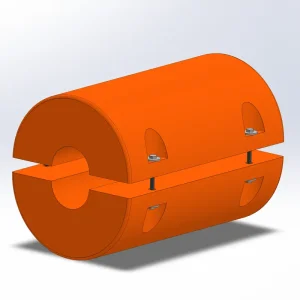
Best Pipe Floats for Floating Pipeline Support and Water Transfer Projects Suppliers, Factory
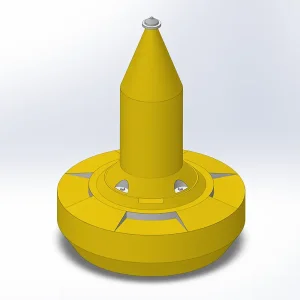
High-Quality Reliable Marine Navigation Buoy for Safe Waterways Manufacturer, Product
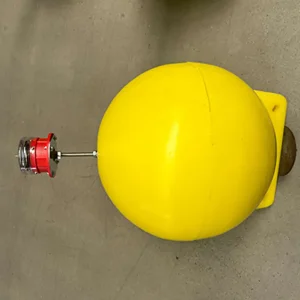
ODM Floating Ball with LED Light – Reliable Marine Navigation and Safety Manufacturer, Pricelist
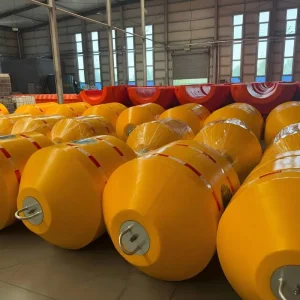
OEM Offshore Mooring Buoy for Safe Vessel Anchoring and Marine Infrastructure Company, Factories
ODM Heavy-Duty Rotomolded Military Airdrop Storage Container Supplier, Factory
ODM Polyethylene Mooring Buoy for Harbors and Floating Facilities Manufacturers, Pricelist
Next-Generation Polymer Formulations & Smart Rotomolding
Anticipating structural engineering requirements for extended Arctic navigation and heavy dredging operations.
Graphene-Enhanced Nanocomposites
Integrating surface-functionalized graphene nanoplatelets directly into the polyethylene masterbatch increases tensile modulus by up to 28% while improving low-temperature elongation at break, creating ultra-durable hulls that resist direct ice-cleaving impact.
IoT Telemetry & Glonass Tracking
Embedding integrated multi-frequency GLONASS/GPS transponders and load cells directly into rotomolded navigation buoys and offshore moorings allows remote monitoring of mooring tension, tilt angle, and geographic drift across remote Siberian waterways.
Closed-Loop Bio-Circular Polymers
Developing advanced chemical recycling protocols to produce ISCC PLUS-certified chemically recycled rotomolded grades, ensuring that decommissioned dredging floats and tanks can be fully reprocessed into high-integrity industrial compounds.
Frequently Asked Questions: Sourcing Rotomolded Products for Russia
Specific engineering and commercial answers for Russian project developers, contractors, and procurement leads.
How do rotomolded PE floats compare against welded steel pontoons in cold waters?
Welded steel floats are vulnerable to weld-seam embrittlement below -20°C, paint peeling, and rapid rust caused by winter salting. In contrast, one-piece seamless rotomolded polyethylene never rusts, flexes elastically upon ice contact, and retains its buoyancy with zero maintenance even after decade-long freeze cycles.
What is the standard buoyancy safety margin for dredging pipelines carrying mineral slurry?
For standard water dredging, a 20% to 30% buoyancy reserve is typical. However, for Russian mineral tailings (iron ore, copper, gold tailings) with slurry densities ranging from 1.3 to 1.8 t/m³, the buoyancy sizing formula must reserve 40% to 50% net positive buoyancy to prevent pipeline submersion during high-density surges.
What documentation accompanies export shipments for Russian customs (EAEU)?
Shipments are accompanied by commercial invoices, packing lists with itemized gross/net weights and HS codes (typically 3926909709 or 8907900000), Certificate of Origin (Form A or CO), Raw Material Mill Test Certificates (MTC), Factory Quality Test Passports (Паспорт качества), and TR CU compliance declarations where required.
Can custom rotomolded parts be produced directly from customer 3D models (STEP/IGES)?
Yes. Our in-house engineering team works directly with STEP, IGES, and DWG files to design CNC-machined or cast aluminum molds. We execute structural finite element analysis (FEA) and mold shrinkage simulations before fabrication to ensure high-tolerance fits for complex assemblies.
What is the production and delivery lead time for full container load (FCL) orders?
Standard catalog pipe floats and buoys maintain a factory production cycle of 7 to 12 days per 40ft High Cube container. Transit via rail from northern China to Moscow typically takes 14 to 18 days, while sea freight to Vladivostok averages 4 to 6 days, ensuring rapid site delivery.
How does direct settlement in Chinese Yuan (RMB) function for Russian industrial buyers?
Russian enterprises can make direct cross-border payments in RMB through Russian partner banks (such as VTB Russia to VTB Shanghai, Sberbank, or regional financial institutions) without currency conversion losses or exposure to Western financial messaging restrictions.
Connect Directly with Juhua Engineering for Russian Projects
Get direct factory pricing, cold-climate polymer formulations, certified buoyancy calculations, and prompt shipping schedules tailored for your project site across Russia.