
 Adriatic Grade
High-Quality Advanced Pipeline Float System for Secure Subsea Installations in Italy
- Shell: High-Density UV Virgin PE
- Core: Closed-cell PU foam matrix
- Deployment: Spool tie-in & PLEM
Custom-engineered buoyancy modules designed to provide precise negative buoyancy reduction during deflection, lowering, and seabed alignment in offshore Italian and Mediterranean marine projects.
Adriatic Grade
Modular Deepwater
Heavy-Duty Pull
Custom OEM/ODM
Strategic offshore gas assets, expanding green-hydrogen corridors, and complex subsea interconnector projects dictate the high technical threshold for pipeline flotation equipment across Italian waters.
Ravenna remains the epicenter of Italy's offshore oil & gas engineering, decommissioning, and upcoming carbon capture and storage (CCS) initiatives. Subsea tie-in operations connecting multi-well subsea production systems (SPS) to unmanned satellite platforms require precise flotation calculations to counteract stiff steel pipelines during horizontal spool connections.
Connecting North African supply lines (Transmed, GreenStream) into the Italian national grid via Mazara del Vallo and Gela entails navigating underwater ravines, volcanic basalt shelves, and violent cross-currents. Pipeline tie-in floats deployed here must withstand substantial hydrostatic head pressures without cell implosion or significant buoyant lift degradation.
Maintaining the MOSE storm-surge barrier system and carrying out industrial port expansions at Genoa, Trieste, and Taranto require specialized pipeline flotation solutions. Controlled buoyancy prevents pipe buckling when sinking intake/outfall assemblies into precision-dredged seafloor trenches close to urban centers.
A technical examination of hydrodynamic equilibrium, bending moment limitation, and modular buoyancy clamp optimization in accordance with DNV-ST-F101 and EN ISO 19901-4 standards.
In offshore subsea engineering, a "tie-in" represents the mechanical or hyperbaric welded connection between two pipeline sections, or between an export pipeline and a Pipeline End Manifold (PLEM) / Subsea Isolation Valve (SSIV). Rigid steel spools must be lowered to the seabed and manipulated into position with millimeter tolerances. Without pipeline tie-in floats, the submerged weight of heavy-wall steel pipes (exceeding 200–600 kg/m when concrete coated) induces excessive bending stress, creating plastic deformation at welded joints.
By strapping engineered pipeline floats along the deflection arm, the submerged weight of the steel pipe is converted into a near-neutral buoyant condition ($F_{sub} \approx 5\% - 15\%$ of dry weight). This permits work-class Remotely Operated Vehicles (ROVs) or modest subsea winches to pull, orient, and mate flange connections (e.g., Morgrip or Cameron collet connectors) without costly heavy-lift construction vessels.
B_net = V_{float} \cdot (\rho_{seawater} - \rho_{core}) - M_{shell} - M_{fasteners}
\sigma_{bending} = \frac{M_{residual} \cdot y}{I_{pipe}} \le [\eta_{allowable}] \cdot SMYS
Where $B_{net}$ is net buoyant lift per module, $\rho_{seawater}$ is measured Mediterranean density ($1028-1030\ \text{kg/m}^3$), $\sigma_{bending}$ is local pipe wall stress, and $SMYS$ is the Specified Minimum Yield Strength of the carbon steel or duplex pipe.
Pipeline floats deployed in Italian offshore waters encounter two distinct operating environments: shallow littoral installations (coastal pulls, landfall operations up to 40 meters) and deep shelf crossings (100–400+ meters). Juhua utilizes high-grade rotational molding processes with UV-stabilized, high-density polyethylene (HDPE) outer shells paired with tailored internal cores:
| Parameter | Standard Dredge / Shore-Pull Float | Subsea Tie-In Modular Float (Mid-Depth) | Deepwater Hydrostatic Tie-In Float |
|---|---|---|---|
| Service Depth Rating | 0 – 15 meters (Atmospheric / Surface) | 15 – 70 meters (Continental Shelf) | 70 – 400+ meters (Deep Shelf & Trough) |
| Outer Shell Construction | Rotationally molded virgin PE (8–12 mm) | Reinforced rotomolded PE (12–18 mm) | Heavy cross-linked PE or Composite Armored |
| Internal Core Matrix | Expanded Polyurethane (35–45 kg/m³) | High-density Rigid PU (65–85 kg/m³) | Hybrid Syntactic Foam / Micro-spheres |
| Water Absorption (28d) | < 3.0% by weight | < 0.8% under hydrostatic load | < 0.15% at peak rated water head |
| Fastening Hardware | Hot-dip Galvanized / AISI 304 | Marine Grade AISI 316L / Super Duplex | Titanium / Inconel 625 / Monel Clamps |
In mid-depth tie-in installations (such as those routinely managed by Saipem and Eni across the Adriatic Sea), utilizing thick-walled rotationally molded polyethylene with a high-density rigid polyurethane foam core provides a balance of cost-efficiency and physical durability. The resilient polymer shell shrugs off accidental collisions with subsea rigging, ROV thrusters, and rock dumping blankets without catastrophic cracking.
Every pipeline float tie-in unit manufactured for Italian energy contractors adheres to rigorous European environmental, marine safety, and material durability protocols.
Our buoyancy calculations and structural clamp modules conform to DNV offshore pipeline criteria and are compatible with Registro Italiano Navale (RINA) classification verification. Fastener torque specifications and frictional slippage thresholds against 3LPE, 3LPP, or concrete weight coatings (CWC) are tested and documented.
The Mediterranean Sea is classified as a Special Protected Area under the Barcelona Convention. Juhua's rotomolded polyethylene shells contain zero heavy metals, utilize food-grade pigments, and guarantee non-leaching performance in sensitive marine protected areas (MPAs) monitored by ISPRA (Istituto Superiore per la Protezione e la Ricerca Ambientale).
Before batch export to Italian ports (Ravenna, Taranto, Augusta), float modules undergo comprehensive quality control: electronic ultrasound wall-thickness profiling, 72-hour hydrostatic pressure chamber immersion, and clamp shear load verification to eliminate the risk of axial slippage during pipeline pull-in.
Addressing the complex hydrodynamic forces found in Italian marine civil engineering, offshore drilling, and port logistics.
Pulling large-diameter steel oil outfalls and industrial intake pipelines through rocky coastal seabed requires staged buoyancy. Juhua modular tie-in floats reduce contact friction with jagged limestone bedrock, allowing shore-mounted pulling winches to maintain a uniform tension profile without exceeding safe cable load limits.
Connecting lateral feeder spools to underwater Pipeline End Manifolds off the coast of Rimini and Ancona requires neutral buoyancy control. Clamp-on modular floats give diving contractors and ROVs the dexterity needed to bolt up flanges and execute hyperbaric weld caps without excessive crane support.
Mediterranean islands rely on deepwater reverse-osmosis desalination. Our corrosion-free polyethylene pipe floats sustain floating butt-welded HDPE strings during tow-out from coastal fabrication yards to offshore submersion sinker sites, ensuring zero environmental degradation from rust or paint chipping.
How our subsea buoyancy and pipeline float designs adapt to the energy transition, offshore floating wind farms, and deepwater carbon management.
Retrofitting depleted Adriatic natural gas reservoirs into massive CO2 injection sites requires specialized dense-phase CO2 tie-in spools. Juhua's development team is validating cryo-resistant internal polyurethane foam cores capable of handling local temperature drops caused by Joule-Thomson expansion during pipeline commissioning.
With major floating wind developments slated for the Strait of Sicily and offshore Sardinia, dynamic power cables must incorporate distributed buoyancy modules (DBMs) to establish lazy wave and reverse-lazy wave geometries. Our rotomolded shells are evolving to feature elastomer internal clamping inserts designed to eliminate fatigue wear against dynamic high-voltage subsea cables.
As Italy solidifies its role as the Southern European Green Hydrogen Hub connecting North Africa to Central Europe, pipeline infrastructure will transition to 100% pure hydrogen or high-percentage H2 blends. Flotation modules will feature specialized anti-static external polymer surfaces and low-permeability polymers to mitigate any galvanic interaction along deep Mediterranean trenches.
Explore our complete range of certified flotation equipment engineered for industrial dredging, port security, mooring logistics, and subsea tie-in operations.
Deepwater Support
Modular Tie-In
Subsea Buoyancy
Underwater Tie-In
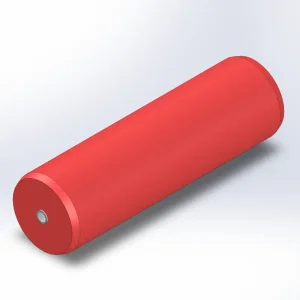 Harbor Defense
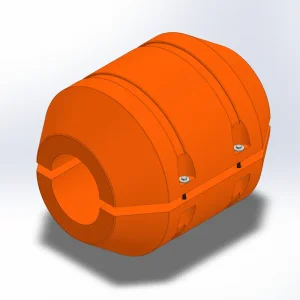 Precision Alignment
 Marine Mooring
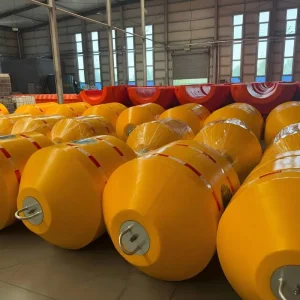 Offshore Port Grade
Direct answers for offshore installation contractors, marine superintendents, and procurement directors working on Italian and European projects.
Standard dredging pipe floats are designed for surface and shallow floating pipelines where atmospheric pressure predominates, providing constant buoyant lift to keep slurry pipes visible and floating. Pipeline float tie-ins, however, are deployed underwater—ranging from intermediate depths to deep seabed installations. They must withstand external hydrostatic pressure without foam crushing, water ingress, or loss of net buoyancy. Moreover, tie-in floats often incorporate specialized clamp liners to prevent damage to expensive subsea corrosion coatings (like 3LPE or 3LPP), feature streamlined geometries to minimize lateral drag from seafloor currents, and may include ROV-operable quick-release mechanisms for post-installation removal.
Clamping friction depends on three variables: bolt preload torque, the static friction coefficient ($\mu$) between the internal float lining and the pipeline jacket (typically concrete weight coating or 3LPP), and hydrodynamic drag forces during installation. Juhua equips heavy-duty subsea tie-in floats with internal molded ribs and vulcanized EPDM or polyurethane elastomeric friction liners. Prior to project mobilization, we provide engineering slip-resistance test reports based on ISO 19901-4 guidelines to ensure the float will not shift axially under turbulent currents or during high-tension bottom pulls.
Yes. The Mediterranean Sea exhibits higher salinity (approx. 38 to 39 PSU) and elevated bottom water temperatures compared to the open North Atlantic. Our pipeline floats are molded from 100% virgin high-density polyethylene containing at least 2.5% carbon black or specialized UV-stabilizer packages (UV8 to UV20 classification). This chemical matrix is impervious to seawater salts, avoids biological boring organisms, and eliminates cathodic protection interference since the PE shell is an electrical insulator.
For Italian energy and civil contractors, we deliver full quality dossiers: Raw Material Certificate of Analysis (COA) guaranteeing virgin polymer grade, Ultrasonic Shell Thickness Measurement Reports, Foam Density and Closed-Cell Hydrostatic Water Absorption Test Logs, and Certificate of Origin (Form A / REX) for streamlined customs clearance through Italian ports such as Ravenna, Genoa, Livorno, and Taranto. Third-party witness testing (SGS, BV, or RINA) can be arranged upon project specification.
Depending on project specifications, floats are either permanently left in place (designed for 25–30 year design life) or removed following the completion of flange connection and hydrostatic pressure testing. For recoverable tie-in floats, Juhua manufactures ROV-friendly quick-release latching pins or sacrificial hydraulic cutting straps. Once cut or pulled by the ROV manipulators, the two half-shells separate safely from the pipe and float to the surface for recovery by the installation support vessel (DSV).
Standard diameter float tooling (ranging from 110 mm up to 1200 mm pipe OD) is maintained in permanent inventory. A standard production run of 100–300 modular tie-in floats requires 12 to 18 business days. Ocean transit from major Chinese shipping terminals to Italian gateway ports (Ravenna, Genoa, Gioia Tauro) typically averages 26 to 32 days. For critical emergency pipeline repair campaigns (SIRS / emergency tie-in repairs), expedited air-cargo shipping for modular shell assemblies is available.
Send your pipe outside diameter, wall thickness, submerged weight target, working water depth, and project coordinate specs to our senior marine engineering team for a customized buoyancy distribution calculation.
Send Inquiry Now