
Featured Marine & Mining Pipe Floats With Cable Troughs
Engineered modular pipeline floats incorporating dedicated channels for electrical cables, telemetry lines, subsea sensors, and hydraulic umbilicals. Deployed across South African and international civil marine sites.
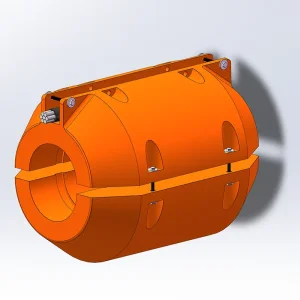
OEM Advanced Cable-Supporting Pipe Floats for Marine Projects Products, Factories

OEM Advanced Modular Pipe Floats with Integrated Cable Channels Manufacturer, Company
High-Quality Reliable Pipe Floats with Cable Troughs for Efficient Marine and Pipeline Operations Quotes, Factory
ODM Pipe Floats With Cable Troughs - Reliable Buoyancy and Cable Protection Products, Factory
South Africa Commercial & Industrial Demand for Cable-Trough Pipe Floats
A comprehensive examination of how South Africa's port maintenance agendas, mineral tailing reclamation operations, and water transfer schemes necessitate specialized pipe flotation technology.
Harbour Operations & Coastal Expansion: Durban, Richards Bay & Saldanha
The Republic of South Africa maintains strategic maritime gateways that handle critical cargo across the Southern African Development Community (SADC). Commercial logistics hubs such as the Port of Durban, the coal-handling berths of Richards Bay, the deepwater iron-ore terminal at Saldanha Bay, and the container terminals of Ngqura and Cape Town require uninterrupted maintenance dredging to counter constant coastal silt migration and littoral drift.
Traditional dredge discharge configurations simply clamped floating buoys over steel or HDPE discharge lines, stringing power cords and sensor cabling haphazardly alongside or suspended from buoyant floats via makeshift ties. In the demanding swell environments of the Atlantic and Indian Oceans along the South African coastline, intense cyclic wave energy rapidly abrades unsecured cables, inducing costly short circuits in telemetry systems, automated sonar heads, and dredge positioning transmitters.
Pipe floats with integrated cable troughs solve this severe operational headache. By rotomoulding a recessed structural channel along the float crown or sidewall, hydraulic dredge operators can safely seat high-voltage power conduits, booster pump telemetry cables, and subsea instrumentation within a protected, non-crushing enclosure. This guarantees Transnet National Ports Authority (TNPA) contractors uninterrupted continuous dredging without risking catastrophic electrical failure.
Mining Slurry Dewatering & Acid Mine Drainage (AMD) Management
South Africa's inland mining heartland—ranging from the Witwatersrand Gold Basin to the Bushveld Igneous Complex (platinum group metals, chrome, and vanadium) and Mpumalanga coal basins—confronts vast tailings slurry and heavy water balance challenges. Tailings Storage Facilities (TSFs) and dewatering impoundments demand constant floating pumping barges and slurry transfer lines.
Mining engineers transport slurries with high specific gravities (SG 1.35 to 1.65) over large water reservoirs. These floating slurry pipelines must run concurrently with heavy electric power feeder cables supplying submersible pumps, alongside automated flow sensors and level instrumentation. In unchanneled float systems, cables slip into acidic slurry pools, resulting in accelerated chemical jacket degradation, mechanical pinches during wind-driven wave sloshing, and catastrophic pump trip-outs.
Our virgin rotomoulded polyethylene pipe floats engineered with specialized cable channels shield high-tension electrical cabling from corrosive chemicals, sulfuric leachates, and intense solar exposure. The integrated channel design allows mining technicians to secure both heavy discharge pipe and vital pump control cabling within a singular, hydro-dynamically balanced assembly.
Vaal Dam, Orange River, and Water Scarcity Infrastructure
Water scarcity across Gauteng, the Free State, and the Northern Cape places intense scrutiny on municipal reservoirs, dam desilting initiatives, and raw water conveyance bypass lines. Projects across the Vaal River system and Lesotho Highlands Water Project delivery conduits frequently necessitate temporary floating intake bypasses to ensure unhindered raw water delivery while dredging sediment silt from upstream impoundments.
Floating pontoon pumps deployed in South African municipal reservoirs require robust power cabling fed from land-based generator substations. By utilizing pipe floats with built-in cable conduits, civil water boards (such as Rand Water and Umgeni-uThukela Water) deploy organized, storm-resistant floating pipelines that protect vital intake cables from entanglement with floating debris, hyacinth weed mats, and shoreline rock friction.
Local Commercial Procurement Pain Points in Southern Africa
Procurement teams in Johannesburg, Durban, and Cape Town historically faced severe bottlenecks: domestic rotational molders in South Africa frequently maintain limited tooling libraries restricted to basic cylindrical floats without molded cable recesses, requiring costly post-purchase fabrication or high-margin European imports burdened with 16-to-24-week delivery horizons.
By partnering directly with a high-capacity Chinese manufacturing entity like Juhua Rubber & Plastic, South African EPC contractors bypass middlemen markups, secure precision molds matching exact outer pipe diameters (from 110mm to 1200mm OD), and achieve ocean container consolidation directly shipped into Durban or Port Elizabeth on accelerated schedules.
Global Flotation Trends & Chinese Factory Efficiency Advantages
Why Tier-1 international dredging conglomerates and civil engineering consortiums increasingly source engineered cable-trough floats from specialized Chinese rotomolding hubs.
Tooling Precision & Rapid Custom Molds
Our facility operates multi-axis CNC tooling machines capable of generating custom split-half aluminum molds for non-standard pipe diameters and bespoke cable conduit cross-sections within 14 working days, eliminating the standard multi-month European engineering lead times.
Virgin Polymer & UV15 Stabilizers
We source ultra-pure virgin linear low-density polyethylene (LLDPE) combined with specialized UV15+ carbon black and photostabilizers. This prevents polymer embrittlement and stress cracking under South Africa's intense UV radiation index (reaching UV Index 11+ in summer).
Closed-Cell Foam Core Infill
Float halves are pressure-injected with high-density polyurethane closed-cell foam (32–45 kg/m³). Even if catastrophic mechanical impact punctures the outer PE skin during storm events, water ingress is strictly confined to <1%, ensuring the pipeline never capsizes or sinks.
Cost-to-Performance Ratio: Sourcing Directly from Binzhou, Shandong
International dredging contractors working across Africa traditionally suffered exorbitant price markups by purchasing through regional distribution networks in Europe or the Middle East. Shandong Binzhou Juhua Rubber & Plastic Co., Ltd. operates a high-tonnage rotational molding campus with continuous electronic temperature monitoring and automated flame-free baking ovens.
By maintaining raw material compounding, tooling fabrication, rotational heating cycles, and closed-cell foam injection in a vertically integrated factory complex, we achieve an unmatched 30% to 45% capital expenditure reduction for African mining houses and maritime EPC contractors, backed by certified mill test sheets, ISO quality verifications, and direct container freight staging to Durban (eThekwini), Cape Town, and Port Elizabeth.
Localized Engineering Use Cases in Southern Africa
How versatile pipe floats with cable troughs deliver high buoyancy safety, structural stability, and reliable power distribution across mission-critical field operations.
Offshore Sand Bypassing Systems (Durban Beachfront)
Durban's coastal shoreline relies heavily on sand replenishment pumping from offshore hopper dredgers. Cable-trough floats support flexible rubber and steel discharge pipelines while simultaneously routing umbilical telemetry lines that link the dredge's differential GPS to shore-based discharge monitoring stations.
Floating Solar Farm (FPV) Conduits (Western Cape)
With private agribusinesses and wine estates across the Western Cape turning to floating solar photovoltaic arrays on farm storage dams, our cable-trough pipe floats double as buoyant conduits carrying high-voltage DC string cables and water cooling return pipes cleanly back to shoreline invertor banks.
Limpopo River Sand Mining & Civil Extraction
Sand mining operators in northern South Africa utilize slurry pumps to extract building aggregate from shallow riverbeds. The dual-chamber cable trough ensures pump power leads remain high and dry above abrasive river gravels, preventing costly cut lines and electrocution hazards.
South Africa Pricelist Framework & Technical Sizing Metrics
A transparent breakdown of how pipe float unit pricing is structured for import into South Africa, alongside essential buoyancy safety formulations.
The Engineering Buoyancy Formula for South African Operations
A common procurement error on African job sites is calculating float quantity based on clean water density (1.00 t/m³). When transporting mining slurry or heavy dredged marine sediment, the conveyed density frequently reaches 1.30 to 1.65 t/m³. The total required buoyancy must always satisfy:
Total Reserve Buoyancy = [ Pipe Dead Weight + Slurry Infill Weight + Cable Load + Hardware ] × 1.30 to 1.50
The additional 30% to 50% safety factor (reserve freeboard) ensures that roughly one-quarter to one-third of the pipe diameter stays elevated above water level, preventing wave wash-over from destabilizing the pipeline or submerging cable access ports in turbulent swells.
| Pipe Outer Diameter (OD) | Float Dimensions (OD × Length) | Cable Trough Size (W × D) | Net Buoyancy per Pair | Polyurethane Core | Indicative Price Range (FOB / CIF SA Base) |
|---|---|---|---|---|---|
| 110 mm – 160 mm | 500 mm × 800 mm | 60 mm × 45 mm | 120 kg | Closed-Cell 35 kg/m³ | $45 – $75 / pair |
| 200 mm – 250 mm | 650 mm × 1000 mm | 80 mm × 60 mm | 230 kg | Closed-Cell 38 kg/m³ | $85 – $140 / pair |
| 315 mm – 355 mm | 850 mm × 1100 mm | 100 mm × 75 mm | 420 kg | Closed-Cell 38 kg/m³ | $160 – $240 / pair |
| 400 mm – 450 mm | 1100 mm × 1200 mm | 120 mm × 85 mm | 780 kg | Closed-Cell 40 kg/m³ | $280 – $390 / pair |
| 500 mm – 560 mm | 1300 mm × 1400 mm | 140 mm × 100 mm | 1,250 kg | Closed-Cell 42 kg/m³ | $460 – $630 / pair |
| 630 mm – 710 mm | 1500 mm × 1600 mm | 160 mm × 110 mm | 1,900 kg | Closed-Cell 42 kg/m³ | $720 – $980 / pair |
| 800 mm – 1000 mm | 2000 mm × 2200 mm | 200 mm × 140 mm | 3,800 kg | Closed-Cell 45 kg/m³ | $1,450 – $2,200 / pair |
*Note: Indicative pricing varies depending on total order volume, raw resin market indices, custom color pigments, fastener metallurgy (Hot-Dip Galvanized Grade 8.8 vs. Marine Grade Stainless Steel 316), and ocean freight rates to Durban or Cape Town. Formal commercial proforma invoices are issued within 24 hours of technical review.
South Africa Shipping & Container Packing Efficiency
Because hollow or foam-filled pipe floats represent high-cube cargo, shipping costs can heavily impact landing prices if not handled by logistics professionals. Our factory utilizes engineered nested packaging techniques where smaller pipe floats or connection tie-ins are nested inside larger assemblies where feasible, maximizing 40-foot High Cube (40HC) container utilization.
Direct container shipping lanes operate continuously from Qingdao Port (China) to Durban Container Terminal (DCT) with transit durations typically spanning 22 to 28 days. Customs clearance paperwork (Commercial Invoices, Packing Lists with Bill of Lading, Certificate of Origin, and Mill Test Certificates) is dispatched digitally ahead of vessel docking to ensure rapid inland transport via the N3 highway corridor toward Gauteng and the mining interior.
Corrosion-Proof Fasteners for African Coastal Salinity
Along South Africa's rugged coastline—notoriously termed the "Cape of Storms"—atmospheric salt concentration and severe wave shock cause standard carbon steel hardware to rust rapidly within months.
Every pipe float pair supplied by Juhua includes precision-recessed bolt pockets. We supply bolt assemblies in either heavy Hot-Dip Galvanized (HDG) Class 8.8 or marine-grade AISI 316 Stainless Steel, paired with self-locking nylon insert nuts and oversized EPDM pressure distribution washers. This guarantees that cyclic wave vibration never backs out nuts or crushes the PE shell walls.
Emerging Technological Trends in Floating Pipeline Architecture
How digital sensing, green polymers, and smart modular designs are reshaping offshore dredging and pipeline management worldwide.
Integrated IoT Sensor Wells & Strain Gauges
Next-generation pipe floats are molded with auxiliary recessed sensor wells alongside cable channels. These accommodate battery-backed IoT transmitters that continuously record pipeline bending strain, water temperature, and localized tilt angles, relaying live stress data to dredge bridge consoles.
Dual-Interlocking Anti-Slip Grooves
Under heavy marine chop, discharge pipelines suffer severe axial torque and slippage. Advanced rotomolded inner bores now feature internal non-destructive gripping ribs and interlocking pin systems that eliminate float migration along the HDPE pipe without puncturing the pipe wall.
Circular Polyethylene Closed-Loop Recycling
International environmental mandates demand zero microplastic shedding. Juhua's virgin LLDPE formulations are 100% recyclable at end of service life. Decommissioned float shells from mining pits can be thoroughly cleaned, reground, and reprocessed into non-critical industrial items.
Frequently Asked Questions: Cable-Trough Pipe Floats in South Africa
Authoritative technical guidance compiled by senior flotation engineers for EPC buyers, mining operators, and marine superintendents.
Q What makes cable-trough pipe floats superior to conventional cylindrical floats?
Standard pipe floats require contractors to strap cables, optical fibers, or hydraulic lines over the outer hull of the float or loosely bind them to the steel/HDPE pipe using zip ties or webbing straps. In tidal swells or turbulent river currents, loose cables undergo continuous flexing, snagging against floating debris, rubbing on rock bottoms during low tide, or getting pinched between adjacent float ends. Pipe floats with molded-in cable troughs hold cabling securely in an integral channel, shielding lines from impact, abrasion, sun exposure, and mechanical crimping.
Q How do South African solar UV levels affect rotational-moulded PE floats?
South Africa experiences some of the highest solar UV radiation levels globally, often exceeding UV Index 11 in areas like the Highveld and Western Cape. Standard non-stabilized polymers degrade through photo-oxidation within 18 to 24 months, turning brittle and cracking. Juhua incorporates high-grade hindered amine light stabilizers (HALS) and UV15+ carbon black pigments into virgin LLDPE raw resin. This extends field operational lifespans beyond 10 to 15 years under direct Sub-Saharan sunlight.
Q How do I determine the correct internal bore diameter for my pipeline?
The internal bore of the float must match the exact Outer Diameter (OD) of your HDPE, steel, or rubber pipe. For instance, an HDPE SDR 17 pipe specified as DN315 has an actual outer diameter of 315 mm. Our float molds are engineered to match these outer boundaries with non-slip clamping tolerances. When placing an inquiry, specify the exact pipe outer diameter, pipe material, and whether your line includes external flanged backing rings or electrofusion couplings.
Q What is the standard warranty coverage for international export shipments?
Our export warranty provides comprehensive quality protection: coverage commences when the buyer takes delivery of the container and continues for 18 months from the documented handover date or 12 months from final project commissioning, whichever milestone arrives first. We guarantee structural integrity against rotational molding delamination, spontaneous environmental stress cracking, and polyurethane core water absorption.
Q Can the cable trough size be customized for large high-voltage armored cables?
Yes. While our standard catalog offers pre-engineered trough cross-sections (e.g., 60×45mm up to 200×140mm), our in-house CNC mold-making shop can adapt existing rotational molds or machine dedicated aluminum inserts to accommodate oversized high-voltage subsea cables, dual parallel hydraulic umbilicals, or multiple sensor conduit configurations for specific civil contracts.
Q How are the floats installed on an active water pipeline?
Installation is fast and modular. Each float consists of two symmetric semicircular halves. The lower half is positioned beneath the pipe; the cables are placed into the molded recess; and the matching upper half is lowered on top. Galvanized or stainless steel bolts pass through reinforced molded-in bolt pockets and are secured with self-locking nuts. Spacing along the pipeline is calibrated to project buoyancy calculations, typically placed edge-to-edge or with small gaps for pipeline flexibility.
Q What happens if a workboat or sharp rock punctures the outer PE hull?
Unlike hollow thin-wall blow-moulded drums that flood completely and sink a pipeline upon breach, Juhua's heavy-duty pipe floats are filled with high-density polyurethane closed-cell foam (35 to 45 kg/m³). The foam core exhibits over 92% closed-cell structure; even if the outer polyethylene shell sustains a tear or puncture from heavy maritime impact, water cannot penetrate the internal cell matrix. The float maintains more than 98% of its original buoyancy.
Q What documentation is provided for South African customs clearance?
Every export shipment dispatched to Durban, Port Elizabeth, or Cape Town comes backed by a complete compliance documentation dossier: Verified Gross Mass (VGM) certificates, Ocean Bill of Lading, Commercial Invoice, Packing List with container packing plans, Certificate of Origin, and Factory Quality Inspection Test Sheets (verifying wall thickness uniformity, polymer tensile strength, and foam core density).
Complete Dredging, Cable Support & Marine Flotation Solutions
Explore our extended series of heavy-duty cable-integrated pipe floats, subsea tie-in supports, slurry rubber hoses, ocean mooring buoys, floating barriers, and modular pontoons.
ODM Floating Pipe Floats with Cable Channels – Secure Buoyancy and Cable Protection for Marine Systems Quotes, Factories
ODM Durable Cable-Integrated Pipe Floats for Submerged Infrastructure Supplier, Manufacturer
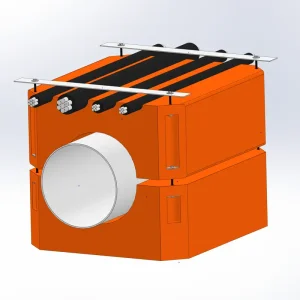
Custom Customizable Floating Pipe Supports with Cable Troughs Company, Pricelist
Best Advanced Pipe Floats with Cable Troughs – Reliable Floating Support for Marine and Industrial Pipelines Company, Quotes
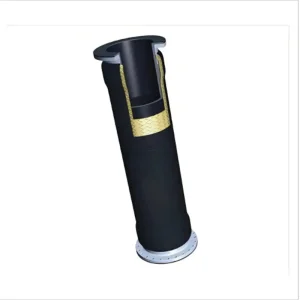
Custom Premium Rubber Hoses for Reliable Water and Slurry Transport Supplier, Products

ODM Mooring Buoy for Reliable Vessel Anchoring and Floating Marine Infrastructure Product, Quotes
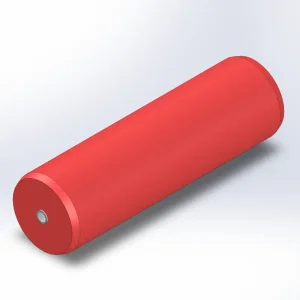
Best Reliable Floating Barriers for Marine and Industrial Protection Supplier, Factory

High-Quality Robust Floating Boat Pontoon for Safe and Flexible Water Platforms Product, Factories
Request Engineering Sizing & South Africa CIF Pricelist
Need certified buoyancy calculations, exact CAD drawings, or container freight quotes for your upcoming marine dredging, mining slurry, or water utility project in Durban, Cape Town, Johannesburg, or Richards Bay? Our technical team replies with full specifications within 24 hours.