Deepwater Installation
Precision-manufactured rotational molded pipeline float systems engineered for deep-sea tie-in spools, marine outfalls, and nearshore pipeline pull-back in the Bengal basin.
Navigating one of the world's most complex fluvial networks requires buoyancy systems calibrated against extreme silt sedimentation, monsoon dynamic shear, and tidal variations.
The People's Republic of Bangladesh is currently undergoing an unprecedented infrastructure renaissance. With maritime trade expanding at exponential rates, flagship infrastructure projects—most notably the Matarbari Deep Sea Port, the Chittagong Port Authority (CPA) expansion, the Payra Deep-Sea Port, and the Single Point Mooring (SPM) with Double Pipeline Project in Maheshkhali—have placed extreme demands on offshore, nearshore, and river-crossing pipeline tie-in engineering.
Pipeline tie-in operations in this deltaic territory encounter environmental variables vastly distinct from conventional open-sea North Sea or Gulf of Mexico operations. The Meghna-Brahmaputra-Padma river confluence discharges over one billion tons of suspended sediment annually into the Bay of Bengal. During pipeline pull-back, seabed laying, and tie-in spool alignment, conventional buoyancy blocks frequently suffer from silt accretion, where heavy sediment settles into crevices, adding unexpected deadweight and causing unpredicted pipeline sag, flange misalignment, or catastrophic seabed stranding.
Key Engineering Takeaway: For pipeline tie-in companies operating along the Kutubdia Channel and Karnaphuli River outfalls, buoyancy modules must incorporate a continuous, hydrodynamic non-fouling profile with zero-pocket external shell geometries that resist sediment settlement during tidal slack water.
Furthermore, natural gas distribution initiatives led by Petrobangla, along with gas transmission connections for floating storage and regasification units (FSRUs) operated by Excelerate Energy and Summit LNG off Moheshkhali Island, require offshore tie-in spools to be connected in high-energy sea states. The southwest monsoon (June to September) generates wave heights exceeding 3.5 to 5.0 meters with surface current velocities topping 4.5 knots. Pipeline float tie-in modules must withstand extreme hydrodynamic lift, drag, and vortex-induced vibrations (VIV) without slipping along the corrosion-coated steel pipe.
Continuous SPM offshore offloading lines and deep draft pipeline tie-ins require high-buoyancy modules rated to counteract dynamic tidal waves and deep saline corrosion.
Intense shipping channels, riverbed horizontal directional drilling (HDD), and industrial effluent outfalls demand heavy impact protection and anti-slip clamping force.
Shallow coastal estuaries with immense silt shifts require customizable multi-stage reserve buoyancy margins to prevent seabed pipeline submergence during ebb tides.
International contractors executing marine works in South Asia require rigorous adherence to hydrostatic modeling, API, and DNV maritime codes.
During a subsea tie-in operation—whether executing an above-water tie-in (AWTI) on a lay barge or utilizing subsea diverless connectors (such as collet connectors or bolted flange misalignment systems)—the physical steel pipeline experiences localized bending moments and high concentrated shear stress. Uncontrolled pipeline weight leads to buckling, exceeding the maximum allowable bending radius determined by DNV-ST-F101 (Submarine Pipeline Systems) and ASME B31.8.
To eliminate critical stress risers at the tie-in weld joints or flange faces, pipeline float tie-in modules are clamped along specific staging intervals. The primary engineering goal is to reduce the submerged effective weight of the pipe spool down to near-neutral buoyancy (typically 5% to 10% negative buoyancy), allowing marine cranes or davits to guide, align, and bolt the tie-in elements with sub-millimeter precision.
| Engineering Parameter | Standard Dredge Float Module | Subsea Tie-In Modular Float (Juhua Spec) | Compliance Specification |
|---|---|---|---|
| External Shell Material | Standard Recycled/Virgin PE | 100% Virgin LLDPE / High-Impact Rotomolded Resin | ASTM D1238 / ISO 1133 |
| Core Buoyancy Media | Expanded Polystyrene (EPS) / Air Core | Hydrophobic Closed-Cell Rigid Polyurethane (PU Foam) | ASTM D1621 / ASTM D2842 |
| Water Absorption (Hydrostatic) | < 5.0% by volume at 1 atm | < 0.25% by volume under continuous 1.5 MPa head | DIN 53428 / ISO 2896 |
| Fastener & Hardware Matrix | Hot-Dip Galvanized Grade 4.8 / 8.8 | Super Duplex Stainless Steel / Marine Grade 316L / Inconel | ISO 3506-1 / ASTM A276 |
| Monsoon Dynamic Reserve Margin | +15% to +20% | +35% to +50% (Calibrated for sediment load) | API RP 17G / DNVGL-RP-F105 |
Global EPC conglomerates executing projects for the Bangladesh Petroleum Corporation (BPC) or Eastern Refinery Limited (ERL) demand comprehensive Finite Element Analysis (FEA) reports verifying that the internal clamping bands do not exceed the coating crush limits of 3-Layer Polyethylene (3LPE) or Concrete Weight Coating (CWC). The clamp-induced hoop stress must be safely distributed across a high-friction elastomeric neoprene or EPDM gasket.
Engineered flotation topologies solving critical marine civil engineering problems across estuaries, riverbeds, and deep-sea corridors.
During horizontal directional drilling under massive river beds like the Jamuna or Meghna, pipe strings suffer severe friction drag against the bore canal. Our engineered float modules establish neutral buoyancy in heavy bentonite mud, minimizing pull-back rig loads.
For connecting subsea wellheads or pipeline end manifolds (PLEM) to trunk lines, modular staged floats allow controlled ballasting and acoustic transponder tracking for divers or remotely operated vehicles (ROVs).
Transitioning lines through shallow intertidal surf zones along Cox's Bazar and Patenga Beach demands rugged high-impact shells that can tolerate bottom bumping against hard packed sand and riprap stone.
Full 3D CFD computational simulation factoring in Bengal Bay current speeds, boundary layer turbulence, and localized drag coefficients.
Fluoropolymer-infused polyethylene matrices prohibiting barnacle, tube worm, and micro-algae growth during extended subsea operations.
Integrated pressure, tilt, and GPS/acoustic telemetry transponders embedded into float bodies for real-time deflection monitoring.
100% recyclable ultra-high molecular weight polyolefins yielding near-zero lifecycle carbon footprint in compliance with UN COP goals.
Navigating statutory authority regulations, third-party port inspections, and engineering verifications across the Chittagong, Dhaka, and Khulna divisions.
Executing pipeline tie-in and marine dredging projects within Bangladesh requires navigating strict statutory parameters. Major public entities including the Bangladesh Inland Water Transport Authority (BIWTA), the Chittagong Port Authority (CPA), and the Mongla Port Authority (MPA) mandate clear navigation marking, non-toxic environmental stability, and material test verifications.
Engineering consultants frequently mandate that all imported rotomolded buoyancy equipment be cross-verified through independent testing laboratories, notably the Bureau of Research, Testing and Consultation (BRTC) at the Bangladesh University of Engineering and Technology (BUET). Key evaluation criteria include:
Customs & Tariffs Facilitation: Juhua provides end-to-end documentation support under HS Code 3926.90 (Articles of plastics/buoyancy aids) ensuring streamlined customs clearance through Chattogram Port (CTG) or Dhaka Air Cargo, backed by pre-shipment third-party inspections (SGS, BV, or Intertek).
Authoritative answers to technical queries encountered by EPC procurement leads, offshore superintendents, and pipeline design engineers in Bangladesh.
During subsea tie-in operations, floats temporarily offset the submerged gravitational weight of the pipeline and tie-in spool. This prevents localized plastic deformation, controls the bending radii (overbend and sagbend), and aligns flanges or mechanical connectors within sub-degree tolerances for safe bolting or hyperbaric welding.
High suspended sediment concentrations (reaching several grams per liter in the Meghna and Karnaphuli plumes) settle into structural ribs and recessed hardware. In Bangladesh, we engineer buoyancy reserve safety margins at +35% to +50% (compared to standard +20% margins in clearer oceans) to compensate for silt deadweight.
Yes. Our tie-in floats feature customized internal radii and heavy-duty, grooved neoprene liners designed to accommodate irregular CWC tolerances without crushing the concrete matrix or slipping along smooth 3LPE/FBE anti-corrosion barrier coatings.
We utilize high-density, closed-cell rigid polyurethane (PU) foam with closed-cell counts exceeding 95%, or syntactically engineered hollow glass microsphere epoxy cores for deepwater tie-ins, maintaining absolute buoyancy even after continuous submergence at project operating depths.
We offer diver-friendly quick-release toggle mechanisms, acoustic transponder-triggered pneumatic release systems, and ROV-compatible wire-cutting bridles that allow immediate module detachment and controlled retrieval to the surface support vessel.
Fasteners are configured based on project duration: Hot-Dip Galvanized Grade 8.8 bolts for rapid pull-backs; Marine Stainless Steel Grade 316L (A4-80) or Super Duplex UNS S32750 hardware for extended subsea moorings and permanent navigational outfall anchors.
Production runs for customized modular floats typically require 10 to 18 business days. Ocean transit from Qingdao/Shanghai directly to Chattogram Port takes approximately 14 to 20 days, allowing swift turnaround for urgent EPC dredging schedules.
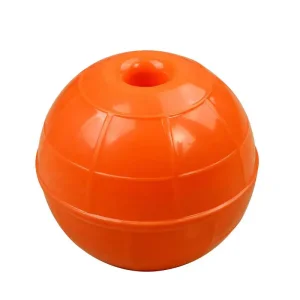
Yes. Outer shells can be rotomolded in safety high-visibility yellow, safety orange, or maritime red in full compliance with IALA navigational standards, complete with embedded 3M marine-grade prismatic reflective bands and solar beacon brackets.
Absolutely. Provide our engineering department with your outer pipe diameter, wall thickness, pipeline steel grade, internal fluid density, bathymetry profile, and current speed, and we will deliver a full buoyancy distribution and spacing layout.
Our warranty spans 18 months from project delivery or 12 months from on-site commissioning, covering any delamination, foam voiding, or UV premature cracking under normal operational guidelines.
Comprehensive equipment catalogue supporting Bangladesh port authorities, maritime dredging, and subsea oil and gas engineering.