
Primary Marine Navigation Buoy Systems for Philippine Waters
High-buoyancy, UV-stabilized rotational polyethylene hulls configured for port approach channels, inland sea lanes, and deep-water straits across Luzon, Visayas, and Mindanao.
-
Offshore Heavy-Duty
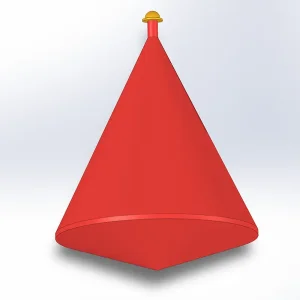
ODM Heavy-Duty Marine Buoys for Reliable Navigation & Offshore Safety Manufacturer, Companies
Send Inquiry Now -
Channel Marking
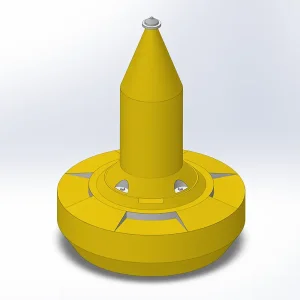
Custom High-Performance Marine Buoys for Safe and Efficient Waterways Manufacturers, Pricelist
Send Inquiry Now -
High Visibility
High-Quality High-Visibility Marine Buoys for Safe Offshore Operations Pricelist, Factory
Send Inquiry Now -
Ocean Grade
ODM Ocean-Grade Navigation Buoys for Safe Maritime Operations Products, Factory
Send Inquiry Now
Maritime Navigation Infrastructure Across the Philippine Archipelago
The Republic of the Philippines constitutes one of the world's most intricate archipelagic nations, encompassing over 7,641 islands and a coastline exceeding 36,289 kilometers. The national blue economy is inextricably linked to sea lines of communication (SLOCs), maritime logistics, inter-island roll-on/roll-off (Ro-Ro) networks, and major international transshipment gateways. The rapid industrialization of key ports under the Philippine Ports Authority (PPA) master plans—including the modernization of the Port of Manila (Manila International Container Terminal / South Harbor), Batangas International Port, Port of Cebu, Subic Bay Freeport, and the Port of Davao—has triggered an unprecedented demand for modern, reliable, and durable Aids to Navigation (AtoN).
Operating floating navigational equipment in Philippine waters presents an engineering challenge distinct from temperate or sheltered basins. Buoys must function uninterruptedly across severe oceanic conditions:
Typhoon Belt Exposure
Situated directly in the Western Pacific Typhoon Belt, the Philippines endures 18 to 22 tropical cyclones annually. Navigational buoys must provide extreme hydrodynamic stability to avoid dragging anchor during sea state 7+ conditions, withstanding gust velocities exceeding 65 meters per second (equivalent to Category 5 Super Typhoons) without hull degradation or lantern decapitation.
Extreme UV & Tropical Weathering
Equatorial UV irradiation in the Philippine sea corridors accelerates pigment breakdown and polymer chain scission in inferior plastics. Rotomolded PE navigation buoys require UV20+ stabilization masterbatch polymers, ensuring colorfast chromaticity retention for lateral red/green marks over a 15-year operational lifecycle under intense insolation.
High-Salinity Biofouling
Warm tropical water accelerates the growth of barnacles, macro-algae, and mollusks in shallow bays like Manila Bay, Lingayen Gulf, and Davao Gulf. Unlike steel hulls that demand frequent sandblasting and toxic anti-fouling paint coats, virgin fluorocarbon-treated LLDPE skin exhibits ultra-low surface energy, drastically reducing marine growth adhesion.
IALA Maritime Buoyage System: Region B Compliance for the Philippines
The Philippine Coast Guard (PCG) Maritime Safety Services Command (MSSC), working in conjunction with the Maritime Industry Authority (MARINA) and international IMO conventions, strictly enforces the International Association of Marine Aids to Navigation and Lighthouse Authorities (IALA) Region B system across all territorial waterways, internal passages, and EEZ borders.
Under IALA Region B rules (commonly referred to as "Red Right Returning"), the buoyage hierarchy applied in the Philippines dictates:
| Buoy Classification | IALA Region B Mark Color | Topmark Shape | Light Characteristics (Night Signal) | Operational Function in Philippines |
|---|---|---|---|---|
| Port Hand Lateral Mark | Solid Green | Single Green Can / Cylinder | Fl.G (Single Green Flash) | Kept to port when entering from seaward (e.g., Manila South Harbor channel entry). |
| Starboard Hand Lateral Mark | Solid Red | Single Red Conical (Point Up) | Fl.R (Single Red Flash) | Kept to starboard when returning from seaward ("Red Right Returning"). |
| Preferred Channel (To Port) | Red with Green Horizontal Band | Modified Conical Topmark | Fl.(2+1)R Composite Group Flashing | Marks primary route bifurcations in busy straits such as Batangas & Cebu. |
| Preferred Channel (To Starboard) | Green with Red Horizontal Band | Modified Cylindrical Can Topmark | Fl.(2+1)G Composite Group Flashing | Indicates secondary channel diverts to starboard, primary to port. |
| Safe Water Mark | Red & White Vertical Stripes | Single Red Sphere | Iso, Occ, or Mo(A) White Light | Landfall buoy, fairway centerlines, and offshore pilot boarding stations. |
| Isolated Danger Mark | Black with Horizontal Red Band(s) | Two Black Spheres (Vertical) | Fl.(2) White Light | Marks localized hazards, coral reefs, or sunken WWII wrecks surrounded by navigable water. |
| Special Purpose Mark | Solid High-Visibility Yellow | Single Yellow "X" St. Andrew's Cross | Fl.Y (Yellow Flashing) | Dredging pipeline demarcation, aquaculture zones, offshore cable runs, and naval exercise areas. |
All Shandong Binzhou Juhua navigation buoys delivered to Philippine clients are engineered with integral pigments compounded directly into the virgin polymer matrix during raw material pulverization. This ensures chromaticity coordinates strictly adhere to IALA Recommendation E-108, eliminating color fading and maintaining compliant visual recognition ranges in bright daylight conditions.
Factory-Direct Engineering: The Juhua Supply Chain Advantage
As a direct rotomolding manufacturer with over 20 years of marine flotation experience, Shandong Binzhou Juhua Rubber & Plastic Co., Ltd. provides EPC contractors, port authorities, and maritime operators in the Philippines with uncompromising structural integrity and streamlined direct delivery.
Continuous CNC Rotomolding
Our facility utilizes variable-frequency closed-loop temperature-controlled rotational molding ovens. Unlike welded steel buoys that rust along heat-affected zones, or hand-laid FRP hulls prone to delamination, our seamless polyethylene buoy shells exhibit continuous wall thicknesses of 12mm to 20mm with zero seams, preventing hydraulic ingress.
Closed-Cell EPS Infilling
The interior of each buoy hull is filled with high-density, closed-cell expanded polystyrene (EPS) or high-grade polyurethane foam (≥35 kg/m³ density). This guarantees 100% reserve buoyancy even in catastrophic vessel collision events where outer shells are punctured, completely preventing hull submersion or sinking.
Direct China-to-Philippines Logistics
Located near major Bohai Rim deepwater export ports (Qingdao, Tianjin), we maintain weekly containerized and breakbulk liner departures directly to the Port of Manila (MICP), Subic, Batangas, Cebu, and Davao. Standard transit times of 7 to 10 days drastically reduce procurement lead times compared to Western European suppliers.
Procuring Marine Aids to Navigation for Philippine Ports?
Our dedicated engineering team provides free hydro-static stability calculations, mooring line catenary analysis, and solar lantern sizing customized to Philippine geographic coordinates.
Technical Parameters: Juhua Marine Navigation Buoys Series
Engineered for extreme performance, our modular PE navigation buoys are available in diameters ranging from 1.2 meters to 3.0 meters to meet varied navigational and focal plane requirements.
| Model Parameter | JH-MB1200 (Inland / Marina) | JH-MB1500 (Harbor Approach) | JH-MB1800 (Channel Marking) | JH-MB2400 (Offshore / Coastal) | JH-MB3000 (Oceanic Deepwater) |
|---|---|---|---|---|---|
| Hull Diameter (mm) | 1,200 mm | 1,500 mm | 1,800 mm | 2,400 mm | 3,000 mm |
| Focal Plane Height (mm) | 1,800 – 2,200 mm | 2,400 – 2,800 mm | 3,000 – 3,600 mm | 4,200 – 5,000 mm | 5,500 – 6,500 mm |
| Hull Material | Rotomolded Virgin PE | UV20+ Virgin LLDPE | UV20+ Virgin LLDPE | Heavy-Duty LLDPE Shell | Modular Multi-Section PE |
| Wall Thickness | 10 – 12 mm | 12 – 14 mm | 14 – 16 mm | 16 – 18 mm | 18 – 22 mm |
| Internal Core Filling | Closed-Cell EPS | Closed-Cell EPS / PU | High-Density EPS Foam | Hydrophobic EPS / PU | Marine Grade PU / EPS |
| Reserve Buoyancy | 650 kg | 1,200 kg | 2,400 kg | 4,800 kg | 9,500 kg |
| Maximum Current Speed | 2.5 Knots | 3.5 Knots | 4.5 Knots | 5.5 Knots | 6.5 Knots |
| Solar Lantern Visibility | 2 – 3 Nautical Miles | 3 – 4 Nautical Miles | 4 – 6 Nautical Miles | 6 – 8 Nautical Miles | 8 – 12+ Nautical Miles |
| Internal Structure | HDG Steel Core Tie-Rod | HDG Q235B Central Tube | Hot-Dip Galvanized Truss | Heavy-Duty HDG Skeleton | Reinforced Structural Cage |
Target Application Scenarios Across the Philippine Maritime Domain
From mega-port container terminals in capital hubs to coral-fringed eco-marine reserves, our flotation technologies deliver reliable navigation markers across diverse deployment requirements.
Port Approach & Basin Dredging
Extensively deployed in major port expansions such as Manila Bay reclamation zones, Batangas LNG terminals, and Subic Bay deepwater wharves. Our high-visibility special mark buoys (Yellow) and channel lateral markers maintain safe navigational separations between active dredging cutter-suction vessels and incoming container liners.
Inter-Island Ro-Ro Navigation
The Strong Republic Nautical Highway (SRNH) links Luzon, Visayas, and Mindanao via vital straits such as the San Bernardino Strait, Guimaras Strait, and Surigao Strait. In these channels characterized by severe 6-knot tidal rips, our JH-MB1800 and JH-MB2400 deep-keel buoys deliver continuous upright visual lines.
Mining & Bulk Carrier Terminals
In high-volume nickel and mineral extraction corridors—including Surigao del Norte, Dinagat Islands, and Palawan—capesize and handymax bulk vessels require dedicated private mooring, hazard demarcation, and anchoring markers to navigate delicate shallow shoals and coral fringed barrier reefs.
Smart AtoN: Telemetry, AIS Transponders & Remote IoT Monitoring
Modern maritime infrastructure demands more than passive visual daymarks. Shandong Binzhou Juhua integrates intelligent AtoN electronic payloads directly within our rotomolded buoy superstructure, catering to Philippine port modernization directives.
Our smart navigation buoy integration ecosystem features:
AIS AtoN Transponders (Type 1 & 3)
Equipped with IMO-compliant AIS transponders that transmit buoy identification, exact GPS coordinates, status messages, and meteorological alerts directly to nearby ECDIS (Electronic Chart Display and Information System) displays of commercial vessels, preventing night-time blind collisions.
4G / Satellite Cloud Telemetry
Using localized Philippine cellular networks (Smart / Globe) or Iridium satellite links for remote waters, our telemetry units report battery voltage, solar panel charging currents, light flasher operational health, and GPS position drift to a centralized web-based maintenance dashboard.
Autonomous Solar MPPT Systems
High-efficiency monocrystalline solar modules are integrated flush into the PE daymark tower, eliminating bird perching and salt encrustation. Powered by premium LiFePO4 (Lithium Iron Phosphate) batteries with intelligent MPPT charging, delivering 20+ days of continuous autonomy during monsoon rains.
Techno-Economic Analysis: Rotomolded PE vs. Traditional Steel Buoys
For decades, port engineers throughout the Philippines relied upon welded carbon steel buoys. However, the tropical marine environment of the South China Sea, Sulu Sea, and Philippine Sea imposes heavy corrosion rates on ungalvanized or painted steel, driving astronomical maintenance costs. Rotomolded virgin polyethylene has rapidly replaced steel as the engineering material of choice.
| Evaluation Criterion | Juhua Rotomolded Polyethylene (PE) Buoys | Traditional Welded Carbon Steel Buoys | Engineering Benefit in Philippines |
|---|---|---|---|
| Corrosion Resistance | 100% Rust-Proof; Non-reactive to tropical saltwater | Severe galvanic and oxidation rust; requires anodes | Zero hull degradation in hot, high-salinity seawater. |
| Color Durability | Color compounded throughout; UV20+ stabilized | Surface paint chips, blisters, chalks, and fades | Eliminates bi-annual drydock scraping and toxic painting. |
| Impact Resilience | Flexible polymer memory absorbs vessel bumping safely | Permanent denting, seam rupture, weld fracturing | High tolerance against barge impact in narrow channels. |
| Weight & Handling | 60% lighter than equivalent steel structures | Excessively heavy; requires 30T+ crane barges | Can be deployed by standard Philippine workboats & tenders. |
| Biofouling Cleaning | Low-energy non-stick surface; cleaned by waterjet | Porous rust harbors deep calcareous organism roots | Reduces offshore diver and maintenance hours by over 70%. |
| Lifetime TCO (15 Yrs) | Extremely Low: Minimal scheduled servicing needed | Very High: Frequent drydocking, blasting & recoating | Delivers up to 55% overall capital and maintenance savings. |
Philippine Marine Navigation Buoy Procurement & Engineering FAQ
Clear, authoritative technical answers addressing compliance, anchoring, shipping, and deployment across the Philippine islands.
Q1: Does your buoyage strictly comply with Philippine Coast Guard (PCG) and IALA Region B rules?
Yes. Every navigation buoy engineered for the Philippine market is configured strictly in accordance with IALA Region B standards ("Red Right Returning"). We manufacture port hand lateral marks in solid emerald green, starboard hand lateral marks in solid crimson red, cardinal marks with correct double-cone topmarks, and special marks in vivid yellow with St. Andrew's crosses. Color coordinates comply with IALA Recommendation E-108.
Q2: How do your navigation buoys survive Category 5 super typhoons in the Philippines?
Our buoys feature a low-center-of-gravity ballast keel paired with a hydrodynamic hull profile that sheds green water easily. Inside, the hull is filled with closed-cell expanded polystyrene (EPS) foam, preventing water intake. When coupled with our custom-engineered catenary mooring chains, high-holding-power (HHP) Bruce or Danforth anchors, and sinker concrete deadweights, our systems withstand sustained winds exceeding 60 m/s and wave heights up to 8 meters.
Q3: What is the transit lead time from your factory in Shandong, China to Philippine ports?
Due to our direct proximity to Qingdao and Tianjin maritime terminals, typical ocean freight transit times are only 7 to 10 days to the Port of Manila (South Harbor / MICT), Batangas, and Subic Bay. Delivery to Visayas (Cebu, Iloilo) and Mindanao (Davao, Cagayan de Oro) takes approximately 12 to 16 days via regular liner services. Custom fabrication runs typically ship within 15 to 25 business days from order confirmation.
Q4: Can you supply complete turn-key mooring assemblies suitable for deep Philippine trenches?
Yes. Philippine coastal waters often plunge rapidly from shallow reefs to depths exceeding 100 meters. We supply complete mooring packages tailored to your site bathymetry, including grade U2/U3 studlink or open-link hot-dip galvanized anchor chains, synthetic fiber bridles, swivel shackles, load-rated D-shackles, and heavy cast concrete or cast steel sinkers.
Q5: Are solar marine lanterns included, and how many cloudy days can they endure?
We configure our buoys with premium self-contained solar LED lanterns (available with visual ranges from 2 NM to 10+ NM). During the Philippine monsoon season (Habagat), prolonged cloud cover is common. Our systems utilize high-efficiency MPPT controllers and Grade-A LiFePO4 batteries sized for 20 to 25 days of continuous zero-sun autonomy.
Q6: How resistant are your polyethylene hulls to coral reef abrasion and accidental vessel impacts?
Unlike brittle fiberglass (FRP) that fractures or steel that dents and breaches, our high-density virgin LLDPE possesses high elongation-at-break (>500%) and impact resistance. When struck by inter-island fishing bangkas, tugs, or workboats, the hull flexes elastically to absorb collision energy before rebounding back to its original geometric contour.
Q7: What documentation and quality inspection certifications do you provide for Philippine customs clearance?
We supply comprehensive export documentation packages including Mill Test Certificates (MTC), Factory Acceptance Test (FAT) reports, raw material UV stabilization certificates, foam density buoyancy certifications, Certificate of Origin (Form E for ASEAN-China Free Trade Area tariff reduction), and detailed mooring calculation sheets.
Q8: Can the buoys be customized for private mining or power plant jetty exclusion zones?
Absolutely. For private port jettees, coal-fired power plants, LNG receiving terminals, and maritime mining concessions in Palawan, Surigao, or Bataan, we manufacture custom Special Mark buoys in yellow with reflective vinyl graphics, hazard warnings ("RESTRICTED AREA / KEEP OUT"), and integrated radar reflectors to alert maritime traffic.
Comprehensive Marine Flotation & Navigation Equipment for Philippines
Explore our full line of precision aids to navigation, dredging pipeline floats, marine engineering pontoons, and specialty rotational molded hardware.
-
Precision AtoN
Best Precision Marine Buoys for Safe and Efficient Navigation Manufacturer, Factories
Send Inquiry Now -
Coastal Projects
Best Reliable Floating Buoys for Coastal Navigation and Offshore Projects Suppliers, Factory
Send Inquiry Now -
Harbor Operations
Custom Reliable Marine Buoys for Safe Waterway Operations Suppliers, Products
Send Inquiry Now -
Standard AtoN
High-Quality Reliable Marine Navigation Buoy for Safe Waterways Manufacturer, Product
Send Inquiry Now -
Dredging Support

Best Pipe Floats for Stable Water Transfer and Marine Pipeline Support Supplier, Pricelist
Send Inquiry Now -
Rotomolded Cases
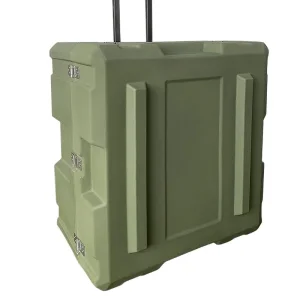
ODM Heavy-Duty Rotomolded Military Airdrop Storage Container Supplier, Factory
Send Inquiry Now -
Buoyancy Floats
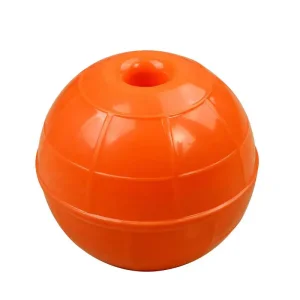
ODM Heavy-Duty ABS Float Ball for Water Engineering Projects Suppliers, Quotes
Send Inquiry Now -
Modular Pontoon

High-Quality Robust Floating Boat Pontoon for Safe and Flexible Water Platforms Product, Factories
Send Inquiry Now
Partner Directly with China's Premier Buoy Manufacturer
Whether you require an individual IALA-compliant channel marker for a private port terminal in Cebu, or a turn-key fleet of deep-sea solar AtoN buoys for a Philippine government port expansion project, our engineering department is ready to assist with sizing, calculations, and quotation sheets.