
Featured Pipeline Float Tie-In Systems for Colombia Projects
Pre-calibrated, high-impact polyethylene buoyancy modules customized for Caribbean offshore mooring, deepwater gas pipeline junctions, and maritime terminal maintenance.
-
 High-Quality Advanced Pipeline Float System for Secure Subsea Installations in Colombia Coastal ZonesExplore Model Specs
-
Modular Subsea Pipeline Float for Reliable Deepwater Mooring & Offshore Support in ColombiaExplore Model Specs
-
Heavy-Duty Pipeline Float System for Subsea Tie-In Installations & Fluvial Terminals in ColombiaExplore Model Specs
-
Innovative Pipeline Float System for Deepwater Subsea Junction Support: Colombia Quotes & SupplyExplore Model Specs
Colombia Industrial Context & Maritime Infrastructure Landscape
Navigating the complex hydrodynamics, environmental regulations, and deepwater exploration demands across the Magdalena River Basin and Caribbean Basins (Sinú-San Jacinto & Guajira Offshore).
Current Commercial Dynamics in Colombia's Maritime & Energy Corridors
Colombia holds a geostrategic dual-coast position in South America, acting as an energy transit and commercial nexus through its Caribbean ports (Cartagena, Barranquilla, Santa Marta, Coveñas) and Pacific gateways (Buenaventura). Over the past five years, Colombia's national energy agenda has pivoted aggressively toward safeguarding natural gas reserves, spearheaded by offshore frontier discoveries such as Uchuva, Gorgon, and Orca in deep and ultra-deep Caribbean waters. Integrating subsea tie-in infrastructure—connecting newly drilled subsea wellheads to shallow production manifolds, floating production storage and offloading (FPSO) units, or onshore treatment plants near Puerto Salgar and Ballena—demands absolute structural precision.
Simultaneously, the vital Magdalena River Navigability Master Plan requires continuous capital and maintenance dredging to sustain vessel draft from Barrancabermeja down to Bocas de Ceniza. In these dredging and slurry disposal corridors, traditional steel flotation cylinders suffer severe, rapid electrolytic decay due to high ambient salinity combined with corrosive organic silt. EPC contractors and marine asset operators are rapidly decommissioning deteriorating steel floats, transitioning exclusively to rotationally molded virgin high-density polyethylene (HDPE) buoyancy modules filled with closed-cell polyurethane.
Deepwater Subsea Tie-Ins
Controlled buoyancy during subsea pipeline lowering reduces bend radius stress at the PLEM (Pipeline End Manifold) connection points, preventing costly subsea pipeline kinking in offshore blocks.
Magdalena Dredging Operations
High sediment density (1.3 to 1.6 t/m³) and strong fluvial currents require custom-calibrated float dimensions that preserve pipeline stability and prevent hydraulic capsizing during high-water seasons.
Coveñas Offshore Oil Terminals
Exporting Castilla and Vasconia heavy crude blends through offshore single point mooring (SPM) calm buoys mandates robust pipeline flotation capable of resisting hydrocarbon splash and marine biofouling.
Macro Industry Solutions & Engineering Value Proposition
Global oil companies, marine contractors, and dredging consortia operating in Colombia face extreme logistic risks: variable discharge densities, erratic swell patterns along the Barranquilla spit, and stringent licensing oversight by the National Environmental Licensing Authority (ANLA). A catastrophic pipeline buckle during an offshore subsea tie-in operation can cause environmental fines reaching millions of dollars alongside multi-month production outages.
Juhua Marine Flotation engineers end-to-end buoyancy architectures tailored to these exact challenges. Our pipeline float tie-in systems eliminate structural pinch points by offering progressive, staged buoyancy. By varying the module spacing and internal foam density along the touchdown zone, the catenary curve of the steel or composite pipeline is precisely manipulated. This prevents exceeding the maximum allowable bending moment (MABM) of high-grade API 5L steel or multi-layer flexible risers during deployment and permanent seabed setting.
Technical Comparison: Juhua Rotomolded Polyethylene vs. Conventional Steel Floats
| Engineering Attribute | Juhua Virgin PE Shell + PU Core | Conventional Welded Steel Floats | Operational Benefit in Colombia |
|---|---|---|---|
| Corrosion Resistance | 100% Inert to Tropical Saltwater & H2S | Rapid oxidation, pitting, galvanic attack | Zero repainting/cathodic replacement in Cartagena bays |
| Impact Deformation | High-elastic memory; absorbs vessel impact | Permanent denting; rupture of weld seams | Withstands barge collisions in Magdalena River locks |
| Buoyancy Reliability | Closed-cell PU foam (zero water ingress) | Hollow chamber: single puncture sinks line | Uninterrupted dredging operations even if punctured |
| Weight for Crane Handling | Lightweight modular halves (fast bolting) | Heavy, cumbersome, requires large davits | Lowers offshore crane barge mobilization day-rates |
| UV Degradation Resistance | UV8 / UV15 stabilized pigment matrix | Epoxy chalking and peel under Caribbean sun | 15+ years service life without surface embrittlement |
Local Regulatory Compliance, Logistics & Port Delivery
International procurement teams sourcing flotation hardware for Colombia must comply with stringent maritime import requirements governed by DIMAR (Dirección General Marítima) and international safety conventions under the International Association of Marine Aids to Navigation and Lighthouse Authorities (IALA). Juhua's pipeline floats and buoys meet all international hydrostatic testing, raw material traceability, and non-toxic aquatic requirements.
Logistically, shipments destined for Colombian maritime projects are cleared directly through the major container terminals of Sociedad Portuaria Regional de Cartagena (SPRC) or Puerto de Barranquilla. Our engineering division packages modular clamp halves using nesting optimization algorithms, which minimizes cubic freight volume (CBM) in standard 40ft High Cube containers. Furthermore, complete technical dossiers—including mill certificates, polyurethane density test graphs, torque limit tables for galvanized/SS316 fasteners, and Spanish-language installation manuals—are delivered alongside every consignment.
Specialized Subsea Flotation, Markers & Marine Transfer Assets
Comprehensive offshore buoyancy components, deepwater tie-in modules, LED navigation markers, and heavy-duty slurry pipelines configured for Colombia tender compliance.
-
Custom Deepwater Pipeline Support Float – Modular & Reliable Subsea Sizing for Colombia ProjectsExplore Model Specs
-
Pipeline Float Tie-In: Modular Deepwater Buoyancy Assemblies & Pricelist for Colombia OperationsExplore Model Specs
-
ODM Deepwater Pipeline Support Floats: Subsea Buoyancy Engineering for Colombia Caribbean BlocksExplore Model Specs
-
Subsea Tie-In Pipeline Floats: Reliable Underwater Buoyancy for Coastal Pipelines in ColombiaExplore Model Specs
-
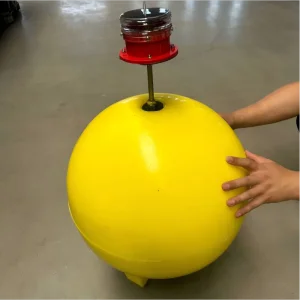 LED-Equipped Floating Ball for High-Visibility Night Waterway Operations in Colombia PortsExplore Model Specs
-
 High-Performance Marine Navigation Buoys for Port Channels & Safe Fairways in ColombiaExplore Model Specs
-
 Custom Pipe Floats for Long-Distance Floating Pipelines & Industrial Water Transfer in ColombiaExplore Model Specs
-
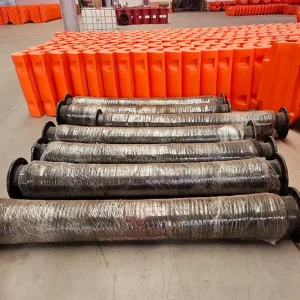 Heavy-Duty Rubber Pipelines & Flexible Armored Hoses for Slurry Dredging Transport in ColombiaExplore Model Specs
Technical Roadmap & Next-Gen Subsea Buoyancy Solutions
Strategic advancements in rotational molding, polymer composites, and telemetry tracking specifically developed for tropical deepwater marine installations.
Phase 1: Syntactic Foam Hybridization
For subsea tie-in depths exceeding 300 meters off Colombia’s Caribbean shelf, conventional polyurethane foam undergoes hydrostatic cell collapse. Our R&D incorporates high-strength hollow glass microsphere (HGMS) syntactic foam cores that maintain hydrostatic equilibrium under extreme hydrostatic pressures up to 3,000 meters depth.
Phase 2: Embedded IoT Acoustic Telemetry
Next-generation subsea tie-in clamps are integrating internal acoustic transponders and stress gauges. Subsea ROVs can scan the float module in real time during the tie-in phase to confirm precise positive buoyancy force, pipeline bend curvature, and internal clamp retention pressure.
Phase 3: Circular Polymer Re-Molding
Addressing corporate ESG targets in Latin America, Juhua is pioneering closed-loop circular rotomolding. Decommissioned pipeline floats from finished dredging concessions along the Magdalena River can be re-granulated, re-stabilized with antioxidants, and molded into non-critical port barrier pontoon systems.
Frequently Asked Questions: Pipeline Float Tie-Ins for Colombia
Comprehensive engineering, purchasing, and customs clearance answers for international procurement managers and project engineers.