

Precision Mooring & Tie-In Systems
Algeria Offshore Tie-In Flotation Units
Custom-calibrated subsea buoyancy modules purpose-built for the challenging bathymetry and high-temperature hydrodynamic conditions of the Algerian Mediterranean basin.
Best Modular Subsea Pipeline Float – Reliable Deepwater Support Manufacturer, Factories (Skikda & Arzew Field Spec)
Inquire Product Specs
Best Heavy-Duty Pipeline Float System for Subsea Installations Manufacturer, Products (High-Salinity Desalination Ready)
Inquire Product Specs
OEM Innovative Pipeline Float System for Reliable Deepwater Support Companies, Quotes (Subsea Tie-In Config)
Inquire Product SpecsIndustrial White Paper Analysis
Algeria Offshore Dynamics: Subsea Tie-In Engineering in the Maghreb Energy Corridor
Algeria stands as the undisputed energy pillar of North Africa, supplying over 12% of Europe's natural gas through extensive offshore networks including Medgaz and Transmed. As Sonatrach accelerates deepwater drilling programs and revitalizes coastal processing hubs in Arzew, Béthioua, and Skikda, subsea tie-in infrastructure has emerged as a high-criticality domain.
Subsea Hydrocarbon Expansions
The offshore sector is transitioning toward deeper margin extraction, tying subsea manifolds directly into shallow shelf gathering hubs. Pipeline tie-in floats play a crucial role during S-lay and J-lay barge operations, attenuating bending stresses, preventing lateral buckle deformation, and enabling millimetric touchdown positioning above uneven seabed topography.
Seawater Desalination Megaprojects
Addressing national arid water demands, the Algerian Ministry of Energy has deployed massive Reverse Osmosis (RO) plants across coastal wilayas like Oran, Tipaza, and Boumerdès. Massive HDPE intake lines and high-salinity brine discharge pipes (up to 2,000mm OD) require precisely distributed marine buoyancy modules during marine towing and offshore seabed tie-in positioning.
Harsh Marine Salinity & Thermal Resistance
The Mediterranean basin exhibits pronounced thermocline stratifications, severe surface UV irradiance (exceeding 180 kLy/year in Algerian coastal reaches), and elevated water salinity (approx. 38 PSU). Our rotomolded subsea floats utilize proprietary UV stabilizers and closed-cell polyurethanes designed to prevent micro-fissuring, water intrusion, or ballast displacement over 25+ years.
Macro Engineering Solutions
Subsea Pipeline Tie-In Methodologies for Algerian Coastal & Offshore Sites
Offshore tie-in operations—connecting subsea flowlines to PLETs (Pipeline End Terminations), manifolds, or riser bases—demand rigorous net buoyancy control. Our engineering team integrates hydro-dynamic modeling to mitigate vortex-induced vibrations (VIV) and optimize deflection angles.
Controlled Deflection & Pull-In Flotation
During horizontal spool or jumper installation, our modular PE floats are strapped at calculated pitch intervals to elevate the pipe string off the sea floor. By achieving near-neutral submerged buoyancy (-2% to -5% net negative weight), subsea winch systems and ROVs can maneuver 24-inch to 48-inch steel or composite pipelines with minimal hydraulic tractive effort, preventing axial over-stressing.
- Eliminates pipeline drag friction on abrasive limestone/sand seabed.
- Enables micro-adjustments for diver-less clamp connector alignments.
- Allows rapid ROV cutting or remote acoustic release of temporary buoyancy.
Shore Approach & Beach Pull Tie-Ins
For shoreline landfall operations along Algeria's cliffed or rocky northern littoral (e.g., Bejaia or Ghazaouet), floating strings are pulled across surf zones into open marine trenches. Our high-impact, abrasion-resistant outer rotomolded shells withstand continuous surf breaker forces, reef scraping, and littoral sediment transport without losing buoyancy.
- Non-marking elastomeric contact pads to preserve anti-corrosion FBE/3LPE coatings.
- Stainless steel 316 / Super Duplex fasteners for marine shelf longevity.
- Internal elastomeric ribbed liners prevents longitudinal pipeline slip.
Algerian Marine Operating Criteria vs. Buoyancy Module Specifications
| Application Environment | Depth Rating | Core Material Chemistry | Pipeline Compatibility | Primary Algerian Project Target |
|---|---|---|---|---|
| Nearshore Landfall & Outfall | 0 – 50 meters | Solid Closed-Cell Polyurethane Foam (PU) | HDPE, Steel, GRP (OD 200mm – 2000mm) | SWRO Desalination Plants |
| Intermediate Continental Shelf | 50 – 300 meters | Cross-linked Micro-Cellular Matrix | Carbon Steel, Clad CRA Pipe (OD 6" – 36") | Arzew & Skikda LNG Terminals |
| Deepwater Mediterranean Trench | 300 – 1500+ meters | Syntactic Foam (Hollow Glass Microspheres) | High-Yield Line Pipe (API 5L X65/X70) | Trans-Med Cross-Border Links |
| Dredging & Port Expansion | Surface / Sub-surface | High-Impact Rotomolded Virgin PE | Flanged Slurry Pipe, Armored Dredge Hose | Djen-Djen Port Container Berth |
Procurement & Compliance Framework
Navigating Algerian Local Content (Loi sur les Hydrocarbures) & Logistics
Procurement managers from international EPC contractors (Technip, Saipem, Subsea 7, Petrofac) and local entities like Sonatrach, Sonelgaz, and the Algerian National Dredging Company face stringent regulatory protocols. Our export solutions are structured to eliminate supply chain friction.
Algerian Bank & Trade Compliance
We provide full documentation for Bank of Algeria Letter of Credit (L/C) requirements, Certificat de Conformité (Certificat de Contrôle Qualité des Marchandises), Certificate of Origin, and EUR.1 trade documentation where applicable. Every production batch is backed by mill test reports (MTRs) and third-party inspection certifications (SGS, Bureau Veritas, DNV).
Port Delivery Routing to Algeria
With high-volume manufacturing hubs strategically positioned near major maritime shipping routes, we provide scheduled containerized (FCL) and break-bulk logistics directly to Algiers Port, Oran Commercial Port, Skikda Terminal, and Béthioua Oil Harbor. Custom stackable nestings maximize 40ft High Cube container volumetric capacity, slashing shipping landed costs.
Hydrostatic & Quality Validation
Every subsea tie-in float undergoes dimensional verification, shell wall ultrasonic thickness scanning, and pressure testing in dedicated hydrostatic chambers simulating downhole marine water heads. Float shells are molded from high-density virgin polyethylene (HDPE Grade PE100) ensuring ultimate crack resistance under subsea hydrostatic cycles.
R&D & Subsea Innovation
Technical Roadmap: Next-Generation Flotation for Algeria's Green Hydrogen & Gas Future
As Algeria explores offshore hydrogen export corridors (such as the proposed SoutH2 Corridor linking Algeria to Italy and Germany via offshore pipelines), our subsea flotation technology continues to advance across four strategic axes.
PHASE 01: MATURED
Syntactic Foam Composites
Development of high-crush-strength syntactic foams utilizing hollow borosilicate glass microspheres, reducing module mass by 35% while extending hydrostatic depth ratings to 3,000 meters for abyssal Mediterranean crossings.
PHASE 02: ACTIVE
ROV-Autonomous Quick Release
Integrating acoustic and ROV-manipulable hydraulic latch mechanisms into subsea tie-in modules, eliminating diver deployment in hazardous deep waters and reducing installation barge spread costs by up to $150,000/day.
PHASE 03: TESTING
Smart Buoyancy Sensor Bundles
Embedded IoT strain sensors and subsea transponders providing real-time data on pipeline sagging, deflection angles, water intrusion, and ambient seabed currents during subsea tie-in maneuvers.
PHASE 04: VISION
Circular Marine Polymers
Pioneering 100% recyclable chemically stable olefin polymers with enhanced thermal stability (up to 75°C pipe surface temperature), ready for offshore green hydrogen and CO2 carbon capture sequestration (CCS) lines.
Technical & Commercial FAQ
Frequently Asked Questions: Algeria Pipeline Floats & Marine Buoyancy
Detailed answers covering sizing formulas, maritime logistics to Algerian ports, material integrity, and tie-in engineering protocols.
Q1: How do you calculate required buoyancy for a subsea tie-in spool in the Algerian Mediterranean?
Buoyancy calculation must factor in Mediterranean water density (typically 1,028 to 1,030 kg/m³ due to higher salinity), pipe outer diameter, wall thickness, steel grade, internal fluid density during hydrotesting or dry pull, and any coating layers (e.g., concrete weight coating or 3LPE). The target is usually calculated so that: Net Submerged Weight = Dry Weight - (Float Displaced Volume × Seawater Density). For subsea pull-in operations, a residual submerged weight of 5% to 10% is maintained to ensure controllable ROV handling without hydrodynamic destabilization from ambient cross-currents.
Q2: Can your floats handle the intense thermal conditions and solar radiation of Algerian coastal projects?
Yes. Our rotomolded polyethylene shells are formulated with premium UV-15 to UV-20 stabilizer packages (hindered amine light stabilizers - HALS) and virgin hexene-copolymer PE resins. This preserves chemical bonding and impact resistance even after decades of continuous exposure in the Mediterranean UV basin. Furthermore, closed-cell polyurethane foam inserts are thermally stable up to 80°C, preventing core collapse during long storage at desert-adjacent ports or warm coastal staging zones like Béthioua.
Q3: What shipping terms and export documentation do you provide for delivery to Algerian ports?
We operate across CIF, CFR, and FOB Incoterms 2020 directly to major Algerian maritime terminals including Port d'Alger, Port d'Oran, Skikda, and Mostaganem. We supply complete commercial dossiers complying with Bank of Algeria regulations: Legalized Commercial Invoices, Packing Lists with volumetric cubic meter (CBM) breakdowns, Clean on Board Bills of Lading, Certificates of Origin certified by the Chamber of Commerce, and third-party inspection certificates from BV, SGS, or TUV certifying conformity before departure.
Q4: Are your pipeline floats compatible with large diameter HDPE lines used in Algerian desalination plants?
Absolutely. We manufacture modular two-piece clamp-on floats accommodating pipe outer diameters up to 2000mm. Each half-shell is precision-molded to fit the nominal outside diameter of standard SDR-rated HDPE pipes (SDR 11, SDR 17, SDR 26). The inner bore is equipped with non-slip ridges and optional elastomeric liners that clamp securely onto the pipe using high-tensile galvanized or 316 stainless steel hardware, ensuring zero slippage during marine towing, controlled flooding, and seabed positioning.
Q5: How do your pipeline floats prevent damage to expensive subsea corrosion-resistant coatings?
Traditional steel clamps or ill-fitted buoyancy modules can scratch or gouge 3-layer polyethylene (3LPE), 3-layer polypropylene (3LPP), or fusion-bonded epoxy (FBE) subsea pipe coatings, causing accelerated cathodic disbondment. Our PE shell contact faces are engineered with radius-molded transitions and can be fitted with neoprene or EPDM elastomeric protective liners. This cushions axial stress distribution while completely isolating the steel line pipe from mechanical abrasion.
Full Production Inventory
Comprehensive Offshore & Marine Buoyancy Catalog
From deepwater pipeline support modules to harbor mooring buoys, explore our engineered rotomolded solutions deployed across 80+ countries worldwide.
Custom Deepwater Pipeline Support Float – Modular and Reliable Supplier, Manufacturers (Algerian Shelf)
Inquire Product Specs
High-Quality Pipeline Float Tie-In – Modular Buoyancy Solution for Deepwater Pipelines Supplier, Pricelist (Sonatrach Spec)
Inquire Product Specs
ODM Deepwater Pipeline Support Floats – Reliable Subsea Buoyancy Solutions Manufacturer, Companies (Offshore Maghreb)
Inquire Product Specs
ODM Subsea Tie-In Pipeline Float – Reliable Buoyancy for Underwater Pipelines Products, Pricelist (Desalination & Oil)
Inquire Product Specs
ODM Mooring Buoy for Reliable Vessel Anchoring and Floating Marine Infrastructure Product, Quotes (Algeria Port Ready)
Inquire Product Specs
ODM Custom Mooring Buoy for Vessel Berthing, Marina Use and Offshore Anchorage Companies, Pricelist (Mediterranean Spec)
Inquire Product Specs
Custom Custom Pipe Floats for Floating Water Pipeline and Marine Support Projects Suppliers, Manufacturers (Intake & Slurry Lines)
Inquire Product Specs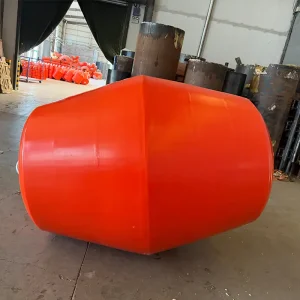
High-Quality Mooring Buoy with Reinforced Connections for Marine Projects Product, Companies (Heavy Weather Calibrated)
Inquire Product SpecsRequest an Algerian Project Buoyancy Calculation Dossier
Provide your pipeline OD, wall thickness, submerged weight target, and project coordinates in Algeria. Our technical engineering desk will deliver a comprehensive 3D sizing analysis, freeboard assessment, and export freight schedule within 24 hours.