
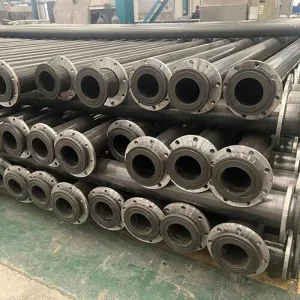
Featured Marine Pipeline Systems for Osaka Projects
Heavy-duty fluid transfer conduits engineered for reclamation, dredging, and high-salinity estuarine operations.
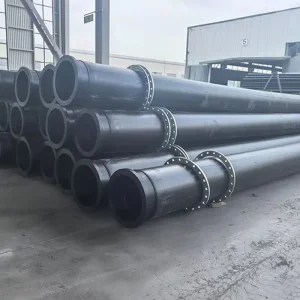
Heavy-Duty Marine Slurry Pipeline for Osaka Bay Reclamation
Explore Product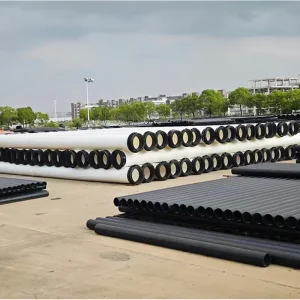
ODM Heavy-Duty Water & Fluid Pipeline for Yumeshima Waterfront
Explore Product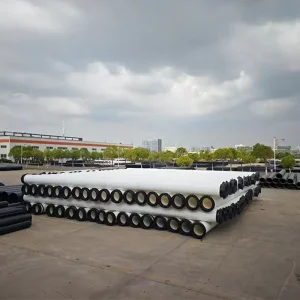
High-Density Liquid Transport Pipeline for Kansai Maritime Civil Works
Explore ProductOsaka Bay Marine Infrastructure & Dynamic Flotation Dynamics
Strategic analysis of port modernization, reclamation at Yumeshima, and the transition toward robust thermoplastic solutions.
Local Maritime Civil Engineering Landscape in Osaka
The Osaka Bay area, including the Port of Osaka and Port of Sakai-Senboku, represents one of Japan's most concentrated maritime logistics and industrial clusters. With ongoing mega-developments like the Yumeshima artificial island expansion, high-performance dredged sediment transport systems and dynamic offshore tail lines are critical. The geographical exposure to seasonal typhoons and tidal cross-currents requires discharge pipelines with exceptional flexibility, torsional stability, and localized strain relief, preventing premature joint failure and costly containment spills.
Corrosion Degradation in High-Salinity Marine Environments
Traditional spiral-welded steel lines face severe degradation in Osaka Bay due to accelerated galvanic corrosion, sand slurry abrasion, and chemical runoff from heavy industrial zones. Maintaining cathodic protection on floating steel pipes incurs unsustainably high OPEX. In contrast, modern virgin high-density polyethylene (HDPE 100-RC) pipelines, matched with closed-cell polyurethane foam-filled PE floats, ensure a zero-corrosion service profile, eliminating structural wall thinning and minimizing costly marine maintenance intervals.
| Nominal Size (OD) | Wall SDR Rating | Working Pressure (Bar) | Slurry Density Rating | Estimated Factory FOB (USD/m) | Osaka Project Fit |
|---|---|---|---|---|---|
| DN 315 mm | SDR 17 / SDR 11 | 10.0 - 16.0 | Up to 1.30 t/m³ | $28.50 - $44.00 | Harbor Maintenance |
| DN 500 mm | SDR 21 / SDR 17 | 8.0 - 12.5 | Up to 1.45 t/m³ | $65.00 - $98.00 | Yumeshima Reclamation |
| DN 630 mm | SDR 17 / SDR 13.6 | 10.0 - 16.0 | Up to 1.60 t/m³ | $115.00 - $162.00 | Deepwater Dredging |
| DN 800 mm | SDR 26 / SDR 17 | 6.3 - 10.0 | Up to 1.55 t/m³ | $178.00 - $245.00 | Long-Distance Estuary |
| DN 1000 mm | SDR 21 / SDR 17 | 8.0 - 10.0 | Up to 1.70 t/m³ | $285.00 - $395.00 | Capital Port Expansion |
*Note: Factory pricelists serve as engineering baseline estimates. Final landed costs include customized UV compounding, steel backing rings, and direct sea shipment to Osaka Port.
Direct-From-Factory Sourcing: The Chinese Supply Chain Advantage
Why Tier-1 Japanese marine contractors and global EPC conglomerates integrate direct procurement from specialized Chinese manufacturing clusters.
Advanced Extrusion & Molding
Our Shandong manufacturing base houses high-capacity rotational molding machinery with automatic multi-point infrared heat profiling. We manufacture extra-thick shells that eliminate internal voids and ensure uniform hoop wall distribution, easily meeting ISO 4427, ASTM F714, and Japanese JIS K6774 engineering tolerances.
Supply Chain Scalability & Value
By integrating virgin resin polymerization partnerships with domestic mold engineering, our pricing structure bypasses trading intermediaries. This direct framework yields up to 40% in project equipment savings, paired with rapid batch manufacturing schedules that de-risk aggressive dredging timelines in Osaka Bay.
Rigorous Factory Acceptance Testing (FAT)
Every export lot undergoes comprehensive non-destructive ultrasonic wall thickness logging, ring stiffness verification, tensile yield analysis, and hydrostatic burst checks. Mill test certificates (EN 10204 Type 3.1) and third-party inspection dossiers (SGS, BV, DNV) are standard with all shipments.
Engineering a Marine Dredging Project in Osaka or Kansai?
Receive comprehensive buoyancy analysis, hydraulic loss calculations, and custom factory-direct quotations within 24 hours.
Engineering Whitepaper: Hydrodynamic Sizing & Slurry Flotation
Mathematical calculations and operating guidelines for heavy marine discharge pipeline design.
Buoyancy Margin Calculation Methodology
Floating pipelines must withstand worst-case hydraulic conditions, such as pipe plugging or severe sand settling where internal bulk slurry densities can surge above 1.65 t/m³. Calculating buoyancy on clean seawater guarantees submergence failure during critical dredging operations.
F_buoyancy ≥ (W_pipe + W_slurry + W_hardware) × S_reserve
Where:
- W_pipe = HDPE dry weight + flange mass
- W_slurry = Internal volume × peak slurry density (1.5 - 1.8 kg/L)
- S_reserve = Safety margin (minimum 1.25 to 1.35 in Osaka waters)
Where:
- W_pipe = HDPE dry weight + flange mass
- W_slurry = Internal volume × peak slurry density (1.5 - 1.8 kg/L)
- S_reserve = Safety margin (minimum 1.25 to 1.35 in Osaka waters)
This provides an operational freeboard where approximately 20% to 25% of the total pipe diameter rides continuously above the sea surface, mitigating fatigue stress caused by localized chop and wave slapping.
Stress Dissipation & Dynamic Wave Loading
Osaka Bay experiences frequent low-frequency swells from the Seto Inland Sea alongside seasonal surge pressures. Traditional rigid pipelines suffer stress concentrations at the shore-discharge interface and discharge point bends. Our modular solutions incorporate key structural innovations:
- Optimized Bolt Flange Interfaces: Heavy ductile-iron or carbon steel backing rings with hot-dip galvanizing or marine epoxy coating, backed by engineered stub ends.
- Flexible Rubber Articulation Sections: Integrated high-abrasion suction and discharge hoses every 36-48 meters to dissipate flexural wave energy.
- Clamping Interlock Systems: Ribbed internal sleeves on our rotomolded PE floats that prevent slippage along the pipe during cyclical axial surges.
Complete Pipeline & Buoyancy System Directory
Explore our certified catalog of pipelines, flotation shells, mooring markers, and harbor safety components.
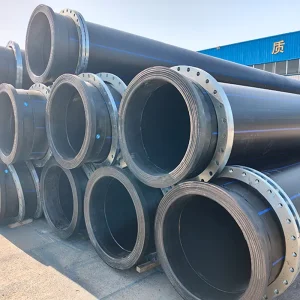
Municipal & Industrial Pipeline for Osaka Coastal Effluent
Explore Product
Industrial-Grade Fluid Transfer Pipeline for Osaka Harbor Works
Explore Product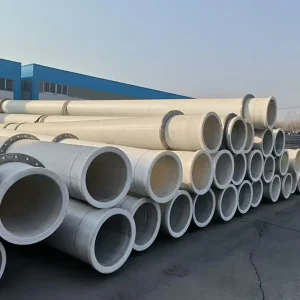
Industrial-Strength Material Transport Pipeline for Kansai Dredgers
Explore Product
Robust Heavy-Slurry Transport Pipeline for Osaka Reclamations
Explore Product
ODM Polyethylene Pipe Floats for Osaka Marine Flotation Lines
Explore Product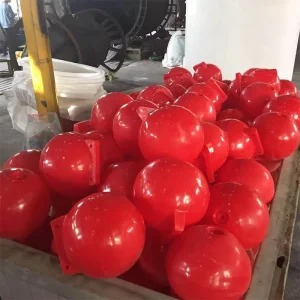
PE Float Balls & Markers for Osaka Commercial Waterway Safety
Explore Product
Foam-Filled Mooring Buoys for Osaka Port Anchorage Berths
Explore Product
Polyethylene Harbor Buoys for Sakai-Senboku Fairway Safety
Explore ProductFrequently Asked Questions (FAQ) for Osaka Procurement Teams
Detailed technical, compliance, and logistical clarifications for engineering contractors.
What are the lead times and shipping logistics from your Chinese factory to Osaka Port?
Because our facility is located in Binzhou, Shandong, we operate in close proximity to Qingdao and Tianjin ports. Direct ocean transit times from Qingdao to the Port of Osaka are typically only 2 to 4 days. Standard stock pipelines and float shells ship within 7 to 10 days of order confirmation, while custom-extruded high-SDR orders require 15 to 20 days production time. We support CFR, CIF Osaka, and DDP project sites across the Kansai region.
How do your dredging pipelines withstand the abrasive sands typical of Osaka Bay seabed desilting?
Our pipelines are produced exclusively with high-molecular-weight virgin PE100 or PE100-RC resin. In slurry abrasion testing under ASTM G75 and DIN 16968 standards, high-density polyethylene exhibits wear rates roughly 4 to 6 times lower than conventional carbon steel pipe when conveying abrasive quartz silt, gravel, and sea slurry. Furthermore, the glassy internal wall (Hazen-Williams coefficient C=150) reduces boundary frictional loss, lowering pumping head energy costs.
Can your float modules and pipelines withstand typhoon wave conditions in western Japan?
Yes. Our rotomolded polyethylene float shells are compounded with UV stabilizers (UV8/UV12) and marine-grade anti-aging agents. The internal cavity is filled with high-density polyurethane closed-cell foam (35–45 kg/m³) that maintains structural buoyancy even if the outer shell suffers an accidental collision. The float assemblies are secured via stainless steel (SUS316) or marine-galvanized fast-locking bolts with lock nuts, resisting torsional twist during storm surges and typhoon-driven wave loading.
What quality certifications and documentation are provided for Japanese civil works compliance?
We provide full traceable QA/QC documentation matching international standards. Every delivery includes raw material melt-flow rate (MFR) tests, carbon black content verification (2.0–2.5%), hydrostatic pressure test reports, and EN 10204 3.1 inspection certificates. We routinely accommodate third-party factory audits by agencies such as Lloyd's Register, DNV, SGS, or Japanese engineering surveyor delegates.
How does your engineering team calculate pipe flotation for varied slurry densities?
Our technical support team models the operational fluid dynamics by analyzing your dredge pump output, maximum discharge pressure, dry pipe weight, flange weight, and peak slurry gravity (typically 1.3 to 1.7 t/m³ in Osaka harbor works). We then select float sizes and spacing intervals that maintain a 25% to 30% buoyancy reserve over gross operating mass, ensuring stable waterline tracking without localized sub-surface sagging.