
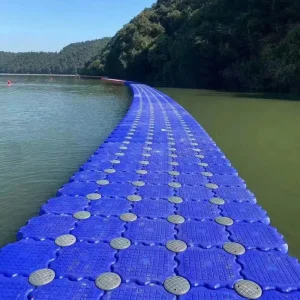
Modular Pontoon
Explore Technical Specs
Precision-manufactured high-density polyethylene pontoon units designed for instant modular assembly, high-load vessel berthing, and rigorous hydro-structural operations across Mexico City water basins.
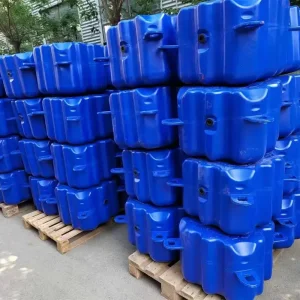
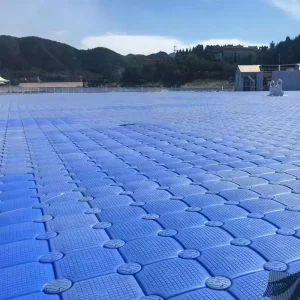

The metropolitan territory of Mexico City (CDMX) and the wider Valley of Mexico basin present distinct hydraulic, geological, and climatic parameters rarely encountered in standard marine engineering. Situated at an altitude of approximately 2,240 meters (7,350 feet) above sea level, installations here face exceptional atmospheric solar irradiance, high UV exposure, volcanic silt lacustrine soil foundations, and complex seasonal precipitation shifts.
Traditional floating dock infrastructures constructed from timber, treated wood, structural steel, or cast concrete suffer rapid structural degradation in this environment. Steel pontoons corrode aggressively when exposed to varying dissolved oxygen and organic acid levels in closed drainage basins, while wood swells, harbors biological fungi, and requires toxic chemical treatments that violate strict Mexican ecological standards set by SEMARNAT (Secretaría de Medio Ambiente y Recursos Naturales).
At 2,240m altitude, UV-A and UV-B index values in CDMX regularly peak at 11+. Standard polymers crack via photodegradation within 24 months. Our virgin rotomolded pontoons integrate compounding UV8+ stabilizers to guarantee a 15-to-20 year active lifespan without polymer embrittlement.
The historic Lake Texcoco basin experiences differential ground subsidence up to 30 cm annually. Fixed pilings fail under soil shear stress. Modular floating pontoons dynamically float on the fluctuating water column, remaining 100% operational regardless of subterranean sinking.
Ecological conservation zones like Xochimilco demand 100% food-grade, non-leaching components. Our high-density polyethylene pontoon modules release zero microplastics, phthalates, or chemical plasticizers, preserving native axolotl aquatic ecosystems.
From historic canals to massive civil stormwater holding reservoirs and weekend nautical tourism, our pontoon solutions are specifically configured for regional Mexican operational demands.
Replacing deteriorating timber piers along tourist embarkation hubs (*Embarcaderos* like Nativitas, Cuemanco, and Fernando Celada). Interlocking HDPE pontoons allow safe tourist boarding onto traditional *trajinera* flatboats, eliminating slip-and-fall hazards through slip-resistant textured surfaces.
In industrial manufacturing clusters across Naucalpan, Tlalnepantla, and Toluca, factories utilize large industrial wastewater and aeration lagoons. Our pontoons act as structural floating walkways, carrying submersible aerators, flow meters, and inspection walkways resistant to aggressive pH fluids.
Located just outside CDMX, Lake Valle de Bravo serves as the premium sailing and motor yacht sanctuary. Severe water level fluctuations (up to 12 meters between dry and wet seasons) render fixed docks unusable. Modular floating pontoon fingers rise and fall effortlessly with reservoir depth changes.
By cutting out intermediary trading companies, enterprise buyers in Mexico City access direct OEM/ODM rotational moulding engineering, verified tensile certifications, and customized volume discounts.
Our state-of-the-art rotational molding machines with computerized multi-zone thermocontrol bake seamless, one-piece polyethylene shells. With zero weld lines, glue bonds, or structural seams, catastrophic water intrusion is mechanically eliminated.
For demanding commercial berthing where vessels exert dynamic kinetic impact, our pontoons can be pressurized with high-density, fire-retardant closed-cell expanded polystyrene (EPS). Even if punctured by sharp debris, the float remains buoyant and unsinkable.
Direct factory sourcing from Binzhou, Shandong provides immediate capital expenditure savings over US or European imported pontoon blocks. Lower unit costs allow Mexican municipalities and private marina operators to expand platform square footage within budget.
| Performance Parameter | Juhua HDPE Modular Pontoons | Structural Steel Pontoon Tanks | Timber / Wood Float Docks | Pre-cast Concrete Caissons |
|---|---|---|---|---|
| Corrosion & Chemical Resistance | Total Immunity (pH 2 - 12) | Severe Rusting in stagnant water | Rotting, Termites, Algal Decay | Spalling & Chemical Micro-fissures |
| Dynamic Buoyancy Capacity | 350 - 380 kg/m² | High (Risk of abrupt flooding) | Low (Rapid water saturation) | Extremely Heavy Deadweight |
| Installation Complexity | Manual Rapid Pin-Lock (No Crane) | Heavy Cranes & Marine Welding | Carpentry & Fastener Drilling | Barge Cranes & Tugboat Towing |
| Maintenance Overhead | Zero Upkeep (Washdown only) | Annual Sandblasting & Epoxies | Bi-annual Board Replacements | Underwater Ultrasonic Inspection |
| Environmental Safety | 100% Recyclable, Non-toxic | Heavy Metal Paint Runoff | Creosote / Chemical Leaching | High Carbon Embedded Footprint |
Under-dimensioning buoyancy is the leading cause of floating dock failure during emergency crowd loadings or storm surges. Our marine engineering team applies the following foundational formula for every custom platform:
Total Net Buoyancy (B_total) ≥ (W_dead + W_live + W_wind_dynamic) × Safety Factor (1.30 - 1.45)
Four-corner interlocking lugs withstand multidirectional shear forces up to 2,000 kgf. Lug pins made of solid, UV-treated POM or reinforced HDPE prevent separation even during heavy lake swells.
For lakes like Valle de Bravo where pile-driving into bedrock is prohibited, submerged concrete sinkers (deadweight anchors) connected via self-tensioning elastomeric mooring tethers keep platforms firmly positioned without swaying.
In urban stormwater containment canals with fixed vertical quay walls, roller pile guides hold the pontoon platform along vertical H-beams, allowing effortless vertical excursion during torrential summer downpours.
Navigating trans-Pacific supply chains requires proven logistics execution. We optimize every step to ensure swift customs clearance at Mexican maritime ports and bonded transport into Central Mexico.
Client submits site bathymetry, shoreline geometry, and boat size profiles. Juhua engineers produce 2D layout drawings and 3D FEA stress simulations within 48 hours.
Automated cycle molding using 100% virgin Sinopec/Sabic polymer resin. Ultrasonic thickness tests, drop impact tests at -20°C, and pressure hydro-testing for leak verification.
Pontoons are nested to maximize 40ft High Cube (40'HQ) container space (holding up to 240-280 standard modular pontoons), drastically slashing sea-freight cost per cubic meter.
Direct sailing to Port of Manzanillo (Pacific) or Port of Veracruz (Gulf). Seamless bonded highway or rail container transfer directly to Mexico City warehouses.
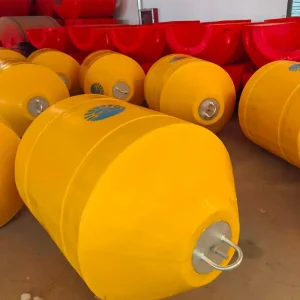
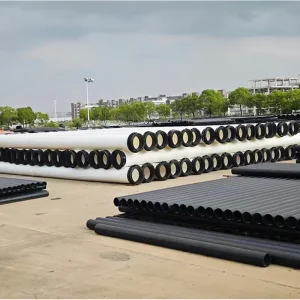
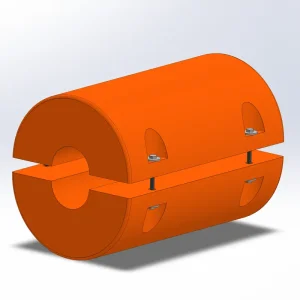
Supplementing modular boat pontoons with matched offshore mooring buoys, dredging pipeline floats, and heavy-duty water transfer infrastructure for holistic environmental engineering.
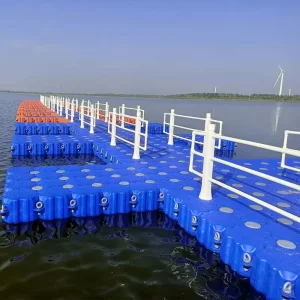

Clear engineering clarifications addressing high-altitude operations, anchoring mechanics, container packing, and customs tariffs for Mexican buyers.
Mexico City's 2,240m elevation exposes outdoor polymers to significantly heightened ultraviolet flux. Standard commercial plastic becomes brittle within two seasons due to free radical photo-oxidation. Juhua dry-blends high-molecular-weight hindered amine light stabilizers (HALS) and premium carbon black/pigment packages at the raw compounding phase (UV8+ rating). This locks polymer chain integrity, allowing our pontoons to withstand decades in high-altitude conditions without crazing, bleaching, or micro-cracking.
A standard single-layer installation utilizing 500x500x400mm modular cubes provides approximately 350 kg to 380 kg of buoyant payload per square meter when fully submerged, with a recommended continuous operating load of 180 kg to 200 kg/m² to preserve an optimal dry freeboard of ~200mm. For industrial pump stations or vehicle gangways, pontoons can be double-stacked or fitted with internal steel bracing trusses to support live loads exceeding 750 kg/m².
Yes. Our floating pontoons are manufactured exclusively using virgin food-contact grade High-Density Polyethylene (HDPE 100). They contain zero heavy metal catalysts, zero halogenated fire retardants, and zero volatile plasticizers. Because polyethylene is chemically inert, it does not leach chemicals into freshwater reserves, making it fully compliant with SEMARNAT environmental protection regulations and UNESCO conservation guidelines in the canals of southern Mexico City.
In locations subject to severe seasonal reservoir swings (such as Valle de Bravo or municipal flood basins like Lake Texcoco), we recommend an engineered elastic mooring system (e.g., elastomeric tethers) or telescoping guide sleeves attached to vertical steel H-piles. Elastic lines elongate dynamically with the ascending water column while dampening wave action, preserving the dock's geographical coordinates without manual adjustment.
From our factory in Shandong, China, standard production lead time for a 40ft HQ container (approx. 240 units) is 10 to 14 days. Ocean carriage from Qingdao Port to the Port of Manzanillo, Colima typically takes 18 to 22 days. Customs brokerage and bonded intermodal truck or rail transfer to Mexico City takes an additional 3 to 5 business days, delivering complete platforms in under 40 days door-to-door.
Yes. Juhua operates precision CNC-machined aluminum production molds. Every float body, interlocking lug, central locking pin, side fixing nut, and pontoon cleat is engineered to strict standard tolerances. Additional modules ordered years later will lock into your existing marina platform without dimensional mismatch or binding.
Whether you require a municipal canal pier in Xochimilco, an industrial lagoon aeration platform in Toluca, or a private yacht club marina in Valle de Bravo, our engineering team provides complete buoyancy calculations, layout drawings, and direct factory pricing within 24 hours.