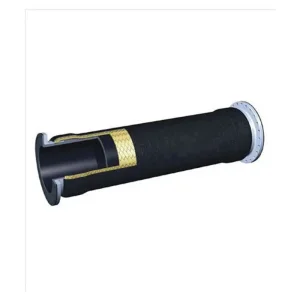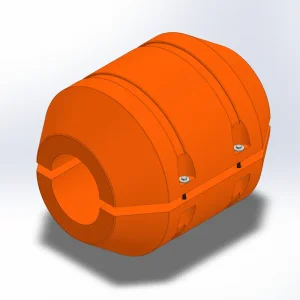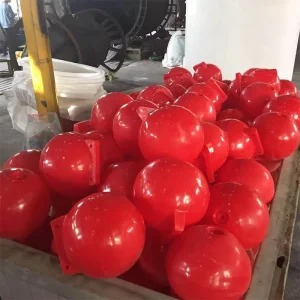
Primary Engineered Modules
Featured Industrial Pipeline & Buoy Solutions
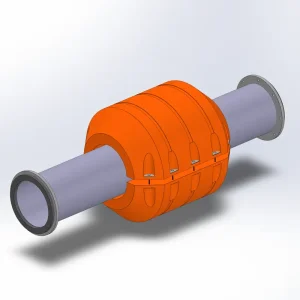
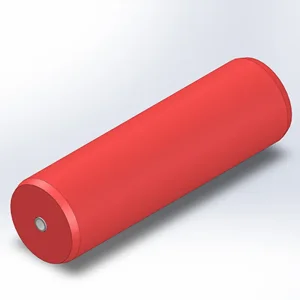
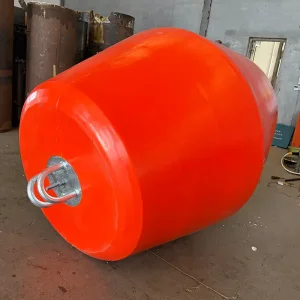
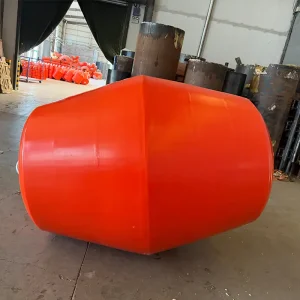
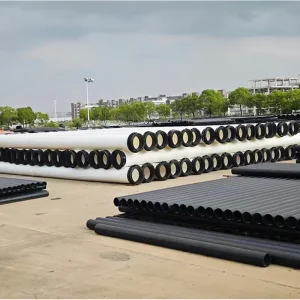
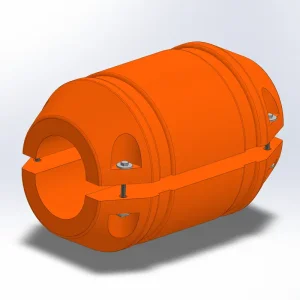
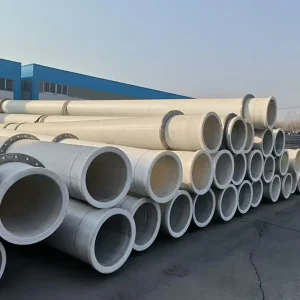
Rotomolded UV-stabilized virgin PE buoyancy shells and industrial transfer systems tailored to specific pipeline outside diameters and extreme slurry loads.

20+ Years
Engineering Manufacturing
80+ Nations
Global Deployment Footprint
100% Closed
Non-Absorbent PU Core
ISO & IALA
Compliant Offshore Shells
Technical Whitepaper
Industrial Macro Buoy Size Sizing & Hydrodynamic Modeling
Navigating the hydrodynamic challenges of hydraulic slurries, open-sea currents, and long-baseline discharge stability through calibrated displacement algorithms.
The Engineering Principle of Buoyancy Sizing (Net Displacement Algorithm)
In offshore infrastructure design, a critical operational vulnerability is under-calculating buoyant reserve factors. Standard static water calculations fail when dredging pipelines transport concentrated hyper-dense solids (tailings or sea sand with densities reaching 1.3 t/m³ to 1.8 t/m³). To prevent pipeline dipping, flex fatigue, or complete submersion during pump restarts, the sizing methodology must satisfy the following dynamic baseline:
Total Reserve Buoyancy (B_total) ≥ [Mass_pipe + Mass_conveyed_medium(Density_max) + Mass_joint_hardware + Mass_cable_auxiliary] × SF (1.25 to 1.35)
By enforcing an engineered safety factor (SF) between 1.25 and 1.35, the floating line maintains an optimal waterline at roughly 25% to 30% pipe diameter above surface, mitigating drag coefficients caused by cresting swells and avoiding torsional fracture at the flexible coupling zones.
| Nominal Pipe OD (mm) | Outer Float Diameter (mm) | Length Per Pair (mm) | Wall Thickness (PE Shell) | Net Buoyancy Rating (kg) | Recommended Industrial Applications |
|---|---|---|---|---|---|
| OD 110 - 160 mm | 500 mm | 800 mm | 6 - 8 mm | 120 - 180 kg | Municipal / Bypass Intake |
| OD 200 - 250 mm | 700 mm | 1000 mm | 8 - 10 mm | 280 - 420 kg | River Maintenance Desilting |
| OD 315 - 400 mm | 900 - 1100 mm | 1200 - 1500 mm | 9 - 12 mm | 650 - 1100 kg | Harbor Deepening & Mining |
| OD 500 - 630 mm | 1300 - 1500 mm | 1800 - 2000 mm | 12 - 15 mm | 1800 - 3200 kg | Heavy Offshore Reclamation |
| OD 710 - 900+ mm | 1800 - 2200 mm | 2200 - 2600 mm | 15 - 18 mm | 4500 - 8000+ kg | Mega Dredge Cutter Suction |
Industrial Landscape
Global Commercial Landscape & Regulatory Compliance
Shifting from legacy steel drums to rotational molded polymer matrices compliant with international environmental and maritime standards.
Elimination of Marine Rust & Flaking
Traditional fabricated steel buoys suffer from galvanic corroding, weld fatigue, and bio-fouling spallation. Modern maritime regulations strictly favor closed-cell rotational polyethylene shells that exhibit 100% resistance to hypersaline degradation and petroleum distillate exposures.
IALA Navigational Colorfastness
For marker buoys and fairway demarcation float units, UV stabilizers (UV8 to UV15 ratings) blended directly into the virgin resin ensure long-term chromatic fidelity matching IALA (International Association of Marine Aids to Navigation and Lighthouse Authorities) chromaticity boundaries without repainting.
Non-Absorbent Closed-Cell Foam Core
Filled with high-density polyurethane (PU) rigid foam (35–45 kg/m³ density). In the catastrophic event that the external shell suffers direct collision abrasion or rupture from workboat propellers, the cross-linked foam barrier limits moisture ingress to negligible rates, eliminating risk of sudden sinking.
Engineered Deployments
Localized Application Scenarios & Operational Stress
Customized hydrodynamic geometry configured for differing shear tensions, wave energy envelopes, and sediment loads.
High-Energy Open-Sea Reclamation
Offshore sand extraction lines undergo violent pitch-and-roll movements. Our pipe floats incorporate internal rib patterns that grab the pipe firmly without slipping, redistributing axial wave stresses across the whole joint assemble.
Mining Tailings & Corrosive Slurry
Mineral extraction circuits frequently pump acid-leached or abrasive solid-liquid slurries across settling lagoons. Virgin rotomolded PE jackets resist pH fluctuations from 1.0 to 14.0 while preserving uninterrupted float lines.
Cable Trough Subsea Tie-Ins
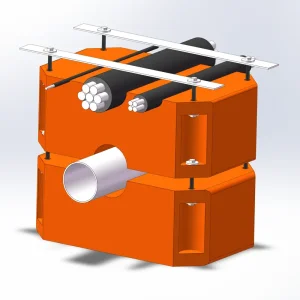
Floating lines requiring simultaneous electrical transmission lines or subsea umbilical cables utilize our patented cable-trough floats, separating physical power feeds from abrasive pipe friction.
Hydroelectric Debris Boom Barriers
Dam turbine intakes demand floating trash barrier buoys capable of intercepting tons of drifting timber and debris. High impact strength (toughness exceeding 20 kJ/m²) halts debris before mechanical damage occurs.
Roadmap & Innovation
Technological Roadmap: The Future of Smart Marine Flotation
Next-generation sensorized buoys, eco-neutral polymer compounding, and automated CNC rotational casting.
IoT Strain & Submersion Monitoring
Integrating low-power IoT inclination sensors and ultrasonic draft sensors into buoy assemblies allows remote SCADA monitoring, warning operations teams of pipeline settling or dredging line clogs in real time.
Bio-Circular Resins & Recyclability
Developing multi-layer co-extrusion and rotational molding with virgin outer barriers and closed-loop post-industrial recycled PE core walls, targeting complete circular lifecycle sustainability across offshore installations.
Automated High-Precision Thermography
Continuous computerized thermal sensing inside rotational ovens guarantees zero resin hotspots and uniform polymer cross-linking, eliminating micro-pinholes and weak corner radii throughout production.
Engineering Knowledge Base
Frequently Asked Technical Questions
Expert guidance on pipeline buoy sizing, hydrodynamic balance, factory warranties, and field deployment.
What is the standard sizing rule for dredge discharge pipeline floats?
The total buoyancy provided must comfortably exceed the aggregate weight of the pipe, connectors, and full slurry load. A reserve buoyancy factor of 20% to 30% is mandatory so approximately 25% of the pipe remains above the water surface to resist lateral wave-drag action.
Why use rotational molded polyethylene over welded steel buoys?
Polyethylene cannot rust, peel, or suffer from electrolytic corrosion in saltwater. PE shells also offer superior elastic impact deformation during workboat collisions, reverting to shape without crushing or splitting.
What is the standard commercial warranty period for factory equipment?
Our standard commercial warranty coverage commences upon handover to the investor and lasts 18 months from that handover date, or 12 months after the completed installation date, whichever milestone is reached first.
Can buoy sizing and fastener holes be customized for unusual pipe diameters?
Yes. While standard dies cover OD 110mm through OD 1200mm, bespoke inner diameters, anti-slip clamping ribs, stainless steel fasteners (AISI 304/316), and integral cable ducts can be fabricated to custom CAD/CAM drawings.
What data must engineers provide for a formal buoyancy proposal?
Essential inputs include pipe outer diameter (OD), wall thickness, pipe base material (HDPE, steel, or rubber hose), conveyed slurry specific gravity (density), current speed, wave height, and required freeboard elevation.
How does polyurethane foam filling perform if the outer shell is punctured?
We use high-density rigid closed-cell polyurethane foam with greater than 90% closed-cell structure. Even if punctured by sharp ocean debris or hull impacts, water cannot easily infiltrate the core, keeping the line safely afloat.
Complete System Catalog
Offshore Mooring, Pipeline & Subsea Flotation Series
Explore heavy-duty mooring units, subsea positioning floats, and sediment pipelines engineered for demanding maritime environments.