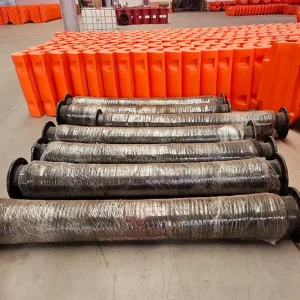
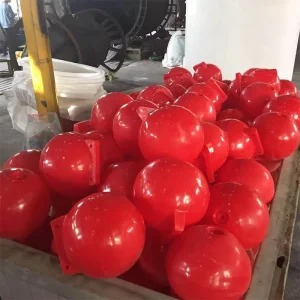
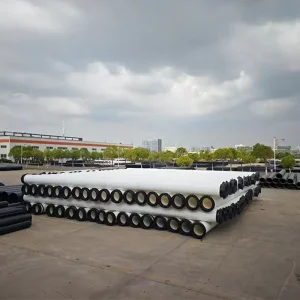
High-Performance Marine & Pipeline Buoy Systems
Explore field-tested rotationally molded polyethylene mooring buoys, dredging pipe float units, and offshore flotation modules engineered for severe water dynamics.
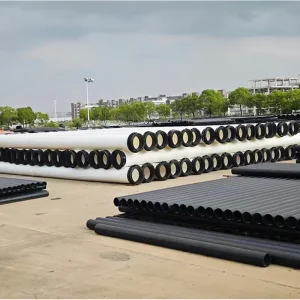


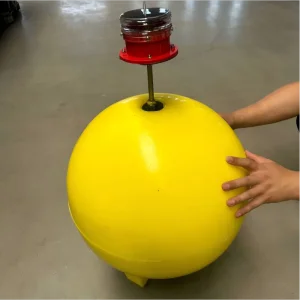


Global Enterprise Procurement Dynamics for Dock & Mooring Buoys
A strategic overview of operational hazards, life-cycle costs, and total cost of ownership (TCO) in maritime infrastructure projects.
Material Degradation Risks
Traditional steel dock buoys experience catastrophic cathodic failure, wall thinning, and ballast loss within 3-5 years under high-salinity conditions. Transitioning to virgin UV8-grade rotational molded high-density polyethylene eliminates corrosion risks, slashing dry-dock maintenance downtime across commercial terminals.
Hydrodynamic Kinetic Loading
Docks, floating pontoon assemblies, and moored vessels subject buoys to dynamic cyclic torsion and extreme surge forces. Modern procurement specifications dictate finite element analysis (FEA) testing for tensile strength, internal closed-cell polyurethane foam cores, and integral galvanised steel load-spreading ribs.
Total Life-Cycle Economy
While initial acquisition cost often dominates tender assessments, operational data demonstrates that self-pigmented polyethylene hulls filled with non-hygroscopic EPS or PU foam reduce lifecycle capital expenditure by up to 64% compared to recoating and refurbishing steel or composite hulls.
Buoyancy Calculation & Mooring System Sizing
Deploying dock buoys, mooring units, or pipeline floats requires precise load-bearing margins rather than rough estimates.
Primary Buoyancy Formula for Marine Pipeline & Mooring Anchors
Standard engineering practice mandates calculating positive reserve buoyancy based on maximum hydrodynamic stress, ballast drag, and pipeline slurry saturation:
Maintain minimum 25% to 33% buoy profile above the baseline waterline under continuous dynamic mooring tension.
For slurry operations, base calculations on ρ = 1.3 to 1.6 t/m³ rather than clear seawater (ρ = 1.025 t/m³).
Integrate current speed and tidal amplitude coefficients to prevent buoy submergence and vortex shedding.
Future Outlook: Smart Buoys & Sustainable Infrastructure
Evolutionary shift from passive floating markers to intelligent maritime sensor nodes and bio-compatible polymer matrixes.
Phase 1: Advanced Rotomolding with Multi-Layer Co-Extrusion
Integration of anti-fouling outer shell coats that eliminate biocide leaching, paired with ultra-high molecular weight polyethylene (UHMWPE) wear liners designed for abrasive slurry transfer and docking rubbing strips.
Phase 2: Embedded IoT & Autonomous Telemetry Navigation
Integration of solar-powered LED telemetry, integrated AIS (Automatic Identification System) transponders, load sensors in central mooring rods, and low-power satellite communication (NB-IoT) for real-time mooring stress monitoring.
Phase 3: 100% Circular Marine Grade Polymers
Development and global deployment of fully recyclable closed-loop polymers matching ISO and IALA recommendations, ensuring marine hardware leaves zero microplastic footprint upon decommission.
International Regulatory Compliance & Factory QA Standards
Engineered to satisfy demanding marine engineering requirements across civil, military, and commercial port authorities.
IALA Conformity
Buoy chromaticity coordinates and optical geometry rigorously engineered to match International Association of Marine Aids to Navigation guidelines for visual signaling clarity.
ISO 9001 Certified
Factory process control utilizing automated infrared temperature scanning and rotational cycle logging to ensure uniform wall thickness without residual internal cooling stresses.
Hydrostatic Testing
Rigid closed-cell polyurethane foam injection provides 100% non-sinkable characteristics even if outer structural polyethylene wall undergoes accidental external puncture.
Full Traceability
Batch-coded raw virgin resins with third-party melt flow index (MFI) and Charpy impact resistance verification reports included in export shipping manifests.
Frequently Asked Questions on Dock Buoys & Marine Flotation
Direct engineering answers to technical queries, material specifications, and purchasing logistics.
Full Spectrum Flotation, Hoses & Tie-In Infrastructure
Explore high-density pipelines, specialized cable-trough floats, and modular heavy-duty marine hardware manufactured to global standards.