
High-Integrity Marine Flotation Modules
Explore our industrial rotomolded dock pontoon floats, offshore mooring devices, and integrated slurry discharge solutions designed for global turnkey deployments.
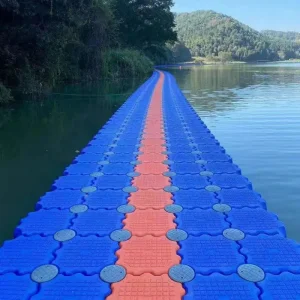
Custom Innovative Floating Boat Pontoon for Versatile Water Platforms
View Product Specs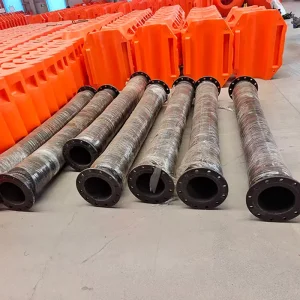
Custom Flexible Rubber Hoses for Advanced Fluid and Sediment Transport
Request Technical Quote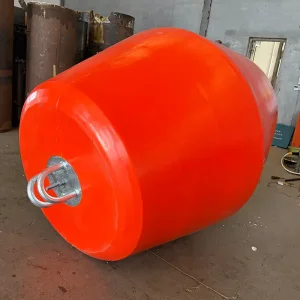
Best Offshore Mooring Buoy for Secure Vessel Anchoring Systems
Examine Engineering Specs
ODM Pipe Floats With Cable Troughs - Reliable Buoyancy & Cable Shielding
View Factory Options
ODM Mooring Buoy for Marina Berths & Offshore Anchorage Modules
Consult Manufacturer
ODM Durable Cable-Integrated Pipe Floats for Submerged Utility Lines
View Sizing Matrix
Custom High-Performance Marine Buoys for Navigable Inland Waterways
Request Price Schedule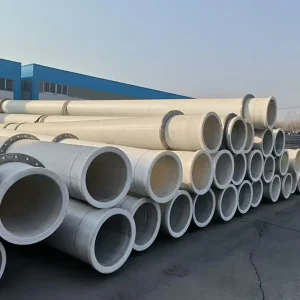
ODM Industrial-Strength Pipeline for Heavy Sediment & Slurry Transport
Inquire Pipeline RatesEngineering Buoyancy: Physics, Polymers & Hydrodynamics
In harsh open-sea and abrasive industrial settings, selecting the best dock floats company requires rigorous evaluation of polymer density, environmental stress cracking, and dynamic freeboard parameters.
Polymer Morphology & ESCR
We synthesize linear low-density polyethylene (LLDPE) blended with specialized UV-20 stabilizers. This architectural polymer matrix delivers exceptional Environmental Stress Crack Resistance (ESCR > 1,000 hrs according to ASTM D1693), eliminating embrittlement induced by intense solar radiation and aggressive saline exposure.
Closed-Cell Polyurethane Foaming
Every structural dock float is infused with high-pressure, water-resistant polyurethane (PU) or expanded polystyrene (EPS) core with a density exceeding 16–20 kg/m³. Even in the catastrophic event of an outer shell rupture caused by vessel collision, the float exhibits negligible water absorption (< 3% vol), preventing loss of buoyancy.
Hydrodynamic Resistance & Sizing
The total required displacement capacity is systematically calculated using our standard formulation: Total Reserve Buoyancy ≥ (Dead Weight of Infrastructure + Peak Live Load + Hydrodynamic Wave Surcharge) × 1.25. This ensures that roughly 25% to 30% of total float height remains as stable freeboard even under full payload conditions.
| Float Class | Wall Thickness (mm) | Core Infill Matrix | Target S.G. Rating | Standard Yield Load (kN) | Typical Operational Longevity |
|---|---|---|---|---|---|
| Commercial Marina Heavy Floats | 8.0 – 12.0 mm LLDPE | Closed-Cell EPS (18 kg/m³) | 1.025 (Ocean Marine) | ≥ 45 kN | 25+ Years Maintenance-Free |
| Mining & Slurry Pipe Floats | 12.0 – 18.0 mm HDPE | PU Foam High-Rigidity Core | 1.350 (Heavy Slurry Density) | ≥ 75 kN | 15+ Years Abrasive Slurry Duty |
| Modular Work Platform Pontoons | 7.0 – 9.5 mm Virgin PE | Pressurized Nitrogen / Air or Foam | 1.000 (Fresh / Brackish) | ≥ 35 kN | 20+ Years Continuous Service |
Why Sourcing Dock Floats from Our Chinese Factory Outperforms Global Alternatives
Our manufacturing complex in Binzhou, Shandong leverages direct access to the world's most dense petrochemical and precision tooling cluster, delivering unmatched scale, cost efficiency, and technical responsiveness.
Automated Multi-Axis CNC Rotomolding
Unlike small regional workshops relying on open-flame artisanal molding, our factory utilizes computer-controlled, multi-arm rotational carousels with precise infrared thermography. This maintains shell wall thickness deviations below ±0.4mm, eradicating stress-concentration thin spots.
Polymer Chemical Supply Integration
Positioned close to premier petroleum refining and polymer compounding facilities, we secure virgin high-grade polyethylene resins without intermediate markups. This ensures 100% trace-documented virgin materials, strictly free from degraded post-consumer filler.
Rapid In-House Aluminum Tooling
We operate an internal CNC tooling division that fabricates custom cast-aluminum and CNC steel molds in as little as 10 to 14 days. International EPC clients enjoy complete design freedom for custom flange attachments, bolt pockets, and conduits at negligible prototype costs.
The Evolution of Marine Flotation: 2025 to 2035 Trends
The global dock float industry is undergoing transformative structural shifts driven by oceanic renewable power, smart monitoring integration, and stringent decarbonization mandates.
Offshore Floating Solar (FPV) Expansion
Global decarbonization is propelling massive investments into Floating Photovoltaic (FPV) reservoirs and coastal arrays. Modern dock floats are transitioning to low-profile, modular aerodynamic designs specifically structured to stabilize solar PV racking against extreme tidal and cyclonic winds.
IoT-Enabled Autonomous Telemetry Buoys
The convergence of satellite LoRaWAN, solar micro-cells, and rotomolded hulls has created the smart buoy era. Our new product iterations incorporate internal sealed chambers for tide level, water salinity, dissolved oxygen sensors, and LED visual aids directly into navigation aids.
Bio-Compatible & Recyclable Polymers
Stringent marine environmental mandates (such as IMO MARPOL frameworks) are phasing out degrading expanded polystyrene beads that break down into microplastics. We spearhead the transition to 100% circular, single-origin LLDPE shells with cross-linked recyclable polyurethane cores.
Localized Engineering Applications & Case Scenarios
From shallow river silt removal to high-energy open-ocean berthing, dock floats and marine flotation systems are mission-critical components across vital global infrastructure.
Commercial Marinas & Yacht Berthing
Engineered with recessed heavy-duty galvanized bolt pockets to form continuous, non-rocking walkway networks. Resistant to marine borers, motor fuels, and severe tidal changes without rot or degradation.
Capital Port & Channel Dredging
Equipped with internal alignment ribs and heavy-duty steel connecting fasteners. Clamps securely over HDPE and steel pipelines, eliminating pipe slippage during continuous sand slurry transport.
Tailing Ponds & Mineral Slurry Lines
Engineered to handle elevated specific gravities (> 1.40) and acidic or alkaline mining tailings. Provides the necessary reserve buoyancy to keep discharge cables and pumps suspended and operational.
Reservoir Floating Barriers & Trash Booms
Modular floating barriers that block invasive aquatic vegetation, floating debris, and surface silt from entering hydroelectric turbine intakes and municipal drinking water pumping stations.
Subsea Cable & Pipe Tie-In Floating
Staged buoyancy modules engineered for offshore umbilical line positioning. Offers controlled hydrostatic displacement during submerged trenching and seabed landing operations.
Deep-Sea Fish Farming & Renewable Offshore Hubs
Reinforced modular floats designed to absorb dynamic cyclical wave action. Serves as reliable foundation pontoons for automated feeding stations and coastal perimeter security.
The Global Buyer's RFP Blueprint for Industrial Marine Floats
A rigorous quality and compliance framework designed for EPC procurement managers, marine civil engineers, and international port authorities.
Wall Thickness Verification Protocol
Procurement teams should mandate calibrated ultrasonic thickness testing across at least 8 distinct points on each float, specifically at mold parting lines and corner radiuses, to ensure full compliance with specified wall ratings (typically 8mm to 16mm).
Hydrostatic Pressure & Absorption Testing
Demand documented 72-hour hydrostatic submersion testing per ASTM D2842. Standard compliance requires water absorption strictly below 3% by volume, ensuring the float will maintain long-term buoyancy integrity under continuous tidal immersion.
Container Nesting & Freight Optimization
Given the low density-to-volume ratio of flotation gear, freight costs can dominate procurement budgets. Our factory incorporates modular split-half nesting architectures, multiplying 40ft High Cube container volumetric load factor by up to 2.8×.
Frequently Asked Questions on Marine Dock Floats & Systems
Direct answers from our senior rotational molding engineers addressing design, installation, sizing, and lifecycle durability.
What is the standard formula for determining pipeline float buoyancy requirements?
Total buoyancy must account for the combined weight of the pipe, full fluid slurry payload, and coupling hardware. Always calculate based on the highest specific gravity of the pumped medium (e.g., slurry at 1.3 to 1.6 S.G. rather than water at 1.0). Use: Buoyancy Required = (Pipe Dry Weight + Maximum Slurry Weight + Fasteners Weight) × 1.25 to 1.30. This guarantees that roughly 25% of the pipe remains above the waterline, minimizing hydrodynamic drag and preventing unexpected submersion.
Why is rotomolded virgin polyethylene superior to steel or fiberglass floats?
Unlike steel, linear low-density polyethylene (LLDPE/HDPE) is chemically inert and completely impervious to saltwater galvanic corrosion, eliminating cathodic protection and recoating costs. Compared to fiberglass, rotomolded PE possesses high ductile elasticity, allowing it to withstand high-energy impacts from workboats and floating debris without fracturing.
How do you safeguard dock floats against extreme sub-zero freeze-thaw cycles?
Our marine floats are compounded with cold-impact modifiers capable of enduring extreme temperatures as low as -40°C without polymer embrittlement. The conical and tapered geometry of our pontoon hulls automatically converts lateral freezing ice expansion pressure into an upward lifting force, preventing the shell from being crushed.
What is the standard warranty coverage and operational life expectancy?
Our standard international engineering warranty spans 18 months from the date of client site handover, or 12 months post-installation commissioning. Due to our virgin resin base and high-grade UV-20 stabilization, the projected functional lifespan in open saltwater operations exceeds 20 to 25 continuous years under standard operating conditions.
Can you provide customized bolt patterns and integrated cable raceways?
Yes. With our internal CNC aluminum mold division, we can design specialized internal channels, top-side cable raceways, reinforced stainless-steel (316L) mounting inserts, and custom dimensional configurations to integrate seamlessly with your project's specific infrastructure requirements.
Comprehensive Product Directory
Review our extended series of specialized offshore buoys, heavy-duty suction/discharge rubber hoses, and modular marine dock pontoons ready for export delivery.
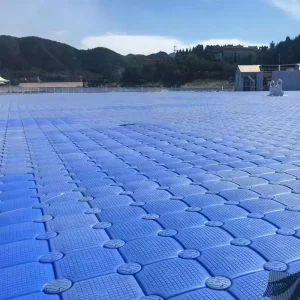
Best High-Performance Floating Boat Pontoon for Modular Water Platforms
Explore Pontoon Details
High-Quality Pipe Floats for Water Transfer, Mining & Marine Pipelines
Request Price Schedule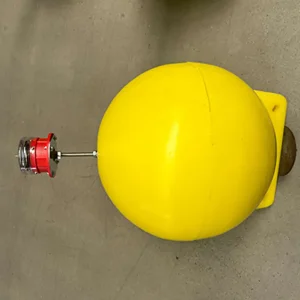
ODM Floating Ball with LED Light – Reliable Marine Navigation & Safety
Inspect Navigation Specs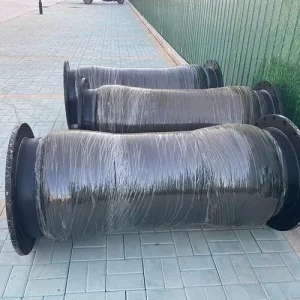
Best Durable Rubber Hoses for Efficient Fluid and Sediment Transport
View Hose Capabilities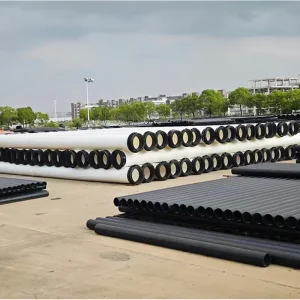
OEM Industrial-Grade Pipeline for Reliable Marine Fluid Transport
Request Factory Quote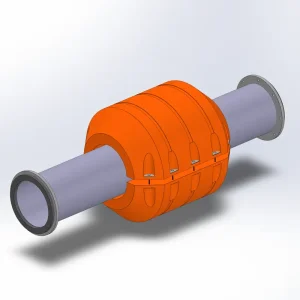
High-Quality Pipeline Float With Modular Buoyancy for Subsea Works
View Tie-In Architecture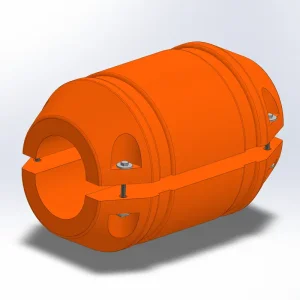
Custom Pipe Floats for Pipeline Stability in Water Transfer Projects
Request Dimensional Sheet
ODM Custom Mooring Buoy for Vessel Berthing, Marina & Anchorage
Check Anchorage RatingsNeed Project-Specific Hydrostatic Sizing?
Connect directly with our marine engineering design desk in Binzhou. Submit your pipeline Outer Diameter (OD), medium density, and wave current parameters for an automated buoyancy calculation and CAD drawing package within 24 hours.