
Precision Engineered Buoyancy & Dredge Floats
Explore our top-tier rotomolded float solutions designed for high abrasive slurry, dynamic wave kinematics, and high-load subsea tie-ins.

OEM Pipe Floats For Reservoir Intake And Temporary Bypass Lines
Request Specs & RFQ ➔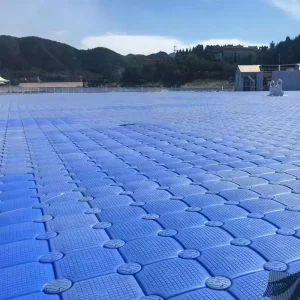
High-Performance Floating Pontoon for Modular Water Platforms
Request Specs & RFQ ➔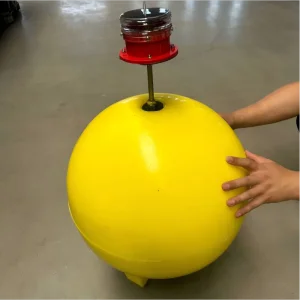
LED-Equipped Floating Ball for Safe & Efficient Operations
Request Specs & RFQ ➔
Pipe Floats for Stable Water Transfer & Marine Pipeline Support
Request Specs & RFQ ➔
ODM Polyethylene Mooring Buoy for Harbors & Floating Facilities
Request Specs & RFQ ➔
OEM Pipeline Float for Floating Systems & Water Transfer
Request Specs & RFQ ➔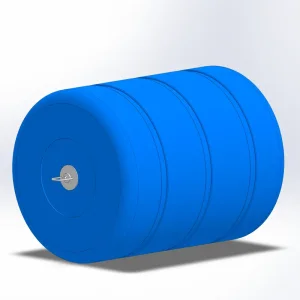
Durable Floating Barriers for Industrial Water Protection
Request Specs & RFQ ➔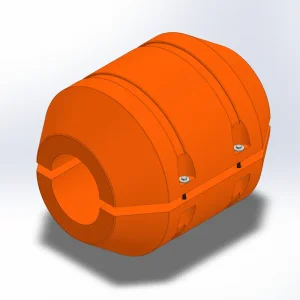
Custom Pipeline Float for Subsea Tie-In & Staged Positioning
Request Specs & RFQ ➔Global Dredging Buoy Procurement Demands & Industry Drivers
Navigating modern sediment transportation, coastal reclamation, and offshore mining through advanced polymer structural integrity.
Port Expansion & Deep-Draft Navigation
As modern container vessels surpass 24,000 TEU capacities, international maritime terminals in Singapore, Rotterdam, and Shanghai demand deeper drafts. Deepening navigational channels involves severe abrasive slurry transport. Global contractors require dredging buoys that withstand persistent hydrodynamic drag, abrasive external contact, and extreme tidal shifts without shell collapse or localized rupture.
Mining Tailings & High-Density Slurry
Tailings transfer pipelines in copper, gold, and iron operations run high specific gravity media (often exceeding 1.6 to 2.0 t/m³). Traditional hollow steel pontoons rust rapidly in acid mine drainage (AMD) or saline lagoons. Procurement demands now mandate closed-cell polyurethane-filled, UV-stabilized Virgin LLDPE floats engineered to resist continuous chemical degradation and catastrophic puncture sinkage.
Coastal Resilience & Land Reclamation
Mega-scale land reclamation across the Middle East, Southeast Asia, and Northern Europe requires continuous multi-kilometer discharge pipelines. Engineering procurement managers focus on long service intervals, thermal creep resistance, and modular interlocking systems that minimize pipe bucking, fatigue-induced flange stress, and erratic operational downtime during rough sea states.
Macro Solutions: Rotomolding Integrity & Buoyancy Sizing
How precision wall-thickness distribution, variable-frequency rotation, and automated thermal metrics prevent pipeline submergence.
Consistent Shell Wall Thickness
Using computer-controlled variable-frequency speed controls and electronic automated temperature measurement, our rotational molding process eliminates thin corners and structural stress concentrations. Every float half features uniform high-impact virgin polyethylene wall geometry (up to 18mm+), ensuring high impact absorption during high-energy wave chop and operational collisions.
Hydrophobic Core Infill
Our buoyancy units are infused with high-density, closed-cell polyurethane foam (≥40-45 kg/m³) with water absorption rates of <1%. If a working outer shell is breached by external collision with rocks or vessel hulls, the core prevents water ingress, preserving essential freeboard and preventing the discharge line from catastrophic sinking.
Tension Clamping & Hardware Stability
Dredging pipelines expand, contract, and flex under internal cyclic pressure pulses. Our buoyancy floats utilize reinforced bolt channels, integrated ribs, and galvanized or 316 stainless-steel marine fasteners. This configuration prevents longitudinal creep along HDPE or steel discharge pipes without localized pipe wall gouging or slippage.
Buoyancy Sizing & Safety Reserve Factor
A common point of operational failure in dredge projects is sizing buoys against clear water instead of maximum density slurry. Floating line design requires calculating wet payload with safety margins against severe dynamic hydraulic surges:
Where SF represents the coastal dynamic safety factor. Sizing guarantees a constant 25% to 30% pipe diameter freeboard visibility above baseline sea state.
- Wet Slurry Density: Evaluated at actual specific gravity (1.3 - 2.1 t/m³)
- Wave-Induced Load Factors: Accommodates pitch, yaw, and surge currents
- Dynamic Bending Stress: Calculated to avoid discharge line fatigue
- Zero Flooding Risk: Closed-cell PU retains 99.2% positive lift if damaged
Technical Roadmap: The Future of Maritime Buoyancy
Leading the transition from static marine floats to intelligent, sensor-monitored, and low-carbon infrastructure assets.
Optimized Rotomolding Polymers
UV15+ compound stabilization, additive thermal anti-oxidants, and automated multi-axis rotational molding machines providing repeatable batch wall thickness and 100% interchangeable spares.
Smart Marine Telemetry
Integration of NB-IoT and LoRaWAN strain sensors within float channels to monitor pipeline bending stress, water ingress warnings, and GPS positioning during severe typhoon conditions.
Self-Powered Nav Buoys
Autonomous multi-spectral LED marine lights integrated with flexible solar thin-films and mini-kinetic ocean wave generators, meeting strict IALA navigational recommendations.
Circular Bio-Polymers
Developing 100% closed-loop recyclable rotomolded polyethylene and bio-based polyurethane expanding agents to meet strict European maritime ESG carbon footprint criteria.
Worldwide Localized Support & Rigorous Regulatory Assurances
Engineered to comply with PIANC guidelines, IALA navigation requirements, and ISO 9001 maritime manufacturing standards.
International Certifications
Every batch of raw PE powder undergoes melt flow index (MFI), environmental stress crack resistance (ESCR ASTM D1693), and tensile yield testing. All mooring buoys and pipeline modules adhere to ISO 9001, ISO 14001, and ISO 45001 manufacturing control protocols.
Export Logistics & Packing Efficiency
Supplying dredging contractors across 80+ countries requires freight optimization. Our pipe float shells nest compactly for 40' High Cube shipping containers, significantly reducing trans-ocean shipping freight per unit volume while maintaining strict dimensional fidelity.
Field Installation & EPC Assistance
From project site calculation of slurry freeboard to bolt-torque torque-spec documentation and rapid on-site replacement dispatch, our technical application engineers eliminate the guesswork for project managers on remote dredging spreads.
Heavy-Duty Mooring, Pontoon & Pipeline Accessories
Certified marine hardware engineered for long-term anchoring, floating platforms, and fluid handling operations.

OEM Foam-Filled Mooring Buoy for Chain-Connected Berths
Request Specs & RFQ ➔
Custom Pipe Floats – Reliable Marine Buoyancy Systems
Request Specs & RFQ ➔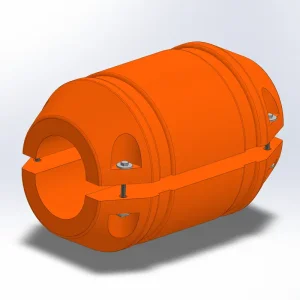
Custom Durable Pipe Floats for Reliable Marine Operations
Request Specs & RFQ ➔
ODM Custom Mooring Buoy for Offshore Anchorage & Berthing
Request Specs & RFQ ➔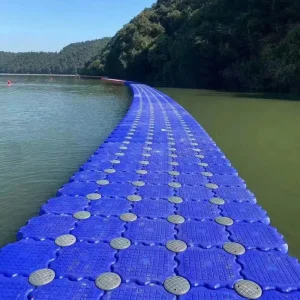
Advanced Floating Pontoon for Modular Water Platforms
Request Specs & RFQ ➔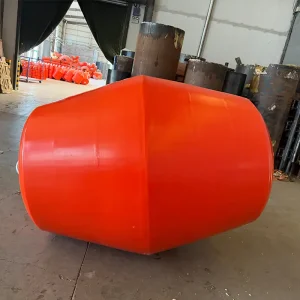
Foam-Filled Polyethylene Mooring Buoy for Marine Anchoring
Request Specs & RFQ ➔
Reliable Floating Barrier Solutions for Water Protection
Request Specs & RFQ ➔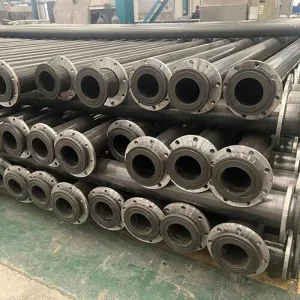
Durable Pipeline for High-Efficiency Slurry & Fluid Transport
Request Specs & RFQ ➔Frequently Asked Questions: Dredging Flotation & Buoy Systems
Direct technical answers addressing installation mechanics, fluid dynamics, polymer resilience, and procurement logistics.
Q: What are pipeline floats and how do they function on active dredge spreads?
Pipeline floats (dredge floats or pipe buoyancy modules) consist of two rotationally molded polyethylene half-shells clamped around steel or HDPE discharge pipes using heavy-duty bolts. They maintain discharge line buoyancy, preserve uniform line alignment across changing tides, minimize dynamic flex fatigue on pipe joints, and ensure high operational visibility to nearby vessel traffic.
Q: How do engineers calculate the exact number of floats required for high-density slurry?
Buoyancy calculations must never rely on empty pipe weight or clean water density. You must sum the total dead weight of the pipe, flange fittings, bolts, and the weight of internal liquid at maximum operating slurry density (e.g., 1.3 to 1.8 t/m³). Total buoyancy provided by the floats should exceed this combined load by a minimum safety factor of 1.25 to 1.30 (25% to 30% reserve buoyancy), leaving roughly one quarter of the pipe diameter above the water surface.
Q: Why is rotomolded polyethylene superior to steel pontoon floats in offshore marine environments?
Polyethylene is chemically inert, eliminates cathodic reaction risks, and never corrodes in aggressive saline or acidic tailings conditions. Unlike steel pontoons which require expensive multi-layer anti-fouling coatings and can sink upon localized hull perforation, our rotomolded PE floats are infused with closed-cell polyurethane foam. Even if breached through heavy rock impact, the hydrophobic core prevents flooding and maintains system lift.
Q: What are the standard warranty terms for EPC contract delivery?
Our standard industrial warranty begins on the date the client hands over the commissioned system to the project investor and extends 18 months from that handover date, or 12 months after the completed installation date, whichever milestone is reached first. All products are backed by ISO-certified quality tracking numbers embedded directly on each molded shell.
Q: What technical parameters must be provided to receive an accurate RFQ and drawing package?
To deliver an engineered buoyancy plan, our application engineers require: (1) Pipe outer diameter (OD) and wall thickness; (2) Pipe material type (HDPE, carbon steel, rubber hose); (3) Slurry specific gravity or slurry density; (4) Total pipeline length; (5) Waterbody dynamics (river flow rate, open ocean wave height, tidal range); and (6) Destination port for shipping optimization.
Q: Can buoyancy modules be tailored for cable troughs, instrumentation conduits, and subsea tie-ins?
Yes. We engineer customized rotomolded solutions including integrated top-molded cable channels for powering subsea booster pumps, molded recessed tie-in lifting lugs for offshore anchor installations, and custom colors compliant with IALA maritime navigation standards (e.g., high-visibility marine yellow, safety orange, red, and green).