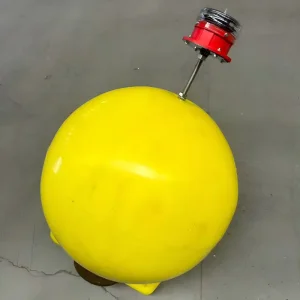
Precision-Moulded Marine Floats & Buoyancy Systems
Engineered for high hydrodynamic stability, structural impact resistance, and seamless pipeline alignment.
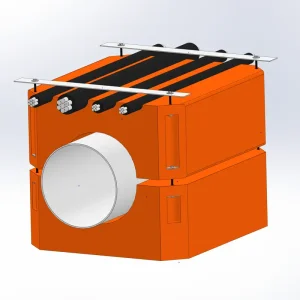
Best Advanced Pipe Floats with Cable Troughs – Reliable Floating Support for Marine and Industrial Pipelines Company, Quotes
Explore Specifications
OEM Innovative Pipeline Float System for Reliable Deepwater Support Companies, Quotes
Explore Specifications
ODM Durable Cable-Integrated Pipe Floats for Submerged Infrastructure Supplier, Manufacturer
Explore Specifications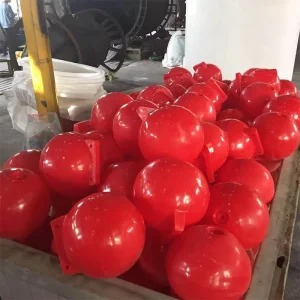
Best PE Float Ball – Durable Buoyancy Solution for Water Projects Products, Quotes
Explore Specifications
Best Reliable Floating Barrier Solutions for Water Protection and Project Control Company, Quotes
Explore Specifications
ODM Mooring Buoy for Secure Vessel Anchoring and Stable Marine Mooring Systems Manufacturers, Manufacturer
Explore Specifications
High-Quality High-Visibility Marine Buoys for Safe Offshore Operations Pricelist, Factory
Explore Specifications
High-Quality Offshore Polyethylene Mooring Buoy – Safe, Durable and Maintenance-Free Floating Mooring System Companies, Factories
Explore SpecificationsMacro-Industrial Landscape of Offshore Flotation
Strategic evolution from rigid corroding steel drums to high-molecular rotomolded polymer architecture in modern maritime projects.
Material Science Paradigm Shift
Global dredging and coastal infrastructure operations have systematically decommissioned traditional fabricated steel pontoon floats. Harsh marine saline electrolytes accelerate electrochemical pitting, leading to sudden buoyancy collapse. Modern Neptune Pipe Floats leverage virgin linear low-density polyethylene (LLDPE) enhanced with UV8 stabilizers, ensuring 30+ years of zero-corrosion underwater life cycles.
OPEX Reduction in Hydraulic Slurry
In high-throughput mining slurry lines and cutter suction dredger (CSD) conduits, fluid dynamics induce heavy pulsing forces. Rotomolded circular and elliptical floats exhibit flexible stress dissipation, absorbing hydrodynamic shocks and preventing excessive bend fatigue along HDPE and steel flange couplings, directly slashing maintenance downtime by up to 43%.
Severe Climate Resilience
From deep freeze operations in Nordic fjords (-35°C) to superheated hypersaline conditions across Middle Eastern desalination canals (+55°C), closed-cell high-density polyurethane (PU) injection provides uncompromised structural integrity without water ingress, even when exterior hulls suffer extreme abrasive mechanical breaches.
Hydrodynamic Buoyancy Reserve & Sizing Protocols
A rigorous mathematical approach prevents premature pipeline submergence during transient high-density slurry transport.
Buoyancy Sizing Formula (Working State)
An empty pipeline buoyancy calculation will trigger catastrophic failures once pumping begins. Proper engineering requires calculating against maximum saturated slurry specific gravity.
Total Net Buoyancy ≥ (W_pipe + W_medium + W_accessories) × K
- W_pipe: Specific dry mass per meter of the carrier pipe (HDPE, steel, or rubber hose).
- W_medium: Slurry load determined by medium density (typically 1.3 to 1.8 t/m³ in reclamation dredging).
- W_accessories: Clamps, hardware, flanges, cables, and accumulated bio-fouling weight.
- Safety Margin (K): Recommended design factor between 1.20 and 1.30.
Target Freeboard Metrics
To counter swell oscillations and windward drag, an assembled pipeline should float with exactly 25% to 30% of its outer diameter proud of the water surface.
Anti-Slip Torque Specification
Inner pipe grip channels are moulded with anti-skid ribs. Hot-dip galvanized or stainless steel 316 fastener kits must be torqued to project shear limits to eliminate axial pipe slippage under turbulent river discharges.
Mission-Critical Application Scenarios
Engineered to adapt to distinct fluid, environmental, and geological stresses across worldwide industrial installations.
Deepwater Port Berth Dredging
Maintains uninterrupted channel clearance by supporting large-diameter discharge lines that navigate active vessel fairways, incorporating integrated navigation lights for maritime safety.
Tailings & Mining Slurry Transfers
Provides rugged buoyancy across corrosive retention ponds, chemical settling basins, and extreme pH mining tailings lines where aggressive fluids would instantly destroy standard metal flotation.
Desalination & Power Plant Outfalls
Supports hyper-saline brine outfall lines and cooling water conduits, balancing high thermal resistance with bio-growth inhibitors to ensure consistent pipeline posture in high-energy littoral zones.
Subsea Tie-In & Cable Integration
Specially routed floats fitted with molded cable troughs allow heavy-voltage submersible electrical cables and telemetry channels to ride safely alongside high-pressure intake pipelines.
Strict Global Quality & Localized Compliance Standards
Fully compliant with international maritime and industrial manufacturing regulations across five continents.
ISO 9001:2015 & PIANC Guidelines
Every manufacturing cycle adheres to strict automated temperature mapping and weight-monitored rotomolding, aligned with World Association for Waterborne Transport Infrastructure (PIANC) recommendations for navigation safety and material endurance.
ASTM Mechanical Verification
Hulls undergo drop-impact testing at cryogenic temperatures per ASTM D5420, alongside continuous tensile strength validations (ASTM D638) to confirm that exterior skins resist mechanical tearing against dredge anchors and debris.
Environmental & Non-Leaching Certs
Virgin food-grade or water-potable LLDPE formulations ensure non-toxic characteristics, preventing chemical leaching or microplastic degradation within environmentally sensitive wildlife estuaries and reservoir storage.
Engineering Roadmap: Smart Flotation Architecture
Driving digital transformation and sustainable materials in heavy marine hydraulic operations.
IoT Pipeline Posture Telemetry
Embedding low-power LoRaWAN strain gauges and inclination sensors inside the foam core to transmit dynamic pipe stress, bend warnings, and sub-surface heave anomalies to dredger control bridges.
Ocean-Bound Polymer Recovery
Pioneering closed-loop rotomolding compounding that integrates up to 40% certified maritime circular polymers without compromising stress-crack resistance (ESCR) or tensile yield limits.
Nanotech Anti-Fouling Hulls
Formulating fluoropolymer-free, biomimetic exterior skins that resist barnacle, algae, and macro-invertebrate attachment, dramatically lowering pipeline drag and reducing periodic cleaning interventions.
Rapid Interlocking Architecture
Developing boltless, composite quick-coupling locking knuckles allowing marine crews to deploy or replace damaged pipeline segments 60% faster during rough weather conditions.
Frequently Asked Engineering & Procurement Questions
Critical specifications, installation practices, and warranty insights directly addressed by our technical team.
What are pipeline floats?
Pipeline floats, also referred to as dredge floats, pipe pontoon collars, or buoyancy modules, are dual-half clamp-on polyethylene bodies filled with closed-cell PU foam. They encase discharge pipelines to provide positive hydrostatic buoyancy, proper elevation, and high-visibility tracking across waterways.
How do I calculate how many floats I need for my pipeline?
Total buoyancy must exceed total combined weight (empty pipe weight + conveyed medium slurry weight + hardware and connection accessories). Engineering rules of thumb mandate at least 20% to 30% reserve buoyancy beyond this threshold so that approximately 1/4 of the pipe's diameter rides steadily above the waterline.
Are polyethylene floats suitable for seawater use?
Yes. Virgin PE is chemically inert and completely impervious to seawater corrosion, salt crystallization, and acid/alkali exposures. Unlike obsolete steel pontoons, polyethylene floats will never rust, peel, or require recoating throughout decades of intense ocean service.
How long is the warranty period?
The standard warranty initiates immediately upon hand-over of the equipment to the project investor and extends up to 18 months following that handover date, or precisely 12 months after the initial operational installation date, whichever benchmark comes first.
What information is needed for an accurate specification?
Contractors should provide: carrier pipe outer diameter (OD), pipe wall thickness and material, slurry density (t/m³), overall line length, hydrodynamic site profile (open sea swell, river current, or tailings pond), target freeboard percentage, and required delivery port.
Can floats and buoys be customised?
Yes. Float collar diameters can be precisely tailored to match unusual pipe external dimensions, integrated with multi-conductor cable channels, cast in safety visibility shades (RAL standard yellow, orange, red), and custom-molded to engineering blueprints.
Specialized Pipeline Floats & Flotation Infrastructure
Heavy-duty marine barriers, pontoons, and LED-equipped maritime safety assets.
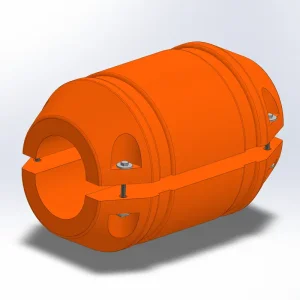
Custom Pipe Floats for Floating Pipeline Stability in Water Transfer and Industrial Projects Companies, Factory
Explore Specifications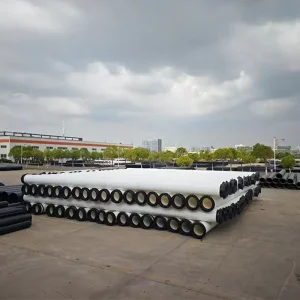
ODM High-Density Pipeline for Efficient Liquid and Gas Transport Manufacturers, Factories
Explore Specifications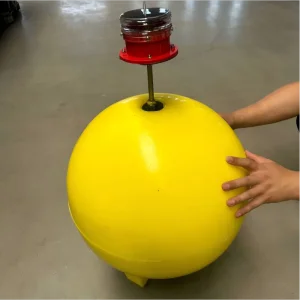
High-Quality LED-Equipped Floating Ball for Safe and Efficient Water Operations Factory, Factories
Explore Specifications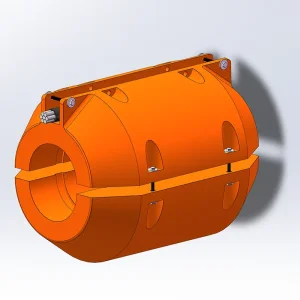
ODM Floating Pipe Floats with Cable Channels – Secure Buoyancy and Cable Protection for Marine Systems Quotes, Factories
Explore Specifications
ODM Reliable Pipe Floats for Marine Projects Supplier, Manufacturer
Explore Specifications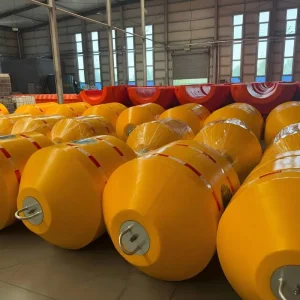
High-Quality Mooring Buoy for Commercial Berths, Marinas and Offshore Holding Areas Manufacturers, Products
Explore Specifications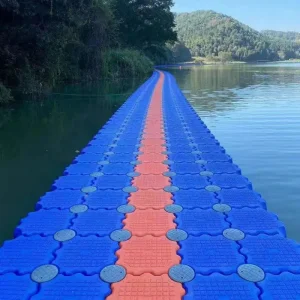
High-Quality Robust Floating Boat Pontoon for Safe and Flexible Water Platforms Product, Factories
Explore Specifications