
Engineered Floating Solutions (Series 01 - 08)
Manufactured using CNC-controlled rotational casting systems for zero-porosity hull integrity and extreme hydro-buoyancy compliance.
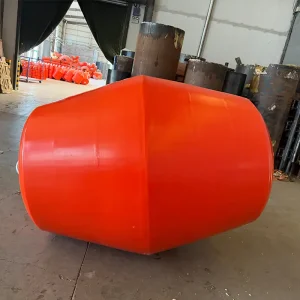

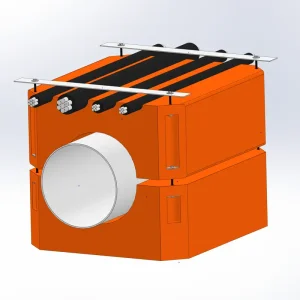

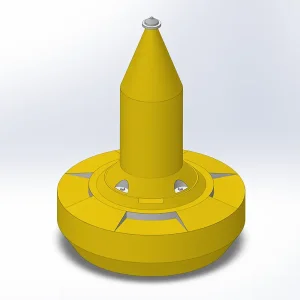

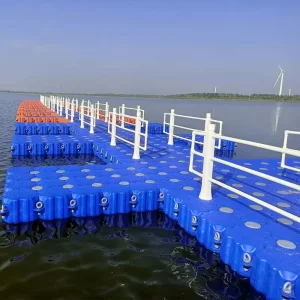
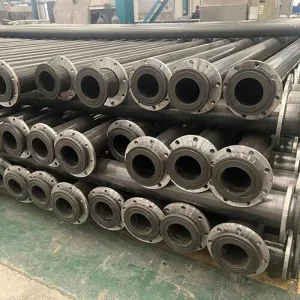
Engineering Dominance: The China Factory Advantage
Bridging polymer science, precision multi-axis rotomolding, and global logistics to establish peak lifecycle performance in demanding water engineering.
Monolithic Shell Integrity
By leveraging advanced variable-frequency thermal molding and digital IR temperature indexing, our Binzhou facility eliminates micro-porosity and seams, producing float bodies resistant to cyclic hydrodynamic fatigue.
- High-density virgin polyethylene (LLDPE 644)
- Wall thickness uniform deviation < 0.5 mm
- Zero chemical adhesion against scaling and fouling
Hydrophobic Closed-Cell Infill
Internal cavities are filled with high-density, closed-cell polyurethane foam. Even under extreme collisions where the outer shell is punctured, the foam structure guarantees zero water intrusion and sustained positive buoyancy.
- Closed-cell index > 92% per ISO 845 standards
- Compression strength > 0.20 MPa
- Complete resistance to water absorption (< 1% vol)
Cost-Effective Tooling Agility
Backed by an extensive Chinese industrial supply chain, we deliver tailor-engineered mold fabrications at 40% less capital expenditure and half the turnaround time of North American or European fabricators.
- In-house CNC mold tooling from 200mm to 1400mm
- Integrated cable duct channels and umbilical slots
- Galvanized/SS316 marine-grade hardware matching
Engineering Rule of Thumb for Slurry Pipelines: Dredge lines transport mixtures substantially heavier than sea water. Always configure total displacement using: Buoyancy Required = (Pipe Dry Weight + Maximum Fluid Density Displacement + Flange/Fitting Accessories) × Safety Factor (1.25–1.35) to preserve one-quarter freeboard height above dynamic sea-swell levels.
Macro Trends & Turnkey Industry Solutions
Modern EPC procurement models emphasize total cost of ownership (TCO), multi-utility umbilical integration, and adherence to carbon-mitigated marine plastics.
Land Reclamation & Port Mega-Projects
Massive reclamation initiatives in Southeast Asia and the Middle East rely on uninterrupted high-discharge sand lines. Our interlocking half-shells reduce line oscillation and avoid hydrodynamic pinching under strong tidal swings.
Deep-Sea Tailings & Mining Slurries
Severe corrosive chemicals and high specific gravities (1.3 to 1.7 SG) destroy conventional float systems. Our cross-linked polyethylene formulations resist chemical breakdown from tailing slurries while preserving float geometry.
Offshore Desalination & Brine Discharge
Critical water facilities employ our cable-trough pipe floats to co-route sensory fiber optics and power cabling alongside heavy-diameter HDPE intakes, cutting installation diving hours by over 60%.
Subsea Tie-In & Pull-Through Rigging
Specialized modular buoyancy cylinders with calibrated release collars allow controlled submerged pipeline lowering, eliminating uncalculated bending stress during trench settlement.
Localized Engineering Application Scenarios
A rigorous specification matrix designed to assist project managers and EPC contractors in selecting buoyancy configurations based on real marine dynamics.
| Application Scope | Recommended Product Variant | Primary Material Configuration | Dynamic Operational Life |
|---|---|---|---|
| Capital Harbor Dredging | Heavy-Duty Pipeline Floats with Shock Ribs | Virgin LLDPE + Closed Cell PU Core + SS316 Bolts | 10 to 15 Years (Continuous Marine) |
| Subsea Pipeline Tie-In | Calibrated Tie-In Staged Floats | High-Density Syntactic / Modified PE Matrix | Engineered Mission Duration / Reusable |
| Offshore Electric Pumping | Floats with Integrated Cable Troughs | UV-16 Stabilized Polyethylene + Anti-Chafing Inserts | 8 to 12 Years |
| Tailings Pond Discharge | Chem-Resistant Modular Dredge Floats | Cross-linked PE + Solvent-Resistant Core | 7 to 10 Years (Harsh Slurry Medium) |
| Vessel Anchorage & Navigation | Foam-Filled Polyethylene Mooring Buoy | Internal Steel Tie-Rod Cage + Marine LLDPE Armor | 15+ Years (Zero Hull Oxidation) |
Specialized Flotation & Marine Systems (Series 09 - 16)
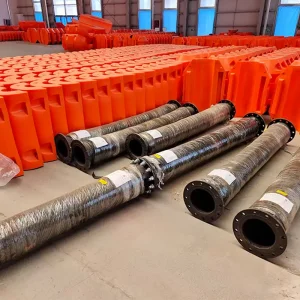
Complete project compatibility from floating pipeline sleeves to high-flex suction hoses and deep-anchorage buoy units.



Frequently Asked Questions on Marine Flotation
Comprehensive engineering clarifications addressing hydrodynamics, structural durability, procurement timelines, and harsh seawater deployment.
What are pipeline floats and how do they function?
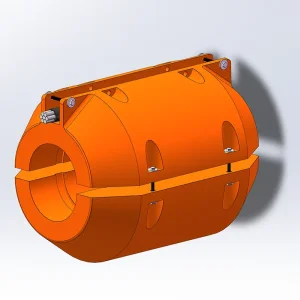
Pipeline floats (dredge floats or buoyancy collars) are clamp-on modular units constructed from rotationally molded polyethylene with closed-cell polyurethane cores. Mounted symmetrically on discharge lines, they suspend steel or HDPE pipelines on the water surface, minimizing bed drag, reducing pumping head loss, and protecting pipeline integrity from ocean currents.
How do engineers calculate float buoyancy requirements?
Total buoyancy must exceed total structural load under loaded conditions. Sizing equations incorporate: the dry weight of pipe segments, weight of slurry medium at peak density (not clean water), connection flanges, rubber hoses, and auxiliary hardware. Standard design adds 20% to 30% surplus buoyancy to sustain a quarter freeboard margin above the water plane.
Why is rotomolded polyethylene preferred over welded steel?
Polyethylene is inert against saltwater rust, marine fouling, and harsh pH effluents. Unlike steel drums, rotomolded PE possesses high dynamic impact elasticity—absorbing vessel impact without catastrophic rupture. It eliminates cathodic protection requirements and marine repainting cycles entirely.
What is the standard product warranty and expected design life?
Standard warranty begins once the buyer transfers equipment on site, lasting 18 months from handover or 12 months from final pipeline installation (whichever occurs first). The underlying structural lifespan of UV-stabilized LLDPE shells exceeds 10 to 15 years under tropical solar and salt spray exposure.
What technical data is required to request a custom specification?
Provide: Pipe Outer Diameter (OD), pipe wall thickness and material (HDPE, carbon steel, or rubber), medium specific gravity, pipeline length, working environment (river, calm basin, open sea), wave height spectrum, target freeboard, and required cable channels.
Can floats accommodate power cables and instrumentation channels?
Yes. Custom rotomolded tooling integrates cable conduits and umbilical slots directly into the upper mating flange of the floats. This design isolates auxiliary cables from dynamic wave fatigue and simplifies line installation.