
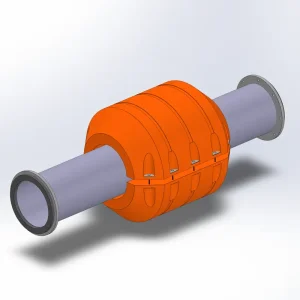
Certified Dredging & Marine Flotation Fleet
Primary Industrial Dredge Floats & Buoyancy Systems
Pre-engineered rotomolded polyethylene shells, subsea buoyancy modules, and wear-resistant pipeline protection units factory-calibrated for severe marine slurry conveyance.

ODM Floating Barriers for Water Protection and Environmental Management
Product Details
Custom Deepwater Pipeline Support Float – Modular and Reliable Engineering
Product Details
Robust Floating Boat Pontoon for Safe Flexible Water Working Platforms
Product Details
ODM Deepwater Pipeline Support Floats – Reliable Subsea Buoyancy Solutions
Product Details
ODM Rotomolded Watercraft Board – High-Impact Marine Grade Hull
Product Details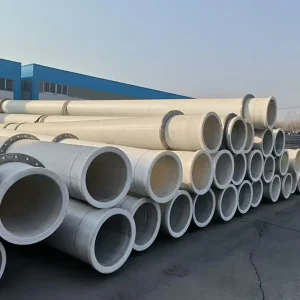
ODM Industrial-Strength Pipeline for Efficient Slurry & Material Transport
Product Details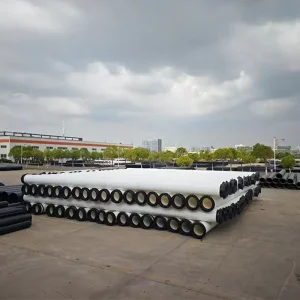
ODM High-Density Dredge Pipeline for Heavy Slurry & Liquid Transfer
Product Details
Global Dredging Market Dynamics
Global Dredging Landscape & Wear-Resistant Slurry Challenges
From massive coastal land reclamation in the Arabian Gulf to navigation channel deepening across Rotterdam and Singapore, hydraulic transport requires unprecedented pipe wear longevity.
Overcoming Slurry Abrasion in High-Velocity Pumping
Modern mega-dredgers, including 30,000+ m³ Trailing Suction Hopper Dredgers (TSHD) and heavy-duty Cutter Suction Dredgers (CSD), generate hydraulic discharge velocities exceeding 6.5 m/s. At these turbulent velocities, abrasive silica sands, gravel matrices, sharp coral fragments, and mineral tailings subject delivery conduits to severe three-body scouring and high-impact erosive destruction.
Standard carbon steel pipelines experience uneven wall thinning, scalloping, and sudden rupture along transition curves. Replacing worn metallic spools offshore leads to exorbitant non-productive vessel downtime. This has accelerated global demand for high-grade synthetic elastomers and modular polyethylene buoyancy systems.
Key Engineering Metric: Wear-resistant rubber dredging hoses lined with natural/polybutadiene compounds or hexagonal ceramic tiles offer up to 4.8× to 8.2× the service life of unlined carbon steel conduits under equivalent slurry volume fractions.
Commercial Mega-Projects Driving Specification
Port Modernization: Accommodating Post-Panamax and Ultra Large Container Vessels (ULCV) demands dredging to depths exceeding 18 meters, generating immense backpressures on discharge hoses.
Mining Tailings Slurry: Transporting hyper-dense copper, gold, and iron tailings involves highly acidic or alkaline carrier waters requiring custom compound chemical passivity.
Offshore Energy & Reclamation: Artificial island construction and seabed trenching for subsea interconnector cables demand continuous dynamic flex-tolerance.
Severe Coral & Silica Slurry
Cutter suction operations in hard carbonate coral or dense quartz deposits generate jagged aggregate. Our multi-layer inner liners prevent tear propagation and gouging.
- Tear resistance exceeding 50 N/mm
- Tensile strength > 22 MPa
- Continuous operating elongation up to 450%
Wave Dynamic Flex Fatigue
Floating discharge conduits endure continuous cyclic flexing caused by ocean swell and tidal roll. Steel rings and spiraled reinforcement avoid delamination.
- High-tensile multi-strand steel cord plies
- Fully integrated vulcanized steel flanges
- Bending angles up to 90° without kinking
Environmental & Thermal Stability
Outer covers compounded with high-percentage chloroprene or synthetic EPDM resist ozone cracking, solar UV degradation, and oil slicks in busy industrial ports.
- Temperature range: -25°C to +82°C
- Marine saltwater corrosion imperviousness
- Zero leaching of heavy chemical plasticizers
Materials Science & Structural Architecture
Anatomy of an Ultra-Wear Dredging Hose System
A multi-layer composite engineered to withstand severe hydrostatic pressures, hydrodynamic external drag, and aggressive internal particle impingement.
1. Sacrificial Inner Layer
Compounded from premium grade natural rubber (NR) and butadiene rubber (BR) blends with vulcanized wear-indicator strips to forecast maintenance cycles accurately.
2. Carcass Reinforcement
Cross-braided high-tenacity polyester cord coupled with spiral high-tensile spring steel wire prevents cross-sectional collapse during acute pipe bends or vacuum suction.
3. Impact Absorption Plies
Intermediary rubber cushion plies disperse kinetic shockwaves caused by large rock impacts, dampening hydraulic surge waves across the pipeline string.
4. Rugged Outer Skin
Weather-resistant outer cover formulated with ultraviolet absorbers and anti-aging agents, resisting mechanical abrasion against vessel gunwales, tugs, and seafloors.
| Dredging Hose Classification | Inner Liner Material | Nominal ID Range (mm) | Working Pressure (Bar) | Abrasion Loss (DIN 53516) | Primary Dredge Function |
|---|---|---|---|---|---|
| Discharge Rubber Hose | Heavy-Duty NR / SBR Blend | DN150 – DN1200 | 15 to 30 Bar | < 90 mm³ | High-pressure surface & land lines |
| Suction Rubber Hose | High-Elasticity Natural Gum | DN200 – DN1100 | Vacuum to 15 Bar | < 75 mm³ | Gimbal ladder / Draghead suction |
| Ceramic-Lined Slurry Hose | Alumina 95% Hex Tiles + Rubber | DN100 – DN800 | 10 to 25 Bar | < 35 mm³ Extreme Wear | Iron ore, mineral sands & sharp gravel |
| Self-Floating Dredge Hose | Expanded Closed-Cell PE Foam | DN300 – DN1000 | 12 to 25 Bar | < 85 mm³ | Self-buoyant offshore discharge strings |
| Short Gimbal Arm Hose | Wire-Reinforced Dynamic Elastomer | DN400 – DN1200 | 20 to 35 Bar | < 80 mm³ | Hull-to-pipeline flexible articulation |
Synergistic Flotation Engineering
Integrating Polyethylene Pipe Floats with Dredge Hoses
Correct buoyancy engineering prevents catastrophic pipeline sagging, excessive joint fatigue, and premature slurry hose failure.
The Physics of Marine Slurry Float Sizing
A fatal oversight in marine pipeline design is sizing buoyancy modules exclusively for an empty conduit. During active dredging cycles, the combined mass of the heavy rubber hose carcass, high-modulus steel flanges, and high-density aggregate slurry (often reaching specific gravities of 1.6 to 1.95 kg/dm³) significantly alters hydrostatic equilibrium.
Our rotomolded polyethylene pipe floats, built from high-tensile virgin PE shells and injected with 35–45 kg/m³ polyurethane closed-cell foam, deliver calculated reserve buoyancy margins that ensure approximately 25% to 30% of the pipe diameter remains visible above the water surface, even under full slurry loading.
- Zero water ingress even if the outer rotomolded shell is punctured
- Galvanized Grade 8.8 fastening hardware with anti-slip rubber pads
- Customized internal saddle contours matched to dredging hose outer diameters
Buoyancy Formula for Heavy Dredge Hoses
B_req = [ M_pipe + M_medium + M_fittings ] × 1.30 (Reserve Factor)
Where M_medium is calculated using maximum anticipated slurry density (e.g., 1,850 kg/m³ for fine sand and clay matrices), not fresh or ambient seawater density.
Engineering Note
Providing balanced buoyancy spacing prevents the pipeline string from developing "S-bends" and localized fatigue concentrations near flanged couplings.
Field-Tested Global Deployments
Targeted Marine Application Environments
Specific operational regimes where wear-resistant dredging hoses and PE float assemblies provide maximum economic utility and risk mitigation.
1. Cutter Suction Stern Discharge Lines
Stern connection hoses operate directly behind the dredger, bearing the dynamic thrust of vessel spud pole rotation, anchor adjustments, and intense discharge pulsations.
- High working pressure ratings up to 30 Bar
- Reinforced integral vulcanized steel collars
- Exceptional torsional resistance to twisting
2. Shore Transition Spools
The intertidal boundary represents the most vulnerable zone for dredging pipelines. Breaking surf, tidal shifts, and rocky seabed friction generate intense external wear.
- Heavy-gauge abrasion covers resistant to oyster cuts
- Staggered buoyancy preventing ground scouring
- High flexibility accommodating tidal drop cycles
3. Tailings Pond Extraction & Bypass
Industrial mining operations must continuously re-dredge settling basins. Slurries contain fine silts, heavy heavy-metal particulates, and aggressive chemical reagents.
- Chemical passivity against broad pH ranges (pH 2 – 12)
- Zero scaling and crystallization buildup inside the bore
- Smooth bore reducing frictional pump head losses
E-E-A-T Quality Governance
Factory Compliance, QA Testing & Localized Field Support
Stringent factory verification protocols certified to international maritime benchmarks ensure reliable operational uptime on mission-critical projects.
Hydrostatic Pressure Proof
Every spool is subjected to factory hydrostatic pressure testing at 1.5× working pressure to verify carcass integrity and flange bond stability.
ISO & PIANC Alignment
Fabrication standards strictly align with ISO 9001 quality systems and PIANC 2019 guidelines for marine slurry transport equipment.
Worldwide Port Logistics
Custom packaging, heavy-duty steel cradle crating, and direct dispatch to major transshipment ports minimize project lead times.
On-Site Fitting Guidance
Field engineering documentation, torque-specification guides, and bolt-tightening sequences prevent installation damage to flange collars.
Complete Marine Fleet Sourcing: Shandong Binzhou Juhua Quality Standard
Combining over 20 years of rotational molding precision, high-density polyethylene polymer synthesis, and heavy elastomeric compounding, Juhua manufactures a complete marine discharge ecosystem. From high-integrity pipeline floats, modular deepwater buoyancy units, and pollution barriers to flexible rubber dredge hoses, our unified production ensures exact component compatibility, eliminating mismatched offshore tolerances.
100% Computerized Temperature Cure
Virgin Grade LLDPE Resins
Zero Pin-Hole Lining Inspection
Next-Gen Marine Tech
Engineering Roadmap: The Future of Wear-Resistant Slurry Transport
Emerging technology advancements transforming modern dredging pipelines into intelligent, environmentally optimized fluid transport corridors.
1. Embedded Ultrasonic & RFID Sensors
Integrating flexible telemetry conductive circuits directly between the carcass layers. Superintendents can measure real-time residual wall thickness via mobile telemetry, preventing unplanned pipe blowouts.
2. Nanocomposite Graphene Rubber
Infusing nano-graphene platelets into natural rubber inner liners enhances abrasion resistance by up to 40% while simultaneously reducing total hose weight and lowering fuel burn on dynamic positioning dredgers.
3. Zero-Microplastic Polyethylene Formulations
Developing bio-circular polymers and high-density, non-leaching additives for rotomolded pipe floats and marine navigation buoys, safeguarding delicate coastal and marine sanctuary ecosystems.
Expanded Buoyancy, Barriers & Marine Accessories
Specialized Marine Flotation, Buoys & Mooring Fleet
Complete your hydraulic discharge configuration with offshore mooring buoys, perimeter protection barriers, and float ball systems.
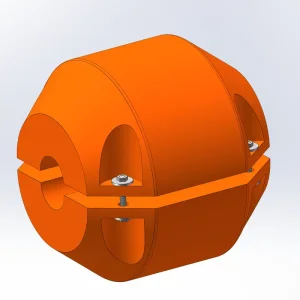
ODM Pipe Floats for Pump Discharge & High-Volume Water Transfer Lines
Product Details
Heavy-Duty Pipeline Float System for Deep Subsea Installations
Product Details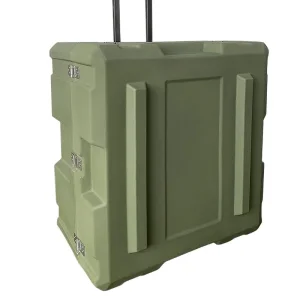
Heavy-Duty Rotomolded Marine Storage Case & Specialized Container
Product Details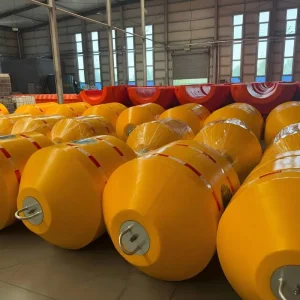
OEM Offshore Mooring Buoy for Heavy Vessel Anchoring & Infrastructure
Product Details
Polyethylene Mooring Buoy – Corrosion-Free Floating Solution
Product Details
Floating Barrier Systems for Debris Interception & Environmental Control
Product Details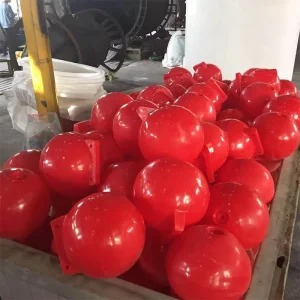
Rotomolded PE Float Ball for Industrial & Aquaculture Operations
Product Details
High-Durability PE Float Ball – Modular Buoyancy Unit for Water Projects
Product Details
Engineering Knowledge Base
Frequently Asked Questions on Wear-Resistant Dredging Hoses
Expert insights compiled by dredging pipeline engineers to assist project managers and procurement specialists in selecting the optimal configuration.
How do you calculate the required inner rubber liner thickness for a dredging hose?
Liner thickness is a function of median grain particle diameter ($d_{50}$), slurry flow velocity ($V$, typically 3.5 to 6.5 m/s), solids concentration by volume ($C_v$, 15% to 35%), and particle angularity. For standard river desilting with fine silt, a 12 mm to 15 mm natural rubber liner is sufficient. For coarse silica sand, gravel, and crushed coral reclamation, heavy liners between 20 mm and 35 mm are specified, frequently paired with colored wear-indicator warning plies.
What is the difference between built-in steel flange collars and loose backing ring designs?
Built-in vulcanized steel nipple collars form an integrated, homogenous part of the hose carcass, with textile plies and steel reinforcement wires wrapped securely around the steel nipple. This design withstands maximum tensile pulling forces and high dynamic pressures without risk of collar detachment. Loose backing ring (swivel flange) designs allow easier rotational alignment during on-water assembly, making them popular for short utility jumper connections.
When should ceramic-lined dredging hoses be selected over elastomeric rubber hoses?
Ceramic-lined hoses (utilizing high-density 92% to 95% $Al_2O_3$ hexagonal tiles vulcanized within an elastomer matrix) are selected when handling highly abrasive slurries containing sharp, hard mineral tailings, quartz sand, or iron ore where particle Mohs hardness exceeds 7. Ceramic hoses resist micro-cutting and gouging wear up to 8 times longer than standard rubber, though they have a larger minimum bend radius.
How does water salinity and UV exposure impact outer dredge hose performance?
Seawater contains dissolved chloride ions that accelerate metallic corrosion on unprotected carbon steel flanges. Concurrently, solar UV radiation and atmospheric ozone break down the unsaturated polymer chains in standard natural rubber, causing surface crazing and cracking. High-specification dredging hoses utilize synthetic chloroprene (Neoprene) or EPDM covers blended with carbon black, providing complete ozone resistance and marine weatherproofing.
Can polyethylene pipe floats be installed over flexible rubber dredging hoses?
Yes, provided the inner diameter of the polyethylene float half-shells matches the expanded outer diameter of the rubber hose under full working pressure. Special inner elastomeric anti-slip liners or grooved seating surfaces are incorporated into the float cavity to prevent longitudinal slippage when the flexible hose pulses or expands during pump startup.
What is the standard warranty and inspection lifecycle for industrial dredge hoses?
Standard manufacturer warranties range from 12 months from on-site commissioning to 18 months from factory handover. Operational service life varies widely based on slurry parameters: typical service lives span 3 to 7 years in soft silt desilting, and 12 to 24 months in extreme diamond, quartz, or coral cutter dredging. Periodic ultrasonic wall thickness profiling and end-to-end electrical continuity testing are recommended every 500 operating hours.