Featured Marine Buoys & Flotation Support Units
Industrial-grade floating barriers, pipe floats, and pontoon components manufactured via automated closed-mold rotational casting for demanding hydraulic environments.

State of Marine Buoyancy: Structural Mechanics, Polymer Tribology & IALA Compliance
An engineering treatise on how modern custom boat buoy manufacturers solve cyclic fatigue, UV degradation, hyperbaric saltwater infiltration, and excessive anchor pull forces.
In modern offshore navigation, harbour expansion, commercial marina anchoring, and dredging operations, the operational reliability of custom boat buoys directly impacts navigational safety and costly marine capital assets. Historically, boat buoys, mooring markers, and navigational beacons relied on welded steel structures or hollow fiberglass-reinforced plastic (FRP). However, steel vessels suffer from severe micro-galvanic corrosion, biological fouling, and coating breakdowns, incurring excessive maintenance costs. Conversely, early composite polymers suffered from stress cracking under prolonged ultraviolet solar flux and catastrophic rupture upon hull impacts.
Today, leading custom boat buoy manufacturers utilize rotational molding (rotomolding) of ultra-high molecular weight, UV-stabilized virgin Linear Low-Density Polyethylene (LLDPE) and High-Density Polyethylene (HDPE). These polymers feature closed-cell polyurethane (PU) or expanded polystyrene (EPS) foam cores injected at calculated densities (32 kg/m³ to 45 kg/m³). The resulting monocoque shell provides superior elastic recovery, meaning that when a vessel collides with a mooring or channel buoy, the polymer wall flexes elastically to absorb kinetic energy without puncturing or damaging ship hulls.
IALA Guideline Compliance Note: All custom navigational, mooring, and boat buoys produced by tier-one Chinese manufacturers adhere strictly to IALA (International Association of Marine Aids to Navigation and Lighthouse Authorities) Maritime Buoyage System standards (Regions A and B), incorporating UV-8 and UV-16 weatherability pigments for minimum 10-year chromatic retention.
Rotomolded Monocoque Shell
Seamless zero-stress rotational fusion produces unbroken outer hulls ranging from 8mm to 18mm in wall thickness, completely eliminating weak seam lines that cause leaks in welded vessels.
- Virgin Dow/ExxonMobil polymer resins
- Seamless hollow casting prevents weld shears
- Zero osmotic water absorption (<0.01%)
High-Density Foam Matrix
Internal cavities are pressure-injected with high-density, closed-cell polyurethane foam that bonds permanently to the inner polyethylene walls, forming an integrated structural composite.
- Unsinkable buoyancy even if punctured
- Compressive modulus withstands wave impacts
- Uniform density distribution stabilizes ballast
Internal Steel Structural Core
Heavy-duty mooring buoys feature central tie-rods or through-hull padeyes fabricated from hot-dip galvanized Q235B or stainless steel, transferring massive hawser tension directly to anchor chains.
- Tensile breaking strength rated to 50+ tons
- Hot-dip galvanization (min 85 µm zinc coat)
- Reinforced swivel eyes prevent cable twist
Strategic Advantages of Sourcing Custom Boat Buoys from China
How clustered petrochemical supply chains, large-scale CNC rotational molds, and integrated testing facilities in Shandong deliver superior cost-performance and turnkey delivery.
Massive Tooling Scale
Chinese manufacturing facilities house multi-axis rock-and-roll and carousel rotomolding machines capable of curing single-piece floats up to 3.5 meters in diameter and 4,000 kg capacity.
Vertical Integration
Direct access to raw petrochemical feeds, in-house steel fabrication for mooring inserts, and custom CNC aluminum mold engraving reduce lead times from months to as little as 15 working days.
Rigorous QA Metrology
Every production run undergoes ultrasonic shell thickness verification, closed-cell hydrostatic leak testing, tensile load validation, and spectrophotometric chromaticity tests.
Unbeatable Total Cost
By cutting intermediary trading markup and optimizing container nest packing, EPC contractors and marine harbor masters save between 30% to 55% compared to North American or European suppliers.
Material Comparison Matrix: Marine Flotation Equipment
Comprehensive comparative physics and operational expenditure metrics between conventional marine buoy constructions and modern rotomolded PE composite structures.
| Performance Criterion | Rotomolded LLDPE / HDPE (Juhua) | Welded Marine Steel (A36) | Fiberglass / FRP Composite |
|---|---|---|---|
| Corrosion & Biofouling | 100% Inert to Saltwater; Non-Adhesive Surface | Severe Electrochemical Rust; Demands Sacrificial Anodes | Resistant to Rust; Prone to Osmotic Blistering |
| Impact Kinetic Absorption | Elastic Memory Deformation (Recovers Original Shape) | Permanent Plastic Denting / Hull Damage to Boats | Brittle Micro-Fracturing / Delamination under Shear |
| Dry Weight vs. Net Reserve Buoyancy | Ultra-Low Tare Weight; Maximized Net Buoyancy | Very Heavy; Demands High-Tonnage Crane Vessels | Moderate Weight; Requires Careful Ballasting |
| Color Stability & Repainting Needs | Mass-Compounded Pigments; Zero Repainting Required | Requires Annual Sandblasting & Toxic Marine Coating | Gel-Coat Fades & Chalks; Periodic Recoating Needed |
| Service Life Expectancy | 15 to 25+ Years Maintenance-Free | 5 to 8 Years Before Major Overhaul | 8 to 12 Years Depending on Wave Stress |
| Disaster Failure Mode | Unsinkable Closed-Cell PU/EPS Matrix Retains 95% Lift | Breached Hull Causes Catastrophic Sinking | Micro-Cracks Slowly Flood Cavity |
Engineered Marine Solutions for Global Aquatic Infrastructure
From mega-port fairway marking to deep-sea aquaculture and tailing pond reclamation, our flotation systems are engineered for specific hydraulic environments.
Commercial Ports & Harbors
Ensuring safe navigation for container ships, bulk carriers, and tug operations. Heavy-duty mooring buoys provide reliable anchoring points inside calm anchorages or surge-prone outer fairways without occupying scarce pier space.
Marinas & Yacht Clubs
Equipping private boat berths, sailing clubs, and luxury marinas with gentle boat buoys that safeguard yacht gel-coats upon berthing contact. Features optional solar LED flashers, anti-theft chain sockets, and customized branding.
Offshore Wind & Marine Energy
Delivering subsea cable floats, umbilical support buoys, and perimeter warning lines for offshore wind farm installations. Designed to withstand 10-meter storm waves and aggressive 4-knot hydrodynamic currents.
Dredging & Hydraulic Reclamation
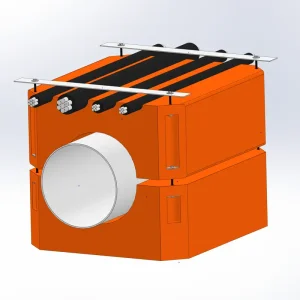
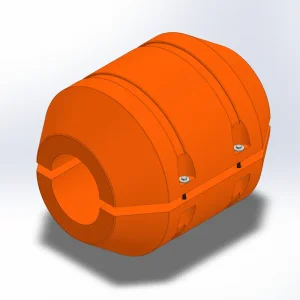
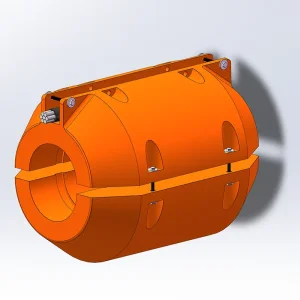
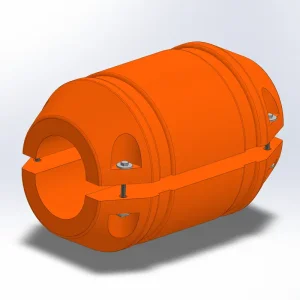
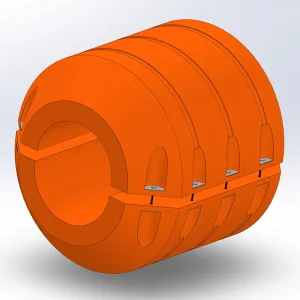
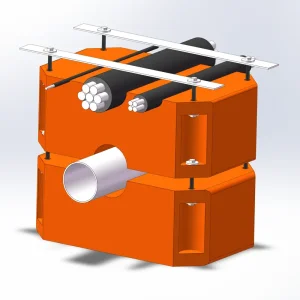
Precision clamp-on dredge pipe floats for discharge slurry pipelines. Engineered with integrated cable troughs and anti-slip gaskets that prevent axial slippage on smooth HDPE pipes under dynamic hydraulic pulses.
Floating Containment Barriers
Modular surface debris screens, oil containment baffles, and silt curtains deployed at hydroelectric dams, drinking water intake reservoirs, and industrial outflow zones to block aquatic weeds and debris.
Deep-Sea Aquaculture Cages
Buoyancy collar supports and tensioning buoys for submersible fish farming grids. Provides high reserve buoyancy to withstand heavy biofouling weight and dynamic tidal drawdowns.
International Tender & Sourcing Guidelines for Marine Buoys
A complete engineering checklist for EPC procurement directors, marine civil engineers, and harbor masters preparing tender dossiers for custom buoy fabrication.
When drafting international procurement specifications for custom boat buoys and marine floating infrastructure, professional buyers must look beyond nominal dimensions. A comprehensive RFP (Request for Proposal) should specify precise physical properties to ensure long-term durability in harsh marine environments:
1. Polymer Chemistry & Tensile Properties
Specify minimum raw material standards to prevent unplasticized brittleness and accelerated micro-cracking:
- Density: ISO 1183 compliant (0.935 - 0.945 g/cm³)
- MFR (Melt Flow Rate): 4.0 - 5.5 g/10min (190°C/2.16kg)
- Tensile Yield Strength: > 18.0 MPa (ASTM D638)
- Elongation at Break: > 600%
2. Marine Hardware Metallurgy
Ensure steel components withstand galvanic action in oxygen-saturated marine splash zones:
- Structural Core: Certified Q235B / Q355 structural steel
- Coating: Hot-dip galvanization ISO 1461 (> 85 µm)
- Fasteners: Marine-grade AISI 316 / 304 Stainless Steel
- Swivels: Forged carbon steel with Nyloc locking nuts
3. Hydrodynamic Buoyancy Margin
Calculate minimum reserve buoyancy based on real-world hydrodynamic loading:
- Reserve Factor: Minimum 1.30x above dead load
- Freeboard: Minimum 25% to 35% height above water
- Current Drag: Sized for maximum local tidal current
- Mooring Pull: Rated with a 2.5x working safety factor
Engineering & Procurement FAQ for Custom Marine Buoys
Answers to common technical questions submitted by port engineers, EPC contractors, and global marine distributors.
How does an engineer calculate the required buoyancy rating for a boat mooring buoy?
The required buoyancy is calculated by summing the total dry weight of the anchor chain suspended in water, ground tackle, mooring pennant, and potential wave down-pull force. As an engineering benchmark, total gross buoy displacement should be at least 2.5 to 3.0 times the total dead-load weight of suspended tackle. This ensures the buoy retains adequate freeboard (reserve buoyancy) to remain visible and prevent being dragged under by sudden wave action.
What is the typical operational lifespan of a rotomolded PE buoy in high-UV tropical seawater?
When compounded with certified UV-16 stabilizing additives and high-purity carbon black or specialized organic pigments, virgin LLDPE/HDPE buoys deliver an operational lifespan of 15 to 20+ years. Polyethylene does not suffer galvanic corrosion, rust, or osmotic delamination, making it far more durable than painted steel in tropical waters.
Can custom boat buoy manufacturers incorporate smart monitoring sensors or solar LED topmarks?
Yes. Custom rotational molds can be engineered with internal top battery wells, solar panel bracket inserts, and NPT threaded cable conduits. This allows integration of self-contained IALA solar LED marine lanterns, GPS tracking transponders, water quality sensors, or AIS (Automatic Identification System) AtoN units.
What happens if a vessel strikes the buoy at high speed?
The high-impact elastic recovery of rotomolded LLDPE allows the buoy wall to flex inward, absorbing kinetic impact energy before rebounding to its original shape. This dramatically minimizes structural damage to both the vessel hull and the buoy. Furthermore, because the core is filled with solid closed-cell polyurethane foam, even if the outer shell is torn by a sharp propeller, water cannot enter, preventing the buoy from sinking.
What is the standard manufacturing lead time for custom tooling and production?
For standard catalog float molds, production takes 7 to 12 working days per 40-foot high-cube container. For fully custom designs requiring new CNC aluminum or sheet-steel molds, mold fabrication takes approximately 18 to 25 days, with first-article sample testing completed within 7 days thereafter.
What warranty terms are provided for international maritime engineering projects?
Standard commercial warranty coverage extends for 18 months from the bill of lading delivery date or 12 months from on-site commissioning, whichever occurs first. Coverage protects against polymer manufacturing defects, environmental stress cracking, and weld failures on internal galvanized metalwork.
Mooring Buoys, Subsea Pipeline Floats & Pontoon Modules
Heavy-duty marine aids to navigation, anchor-chain connected mooring buoys, subsea tie-in buoyancy modules, and floating docks available directly from the manufacturer.