High-Performance Marine Flotation Systems
Explore our industrial clamp-on dredging floats, navigation aids, and integrated cable trough buoyancy modules engineered to perform in the harshest marine conditions.



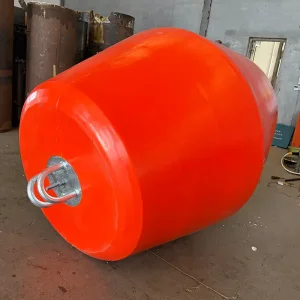
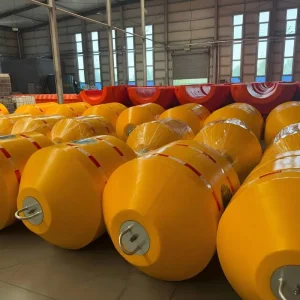
China Factory 4.0: Resilient Supply Chains & Custom Engineering
Shandong Binzhou Juhua Rubber & Plastic Co., Ltd. leads marine rotomolding innovations. Leveraging automated PLC temperature controls and closed-loop molding cycles, our factory ensures unmatched dimensional stability, zero environmental cracking, and rapid turnaround for global maritime infrastructure projects.
Advanced Polyethylene Compounding
We use virgin LLDPE / HDPE matrices compounded with high-efficiency UV stabilizers (UV8 to UV16 levels) and antioxidant additives. This structural formulation resists micro-cracking, marine biological fouling, and severe solar photodegradation across long deployments.
Closed-Cell Polyurethane Foam Core
Every buoy boat and pontoon module can be injected with high-density closed-cell polyurethane foam (32–45 kg/m³). Even under catastrophic outer hull puncture from vessel collisions, internal water absorption remains below 3%, preventing sudden buoyancy loss.
CAD/FEA Stress Optimized Geometry
Buoy hulls feature integrated hydrodynamic deflection ribs and reinforced mooring chain channels. Finite Element Analysis (FEA) ensures our buoy boats withstand high drag currents and wave-slamming loads up to sea state 6 without structural failure.
Macro-Industry Applications & Procurement Demands
From deep-sea mining slurry discharge lines to navigational aids in automated port waterways, Juhua delivers application-targeted flotation architectures designed for harsh operating environments.
Port & Commercial Berthing Operations
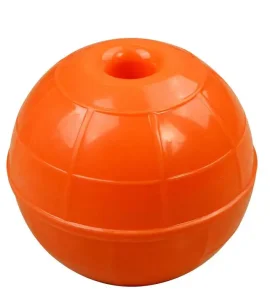
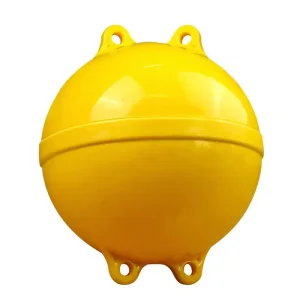
Heavy vessel traffic requires rugged navigation buoys and secure mooring platforms that can handle ship impact and surge forces. Our buoy solutions integrate IALA-standard solar topmarks, lantern brackets, and radar reflectors to keep shipping channels clearly organized.
Explore Mooring Systems →High-Density Mining Tailings Pipelines
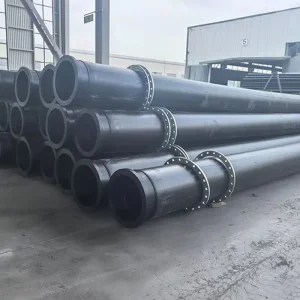
Transporting ore tailings demands precise buoyancy margins. Our wear-resistant pipe floats and cable-trough modules keep high-specific-gravity slurry lines buoyant while protecting auxiliary power and telemetry lines from abrasive wave action.
Explore Cable Trough Floats →Aquaculture & Offshore Platforms
Modern offshore fish farms and pontoon workboats require modular, non-toxic buoyancy systems that hold up in high-salinity water. Our rotomolded pontoon blocks provide stable working surfaces and secure anchorage for long-term open-ocean use.
Explore Pontoon Boating Units →- Specific Gravity Calibration: Size against actual slurry density (often 1.3 to 1.6 t/m³ in mining tailings), not pure water.
- Freeboard Safety Margin: Target maintaining 25% of the overall pipe outer diameter above the waterline to resist wave drag.
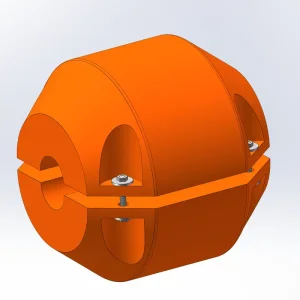
- Interchangeable Halves: Modular bolt-on construction allows rapid field replacement using galvanized or 316 stainless hardware.
Technology Roadmap & Localized Compliance Assurance
Procuring marine hardware requires rigorous adherence to international maritime safety standards, raw material traceability, and robust quality documentation.
| Technical Domain | Current Industry Baseline | Juhua Factory 4.0 Standard | Next-Gen Engineering Roadmap |
|---|---|---|---|
| Material Science | Standard recycled PE, UV rating < 4 | 100% Virgin Food-Grade HDPE, UV16 stabilized | Graphene-reinforced bio-based marine polymers |
| Structural Integrity | Manual rotational molding, variable walls | PLC automated rotation with continuous infrared temperature monitoring | Integrated ultrasound real-time wall thickness inspection |
| Telemetry & IoT | Passive unmonitored floating hardware | Integrated mounting slots for radar/AIS systems | Built-in self-charging solar IoT GPS & load sensor beacons |
| Environmental Safety | Chlorofluorocarbon blowing agents | Eco-compliant closed-cell PU foaming systems | 100% circular, zero-microplastic end-of-life recycling program |
International Marine Compliance
Our navigation buoys and mooring markers align with IALA (International Association of Marine Aids to Navigation and Lighthouse Authorities) chromaticity recommendations. Products are verified for salt spray resistance (ASTM B117) and impact strength at sub-zero temperatures.
Full Raw Material Traceability
Every shipment comes with raw material Mill Test Certificates (MTC), melt flow index reports, and tensile strength documentation. Strict batch-tracking ensures every float shell matches project specifications from mold to destination port.
Frequently Asked Questions (FAQ)
Engineering and commercial answers for project designers, marine contractors, and supply chain managers.
Engineered Floating Solutions & Accessories
Browse our additional line of rotomolded containment barriers, underwater tie-in buoyancy modules, and heavy-duty mooring buoys.