Heavy-Duty Marine Flotation & Discharge Equipment
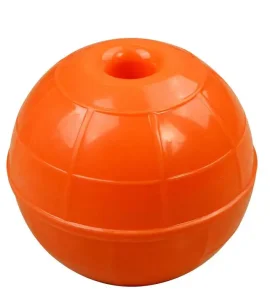
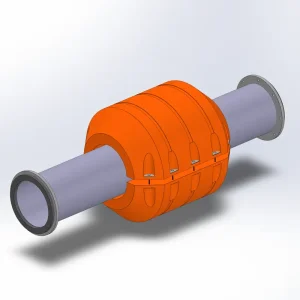
Featured heavy-duty dredge buoys, modular pipeline floats, barrier networks, and subsea buoyancy assemblies fabricated to marine engineering tolerances.



Global Dredging Infrastructure & Dynamic Flotation Realities
The commercial dredging market is undergoing rapid transformations driven by global port deepening for ultra-large container vessels (ULCV), coastal reclamation, and stringent environmental discharge directives.
Corrosion Elimination Paradigm
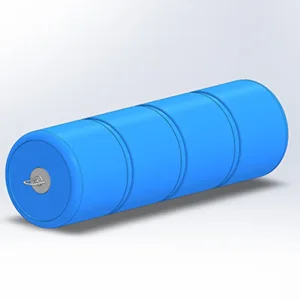
Traditional marine dredging operations relied heavily on welded steel pontoons and hollow steel drums. These structures suffered catastrophic galvanic corrosion, pitting from high-salinity waters, and rapid coating degradation under cyclic marine wave loading. The modern industry has shifted decisively toward rotomolded linear low-density polyethylene (LLDPE) dredge buoys and floats, completely eliminating structural rust, minimizing dry-dock overhaul cycles, and providing lifetime dielectric resistance against chemical runoff.
Hydraulic Slurry Slumping Management
Discharge lines conveying dredged sediment, gravel, quartz sand, and caustic mining tailings do not transport a static liquid. High-density mixtures (specific gravity ρ = 1.3 to 1.85 t/m³) exhibit high friction and sudden particle settling during flow deceleration. Inadequate buoyancy margins result in localized pipeline sag, accelerated abrasive bore scour, line rupture, or complete pipeline submersion. Certified dredge buoys provide calibrated excess reserve displacement to stabilize the hydraulic gradient.
Environmental & Turbidity Containment
Stricter MARPOL and national environmental protections mandate real-time turbidity barriers and containment booms alongside capital dredging operations. Uncontrolled sediment plumes destroy marine benthic ecosystems, degrade surrounding fisheries, and violate marine lease permits. Modern dredge buoys are engineered to seamlessly integrate with weighted silt curtains, surface oil skimmers, and anti-debris curtain systems directly alongside high-volume discharge conduits.
Naval Architecture Principles for Pipeline Buoyancy Sizing
Failure in dredging pipe flotation originates from under-calculating transient loading conditions. Our rotational molding engineers deploy deterministic formulas to ensure absolute structural freeboard under harsh sea states.
Deterministic Buoyancy Calculation
To maintain the international baseline freeboard where approximately 25% to 30% of the pipe diameter stays safely above the water line, total net buoyant force ($F_{buoyant}$) must encompass dynamic slurry density and marine drag variables:
F_buoyant ≥ (W_pipe + W_slurry + W_hardware + W_cable) × S_fWhere: S_f = Safety reserve factor (minimum 1.25 for sheltered waterways, 1.35 to 1.50 for high-current coastal zones and rough open-ocean swells).
Site-Specific Sizing Directives
- Specific Gravity Verification: Clean water (1.0 t/m³) is completely invalid for dredge line calculations. Sizing must be benchmarked on peak slurry density (typically 1.35 – 1.65 t/m³).
- Wave-Induced Dynamic Impact: Open water generates cyclic slamming pressures. Solid closed-cell polyurethane foam interior guarantees reserve displacement even if shell punctures occur.
- Inter-Float Spacing: Buoys must prevent pipe sag without causing rigid stress concentrations at HDPE pipe butt-weld joints.
Custom Dredge Buoys Standard Pricelist & Specification Index
Indicative tier-1 manufacturer FOB pricing matrix for rotomolded cylindrical pipe float pairs and heavy-duty marine buoys. Final quotations adjust for raw polymer index, PU filling density, and marine-grade bolt metallurgy.
| Nominal Pipe OD (mm / in) | Outer Diameter × Length (mm) | Wall Thickness (PE) | Net Buoyancy Capacity (kg/pair) | Fastener Specs | Est. FOB Price Range (USD/pair) |
|---|---|---|---|---|---|
| 110mm – 160mm (4"– 6") | 500mm × 800mm | 5.5 – 6.5mm | 110 – 160 kg | Hot-Dip Galv / SS304 M12 | $65.00 – $115.00 |
| 200mm – 250mm (8"– 10") | 700mm × 1000mm | 7.0 – 8.0mm | 320 – 480 kg | Galvanized / SS316 M14 | $140.00 – $220.00 |
| 315mm – 400mm (12"– 16") | 900mm × 1200mm | 8.5 – 9.5mm | 650 – 950 kg | High-Tensile Gr8.8 / SS316 M16 | $260.00 – $410.00 |
| 450mm – 560mm (18"– 22") | 1200mm × 1500mm | 10.0 – 11.5mm | 1,400 – 2,200 kg | High-Tensile Gr8.8 / SS316 M20 | $480.00 – $780.00 |
| 630mm – 710mm (24"– 28") | 1400mm × 1800mm | 12.0 – 14.0mm | 2,600 – 3,700 kg | Marine Grade SS316L M22 | $850.00 – $1,350.00 |
| 800mm – 900mm (32"– 36") | 1700mm × 2200mm | 14.0 – 16.5mm | 4,500 – 6,200 kg | Marine Grade SS316L M24 | $1,600.00 – $2,450.00 |
| 1000mm – 1200mm (40"– 48") | 2100mm × 2500mm | 16.0 – 18.5mm | 7,500 – 11,000 kg | Custom Stud Bar & Nyloc SS316 | $2,900.00 – $4,600.00 |
*Volume tiered commercial discounts apply for full 40'HQ shipping container quantities. Pricing excludes port duties, special testing agency stamps (ABS, BV, DNV), and localized tariffs.
Engineered Buoyancy Deployments Across Demanding Sectors
From high-velocity estuarine tidal waters to extreme high-altitude mineral tailings ponds, our rotational molded buoys deliver uncompromising operational durability.
Port Deepening & Harbor Capital Works
Deploying large-diameter trailing suction hopper dredgers (TSHD) requires continuous discharge conduits extending up to 5 kilometers to shore containment cells. Dredge buoys secure steel and flexible rubber pipeline strings, absorbing constant wake action from passing cargo traffic without slippage or bracket sheared-bolt failures.
Tailings Transfer & Mineral Beneficiation
Phosphate, copper, iron ore, and bauxite tailings involve aggressive slurries with specific gravities exceeding 1.5 t/m³ coupled with acidic or alkali reagents. Our LLDPE shells exhibit complete chemical inertness across pH 1 through 13, insulating against chemical degradation that rapidly compromises coated steel or low-grade plastics.
Subsea Pipeline Tie-Ins & Cable Flotation
Specialized subsea pipeline pull-ins, beach landing pulls, and inter-array power cable installations necessitate calibrated staged buoyancy modules. Float tie-in models with molded internal anti-skid ribs secure the lines securely against axial displacement, allowing safe positioning and steady tow-out across open water channels.
International Compliance, Marine Certifications & Field Support
Our production lines in Lizhuang Town, Huimin County, operate under comprehensive computerized monitoring systems to guarantee rigorous structural compliance and third-party qualification.
ISO 9001 & Raw Material Traceability
Every production campaign uses 100% virgin prime rotomolding polyethylene compounds enriched with minimum UV-8 stabilizer packages. Raw materials undergo melt flow index (MFI) and environmental stress crack resistance (ESCR ASTM D1693) testing to guarantee against brittle fractures in extreme tropical sunlight or sub-zero arctic dredging operations.
Hydrostatic Pressure & Foam Integrity
Internal buoyancy voids are injection-filled with high-pressure rigid polyurethane (PUR) closed-cell foam with a density rating exceeding 35-40 kg/m³. With a closed-cell content of over 92%, water absorption is limited to less than 1.5% under permanent submergence, preventing loss of reserve displacement in the event of external shell abrasion or impact tearing.
Rapid Factory Support & Mobilization
We support global EPC contractors with complete deployment layouts, spacing recommendations, bolt torque guides, and pre-assembled hardware sets. Fast-track containerized staging ensures delivery to major global hub ports in Europe, the Middle East, Southeast Asia, South America, and Africa, keeping operations aligned with strict project milestones.
Technological Roadmap: The Evolution of Intelligent Marine Buoyancy
Next-generation dredging projects require higher visibility, structural automation, and automated condition monitoring across miles of remote floating pipelines.
IoT-Enabled Structural Health Monitoring
Future dredge buoys are advancing toward integrated, self-powered sensory arrays. Miniaturized strain gauges, multi-axis accelerometers, and tilt sensors molded into float collars monitor localized pipeline bending stresses, dynamic wave slamming loads, and unauthorized line drifting in real time, alerting dredge masters through AIS/LoRa telemetry.
Circular Economy & Bio-Based Polyethylene
In response to international maritime ESG directives, research is accelerating the integration of ultra-durable bio-circular virgin polymers and 100% recyclable, fluorocarbon-free core foams. These formulations preserve high tensile strength and puncture resistance while lowering the carbon footprint across marine infrastructure projects.
Hydrodynamic Low-Drag Profiles
Naval computational fluid dynamics (CFD) modeling has yielded asymmetrical and elliptical outer shell designs. In high-velocity estuarine tidal streams and river currents, these hydrodynamic profiles reduce hydrodynamic cross-flow drag forces by up to 28%, significantly decreasing anchor cable tension and preventing pipeline zig-zag drift.
Frequently Asked Questions for Project Engineers & Buyers
Detailed technical answers to common queries regarding dredge buoys, buoyancy margins, and operational reliability.
What is the standard rule of thumb for calculating dredge buoy buoyancy?
The total buoyancy provided by the pipeline floats must exceed the aggregate weight of the pipe itself, the conveyed slurry (based on peak specific gravity), and all joint accessories (flanges, bolts, sleeves) by a reserve margin of at least 20% to 30%. This excess displacement guarantees that approximately one-quarter to one-third of the pipe's outer diameter remains comfortably above the water line, maintaining line visibility and preventing submergence from localized wave slapping.
Why is rotomolded polyethylene preferred over fabricated steel or hollow drums?
Rotomolded LLDPE delivers total corrosion resistance against high-salinity seawater, sulfuric mine tailings, and chemical compounds without requiring continuous sandblasting or re-coating. In addition, its ductile outer shell absorbs heavy impact collisions from workboats without permanent denting. When filled with closed-cell polyurethane foam, rotomolded buoys are virtually unsinkable, unlike steel drums that flood and sink immediately upon a single weld fissure or puncture.
How does internal polyurethane (PUR) foam behave if the outer shell is torn?
Our buoyancy products are injection-filled with high-density (35-40 kg/m³) rigid polyurethane foam with over 92% closed-cell structure. Under severe abrasion or outer shell damage, water is prevented from migrating throughout the interior void. The absorption rate remains below 1.5% by volume, ensuring the float maintains its buoyant capacity until routine maintenance is scheduled.
What parameters are required to generate an accurate quotation and engineering drawing?
To provide an optimized recommendation, our engineering department requires: (1) Pipe outer diameter (OD) and material (HDPE, steel, rubber); (2) Pipe wall thickness / SDR rating; (3) Conveyed slurry composition, peak density (t/m³), and operating pressure; (4) Total pipeline length and inter-float spacing expectations; (5) Marine environmental conditions (wave height, tidal current velocity, salinity); and (6) Destination port for containerized loading optimization.
What is the standard warranty period and expected working lifespan?
The contractual warranty coverage starts on the date the buyer formally hands over the goods to the project owner/investor and terminates 18 months post-handover or 12 months after active water installation, whichever milestone occurs first. When exposed to normal marine conditions with UV stabilization, virgin rotomolded LLDPE floats routinely achieve operational field lifespans between 10 to 15 years.
Modular Pipeline, Mooring & Pontoon Engineering Portfolio
Complementary deepwater tie-in units, heavy-duty mooring buoys, discharge pipelines, and slurry handling rubber hoses.