
Primary Dredger & Marine Flotation Fleet (Selection I)
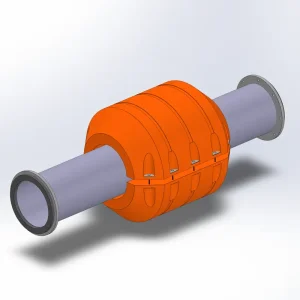
Standardized and custom engineered pontoon solutions built using Virgin LLDPE / HDPE matrices with expanded closed-cell polyurethane foam cores.





Global Dredging Landscape & Buoyancy Demands
Maritime logistics expansion, deep-water port access channels, and climate change-induced coastal adaptation have fundamentally transformed modern dredge line buoyancy engineering.
Aggressive Slurry Densities
Contemporary capital dredging involves ultra-high specific gravity slurries exceeding 1.6 to 1.8 t/m³. Conventional steel pontoons buckle under localized cyclic hydrodynamic load. Modular polyethylene floats resolve buckling failure through high-elastic resilience.
Harsh Marine Degradation
Open-ocean salinity and UV irradiation trigger severe pitting corrosion in metallic buoyancy assemblies. Rotomolded LLDPE formulations containing 2.5% carbon black masterbatch eliminate corrosion entirely, guaranteeing decades of non-destructive duty cycles.
Environmental Compliance
Stringent IMO and regional marine safety regulations demand zero-leakage protocols. Traditional pontoons risked hydraulic or rust contamination. In contrast, inert polymer floats maintain closed-loop buoyancy with zero environmental toxicity.
Commercial Dredger Floats Engineering Pricelist
Indicative FOB cost structure according to inner pipe diameter, buoyancy rating, and polyurethane foam infusion volumes. Customized volumetric designs are available upon engineering inquiry.
| Pipe Outer Dia. (OD) | Outer Diameter (mm) | Total Length (mm) | Wall Thickness | Net Buoyancy (kg) | Indicative Price Range (USD/Pair) |
|---|---|---|---|---|---|
| DN 110 - DN 160 | 500 mm | 800 mm | 5.5 - 6.5 mm | 110 - 160 kg | $45.00 - $68.00 |
| DN 200 - DN 250 | 700 mm | 1100 mm | 7.0 - 8.5 mm | 280 - 420 kg | $85.00 - $135.00 |
| DN 315 - DN 400 | 950 mm | 1400 mm | 9.0 - 11.0 mm | 650 - 950 kg | $180.00 - $270.00 |
| DN 450 - DN 560 | 1200 mm | 1800 mm | 11.0 - 13.5 mm | 1,400 - 2,100 kg | $360.00 - $520.00 |
| DN 630 - DN 800 | 1500 mm | 2200 mm | 13.0 - 16.0 mm | 2,800 - 4,200 kg | $720.00 - $1,150.00 |
| DN 900 - DN 1200 | 2000 mm | 2600 mm | 16.0 - 20.0 mm | 5,500 - 8,500 kg | $1,650.00 - $2,800.00 |
Engineering teams must never estimate float counts using dry or empty-pipe weights. Total buoyant lift must account for slurry saturation, marine encrustation, and hydrodynamic wave resistance:
- Target Freeboard: ≈ 25% of the outer pipeline diameter exposed above surface
- Fluid Ingress Resistance: 35-40 kg/m³ closed-cell polyurethane foam core prevents waterlogging
- Thermal Cycling: Anti-stress rib architecture eliminates cold-weather brittleness
Localized Engineering Field Applications
From extreme tidal variations to corrosive tailings ponds, our buoyancy systems deliver proven stabilization across challenging environments.
High-Current Port Capital Dredging
In high-traffic sea channels with continuous crosswinds and vessel swell, float stability prevents pipeline buckling. Fastened via high-tensile galvanised or stainless steel bolt sets with anti-loosening nylon nuts, these floats secure the dredge line continuously.
Mining Tailings & Acid Leach Transfer
Discharging high-density mineral slurries across tailings ponds involves aggressive chemical environments. Our rotationally molded shells use UV-stabilized, high-density polyethylene that is fully impervious to acid and alkali attack.
Ecological Reservoir Desilting & Barriers
Reservoirs require low-impact maintenance where heavy mechanical equipment must not cause accidental contamination. Our floats offer lightweight handling, streamlined towing geometries, and can integrate pollution barriers or silt curtains.
China Factory Scale & Supply Chain Resilience
Based in Binzhou, Shandong, Shandong Binzhou Juhua Rubber & Plastic Co., Ltd. delivers direct factory-integrated benefits to marine EPC contractors worldwide.
Vertical Integration & Tooling Hub
With complete internal CNC toolmaking, raw resin blending, and high-capacity rotational ovens, we achieve unmatched turnaround speed from engineering CAD design to batch production without middleman markups.
Microprocessor-Controlled Molding
Every float shell is molded using variable-frequency rotational control paired with real-time infrared temperature profiling. This guarantees uniform wall thickness and completely eliminates seam weaknesses or thin-wall failures.
Direct Coastal Logistics
Proximity to Qingdao and Tianjin ports streamlines bulk maritime logistics. Our standardized nesting packaging reduces container freight volume by up to 30%, keeping landed costs exceptionally competitive worldwide.
Buoyancy Technology Roadmap (2025–2030)
Smart maritime operations require floats that do more than provide passive lift. We are pioneering integrated telemetry, reinforced composites, and circular materials.
IoT-Enabled Smart Floats
Embedding low-power LoRaWAN and satellite-linked strain sensors directly into the float wall during the molding process. Contractors can monitor pipeline stress, joint deflection, and temperature variations in real time via an offshore dashboard.
Graphene-Enhanced Polymers
Incorporating nano-graphene reinforcements into the outer polyethylene matrix to deliver up to 40% higher tensile strength and abrasion resistance. This reduces wall thickness without compromising structural integrity or impact resilience.
100% Closed-Loop Recyclability
Engineering cross-link-free recyclable polyurethanes and post-industrial ocean-bound plastic composites. Once a dredging project wraps up, flotation bodies can be mechanically ground, re-granulated, and remolded with zero material degradation.
Localized Engineering Support & QA Protocols
We back every project with thorough field inspection services, third-party test certifications, and clear warranty terms.
Rigorous Factory Acceptance Tests (FAT)
Every production batch undergoes hydro-pressure compression tests, drop-impact testing at sub-zero temperatures, and tensile pull tests on integrated fastening lugs to prevent offshore pull-out failures.
Dual-Metric Warranty Protection
Coverage begins when the buyer hands the equipment over to the end-investor, lasting 18 months from that handover date or 12 months from the installation date (whichever comes first), fully supported by readily available replacement modules.
Site-Assembly Guidance & Spares
We supply modular split-shell spare sets, corrosion-proof marine fasteners, torque specifications, and pipeline positioning drawings to ensure smooth on-site installation by your marine crew.
Specialized Floatation & Pontoon Modules (Selection II)
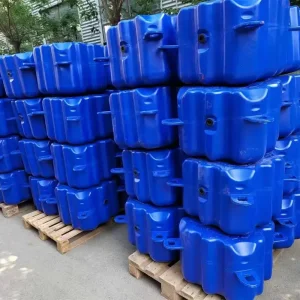
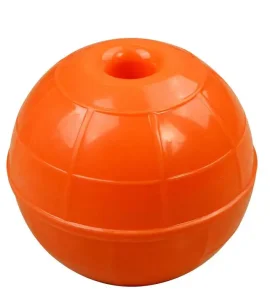
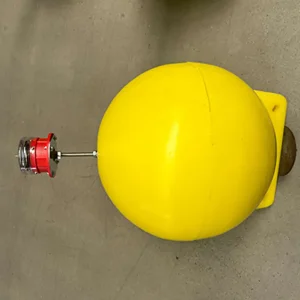
Explore our expanded lineup of pipeline floats, mooring buoys, floating boat platforms, and custom rotomolded assemblies.


Frequently Asked Technical & Commercial Questions
Common inquiries answered directly by our rotational molding and offshore installation engineers.
What are dredging pipeline floats and how are they constructed?
Pipeline floats (dredge floats or buoyancy collars) are two-piece clamp-on shells manufactured from virgin medium-to-high density polyethylene (MDPE/HDPE). Filled with closed-cell polyurethane foam, they clamp around discharge lines to keep the system buoyant, aligned, and clearly visible during slurry transport.
How do you accurately calculate the number of floats required?
Floats must offset the dry pipe weight, the conveyed medium (often slurry with specific gravity between 1.3 and 1.8), joint couplings, and dynamic wave forces. Total buoyancy should exceed this gross weight by 20% to 30%, keeping about one-quarter of the pipe diameter above the waterline.
Why is rotomolded polyethylene preferred over welded steel pontoons?
Unlike steel, polyethylene is 100% rustproof and resistant to saltwater corrosion and abrasive sediment. Its elasticity absorbs boat impacts and shore contact without permanent deformation, and its lightweight profile significantly reduces handling and transport costs.
What is the standard warranty period and after-sales support policy?
Our standard warranty begins on the handover date to the project investor and extends for 18 months, or 12 months from the active installation date (whichever comes first). We also maintain ready inventories of replacement halves, fasteners, and installation hardware.
What project parameters are required for a firm price quotation?
To provide an accurate quote, please supply: 1) Steel or HDPE pipe outer diameter (OD); 2) Slurry density or transported medium; 3) Discharge pipe length; 4) Site conditions (river, harbor, or open ocean); 5) Desired freeboard margin; 6) Delivery destination port.
Can you manufacture custom cable troughs and subsea tie-in profiles?
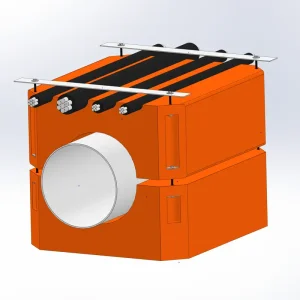
Yes. We regularly produce custom designs with molded-in electrical cable troughs, subsea tie-in anchoring eyes, high-visibility marine colors, retro-reflective markings, and specialized internal profiles to fit non-standard pipe coatings.