Custom Float Pipe Manufacturers & Company
Precision Rotomolded Polyethylene Buoyancy Solutions, Hydrodynamic Stability Systems, and Heavy-Duty Slurry Pipeline Management for Dredging, Marine Infrastructure, and Subsea Operations.
High-Performance Floats & Pipeline Infrastructure
Explore standard and precision-engineered float pipe modules built for offshore reclamation, aggressive slurry handling, and environmental barrier control.


Engineering Superiority in Marine Slurry & Dredging Infrastructure
Analyzing global commercial environments, marine polymer resistance, and total pipeline integrity across complex hydrodynamic operations.
Advanced LLDPE/HDPE Formulations
Our rotomolded shells are formulated with premium virgin Linear Low-Density Polyethylene (LLDPE) enhanced with carbon-black stabilization and Class 8 UV inhibitors. This eliminates stress-cracking caused by UV degradation, thermal variations, and harsh oceanic saltwater environments, offering decades of structural integrity without rust or coating failures.
Closed-Cell Polyurethane Core
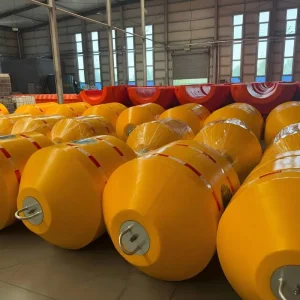
Each buoyant body is filled with high-density polyurethane (PU) closed-cell foam with a core density exceeding 32-35 kg/m³. Even in the catastrophic event that the external protective polyethylene shell sustains impact punctures or abrasive gouges, the float retains 95%+ buoyancy without water ingress or sinking risks.
Interchangeability & CNC Tooling
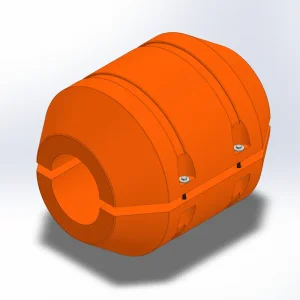
Standardized rotational molding molds manufactured through multi-axis CNC machines guarantee uniform wall thickness, accurate clamping curvature, and seamless interchangeability. Existing clients can order spare half-bodies knowing they will seamlessly clamp over their current operational floating lines without downtime or misalignment.
Hydrodynamic Buoyancy Reserve Equation
Under-sizing float buoyancy is the single greatest cause of submerged discharge lines during dredging slurry densification. Our engineering standard mandates calculation over full working slurry load, not clean water:
Required Net Buoyancy (F_b) ≥ (W_pipe + W_slurry[ρ_max] + W_hardware) × Safety Factor (1.20 - 1.30)
This design guideline ensures a clean, predictable 25% pipeline freeboard above the waterline, safeguarding the pipeline against high shear, wind chop, and unexpected sediment surges.
Engineered for Harsh Terrains & Hydrodynamic Extremes
From shallow sandbars to severe subsea installations, our float systems adapt to real-world industrial stresses.
Port & Harbor Reclamation
Harbor maintenance and land reclamation require floating lines that handle constant wake and heavy ship surges. Coupled with integrated navigation lights and warning flags, Juhua pipe floats keep discharge pipelines safely oriented while providing maximum visual warnings to maritime traffic.
Mining Tailings & Slurry Ponds
Transporting ore tailings involves heavy abrasive slurries with specific gravities frequently exceeding 1.4 to 1.8. Custom-dimensioned float shells distribute concentrated weight evenly, preventing local pipe sagging, internal wear hot spots, and catenary pipe buckling.
River Desilting & Municipal Control
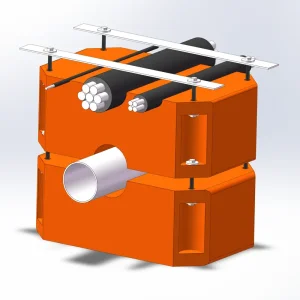
Navigating curved inland rivers with rapid crosscurrents demands flexible pipeline transitions. Our modular clamp-on floats allow tailored float spacing and optional cable troughs, enabling concurrent delivery of power cables, sensors, and telemetry lines without tangling.
Localized Support, Engineering Compliance & Standards
Full conformance to international maritime regulations, ISO quality controls, and turn-key logistics support.
Strict ISO 9001 Quality Assured
All batches undergo systematic mechanical load testing, ultrasonic thickness gauging, and closed-cell water absorption checks. Fasteners and galvanized/stainless hardware sets are engineered to resist high-salinity galvanic corrosion for long-term deployments.
Comprehensive Handover Warranty
We provide full structural assurance: the product warranty activates upon buyer handover to the site investor and extends 18 months from delivery or 12 months from on-site commissioning, whichever occurs first, supported by responsive spare-parts inventory.
Export Container Optimization
Rotomolded half-body designs nest neatly for maritime container packing (20GP/40HQ), maximizing payload volume, drastically reducing international freight expenses, and enabling organized, damage-free offloading at remote discharge ports.
The Future of Intelligent Flotation Engineering
Anticipating next-generation marine infrastructure demands through smart sensing, bio-friendly polymers, and ultra-deepwater capabilities.
IoT-Enabled Buoyancy Telemetry
Integration of low-power sub-surface telemetry modules within pipeline float shells to detect internal slurry leakage, pipeline stress concentrations, and localized freeboard reduction in real time, transmitting predictive alerts via satellite or LoRaWAN networks.
Eco-Circular Marine Resins
Development of ultra-durable post-consumer and ocean-bound recycled polymer blends that maintain 100% of the tensile impact strength required for dredging, advancing circular economy goals without compromising physical lifespan or hydrolytic resilience.
Deepwater Synthetic Foam Modules
Expanding subsea tie-in capabilities with micro-balloon syntactic foam inserts capable of withstanding hydrostatic pressures exceeding 50 bar, providing buoyant support for deepwater offshore oil, gas, and green-hydrogen transfer conduits.
Engineering Questions & Detailed Technical Specifications
Direct answers for offshore operators, dredging contractors, and marine procurement teams.
What are pipeline floats?
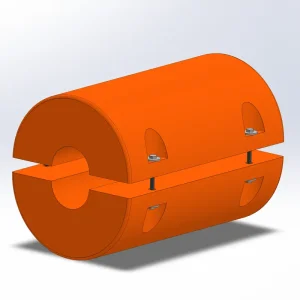
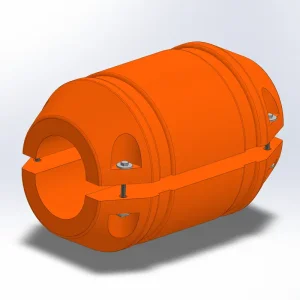
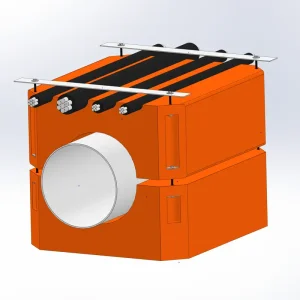
Pipeline floats (dredge floats or buoyancy modules) are rotomolded polyethylene two-piece clamp-on shells filled with closed-cell foam. They clamp directly over discharge and transfer pipes to keep dredging, slurry, or water pipelines floating steadily, visually detectable, and properly aligned on water surfaces.
How do I calculate how many floats I need for my pipeline?
Total buoyancy must exceed total weight. Calculate the combined weight of the pipe, full internal slurry at peak density, and connected hardware. Floats must supply 20% to 30% surplus buoyancy over this total weight, maintaining approximately one-quarter of the pipe diameter above the surface line.
Are polyethylene floats suitable for seawater use?
Yes. Virgin linear polyethylene is intrinsically immune to saline corrosion, bio-fouling degradation, UV exposure, and acidic or alkaline chemical attacks. Unlike steel floats that face rust, cathodic wear, and coating breakdown, PE floats remain maintenance-free for decades in marine environments.
How long is the warranty period?
The standard warranty coverage begins upon customer handover to the end investor or project owner. It remains fully active for 18 months from that handover date or 12 months from the practical installation and commissioning date, whichever threshold is reached first.
What information is needed for an accurate pipe float specification?
Submit: (1) Pipe outer diameter (OD), (2) Pipe material and wall thickness, (3) Conveyed medium and specific gravity, (4) Line length and spacing requirements, (5) Site conditions (river, harbor, open sea), (6) Desired freeboard and safety color markings, and (7) Destination port.
Can floats and buoys be customised?
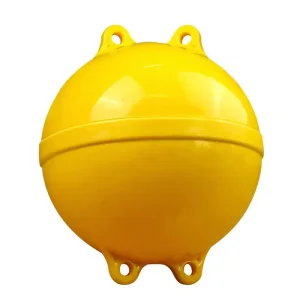
Yes. Float bodies are custom-dimensioned to match specific pipe ODs, cable trough channels can be integrated directly, and custom shell colors (safety orange, yellow, marine white) can be blended. Custom rotomolded geometries can also be engineered directly to client CAD blueprints.
Engineered Flotation, Mooring & Subsea Systems
Heavy-duty navigation buoys, pipeline tie-ins, and industrial flotation systems for offshore projects worldwide.