
Standard & Specialized Marine Engineering Assets
High-resilience rotomolded and vulcanized transfer solutions designed for mission-critical offshore offloading and dynamic subsea-to-surface loading operations.





Offshore Fluid Transfer: The Critical Infrastructure Matrix
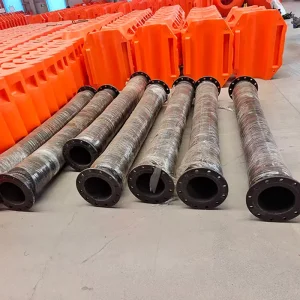
The commercial scale of dynamic floating marine hoses and polymeric flotation elements is tied fundamentally to offshore exploration, Single Point Mooring (SPM) facilities, and continuous harbor channel maintenance.
Deepwater Dynamics & Fatigue
Modern offshore crude offloading environments (including FPSO to shuttle tanker offloading) subject flexible floating hoses to cyclical bending stresses, high-shear surface waves, and fluctuating internal hydrodynamics. The industry prioritizes carcass endurance and dynamic fatigue survival.
Zero-Spill Ecological Imperatives
Stringent IMO, MARPOL, and regional environmental regulations require dual-carcass construction with instantaneous leak-detection annuli. Marine terminal operators cannot tolerate single-point failures that risk localized hydro-carbon contamination or operational downtime.
Hybrid Flotation Architecture
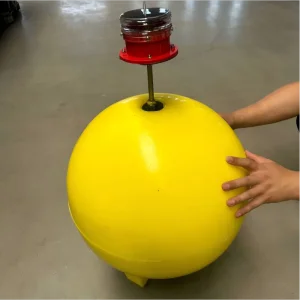
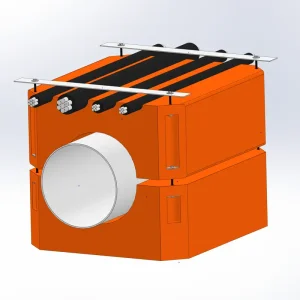
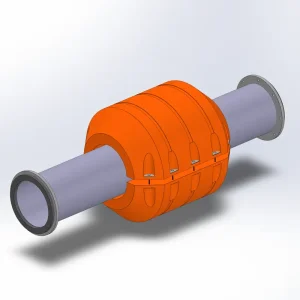
Traditional integrated closed-cell rubber sponge flotation is increasingly augmented or substituted by high-durability, UV-stabilized rotomolded outer polyethylene (PE) shells and modular clamp-on floats, ensuring buoyancy even under heavy mechanical impact or continuous weathering.
Hydrodynamic Stability & Sizing Engineering
Shandong Binzhou Juhua Rubber & Plastic Co., Ltd. (Juhua / Giant Rubber) incorporates variable-frequency speed control, electronic automatic temperature telemetry, and precise polymer distribution to achieve superior cross-sectional uniformity across all flotation layers.
- UV-Stabilized Polyethylene Shells: Complete immunity to saltwater oxidation, biological fouling, and chemical erosion without requiring toxic anti-fouling coatings.
- Calculated Reserve Buoyancy: Precision matched to slurry specific gravity (up to 2.1 SG) or heavy crude, maintaining approximately one-fourth diameter freeboard.
- Precision Clamping Geometries: Internal non-slip ribs and corrosion-resistant hot-dip galvanized or stainless-steel fastener configurations eliminate line slippage.
            // Sizing Formula for Dynamic Marine Fluid Lines

            // Minimum Reserve Buoyancy Calculation


            B_total ≥ (W_pipe + W_fluid + W_hardware) × SF


            Where:

            • W_pipe   = Dry carcass mass (kg/m)

            • W_fluid  = Cross-sectional media payload

                      (π × ID² / 4) × ρ_medium

            • W_hardware = Flanges, collars & bolts

            • SF      = Dynamic Safety Factor (1.20 - 1.30)

            • Freeboard: Target ≥ 25% outer diameter profile
Industrial Offshore & Coastal Scenarios
From CALM buoy moorings to estuarine maintenance dredging, customized floating transfer strings adapt to harsh hydrodynamic regimes.
CALM / SPM Terminal Operations
Catenary Anchor Leg Mooring systems utilize floating hose strings to bridge the offloading buoy and shuttle tankers. Hoses require high flexibility at the buoy rail connection to mitigate kinking under severe weather and sea states.
FPSO Tandem Discharge Configurations
Tandem offloading requires hoses stored on reels or chutes to be deployed directly into open sea. The hose must withstand bending over storage drums while retaining internal reinforcement structure and high reserve buoyancy.
High-Density Slurry & Tailings Land Reclamation
Harbor expansions and mine tailings disposal transport slurries exceeding 1.6 SG. Standard flotation fails, causing pipelines to sink. Customized oversized rotomolded floats provide calculated upward reserve force.
Next-Generation Marine Flotation Innovations
The marine fluid offloading sector is moving toward digitized structural health monitoring and carbon-neutral material lifecycles.
IoT-Enabled Structural Health Monitoring
Next-generation floating transfer lines integrate embedded fiber-optic strain sensors and RFID-tagged buoyancy jackets. These measure distributed bending radii, pressure transients, and carcass integrity to forecast maintenance cycles accurately.
Circular Rotomolding Polymers
Addressing decommissioning obligations, Juhua utilizes fully recyclable high-density polyethylene (HDPE) compounds compounded with advanced UV-328 stabilizers, extending service lifetimes to 15+ years in high-insolation equatorial waters.
Dynamic Anti-Crush Cell Foams
Polyurethane core filling technology continues to evolve from open-cell designs to non-water-absorbing, cross-linked rigid closed-cell systems. Even if external polymer shells suffer high-energy vessel collision, net water intake remains near zero.
Industrial Transfer & Auxiliary Solutions
Explore our full line of marine navigation assets, subsea tie-in buoyancy elements, and rotomolded waterworks solutions.

Frequently Asked Technical Questions (FAQ)
Answers to common structural, hydrodynamic, and procurement inquiries from marine engineering contractors, terminal operators, and EPC project managers.