
High-Performance Mooring & Buoyancy Systems (Series I)
Engineered for high hydrodynamic stability, cyclical load absorption, and extreme marine longevity. Browse standard and customizable marine configurations with direct factory pricing.
-
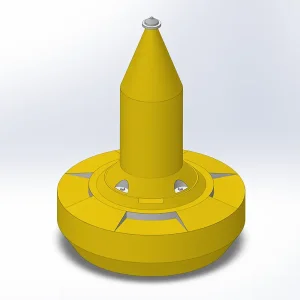 Custom High-Performance Marine Buoys for Safe and Efficient Waterways Manufacturers, PricelistRequest Quote
-
 ODM Pipe Floats for Floating Water Pipelines and Marine Support Systems Manufacturers, ManufacturerRequest Quote
-
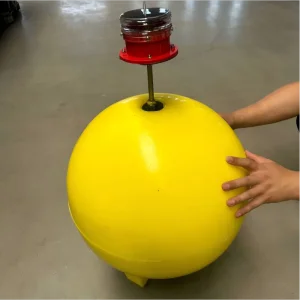 High-Quality LED-Equipped Floating Ball for Safe and Efficient Water Operations Factory, FactoriesRequest Quote
-
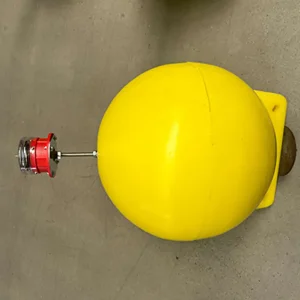 ODM Floating Ball with LED Light – Reliable Marine Navigation and Safety Manufacturer, PricelistRequest Quote
-
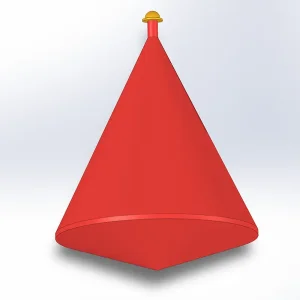 ODM Heavy-Duty Marine Buoys for Reliable Navigation & Offshore Safety Manufacturer, CompaniesRequest Quote
-
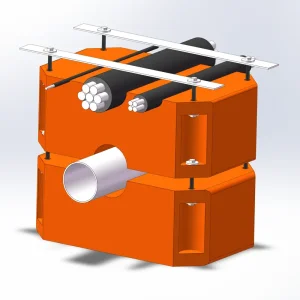 OEM Advanced Modular Pipe Floats with Integrated Cable Channels Manufacturer, CompanyRequest Quote
-
 ODM Mooring Buoy for Secure Vessel Anchoring and Stable Marine Mooring Systems Manufacturers, ManufacturerRequest Quote
-
ODM Durable Cable-Integrated Pipe Floats for Submerged Infrastructure Supplier, ManufacturerRequest Quote
Evolution of Mooring Buoy Accessories & Critical Load Integrity
In offshore, terminal, and port logistics, mooring buoy hardware serves as the primary failsafe between multi-million-dollar maritime vessels and subsea anchor chains. Explore how metallurgical and polymer engineering has evolved to meet severe ocean currents and dynamic cyclic fatigue.
Through-Chain Hawse Pipe Systems
Traditional mooring buoys utilized internal tension rods that concentrated mechanical shear stress within the buoy shell. Modern Class-approved configurations feature heavy-wall central through-hawse pipes lined with structural steel (Q345B/Grade 3), allowing the anchor chain to pass continuously from the subsea ground tackle to the top mooring eye.
- Zero mechanical load transferred to the rotomolded PE shell
- Accommodates 16mm to 76mm stud-link chain seamlessly
- Cast-steel bellmouth ends eliminate link chafing
Bi-Directional High-Load Swivels
Tidal reversals and cyclic yaw forces induce intense rotational torque on mooring pendants. Without engineered swivel hardware, anchor chains knot, shorten, and cause catastrophic ground tackle dragging. Our forged Grade 80 alloy steel swivels provide sealed continuous 360-degree rotation under sustained working tensions.
- Minimum Breaking Load (MBL) ratings from 150 kN to over 2,200 kN
- Dual marine seals protect internal needle thrust bearings
- Sacrificial zinc anode integration for cathodic prevention
Polyurethane & LLDPE Matrix Evolution
The maritime industry has progressively abandoned welded steel buoys due to heavy corrosion rates, high repainting OPEX, and puncture hazards. Modern rotomolded virgin Linear Low-Density Polyethylene (LLDPE) shells filled with closed-cell polyurethane foam guarantee 100% unsinkable performance even if punctured.
- UV20+ stabilized resin prevents chalking & embrittlement
- Elastic memory withstands low-speed vessel impacts
- Eliminates blast-cleaning and biocidal antifouling cycles
Engineering Buoyancy Reserve & Tensile Proof Validation
Inadequate reserve buoyancy leads to mooring buoy submersion under heavy current drags, resulting in severe dynamic snatch loading. Our marine architects apply rigorous buoyancy reserve coefficients for every custom quotation.
// NET EFFECTIVE RESERVE BUOYANCY CALCULATION FOR MOORING ARRAYS:
B_net = (V_displaced × ρ_seawater) - (W_buoy_dry + W_accessories + W_submerged_chain)
Where Safety Factor (SF) ≥ 1.35 to 1.50 under maximum 100-year storm surge currents (v ≥ 2.5 m/s).
*Note: W_submerged_chain accounts for 50% to 65% of the suspended riser chain weight resting between the seabed touch-down point and the bottom pad-eye under slack tide conditions.
| Component Hardware | Standard Material Grade | Surface Treatment | Proof Load Range (kN) | Class Certification Standard |
|---|---|---|---|---|
| Central Hawse Pipe | Structural Steel Q345B / ASTM A36 | Hot-Dip Galvanized ISO 1461 (≥85 µm) | 250 – 1,800 kN | DNV-OS-E301 / IALA E-108 |
| Bow & D-Type Shackles | Grade 80 / Grade 100 Alloy Forging | Dacromet / Zinc Electroplate / HDG | 120 – 2,400 kN | EN 13889 / US Fed Spec RR-C-271 |
| Mooring Swivel Assemblies | Forged Cr-Mo Alloy Steel 42CrMo | Self-Lubricated Marine Epoxy + HDG | 200 – 2,200 kN | ABS / BV Mooring Guidelines |
| Pick-Up Pendants & Eyes | Stainless Steel 316L / Forged Mild Steel | Passivated / Marine Fluoropolymer | 80 – 650 kN | ISO 1704 / OCIMF SBM Rules |
| Fasteners, Tie-Rods & Bolts | 316 (A4-80) Stainless or Grade 8.8 Steel | Hot-Dip Galvanized / PTFE Coating | 45 – 350 kN | DIN 931 / ISO 4014 |
Engineered for Global Environmental Extremes
From sub-zero Arctic freeze-in conditions to equatorial ultra-saline marine terminals, mooring accessories require environment-specific metallurgy and polymer formulations.
Arctic & Ice-Prone Ports
High-latitude ports demand impact-resistant ductile metallurgy. Standard mild steels experience severe ductile-to-brittle transitions at -20°C. Juhua specifies Charpy V-Notch impact-tested steels verified at -40°C with non-stick silicone coatings to deter surface ice accretion.
Tropical High-Saline Waterways
In shallow, warm equatorial harbors, biofouling and microbial-induced corrosion accelerate steel wastage up to 1.2 mm/year. Juhua combines sacrificial heavy-mass zinc collars with thick-walled rotomolded hulls that prevent barnacle rooting without toxic leaching.
Typhoon & Storm Surge Zones
Tropical cyclones inflict extreme wave heave and dynamic snap-back tensions. Our accessories feature heavy forged bellmouth chain stoppers and shock-absorbing elastomeric load washers that dampen instantaneous peak tension spikes.
Mine Tailings & Corrosive Ponds
Acid rock drainage (ARD) and alkaline tailings discharge pipelines require exceptional chemical resistance. We utilize virgin high-density polymer housings with Hastelloy or Duplex 2205 fasteners to deliver decade-long maintenance-free flotation.
Specialized Industrial Marine & Pipeline Solutions (Series II)
Comprehensive turnkey flotation bodies, dredging pipeline floats, subsea tie-ins, and containment barrier assemblies manufactured to rigorous global specifications.
-
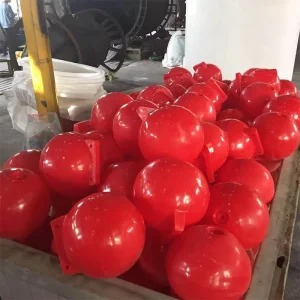 Best PE Float Ball for Safe and Efficient Water Operations Companies, PricelistRequest Quote
-
 ODM Floating Barrier Systems for Water Safety and Project Efficiency Manufacturer, CompanyRequest Quote
-
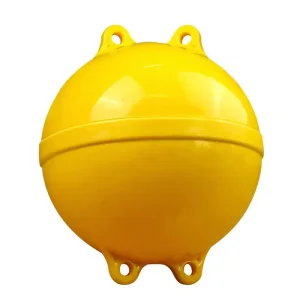 ODM ABS Float Ball for Reliable Marine and Freshwater Buoyancy Manufacturers, FactoriesRequest Quote
-
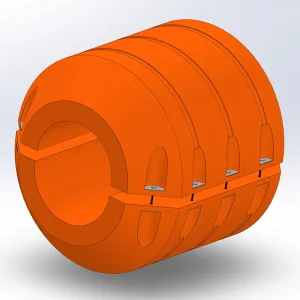 ODM High-Buoyancy Floats for Marine Projects Suppliers, PricelistRequest Quote
-
 ODM Subsea Tie-In Pipeline Float – Reliable Buoyancy for Underwater Pipelines Products, PricelistRequest Quote
-
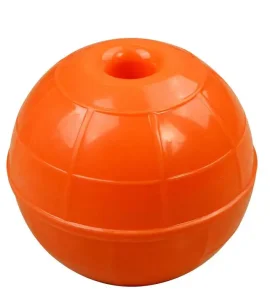 OEM ABS Float Ball – Durable Buoyancy Support for Water Projects Manufacturers, ManufacturerRequest Quote
-
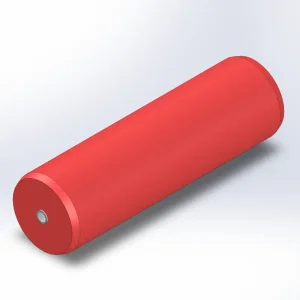 Best Reliable Floating Barriers for Marine and Industrial Protection Supplier, FactoryRequest Quote
-
ODM Mooring Buoy for Marina Berths, Vessel Anchorage and Offshore Mooring Systems Suppliers, ManufacturersRequest Quote
Frequently Asked Engineering & Procurement Questions
Essential due-diligence questions addressed by Juhua's senior naval architects and international marine procurement specialists.
What is the standard corrosion allowance for mooring through-hawse steel assemblies?
Under IALA and DNV guidelines for permanent marine mooring infrastructure, our structural steel central hawse assemblies are engineered with a minimum base wall thickness of 12mm to 16mm and hot-dip galvanized to ISO 1461 (≥85 µm to 120 µm zinc layer). This delivers an initial 10-year galvanic barrier, complemented by optional sacrificial zinc anodes for installations exceeding a 20-year service life.
How do you verify the Minimum Breaking Load (MBL) for custom swivels and shackles?
Every production batch undergoes 100% Magnetic Particle Inspection (MPI) to identify surface defects, followed by a calibrated 2x Working Load Limit (WLL) proof test on our 2,000 kN horizontal tensile test bed. Destructive sampling is performed on forging lots to certify ultimate Minimum Breaking Load (MBL), accompanied by EN 10204 3.1 material test certificates.
Can Juhua provide custom-molded hawse angles for high-current river moorings?
Yes. In unidirectional high-velocity river current regimes or narrow shipping channels, vertical hawse designs can experience severe chain-rubbing fatigue. Juhua's engineering team designs and manufactures offset angled hawse pipes (ranging from 15° to 35°) using custom CNC rotational molds to align the anchor chain precisely with the dominant catenary angle.
What is the typical quotation and manufacturing lead time for custom marine orders?
Technical RFQ proposals—including 2D general arrangement drawings, buoyancy reserve calculations, and container packing plans—are furnished within 24 hours. For standard buoy shells and forged shackles, dispatch occurs within 7–10 days. Bespoke rotational molds and custom-fabricated steel assemblies typically complete in 20–25 business days from drawing sign-off.
Why is rotomolded LLDPE preferred over rigid polyurethane elastomer shells?
Rotational moulding with virgin LLDPE creates a continuous, stress-free monolithic shell with exceptional elastic elongation (over 300%). Rigid PU elastomers or sprayed coatings are susceptible to surface delamination, micro-cracking, and moisture migration after prolonged UV exposure. LLDPE provides superior resistance to impact abrasion against steel hulls and pier fenders.
How does closed-cell polyurethane foam interior prevent water logging?
Juhua injects rigid marine-grade polyurethane foam at high pressure with a density of 38 to 45 kg/m³ and greater than 92% closed-cell content. Even in the event of an outer hull breach caused by high-energy collisions, the polyurethane matrix restricts water absorption to less than 2% by volume, ensuring the buoy preserves required reserve buoyancy.
Accelerate Your Mooring Buoy Infrastructure Project
Bypass broker markups. Connect directly with Shandong Binzhou Juhua's marine manufacturing team for CAD modeling, buoyancy verification, and FOB/CIF commercial pricing.
Required Information for an Immediate Technical Quotation
To enable our naval architects to prepare an accurate quotation within 24 hours, please share your desired Buoy Outer Diameter / Net Buoyancy (kg), Ground Tackle Chain Size (mm), Operating Water Depth & Max Current (knots), and Destination Seaport.