High-Performance Mooring & Pipeline Float Solutions
Engineered for high mechanical stability, wave dynamics compliance, and resilient vessel securement across dredging, ports, and offshore facilities.

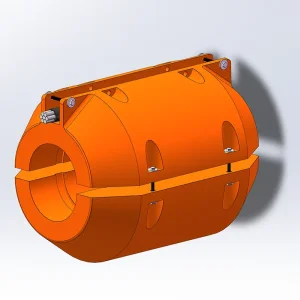
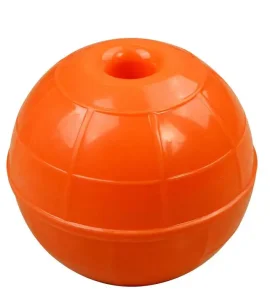
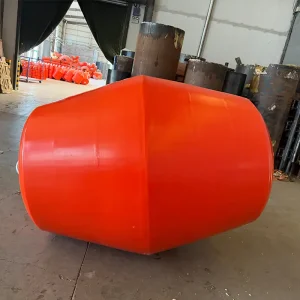



Structural Engineering of Mooring Marker Buoys
Advanced rotomolding manufacturing paradigms, hydrostatic load calculations, and environmental stress cracking resistance (ESCR) benchmarks.
Advanced Polyethylene Polymer Science
Utilizing high-grade LLDPE and HDPE resins combined with UV-stabilizer packages (UV8 to UV20 ratings), our rotational molding process produces seamless, stress-free outer shells that resist salt corrosion, crude exposure, and heavy marine fouling without degradation.
- Uniform wall thickness verified by ultrasonic gauge
- Zero seam weld lines eliminating point ruptures
- Integrated non-fading IALA standardized pigmentation
Hydrodynamic Stability & Closed-Cell Core
Each mooring marker buoy is precision-injected with high-density polyurethane (PU) closed-cell foam. In the rare event of hull puncture from high-energy vessel impact, the hydrophobic core prevents water ingress, preserving essential reserve buoyancy.
- Closed-cell density rating: 38 kg/m³ to 45 kg/m³
- Reserves buoyancy margin ≥ 120-130% over working load
- Calculated metacenter minimizing angular roll in swells
Through-Chain Tensile Architecture
Mooring loads are entirely isolated from the polymer shell through hot-dip galvanized internal structural steel cross-members or central through-pipe channels. This design routes extreme tractive force straight to the anchor seabed system.
- High-strength central mooring pad-eyes (Q235/Q355)
- Hot-dip galvanization meeting ISO 1461 standards
- Load-tested pull capability up to 50+ metric tons
Localized Support & International Compliance Assurance
Deploying mooring systems across territorial waters demands strict convergence with navigational safety protocols, maritime zoning codes, and rigorous localized documentation.
IALA Navigational Harmonization
Whether projects are governed by IALA Region A (Europe, Australia, New Zealand, Africa, Asia) or IALA Region B (Americas, Japan, Korea, Philippines), all marker colors, daymarks, radar reflectors, and solar beacon attachments meet precise chrominance specifications.
- Cardinal, Lateral, and Isolated Danger marker variants
- Precision daylight chromaticity per CIE standards
- Integrated top-mark brackets and marine light adapters
Classification Society Traceability
Global port authorities mandate verified material certificates. Our QA/QC framework produces complete metallurgical mill certificates, foam density batches, rotational heating logs, and weld inspection records aligned with DNV, BV, and ABS third-party survey standards.
- Full raw material tracking from polymer pellet to buoy
- Dimensional conformance reports under ISO 9001:2015
- NDT inspection protocols on all structural steel eyes
On-Site EPC Engineering Support
Navigating varying bathymetry, tidal amplitudes, and seabed geotechnical factors requires custom-tailored catenary designs. We furnish marine contractors with calculated scope ratios, anchor mass guidelines, and bridle configurations suited to specific regional harbors.
- Tide-compensated anchor rope & sinker calculations
- Pre-assembled chain assemblies for immediate water-drop
- Comprehensive installation manuals and site drawings
China Direct Factory Supply Chain & Scale Superiority
Leveraging high-capacity industrial clustering in Shandong, China to provide unmatched lead-time agility, precision mould toolmaking, and global logistics efficiency.
Complete Tooling & Mold Manufacturing
Operating dedicated computerized CNC tooling centers and high-tonnage rotational molding ovens with multi-axis automated rotation. From rapid prototyping of proprietary buoy geometries to standard stock runs, tooling cycles are halved compared to Western fabricators.
- In-house tooling reduces prototype cycles by 60%
- Automated temperature & cooling control for uniform shells
- Capacity to handle oversized molds up to 4.5m diameter
Vertical Upstream Polymer Integration
Direct supply agreements with leading chemical refiners ensure premium rotational-grade polymers with guaranteed Melt Flow Index (MFI) consistency and anti-oxidant additives. This shields project schedules and costs from volatile overseas raw material pricing.
- Strict raw resin lot testing for zero contaminant voids
- Cost reductions transferred directly to large-scale contracts
- Batch-to-batch colorimetric matching for port visual continuity
Multimodal Port Logistics & Packing Efficiency
Situated within rapid logistics proximity to major container and breakbulk hubs (Qingdao, Tianjin), enabling turnkey container stuffing optimizations, flat-rack heavy export packing, and swift ocean transit times across APAC, EMEA, and the Americas.
- Optimized volumetric packing profiles lowering ocean freight
- Heavy-duty palletized frames for transshipment protection
- FCL / LCL export documentation delivered within 48 hours
Procurement Criteria & Future Marine Flotation Trends
Addressing the shifting paradigm from high-maintenance steel markers to intelligent, circular-economy polyethylene mooring infrastructure.
How EPCs & Port Authorities Evaluate Sourcing
Modern marine procurement has evolved past low-initial-cost purchasing toward total Lifecycle Cost Analysis (LCC). Key criteria prioritized by tier-1 marine contractors include:
- Zero Corrosion Maintenance: Eliminating the frequent sandblasting, recoating, and sacrificial anode replacements required by traditional steel buoys.
- Impact Resiliency: Polyethylene hulls flex upon low-speed vessel contact and rebound, minimizing damage to both watercraft hulls and marker structures.
- Turnkey Flotation Integration: The ability to source mooring marker buoys, pipeline floats, dredging hoses, and modular barriers under a single coordinated supplier contract.
Emerging Industry Advancements
The offshore mooring and marker buoy sector is witnessing rapid technology adoption to support green port development and unattended maritime operations:
- IoT & Telemetry Integration: Integration of low-power AIS transmitters, LoRaWAN weather nodes, and solar self-contained navigation lights with GPS synchronization.
- 100% Recyclable Marine Polymers: Shifting towards zero-waste circular plastics that can be completely re-granulated at end-of-life after 15–20 years of continuous sea exposure.
- Hybrid High-Buoyancy Foams: Utilization of eco-friendly blowing agents yielding maximum tensile resilience and minimal density loss under extended hydro-pressure.
Mission-Critical Localized Application Environments
Field-proven performance across high-stress environments, from high-sediment river dredge cuts to open offshore tanker anchorages.
Commercial Port & Harbor Terminals
Deployed as multi-berth identification stations, fairway approach demarcations, and emergency anchorage buoys. Their high visibility and custom identification graphics prevent commercial traffic congestion and streamline berth allocation.
Dredging & Pipeline Corridor Demarcation
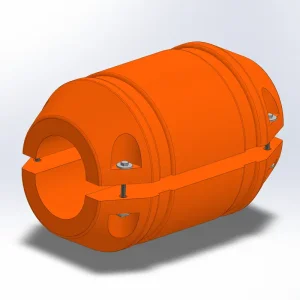
Installed along discharge routes and land reclamation pipelines. Working alongside pipeline floats, mooring buoys secure dredge vessel repositioning cables and clearly mark underwater floating lines to prevent boat collisions.
Offshore Aquaculture & Energy Zones
Providing heavy-duty surface boundary demarcation for deep-sea fish farms, offshore wind substation perimeters, and subsea oil & gas pipeline crossings subject to severe oceanic wave dynamics.
Frequently Asked Questions on Mooring Marker Buoys
Direct answers from our engineering team addressing hydrostatics, custom manufacturing, material durability, and warranty protections.
What is the structural difference between a standard marker buoy and a mooring buoy?
A standard marker buoy primarily serves visual navigation and carries light loads (lantern, radar reflector). A mooring marker buoy features heavy-duty internal steel structural framing, through-hull chain hardware, and reinforced tie-points engineered to absorb dynamic tension from moored vessels and anchors.
How is buoyancy reserve calculated for offshore mooring buoys?
The total buoyancy must support the dry weight of the buoy, the suspended chain/cable load at maximum tidal depth, plus an extra reserve buoyancy margin of at least 120% to 130%. This prevents submergence during high tidal sweeps or gust wind loads.
Why is rotomolded polyethylene superior to steel for marine marker buoys?
Polyethylene never rusts, resists biological crusting, and needs no repainting. Unlike steel shells that dent and lose protective coating, virgin rotomolded PE with closed-cell polyurethane core withstands impacts elastically and prevents sinking.
What is the standard warranty period for your marine flotation products?
The warranty commences when the buyer delivers the equipment to the investor and extends 18 months post-handover, or 12 months after the on-site commissioning/installation date, whichever milestone is reached first.
Can you customize buoy dimensions, internal channels, and visual markings?
Yes. Customization is fully supported including shell color, custom retro-reflective daymarks, numbering, solar bracket footprints, central through-pipe diameters, and bespoke rotomolded geometries tailored to proprietary engineering drawings.
What data should clients submit to receive an accurate engineering quotation?
Specify the deployment application (navigation or mooring load), required working buoyancy, water depth and tidal variance, current/wave parameters, mooring chain size, color scheme (IALA Region A or B), and target port of destination.
Complete Dredging Pipeline & Specialized Flotation Systems
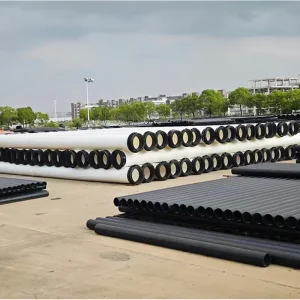
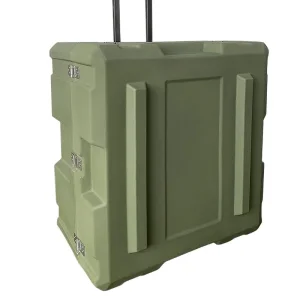
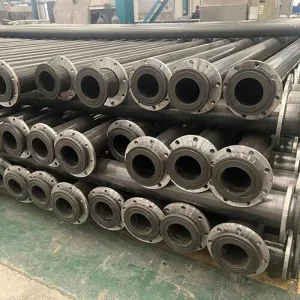
Direct manufacturer supply for fluid conveyance, offshore pipe stabilization, and military-grade rotationally molded logistics systems.