
Heavy-Duty Neptune Style Pipeline Floats & Navigation Buoys
Precision-molded rotomolded outer shells with high-density closed-cell polyurethane cores, engineered for demanding open-sea, port deepening, and industrial discharge lines.



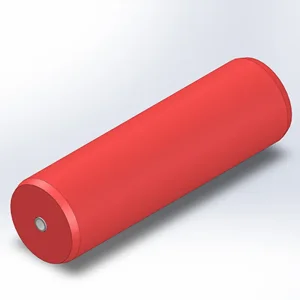
The Strategic Procurement Landscape of Neptune Flotation Systems
An engineering breakdown of why global civil contractors, offshore mining ventures, and harbor dredging conglomerates evaluate Neptune Flotation parameters before issuing tenders.
Capital Allocation & Total Cost of Ownership
Traditional steel pontoon collars suffer from rapid galvanic degradation, localized crevice corrosion, and heavy transport penalties. Modern Neptune-style virgin LLDPE/HDPE rotomolded float bodies reduce operational maintenance overhead by up to 64% over an 18-month lifecycle while eliminating rust-induced ballast failure on continuous dredging lines.
Hydrodynamic Slurry Stabilization
When pumping hyper-concentrated mixtures of marine silt, bentonite, or crushed quartz ore with specific gravities from 1.35 to 1.85 g/cm³, uncontrolled sag in floating lines induces catastrophic localized cavitation and premature flange shearing. Custom Neptune buoyancy blocks integrate graduated longitudinal load-bearing ribs to balance submerged displacement evenly.
Dynamic Freeboard Integrity
Marine engineers require strict freeboard margins (minimum 25% of pipe outer diameter maintained above static waterline). Utilizing premium closed-cell polyurethane foam cores with a minimum water absorption rate (<0.05 kg/m² per ASTM D2842), these flotation shells maintain stable draft levels even if puncture occurs during rough sea-state towing maneuvers.
Neptune Buoyancy Sizing Formula (Field Safety Standard)
For guaranteed hydrodynamic stability on marine pipelines: Total Net Buoyancy (Fnet) ≥ [ Wpipe + Wlining + (π/4 × ID2 × ρslurry × L) + Whardware ] × Safety Factor (1.25 to 1.35). Neglecting slurry density or calculating displacement on empty pipe dimensions is the primary driver of catastrophic dredging line swamping in tidal swell zones.
China Direct Factory Advantage vs. Western Distribution Chains
How Tier-1 Chinese manufacturing plants like Shandong Binzhou Juhua combine automated rotational molding scale, raw material vertical integration, and direct quoting speed to empower international contractors.
Automated Multi-Axis Rotational Molding
Unlike small-scale regional fabricators utilizing manual open flames, our factory lines feature digital PID temperature regulation and variable-frequency biaxial arms. This ensures perfectly uniform wall thickness (up to 18mm) across high-stress stress risers, flange bolting recesses, and end radii without structural thin spots.
Direct Coastal Logistics & Nested Freight Packing
Flotation products represent high volumetric cube space. Utilizing precision-designed stackable half-shells and nested container stowage patterns developed specifically for 40ft High Cube containers, we drop freight rates per displaced cubic meter by up to 28% for ports across Rotterdam, Houston, Dubai, Singapore, and Santos.
Virgin Polymer & UV8 Resistance Standards
Every batch of polyethylene undergoes melt-flow indexing and impact testing under ASTM D1238. Compounded with UV8 to UV16 stabilizers and antioxidant additives, the shells survive uninterrupted equatorial sun exposure (>8000 hours UV exposure resistance) without embrittlement, stress cracking, or discoloration.
Global Compliance Guarantees: Navigating Local Waters
Ensuring your custom Neptune flotation procurement complies with federal maritime laws, environmental protection directives, and harbor authority requirements across all operational jurisdictions.
IALA Navigational Colorimetry (AISM / IALA)
Marine navigation buoys, pipeline marker collars, and barrier floats meet IALA Recommendation E-108 standards for surface chromaticity. Our daylight fluor pigments ensure international recognition across Region A (Europe, Australia, Africa) and Region B (Americas, Japan, Philippines) waterways.
Environmental RoHS & Eco-Toxicity Audits
When operating in protected marine reserves, river estuaries, and potable drinking reservoirs, leeching risk is non-negotiable. Our PE resins are free of heavy metal catalysts, lead compounds, and volatile plasticizers, ensuring zero chemical toxicity to local aquatic biology.
Pressure & Hydrostatic Crush Certification
Each customized dredge float half-shell is tested against external hydraulic loads up to 400 kPa to confirm resistance against dynamic tidal submergence and wave slap fatigue, fulfilling testing standards audited by third-party inspection firms (SGS, Bureau Veritas, or DNV).
| Flotation Parameter | Standard Commercial Dredge Float | Heavy-Slurry Neptune Specification | Juhua Factory Engineered Custom |
|---|---|---|---|
| Outer Shell Material | Recycled / Regrind Blend PE | Virgin LLDPE / HDPE Polymer | 100% Virgin Food-Grade UV16 LLDPE |
| Internal Core Filling | Hollow or Low-Density EPS Foam | Closed-Cell Rigid Polyurethane | 38-45 kg/m³ Hydrophobic Polyurethane |
| Fastening Hardware | Standard Galvanized Carbon Steel | Hot-Dip Galvanized Gr 8.8 | Marine 316 Stainless / Dacromet Coated |
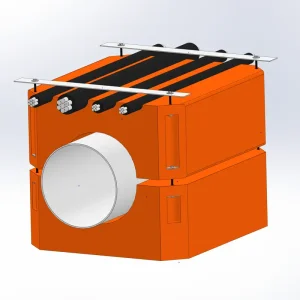
| Cable / Power Troughs | None (External straps required) | Optional Integrated Recesses | Precision Dual High-Voltage Cable Troughs |
| Tensile Strength (ASTM D638) | 14 - 17 MPa | 21 - 24 MPa | ≥ 23.5 MPa (Elongation at Break > 450%) |
Localized Application Scenarios Across Five Marine Sectors
Real-world engineering challenges solved by custom-engineered Neptune flotation geometry, from shallow river deltas to offshore deepwater terminals.
1. High-Density Mining Tailings Lines
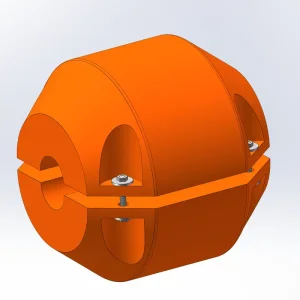
Mining operations transferring iron ore slurry, copper tailings, and bauxite residues require custom pipe floats capable of bearing pipe weights upwards of 450 kg/m. Neptune-style modular collars with inner anti-slip ribbed sleeves prevent linear creeping and rotation along smooth HDPE discharge pipelines.
2. Shallow River Desilting & Harbor Deepening
Operating in constricted shipping lanes with strong crosscurrents demands highly visible, streamlined float shapes. Low-profile hydrodynamic outer geometry minimizes drag against river currents, decreasing anchoring mooring winch tensions by up to 32% on continuous discharge paths.
3. Offshore Desalination Intake & Outfall
Seawater Reverse Osmosis (SWRO) facilities need floating outfall diffusers and intake lines resilient to hypersaline brine concentrations and intense surface wave chop. Rotomolded PE never rusts, resists biofouling adherence, and provides long-term mooring stability over decades.
4. Floating Solar (FPV) & Hydropower Barriers
Reservoirs require debris deflection booms and trash screens to protect turbine penstocks and floating photovoltaic islands. Heavy-duty barrier floats with internal galvanized steel tensioning channels isolate debris, weeds, and timber before they threaten infrastructure.
5. Land Reclamation & Coastal Defense Works
Trailing Suction Hopper Dredgers (TSHD) discharging via rainbow nozzles or floating pipelines into coastal reclamation containment bunds depend on robust float clamping rings that withstand constant beaching and refloating across cyclical intertidal zones.
6. Cable-Integrated Floating Lines (Smart Pipes)
Modern dredge automation integrates real-time pressure transducers, sonic flow meters, and high-voltage power conduits along the floating discharge pipe. Neptune-style floats engineered with specialized top-side molded cable troughs shield fragile wiring from marine abrasion and prop strikes.
Technological Innovations Reshaping Industrial Marine Flotation
How digitalization, IoT telemetry, high-circularity resins, and extreme-climate stabilization are establishing the next frontier of offshore buoyancy.
IoT-Enabled Flotation & Stress Telemetry
Next-generation Neptune floats embed low-power LoRaWAN and satellite transponders inside the foam matrix. These integrated sensory nodes continuously monitor pipeline tilt angles, internal core moisture penetration, localized stress peaks, and surface water temperature, alerting control rooms before joint failure occurs.
Bio-Circular Polyethylene & Easy-Disassembly Cores
Global infrastructure tenders increasingly mandate verifiable Scope 3 emission targets. Forward-looking manufacturing embraces mass-balanced bio-based ethylene feedstocks and developed steam-delaminable PU foam compounds, ensuring 100% shell recyclability at end-of-field decommissioning.
Cryogenic & Hypersaline Resilience
As oil, gas, and mineral dredging pushes into sub-zero Arctic zones and hyperthermal mine runoff ponds (operating between -40°C and +75°C), specialized additive packages prevent plasticizer phase-separation, guaranteeing uncompromised Charpy impact strength during violent wave shocks.
How to Secure an Accurate Custom Neptune Flotation Quote
Eliminate quotation delays and engineering revisions. Provide these six critical operational variables when communicating with our factory engineering team.
Outer Pipe Exact Dimensions
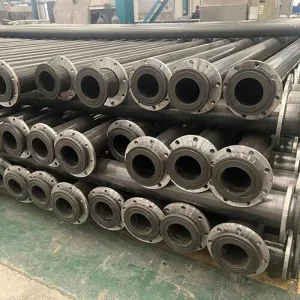
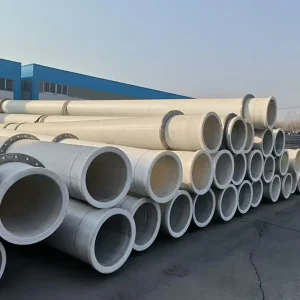
Specify outer diameter (OD) in millimeters or inches (e.g., DN250, DN500, DN800, DN1200). Note pipe wall thickness, material (HDPE SDR rating, carbon steel, or rubber hose), and flange collar clearance tolerances.
Conveyed Medium Physical Density
Indicate the specific gravity of the pumped fluid (ρslurry). Clean river water is 1.0 t/m³, seawater is 1.03 t/m³, while abrasive sand-gravel slurries range between 1.30 and 1.65 t/m³. This dictates required displacement volume.
Target Freeboard & Operating Sea State
State whether the project runs in protected harbors, fast-moving rivers, or open offshore swells. Specify required safety margin (standard is 25% to 30% pipe diameter clear above still water).
Cable & Hydraulic Trough Requirements
If power conductors, telemetry cables, or grease hoses accompany the dredge discharge line, provide outer diameter and quantity of cables so recessed channels can be integrated into the tooling dies.
Fastening Hardware Metallurgy
Choose between standard Hot-Dip Galvanized (Grade 8.8) fasteners for freshwater rivers, or Marine Grade Stainless Steel (SS316 / SS316L / Duplex 2205) with Dacromet anti-galling coatings for high-salinity marine operations.
Delivery Schedules & Discharge Port
Inform us of your project start date and destination port CIF/FOB conditions. This allows our logistics specialists to compute optimized container packing plans and factory production line allocation.
Custom Neptune Flotation: Detailed Engineering Q&A
Direct, authoritative answers addressing design life, buoyancy safety margins, installation procedures, and factory customization options.
What distinguishes genuine Neptune-style floats from ordinary commercial pipeline floats?
How do you calculate the required number of flotation collars for a floating dredge line?
Why is closed-cell polyurethane foam filling superior to expanded polystyrene (EPS)?
Can custom Neptune float molds be fabricated to match uncommon pipe diameters?
What is the official manufacturer warranty policy and expected operational design life?
How are the float halves fastened around the pipeline to prevent slippage during tides?
Explore Complete Neptune Flotation & Marine Infrastructure Lineup
From custom water-transfer pipeline pontoons to high-buoyancy mooring floats and autonomous navigation buoys, access our export-certified product inventory.

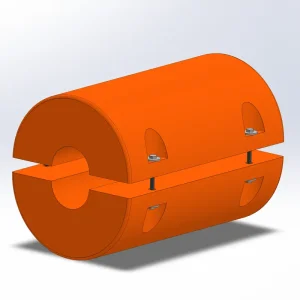
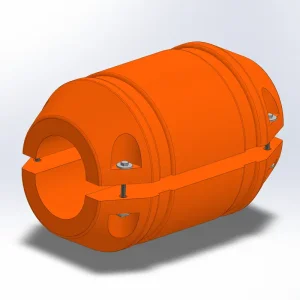
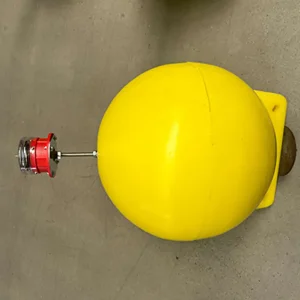

Ready to Calculate Your Neptune Flotation Displacement & Pricing?
Skip unnecessary middleman markups. Send your pipe outer diameter, wall thickness, slurry density, and project delivery port directly to our senior buoyancy design engineering group in Shandong, China.