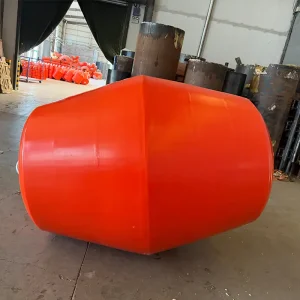
Primary Flotation & Marine Operations Catalog
Explore heavy-duty surface and submerged buoyancy modules built to maintain hydrodynamic equilibrium across critical maritime and dredging configurations.
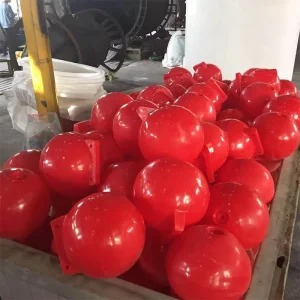
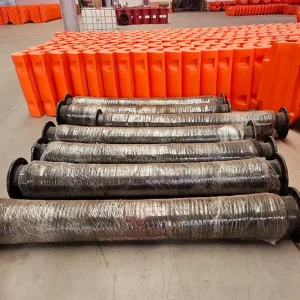
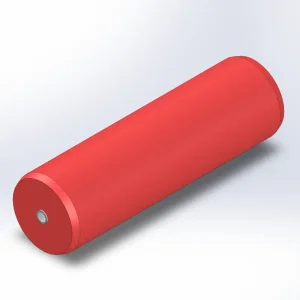



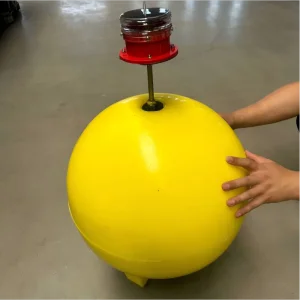

Technical Whitepaper: Polymeric Flotation Architecture in Industrial Fishing & Marine Operations
A rigorous examination of polymer morphology, compressive crush resistance, hydrostatic loads, and lifecycle endurance across dynamic marine environments.
Commercial pelagic fishing, offshore mariculture, and marine civil dredging demand severe mechanical and hydrostatic reliability from floating assets. As oceanic harvesting shifts into deeper waters and high-energy current zones, standard commercial floats frequently suffer from internal foam matrix collapse, micro-cracking, water ingress, and surface peeling. Engineered closed-cell Polyvinyl Chloride (PVC) and rotational-molded high-density polyethylene (HDPE) floats provide structural integrity against hydrostatic pressure, preventing buoyancy degradation even after prolonged oceanic submersion.
At our Binzhou, Shandong manufacturing base, Shandong Binzhou Juhua Rubber & Plastic Co., Ltd. (operating internationally under Juhua / Giant Rubber) bridges the gap between material polymer science and marine hydrodynamic engineering. With over two decades of rotational molding and polymer synthesis expertise, our facility crafts customized, wear-resistant floats designed to endure heavy abrasion against nylon ropes, steel winch drums, and extreme ultraviolet (UV) exposure.
Hydrostatic Integrity
High closed-cell ratios (>96%) prevent internal water logging and structural wall implosion under depths reaching down to 60 Bar pressure thresholds.
UV8 to UV16 Stabilization
Compounded with high-grade hindered amine light stabilizers (HALS), preventing photo-oxidative degradation, surface chalking, and brittleness in equatorial sunlight.
Tensile & Drum Abrasion
Thick, reinforced outer skins resist high-speed net hauling friction, mechanical power blocks, and impact against ship hulls without split failure.
Precision Center-Grommets
Custom reinforced inner bores matched precisely to rope diameters eliminate abrasive rope wear, slippage, and stress concentration along the net headline.
Direct-from-Factory Architecture: Shandong Supply Chain Advantages
Unlocking scalable production, cost efficiencies, and material traceability for large-scale maritime supply contracts.
Shandong Petrochemical Proximity
Situated in Huimin County, Binzhou, Juhua leverages immediate regional access to China's premier petrochemical clusters. Direct raw material access to virgin high-grade polyethylene resins, custom PVC blowing agents, and specialized UV additives minimizes intermediate shipping overhead and guarantees batch-to-batch chemical purity.
Automated Rotomolding & Press Lines
Our manufacturing line integrates variable-frequency speed controls, digital thermodynamic telemetry, and standardized high-precision tooling molds. This eliminates thin spots, seam cold-welds, and asymmetric wall thickness, delivering consistent net float units that integrate seamlessly into industrial spooling gear.
Port Logistics & Fast Multimodal Transit
Direct logistical corridors link our facility to Qingdao and Tianjin maritime freight hubs. Efficient nested container stuffing protocols and bulk containerization reduce ocean transport freight volume by up to 35%, ensuring maritime contractors and fleet purchasers receive verified quotes with predictable CIF/FOB timeframes.
Where dynamic water resistance, leadline sinker speed, and current shear demand a safety buoyancy margin of 25% to 35% above the combined static weight of the net mesh, ropes, and retained biomass.
Global Enterprise Procurement: Localization, Compliance & ESG Standards
Meeting rigorous international criteria for industrial fisheries, marine contractors, and public environmental mandates.
REACH / RoHSNon-Toxic Formulations
Modern commercial fishing requires strict compliance with food-grade mariculture standards. Our polymeric formulas eliminate banned plasticizers, heavy-metal phthalates, and toxic organotins, avoiding marine biochemical leaching in delicate fisheries and aquaculture bays.
Circular EconomyRecycled Polymer Compatibility
To support enterprise ESG objectives, Juhua supports technical closed-loop sourcing programs. Our rotomolded and solid-skin floats are constructed from 100% recyclable polyolefins and high-grade polymers, lowering carbon footprints without sacrificing compressive tensile strength.
Audit-ReadyFull Material Traceability
Every production run includes comprehensive Mill Test Certificates (MTC), buoyancy verification reports, Shore D hardness measurements, and accelerated aging assessments under simulated salt-spray conditions (ASTM B117 standards).
Localized Deployment Scenarios & Sector Blueprints
Engineered float designs matched to localized ocean currents, hauling machinery, and working depths.
Oceanic Purse Seine
Designed for high-speed tuna seine sets. High-buoyancy oval and bullet geometries eliminate net headline submergence during pursing, resisting massive winch pressure without split ruptures.
Deep-Water Gillnets
Cylindrical floats engineered to maintain net verticality across variable ocean thermoclines and bottom depths without undergoing cellular shrinkage or water absorption.
Aquaculture Cage Mooring
Supplying constant tension and freeboard buoyancy for salmon, sea bass, and tuna pens subject to continuous swell movement and storm surge loading.
Dredge & Barrier Lines
Clamp-on and through-hole floats integrated into marine debris booms, silt barriers, and pipeline discharge lines for port expansions and coastal protection.
Emerging Macro Trends in Global Marine Flotation
How automation, IoT tracking, and polymer materials science are redefining the next generation of net buoys.
1. IoT-Integrated Smart Buoys
Integration of compact satellite transponders, LED beacon channels, and subsurface sonar sensors into customized rotomolded float shells. Juhua's custom molding accommodates embedded battery wells and sealed electronics bays for real-time drift tracking.
2. Microplastic Mitigation Formulations
Regulatory pressures from global maritime authorities are accelerating the transition away from brittle, shedding polystyrene (EPS) toward tough, abrasion-resistant, cross-linked PE and elastomer-modified PVC shells that eliminate micro-fragmentation.
3. Modular Hydrodynamic Geometries
Computational Fluid Dynamics (CFD) modeling has yielded streamlined float profiles that lower drag coefficients during net retrieval, reducing fleet fuel expenditure and wear on mechanical net-drum hauling systems.
Technical & Procurement FAQ
Authoritative responses to common engineering, customization, and factory procurement questions.
What is the core distinction between expanded PVC floats and rotomolded PE floats?
Expanded PVC floats offer higher density-to-volume ratios with solid closed-cell foamed structures, making them well-suited for high-pressure deepwater netting, longlining, and seine headlines where hydrostatic collapse resistance is paramount. Rotomolded PE floats feature hollow or polyurethane-filled tough outer shells, delivering impact and puncture resistance for floating pipelines, barriers, navigation markers, and large mooring assemblies.
How do you calculate the exact buoyancy requirements for a commercial fishing net or pipeline?
Buoyancy is calculated by summing the total dry weight of the net webbing, leadline sinkers, chains, ropes, and submerged fittings, factoring in their submerged negative buoyancy under water salinity conditions (1.025 g/cm³ for ocean water). A safety reserve factor of 25% to 35% is added to ensure proper freeboard visibility and to maintain net mouth opening dimensions under high water current drag.
Can you provide custom tooling, customized bore dimensions, and custom colorways?
Yes. Operating our own in-house CNC mold-making and rotational tooling workshop allows Juhua to tailor internal rope hole diameters, external profiles, buoyancy capacities, company branding, and high-visibility chromatic requirements (safety orange, international yellow, signal white) directly to technical drawings.
What is the factory warranty and verified service lifecycle in open maritime conditions?
Our standard commercial warranty extends up to 18 months from delivery or 12 months from deployment. When properly specified with our UV8/UV16 stabilizing compound packages, our high-density polyethylene and synthetic PVC net floats routinely deliver 8 to 15 years of continuous operational lifespan in harsh marine environments.
What information is required to receive an immediate factory quote?
Please provide target working depths (or hydrostatic load expectations), preferred shape (bullet, oval, cylindrical, clamp-on), center hole bore diameter, quantity requirements, and target destination seaport. Our technical sales team provides sizing verification, dynamic buoyancy calculations, and packing metrics within 24 hours.
Subsea & Heavy-Duty Offshore Flotation Systems
Engineered buoyancy systems, mooring buoys, and pipeline float configurations engineered for high-durability subsea deployments.