
Featured Marine Pipeline & Buoyancy Systems (Series I)
High-integrity rotomolded polyethylene shells, mooring units, and subsea tie-in modules engineered to withstand saline corrosion, hydrodynamic shear stresses, and harsh marine environments.
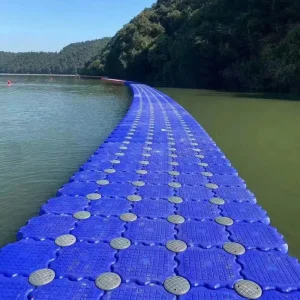
OEM Advanced Floating Boat Pontoon for Custom Water Platforms
View Engineering Details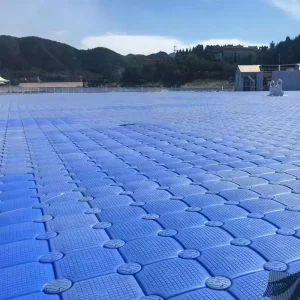
High-Performance Floating Boat Pontoon for Modular Platforms
View Engineering Details
ODM Foam-Filled Mooring Buoy for Marinas and Offshore Anchorages
View Engineering Details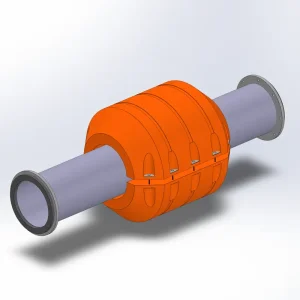
Pipeline Float with Modular Buoyancy for Subsea Installation
View Engineering Details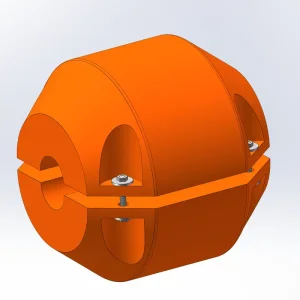
High-Quality Durable Pipe Floats for Safe Marine Dredging
View Engineering Details
ODM Mooring Buoy for Marina Berths & Offshore Mooring Systems
View Engineering Details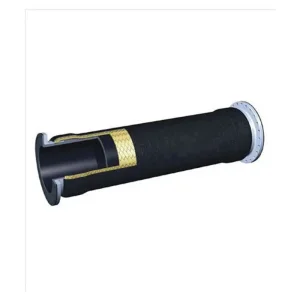
Reliable Pipelines for Marine Sediment & Slurry Transport
View Engineering Details
ODM Mooring Buoy for Stable Commercial Vessel Anchoring
View Engineering DetailsEngineering Sea Water Pipe Materials: Metallurgical & Polymeric Comparative Analysis
Conveying raw seawater, saline brines, and subsea mining slurries requires materials capable of mitigating microbially influenced corrosion (MIC), pitting, cavitation, and stress corrosion cracking (SCC).
High-Density Polyethylene (HDPE PE100 / PE100-RC)
The global gold standard for intake, outfall, and dredging pipelines. Completely inert to electrolytic and biochemical attacks with zero bio-fouling leaching. Coupled with closed-cell polyurethane-filled rotomolded flotation collars, HDPE pipe structures provide ductile flexibility against storm surges and continuous cyclic wave motions.
- Zero galvanic corrosion in high-salinity seawater
- Low roughness coefficient (Hazen-Williams C = 150)
- Operating lifespan exceeding 50+ years in marine splash zones
Super Duplex Stainless Steels (UNS S32750 / 2507)
Engineered for high-pressure seawater reverse osmosis (SWRO) feed manifolds and offshore topside platforms. With a Pitting Resistance Equivalent Number (PREN > 42) and high mechanical yield strength (≥ 550 MPa), Super Duplex combats hyper-saline crevice attack under elevated hydrostatic pressures.
- Excellent resistance to localized chloride pitting
- Wall-thickness minimization under extreme operating pressures
- Requires stringent welding control (ferrite/austenite phase balance)
Copper-Nickel Alloys (CuNi 90/10 & 70/30)
Historically favored in commercial shipbuilding cooling loops and coastal thermal power plants. CuNi generates a cuprous oxide film providing natural macro-fouling inhibition (barnacles, mussels, algae). However, fluid velocity must be strictly regulated below 3.5 m/s to prevent destructive shear erosion of the protective layer.
- Inherent biological antifouling without biocide dosing
- Susceptible to erosion-corrosion if fluid flow rates surge
- Higher density and cost profile compared to high polymers
Custom Sea Water Pipe Material Manufacturers Pricelist & Cost Index
Indicative price ranges, procurement benchmarks, and life-cycle cost (LCC) indices across major seawater pipe materials and integrated rotational flotation accessories.
| Material Classification | Common Standard / Grade | Nominal Size Range (OD) | Indicative Price Benchmark (USD) | Salinity & UV Durability | 30-Year LCC Cost Index |
|---|---|---|---|---|---|
| HDPE PE100-RC Solid Wall | ISO 4427 / ASTM F714 | DN110 - DN1600 | $18.50 - $480.00 / meter | Immune to Salt & Rust | Lowest (Index 1.0) |
| Rotomolded Flotation Modules (PE) | Virgin LLDPE + PU Foam Injected | ID Matched to OD 110-1400mm | $65.00 - $1,450.00 / pair | 50+ Years UV Stabilized | Low (Zero Upkeep) |
| Super Duplex Stainless Steel | ASTM A790 UNS S32750 / 2507 | 2" - 24" (Sch 10S - 80S) | $4,800 - $9,500 / metric ton | PREN > 42 High Salinity | Moderate (High Capex) |
| Glass Reinforced Epoxy (GRE/GRP) | ISO 14692 / ASTM D2996 | DN50 - DN1200 | $45.00 - $620.00 / meter | Zero Corrosion | Moderate (Joint Care) |
| Copper-Nickel (CuNi 90/10) | EEMUA 144 / DIN 86019 | 1/2" - 16" | $14,500 - $22,000 / metric ton | Biofouling Resistant | High (Velocity Limits) |
| Heavy Duty Marine Rubber Hose | ISO 28017 / Dredge Slurry Spec | ID 150 - ID 1000mm | $110.00 - $1,850.00 / piece | Abrasion & Flex Dynamic | Medium (Wear Cycles) |
Hydrodynamic Buoyancy Calculation Standard for Seawater Marine Pipelines
Sizing pipeline buoyancy collar spacing requires precise mathematical modeling that accounts for slurry density, seawater salinity fluctuations (ρsw ≈ 1.025 to 1.035 kg/m³), pipe mass, hydrodynamic drag, and freeboard safety margins:
Engineering Guideline: Calculations based purely on static clean water will inevitably cause submerged lines when conveying mineral slurries (density ≥ 1.35 kg/dm³). Our design team runs finite element hydrostatic simulation checks to ensure a 25% freeboard height above choppy wave crests.
China Factory 4.0: Supply Chain Resilience & Rotational Molding Efficiency
Shandong Binzhou Juhua Rubber & Plastic Co., Ltd. (Juhua / Giant Rubber) leverages Industry 4.0 digital process control to transform traditional rotomolding into an aerospace-precision marine production framework.
Real-Time Pyrometric & Frequency Control
Equipped with multi-axis closed-loop variable-frequency drives and digital infrared heat sensors, our rotomolding ovens maintain internal tool thermal gradients within ±1.5°C. This guarantees that polyethylene crystallization proceeds uniformly, eliminating localized micro-voids, brittle fracture zones, and wall-thickness tapering across high-stress clamping ribs.
Standardized Interchangeability Tolerances
Through high-grade CNC-machined cast aluminum tooling, float shells maintain outer dimensional conformity of ±0.5%. Replacement halves produced years apart mate seamlessly with pipelines already stationed in oceanic conditions. Clamping lugs are engineered with reinforced load distribution shoulders that prevent bolt pull-through under severe gale surges.
End-to-End Raw Material Traceability
We process exclusively 100% prime virgin low-density and high-density polyethylene resins compounded with thermal antioxidant packages and masterbatch UV stabilizers (UV rating ≥ UV8/UV15). Every raw batch undergoes Melt Flow Index (MFI) and Environmental Stress Crack Resistance (ESCR ASTM D1693 > 1,000 hrs) testing before induction.
Macro Industry Solutions: Seawater Piping Across Severe Operational Theaters
Navigating hydraulic surges, abrasive seabed friction, and biological encroachment across capital marine infrastructure.
SWRO Desalination Intakes & Hypersaline Brine Outfalls
Seawater reverse osmosis facilities face aggressive biofouling at shallow intake cribs and intense localized chloride corrosion at multi-port outfall diffusers where brine reaches 70,000 ppm TDS. Juhua's thick-wall HDPE ballast lines coupled with non-corroding polyurethane flotation collars ensure decades of submarine alignment without cathodic protection maintenance.
Offshore Sand Reclamation & Megaport Deepening
Trailing suction hopper dredgers (TSHD) pump abrasive marine sediment at 6 m/s velocities across ocean swell zones. Utilizing our paired high-buoyancy dredge pipeline floats with cable pass-through troughs allows simultaneous floating slurry discharge and high-voltage power transmission directly to booster pumps without risk of line entanglement.
Deep-Sea Marine Mining & Tailings Transport
Subsea mineral recovery requires modular buoyancy shells capable of maintaining volumetric stability under hydrostatic compression. Our engineered closed-cell rigid polyurethane foam cores retain near-zero water absorption (< 0.1 g/cm³) even in the event of accidental outer shell punctures caused by workboat impacts.
Technical Roadmap & Future Outlook: Next-Generation Marine Materials
How continuous polymeric advancements, bio-inspired antifouling surfaces, and IoT sensor integrations are reshaping oceanic fluid distribution systems through 2030 and beyond.
Nano-Graphene Reinforced Polyethylene Composites
Integration of pristine graphene nanoplatelets within the rotomolding polymer matrix elevates yield tensile strength by 32% while dramatically retarding slow crack growth (SCG). This enables thinner pipe and float walls without sacrificing hydrostatic collapse ratings, diminishing total freight mass for trans-oceanic container shipments.
Non-Toxic Biomimetic Micro-Textured Shells
Transitioning away from cuprous biocides, next-gen outer shells incorporate sharkskin-inspired micro-riblet surface topologies molded directly during rotational thermal cycles. This non-chemical passive mechanism cuts micro-algal and barnacle adhesion by over 70%, radically lowering drag resistance and maintenance cleaning costs.
Integrated IoT Acoustic & Strain Telemetry
Embedding self-powered piezoelectric acoustic sensors and low-power satellite beacons into float collar cores provides harbor engineers with real-time operational feedback on internal pipe wear, pressure spikes, mooring anchor tension, and geographical coordinates during extreme meteorological events.
Localized Global Support & Rigorous Regulatory Compliance Assurance
Ensuring zero-friction commissioning through full alignment with international maritime covenants, classification society approvals, and EPC contractual documentation.
International Maritime Organization (IALA / IMO) Compliance
All marine navigation buoys, pipeline marker units, and floating barrier bodies comply strictly with IALA Guideline E-108 for chromatic coordinates (Maritime Red, Green, Yellow, and Special Marks). Visual brilliance and surface reflectivity are verified after 3,000 hours of accelerated QUV weathering.
Marine Classification Society Mill Inspections
Our manufacturing operations accommodate third-party staging verifications by DNV, Bureau Veritas (BV), ABS, and Lloyd’s Register. Standard Quality Dossiers include raw resin certificate of analysis (COA), Charpy impact test reports (-30°C), hydrostatic burst test records, and foam core density verification.
Global Logistics & Turnkey Spare Modules
With customized nested export packing, our pipeline floats optimize 40HQ container volumetric capacity by up to 35%, substantially driving down maritime shipping surcharges. Standard interchangeability guarantees prompt delivery of replacement float halves to over 80 major global deepwater ports.
Global Procurement Checklist: Critical Technical Parameters for Tendering
Avoid costly specification errors by supplying these operational baseline values to our engineering department during the initial RFP/RFQ phase.
| Evaluation Parameter | Required Technical Data | Impact on Material & Tooling Sizing |
|---|---|---|
| Discharge Pipe Outer Diameter (OD) | Exact OD in mm or inches (±1mm tolerance) | Dictates interior clamping saddle curvature to prevent line slippage |
| Slurry Specific Gravity (ρ) | Clean water (1.0) vs. Tailings/Sand (1.25 – 1.80 kg/L) | Determines required volumetric displacement and net buoyancy reserve |
| MetOcean Wind, Wave & Tidal Current | Current velocity (m/s), significant wave height (Hs in meters) | Calculates dynamic drag, bolt tensile shear requirements, and hull ribbing |
| Operating Fluid Temperature Range | Min/Max thermal exposure (°C) | Assesses polymeric thermal expansion and long-term creep modulus |
| Auxiliary Utility Requirements | Subsea power cables, optical fibers, hydraulic pilot lines | Incorporates molded-in utility troughs directly into the upper float mold |
| Target Project Service Freeboard | Percentage of pipe diameter exposed above waterline (typical 25%) | Controls float installation spacing frequency along the discharge line |
Frequently Asked Questions on Seawater Pipe Materials & Buoyancy
Clear, mathematically verified answers to common questions raised by dredging contractors, marine EPC procurement officers, and harbor port authorities.
Pipeline floats (also designated as dredge floats or buoyancy modules) are rotationally molded polyethylene half-shells fitted around dredging, mining slurry, or water-transfer pipes. Bolted tightly together, they provide buoyant lift, dynamic alignment, and high-visibility marking, keeping discharge lines afloat on water surfaces without dragging against abrasive seabeds.
Total float buoyancy must strictly exceed the aggregated weight of the pipe shell, the conveyed medium (slurry or saltwater), flanges, and marine accessories. Best-practice marine standards require floats to provide a 20% to 30% buoyancy surplus over this full working weight, ensuring roughly one-quarter of the pipe diameter floats visible above the waterline for stability and inspection.
Unlike steel, virgin high-grade polyethylene is totally impervious to electrochemical saltwater attack, microbially influenced corrosion (MIC), and sacrificial coating spalling. Polyethylene shells do not rust, do not require sandblasting or toxic repainting, absorb harsh mechanical collisions elastically, and offer decades of maintenance-free service in tropical or arctic sea conditions.
The standard warranty commences on the formal date the buyer hands over the commissioned equipment to the end-investor and terminates 18 months from the official handover milestone, or 12 months after the initial operational installation date, whichever interval expires first. Extended warranties are available upon EPC project qualification.
Please share the pipe outer diameter (OD), material and wall thickness, conveyed medium type and solid slurry density, overall pipeline run, installation environment (harbor, river, or open ocean), target freeboard percentage, color/reflective strip specifications, total piece count, and the final international destination discharge port.
Yes. Float inner diameters are precision-machined to match your exact pipe OD. Fasteners can be upgraded to marine-grade 316 stainless steel or galvanized high-tensile steel. In addition, internal cable troughs, custom identification branding, and bespoke rotomolded platform sections can be custom-engineered straight from your CAD/SolidWorks files.
Featured Marine Flotation, Buoys & Transfer Hoses (Series II)
Explore specialized subsea installation systems, mooring solutions, navigation markers, and heavy-duty rubber discharge hoses built to commercial marine specifications.

Heavy-Duty Pipeline Float System for Subsea Installations
View Engineering Details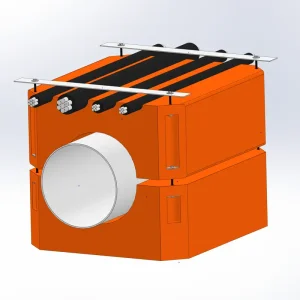
Pipe Floats with Cable Troughs for Industrial Lines
View Engineering Details
ODM Custom Mooring Buoy for Marina & Offshore Anchorage
View Engineering Details
Heavy-Duty Flexible Rubber Hose for Marine Slurry Transfer
View Engineering Details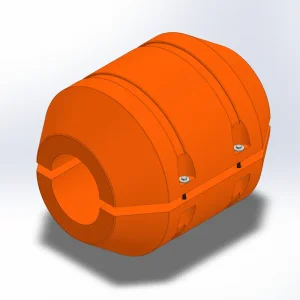
Custom Pipeline Float for Subsea Tie-In & Controlled Positioning
View Engineering Details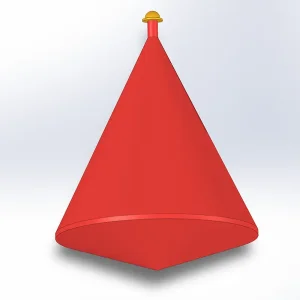
Precision Marine Buoys for Safe & Efficient Navigation
View Engineering Details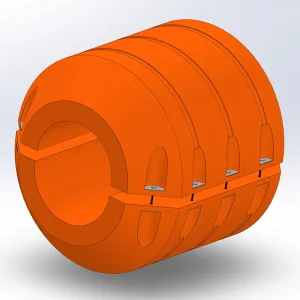
OEM Reliable Marine Pipe Floats for Maximum Pumping Efficiency
View Engineering Details