Featured Flotation Equipment & Aquatic Barrier Components
Rotationally molded polymer modules engineered with heavy-wall cross-sections, closed-cell polyurethane foam cores, and high UV stability for demanding marine applications.
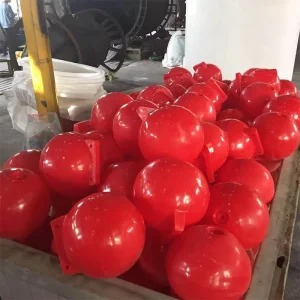


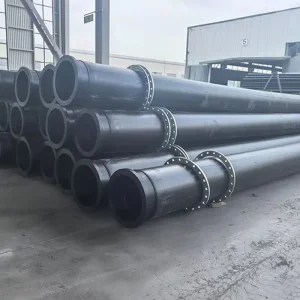
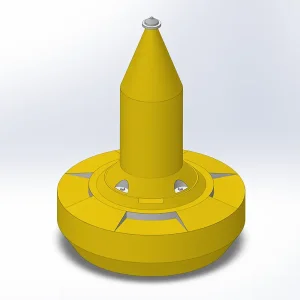

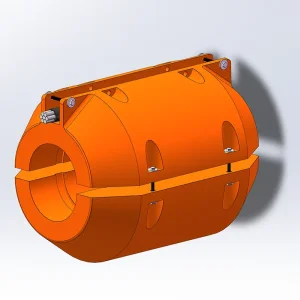
Global Industrial Sourcing Demands for Floating Debris Barriers
Modern municipal utilities, hydroelectric facilities, and port operators are transitioning from high-maintenance fabricated carbon steel booms to modular rotational molded polyethylene barriers due to dynamic hydrological loads and severe biofouling.
Hydropower Dam Turbine Security
Riverine debris, including timber logs, discarded plastics, and root masses, causes catastrophic cavitation and mechanical jamming in intake turbines. Heavy-duty trash booms provide load-bearing deflection, preserving up to 98.4% turbine efficiency during high-flow flash flood stages.
Municipal Water Treatment & Desalination
Desalination intake lagoons and urban potable supply intakes require micro-particulate and macro-debris containment. Floating barriers prevent macro-contaminants and floating jellyfish clusters from choking intake screens, directly reducing municipal operational expenditures.
Industrial Marine Demarcation & Oil Boom
Port terminals and dredging operations mandate maritime safety perimeters. Our barriers serve dual duties: physical trash deflection and demarcation curtains equipped with reflective navigation accents, ensuring compliance with international maritime boundary regulations.
Structural Engineering: Rotomolded Polyethylene vs. Steel
An analysis of material degradation, ballast physics, and lifecycle costs for marine barriers installed in aggressive saltwater, brackish, and hypersaline environments.
Stress-Crack & Impact Resistance
Fabricated from high-molecular-weight linear low-density polyethylene (LLDPE) reinforced with UV stabilizers (UV8 to UV16). The outer shell exhibits high izod impact strength down to -40°C, absorbing kinetic collisions from logs without cracking or puncture propagation.
Unsinkable Monolithic Foam Infill
Our automated high-pressure polyurethane foaming process guarantees a uniform core density of 35-40 kg/m³. Even if external puncturing occurs from extreme collisions, the closed-cell hydrophobic matrix prevents liquid ingress, preserving full system buoyancy.
Internal Continuous Tensile Backbone
Rather than placing hydrodynamic and surge stresses on the polymer shell, loads are transferred via hot-dip galvanized steel chains (Grade 40/80) or stainless-steel internal load lines running through molded-in conduit sleeves. This design handles breaking loads up to 650 kN.
Total Cost of Ownership (TCO) Comparison: 15-Year Operational Window
Traditional painted carbon steel floating drums require recoating, cathodic anode replacement every 24 to 36 months, and risk catastrophic sinking if seams crack. Rotomolded PE barriers eliminate maintenance painting, resist marine growth attachment, and lower 15-year operational expenditure by up to 64%.
Naval Architecture Sizing Principle: Hydrodynamic Freeboard Verification
In floating trash boom deployments, undersizing leads to debris overriding the barrier during high swell periods. Buoyancy modules must balance the drag force ($F_d$) generated by water velocity against the current load and submerged skirt friction:
A minimum reserve buoyancy factor of 35% ensures the module maintains a 25% freeboard height above water at peak current speeds, preventing log overriding.
Technology Roadmap: Intelligent & Autonomous Barriers
Next-generation floating containment technologies incorporate real-time monitoring and advanced material engineering to meet modern environmental compliance standards.
Multi-Segment Mold Interlocking
Tongue-and-groove modular articulation provides self-aligning flexible joints that dampen wave energy without over-stressing mechanical pivot pins.
Graphene-Polymer Nanocomposites
Infusing microscopic graphene platelets into polyethylene enhances tensile modulus by 32%, improving wear resistance against abrasive sand and floating timber.
IoT Strain & Tension Monitoring
Integrated load cells within end-anchor terminations transmit real-time mooring tensions via LoRaWAN/Satellite, notifying operators of debris overload risks.
Self-Clearing Automated Skimmers
Autonomous surface vessels work alongside stationary floating barriers, collecting concentrated trash without human deployment.
Engineering Compliance, Quality Assurance & Field Support
Our facility in Lizhuang Town, Huimin County, operates certified manufacturing processes backed by structural load testing, international shipping documentation, and on-site engineering oversight.
ISO 9001 & Raw Material Traceability
Every rotational molding run uses certified virgin PE from Sinopec or SABIC. We track melt flow index (MFI), density profiles, and wall thickness uniformity with automated ultrasonic gauges across production runs.
Export Logistics & Mooring Layout
We supply complete turnkey hardware: Grade 40/80 mooring chains, Bruce/Danforth anchors, concrete anchor layout designs, swivel shackles, and ocean freight packaging optimized for high-cube (40HQ) containers.
Warranty Terms & Commissioning Support
Our warranties run up to 18 months from buyer handover or 12 months from final project commissioning. We provide CAD anchor schematics, wave energy stress calculations, and video consultation for installation teams.
Frequently Asked Questions: Technical Specifications & Procurement
Detailed answers to questions from port authorities, EPC civil engineers, and environmental procurement directors.
How do you size a floating debris barrier for dynamic water currents?
Design sizing balances current speed (m/s), wind fetch, wave amplitude, and anticipated debris weight. By matching the barrier's submerged skirt depth and freeboard height, we prevent both debris entrainment underneath and log wash-over during high-flow conditions.
Can the barriers accommodate water level variations in hydroelectric dams?
Yes. We engineer end-anchor slides or shoreline vertical tracking rails. As reservoir water levels fluctuate seasonally, shore attachments move smoothly on vertical guide tracks without causing torsional binding or structural strain.
Are rotomolded PE barrier floats resistant to oil spills and chemical effluents?
High-density polyethylene is chemically inert, providing resistance to aliphatic hydrocarbons, crude oil slicks, acids, and industrial runoff. Unlike steel, it does not rust or scale, making it suitable for hazardous chemical zones and open seas.
What is the recommended maintenance schedule for these barrier installations?
Our PE barriers require minimal scheduled maintenance. We recommend inspecting anchor shackle pins and wear points every 6 to 12 months, checking mooring line pretension, and clearing accumulated debris loads after major storm events.
How are the products protected against intense solar UV radiation in tropical zones?
All polymer resins are compounded with UV-class carbon black or high-grade hindered amine light stabilizers (HALS UV8-UV16). This matrix protects the outer molecular chains from photo-oxidation and brittleness for 15+ years in harsh marine environments.
What information is needed to receive a complete quotation and engineering drawing?
Please provide water body span width, maximum current velocity, seasonal water level changes, wave height ranges, debris composition (e.g. aquatic weeds vs. heavy timber), and destination seaport for optimized container staging.
Supporting Pipeline, Float, and Marine Hardware Systems
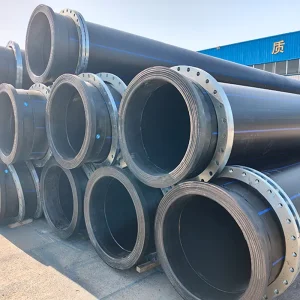
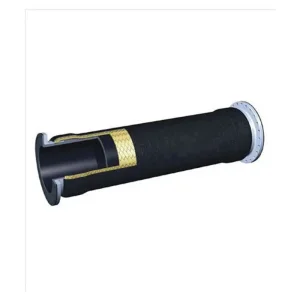
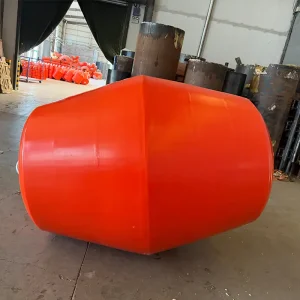
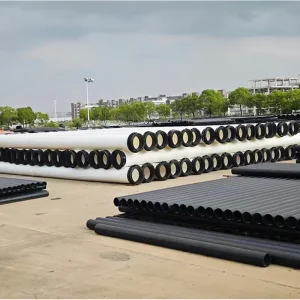
Explore complementary pipeline buoyancy elements, dredging hoses, and heavy-duty offshore mooring buoys manufactured to ISO-compliant standards.