
Core Marine & Flotation Infrastructure Fleet (Tier 1)
Engineered for immediate integration across international ports, hydraulic dredging programs, and industrial slurry conveyance.
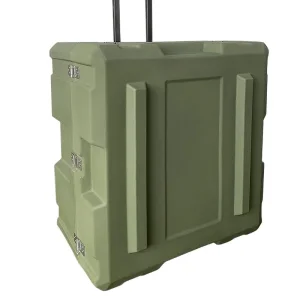
ODM Heavy-Duty Rotomolded Military Airdrop Storage Container Supplier, Factory
View Engineering Details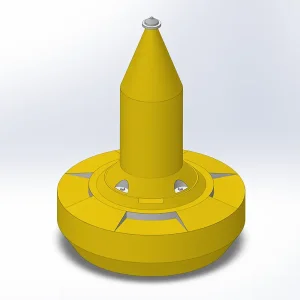
ODM Ocean-Grade Navigation Buoys for Safe Maritime Operations Products, Factory
View Engineering Details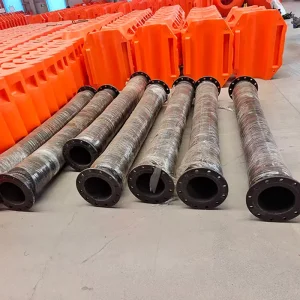
Custom Flexible Rubber Hoses for Advanced Fluid and Sediment Transport Products, Quotes
View Engineering Details
Custom Pipe Floats for Floating Pipeline Stability in Water Transfer and Industrial Projects Companies, Factory
View Engineering Details
Best Precision Marine Buoys for Safe and Efficient Navigation Manufacturer, Factories
View Engineering Details
High-Quality Pipe Floats for Industrial Water Lines and Floating Pipeline Support Manufacturers, Companies
View Engineering Details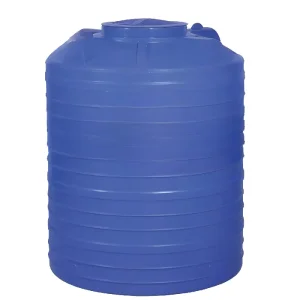
Custom Polyethylene Rotomolded Water Storage Tank – Durable and Safe Liquid Storage Solution Supplier, Factories
View Engineering Details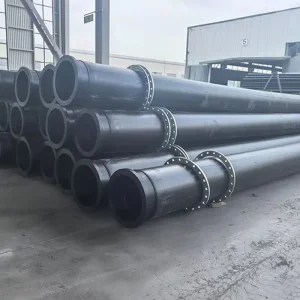
Best Heavy-Duty Pipeline for Safe and Efficient Transport Companies, Company
View Engineering DetailsState of the Floating Pipeline Industry: Commercial & Macro Realities
As capital expenditure across coastal reclamation, subsea infrastructure, tailings reprocessing, and deep-water port modernization escalates worldwide, traditional buoyant systems face unprecedented scrutiny.
Global Dredging Expansion
With global container ship draughts exceeding 16 meters, navigation channels require constant capital and maintenance dredging. Floating pipeline systems are the critical hydraulic conveyance conduit for Trailing Suction Hopper Dredgers (TSHD) and Cutter Suction Dredgers (CSD).
Mining Tailings Management
Mining facilities in South America, Australia, and Africa are moving slurry away from earthen dams toward floating pipeline networks on specialized settling ponds, mitigating breach risks and complying with stringent Global Industry Standard on Tailings Management (GISTM) criteria.
Urban Hydrological Adaptation
Rapid climate shifts require flexible municipal bypass pipelines for flood alleviation, raw water emergency intakes, and desalination discharge networks. Static subsea installation is increasingly replaced by rapidly relocatable, rotomolded PE floating conduits.
Engineering Architecture: Rotational Moulding & Polyethylene Integrity
Manufactured by Shandong Binzhou Juhua Rubber & Plastic Co., Ltd. (operating internationally as Juhua / Giant Rubber), our floating systems eliminate the chronic failure modes common to legacy steel and fiberglass modules.
| Performance Dimension | Juhua Rotomolded PE System | Legacy Welded Steel Floats | Fiberglass / GRP Systems |
|---|---|---|---|
| Corrosion Resistance | Total chemical inertness; zero marine saltwater degradation. | Severe pitting, internal oxidation, galvanic decay. | Resistant, but prone to osmotic blistering and resin cracking. |
| Impact Dynamic Response | High-energy absorption; flexible elastic recovery under wave slam. | Permanent denting, catastrophic weld seam rupture. | Brittle fracture, delamination under aggregate shock. |
| Internal Core Fill | Closed-cell polyurethane foam (≥ 35 kg/m³) with 0% water intake. | Air filled or cheap open-cell foam; rapid waterlogging if punctured. | Inconsistent resin injection, voids leading to loss of buoyancy. |
| Operational Lifespan | 15 to 25+ years under intensive UV radiation (UV8-UV16 stabilization). | 3 to 7 years without costly recurring abrasive blasting and painting. | 8 to 12 years; degraded by UV breakdown of matrix resin. |
| Weight & Handling Cost | Ultra-lightweight clamp-on halves; rapid crane mobilization. | Excessively heavy; requires massive support cranes and rigging gear. | Moderate weight; delicate mounting points prone to cracking. |
Comprehensive Solutions Across Industrial Application Sectors
Floating pipelines operate as dynamic structural systems subject to hydrodynamic loading, current drag, cyclic bending moments, and heavy internal slurry weights.
Capital Marine Dredging & Land Reclamation
Continuous sand and aggregate transport over distances exceeding 5,000 meters requires robust discharge lines. Juhua pipe floats, paired with HDPE discharge pipelines and flexible rubber discharge hoses, create an unbroken elastic train that flexes with multi-directional swells, eliminating flange fatigue and catastrophic pipeline rupture.
Mining Tailings & Acid Leach Transfer
Mining tailings slurry carries specific gravities ranging from 1.35 to 1.85 g/cm³. Under sizing buoyancy modules leads directly to sinking pipelines. Juhua engineers custom flotation bodies configured with cable troughs, enabling operators to run telemetry, power conduits, and emergency slurry shutoff lines safely above water.
Desalination Brine & Outfall Management
High-salinity reject streams quickly encrust and degrade metallic marine pipe. Our UV-stabilized virgin polymer pipe bodies provide seamless corrosion defense. Combined with modular floating barriers, outfall zones remain secure against marine debris infiltration and unauthorized civilian watercraft access.
Hydrodynamic Buoyancy Calculation & Sizing Formulation
A critical mistake made by non-specialized procurement teams is calculating buoyancy requirements based on clean water or empty pipes. When the slurry pump engages, line density spikes, plunging under-designed systems below the surface.
- B_total: Total upward buoyant force exerted by all flotation units combined (kgf or kN).
- W_pipe: Dead weight of HDPE or steel pipe shell per linear running meter.
- W_medium: Exact weight of conveyed slurry:
V_internal × ρ_slurry(where slurry density often reaches 1.4 – 1.8 kg/L). - W_fittings: Fasteners, steel flanges, rubber backing rings, monitoring cables, and external harnesses.
- Safety Factor (SF): Minimum 1.20 to 1.30 (yielding 20% to 30% reserve buoyancy) under calm inland conditions; SF ≥ 1.40 for exposed coastal marine swells.
By engineering to this standard, approximately 25% to 30% of the pipe float's outer diameter remains visible above the waterline during peak continuous slurry transit. This prevents submergence drag, mitigates vortex-induced vibration (VIV), and provides visual status cues for marine dredging operators.
Technological Roadmap: The Next Frontier of Floating Pipelines
How Shandong Binzhou Juhua Rubber & Plastic Co., Ltd. is actively shaping the future of marine polymer conveyance.
1. Smart Telemetry & IoT-Monitored Floats
Integration of low-power LoRaWAN and satellite-enabled sensors within the rotationally moulded float shell. Operators can continuously track pipeline axial strain, acceleration, tilt angle, GPS deviation, and internal core temperature from any digital dredging dashboard in real time.
2. Sustainable Circular Polymers
Transitioning product lines toward virgin-grade post-industrial recycled polymers without sacrificing tensile elongation or cross-link density. Juhua's closed-loop scrap recycling within our rotomoulding facility ensures zero manufacturing polymer waste enters global waterways.
3. Extreme Hydrodynamic Geometries
Next-generation Computational Fluid Dynamics (CFD) modeling of float profiles to lower drag coefficients in violent tidal passages. Bullet-nose profiles and stepped hydrodynamic vortex generators cut drag forces by up to 22%, saving fuel across tow boats and dredge positioning winches.
Frequently Asked Technical Questions (FAQ)
Critical engineering criteria, field assembly procedures, and warranty terms defined by Juhua's technical division.
What is the core function of a dredging pipe float module?
Pipeline floats (also termed dredge floats, pontoon floats, or buoyancy modules) are paired semi-cylindrical clamp-on rotationally moulded polyethylene bodies filled with high-density closed-cell polyurethane foam. They fit snugly around discharge lines (HDPE, steel, or rubber) to keep sediment, slurry, or water conveyance lines securely afloat, visible, and structurally stable on dynamic water surfaces.
How do you calculate the exact number of floats required for a pipeline run?
Calculate the aggregated weight per meter of the empty conduit, the weight of the conveyed medium at peak slurry density, and the weight of all flanges, bolt sets, and ancillary cables. Total float buoyancy must exceed this combined weight by at least 20% to 30% (yielding a safety factor between 1.2 and 1.3). This ensures roughly one-quarter to one-third of the pipe body remains clear of the water line under dynamic operating conditions.
Why is rotomolded polyethylene superior to welded steel in offshore applications?
Polyethylene (PE) is 100% rustproof, chemically unreactive with saltwater, and resists UV degradation through embedded carbon and chemical stabilizers. Steel floats corrode rapidly, peel coatings, dent easily, and will sink if punctured. Juhua's closed-cell polyurethane-filled PE floats remain buoyant even if the outer shell suffers puncture damage from debris or collisions.
What is the standard warranty duration and coverage?
The comprehensive warranty begins the day the buyer officially hands over the equipment to the project investor and expires 18 months from that handover date, or 12 months after completed commissioning and installation—whichever arrives first. Coverage protects against shell material manufacturing defects, premature UV degradation, and foam core debonding.
What project parameters are required for an accurate quotation and sizing proposal?
Clients should provide: 1) Pipe outside diameter (OD) and material (HDPE, steel, or composite); 2) Wall thickness / SDR rating; 3) Nature of conveyed fluid and specific gravity (ρ); 4) Total pipeline length; 5) Operating water environment (river, sheltered basin, port, or high-swell offshore zone); 6) Required freeboard clearance; 7) Desired shell color/marking; and 8) Target seaport for export logistics.
Specialized Floating Pipeline & Buoyancy Products (Tier 2)
Complete marine equipment lineup: robust navigation buoys, modular aquatic barriers, and industrial pipelines ready for global shipment.
ODM Heavy-Duty Marine Buoys for Reliable Navigation & Offshore Safety Manufacturer, Companies
View Engineering Details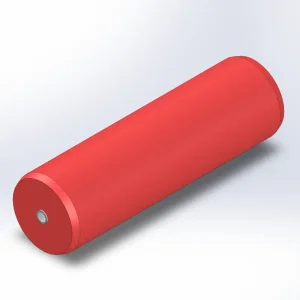
Best Reliable Floating Barriers for Marine and Industrial Protection Supplier, Factory
View Engineering Details
Custom Pipe Floats – Reliable Buoyancy for Marine Pipeline Projects Products, Companies
View Engineering Details
High-Quality Robust Floating Boat Pontoon for Safe and Flexible Water Platforms Product, Factories
View Engineering Details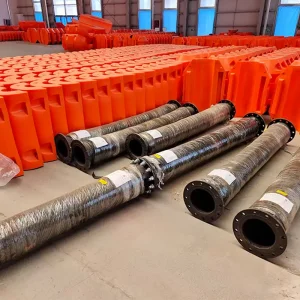
Custom Heavy-Duty Rubber Hose for Marine and Water Management Projects Suppliers, Manufacturers
View Engineering Details
Best Reliable Floating Buoys for Coastal Navigation and Offshore Projects Suppliers, Factory
View Engineering Details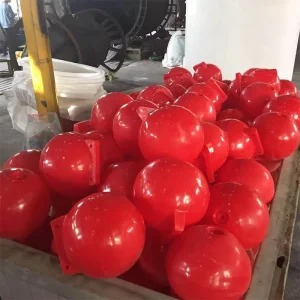
Best PE Float Ball for Safe and Efficient Water Operations Companies, Pricelist
View Engineering Details