
Featured Marine & Pipeline Flotation Inventory
Precision-engineered rotomolded polyethylene solutions deployed globally for water intake protection, sediment transport, pipeline buoyancy, and waterway safety control.

ODM Mooring Buoy for Secure Vessel Anchoring and Stable Marine Mooring Systems Manufacturers, Manufacturer
View Product & Quote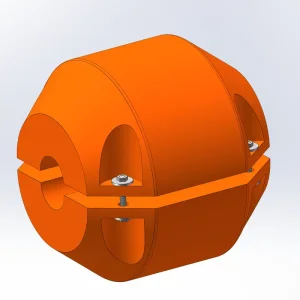
ODM Pipe Floats for Pump Discharge and Water Transfer Lines Manufacturers, Company
View Product & Quote
ODM Durable Cable-Integrated Pipe Floats for Submerged Infrastructure Supplier, Manufacturer
View Product & Quote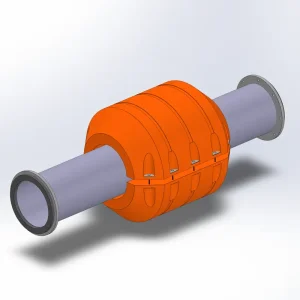
ODM High-Performance Floats for Efficient Pipeline Operations Manufacturers, Products
View Product & Quote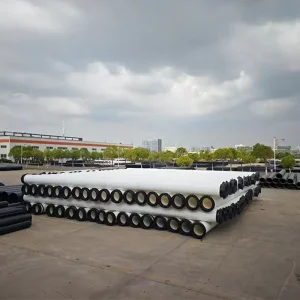
ODM High-Density Pipeline for Efficient Liquid and Gas Transport Manufacturers, Factories
View Product & Quote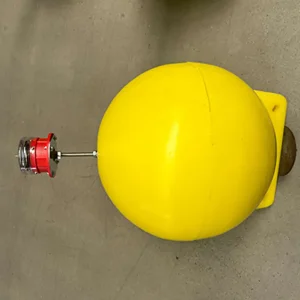
ODM Floating Ball with LED Light – Reliable Marine Navigation and Safety Manufacturer, Pricelist
View Product & Quote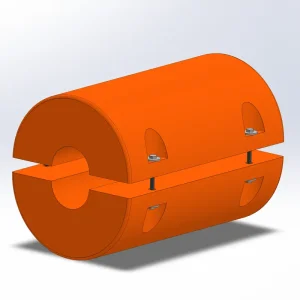
Best Pipe Floats for Floating Pipeline Support and Water Transfer Projects Suppliers, Factory
View Product & Quote
ODM Floating Barrier Systems for Water Safety and Project Efficiency Manufacturer, Company
View Product & QuoteThe Macroeconomics of Floating Trash Barriers & Global Water Infrastructure
Hydrological systems worldwide are under escalating pressure from anthropogenic plastics, natural timber runoff, seasonal weed blooms, and municipal municipal waste streams. Floating trash barriers represent the primary mechanical defense line against catastrophic intake failure and downstream contamination.
Intake & Dam Protection
Hydroelectric facilities and irrigation reservoirs face crippling downtime when floating debris blocks trash racks. Heavy logs and root balls create differential pressure spikes across intake gates, causing cavitational damage to expensive hydro turbines.
- Continuous deflection of heavy timber debris
- Minimization of head-loss across intake screens
- Subsurface skirt integration prevents vortex entrainment
Municipal & Stormwater Canals
Rapid urban runoff during flash flood events washes hundreds of tons of post-consumer plastics, bottles, and vegetation into open canals. Floating trash barriers serve as localized concentration points where mechanical skimmers recover debris safely.
- High-visibility safety demarcation for civilian zones
- Modular chain links facilitate variable water levels
- Engineered angled corridors direct debris to extraction bays
Ports, Harbors & Estuaries
Coastal authorities require marine trash barriers to intercept oceanic litter prior to entering protected commercial berths, marinas, and delicate marine reserves. The systems must withstand severe cyclic wave fatigue, tidal ranges, and saltwater corrosion.
- 100% rustproof rotational-molded LLDPE hulls
- Hot-dip galvanized / SS316 underwater linkage hardware
- Closed-cell PU foam core prevents sinking upon puncture
"Field studies conducted across hydroelectric power infrastructure demonstrate that an unmitigated floating debris volume of 1,200 m³/season generates an average of $380,000 in unscheduled downtime, hydraulic turbine wear, and emergency mechanical dredging costs. Investing in an engineered floating trash boom system delivers an average CapEx payback period under 14 months, while providing continuous waterway boundary compliance."
Hydrodynamic Structural Mechanics & Buoyancy Sizing
Specifying a robust floating trash barrier involves rigorous hydro-structural calculations rather than simple perimeter estimation. Current velocity, wind shear, debris entrapment drag, and anchor tension must be factored into every deployment plan.
Rotomolded Polyethylene & Foam Structural Matrix
Our floating trash boom modules are manufactured via computer-controlled rotational molding utilizing virgin Linear Low-Density Polyethylene (LLDPE) compounded with Class 8 UV inhibitors. The inner cavern of each cylindrical or barrel pontoon is pressure-injected with high-density, closed-cell polyurethane (PU) foam (35–40 kg/m³).
Even in the rare event of puncture from high-speed impact with submerged sharp debris or marine collisions, the closed-cell matrix prevents capillary water uptake. The barrier maintains 100% of its designed buoyancy reserve indefinitely, eliminating catastrophic sinking risks.
F_drag = 0.5 × ρ_water × C_d × A_submerged × (V_current)²
Note: When the underwater screen collects heavy trash, the effective drag coefficient C_d surges dramatically. Our structural anchor specifications incorporate a safety design margin of 2.5× to 3.0× baseline static load.
Core Structural Components
Outer Floater Shell
Seamless monolithic rotational molded PE, wall thickness 8–14mm, color-fast high-visibility safety yellow or international orange.
Internal Load Spine / Tension Member
Heavy-duty hot-dip galvanized grade 80 steel chain or stainless steel wire rope running coaxially through reinforced center channels.
Subsurface Debris Skirt / Curtain
Galvanized steel wire mesh, heavy-duty perforated PVC belts, or high-tenacity polyester netting with bottom lead ballast chains (draft depth 0.3m to 2.5m).
Tidal & Shore Anchor Compensators
Articulating shore sliding brackets, deadweight concrete sinkers, or helical screw anchors accommodating dynamic water level fluctuations.
Technical Comparison: Heavy-Duty PE Booms vs Alternative Systems
Why rotomolded polyethylene floating barriers outperform traditional steel pontoons and temporary fabric silt curtains.
| Engineering Parameter | Juhua Rotomolded PE Trash Barrier | Welded Steel Pontoon Booms | Standard PVC Curtain Booms |
|---|---|---|---|
| Corrosion Resistance | Immune (Saline / Acidic / UV) | High Rust Risk / Frequent Repaint | Good (Limited UV Resistance) |
| Impact Resilience | Elastic Deformation & Recovery | Permanent Denting & Weld Cracking | Easily Torn by Tree Branches |
| Flotation Security | 100% Solid PU Foam-Filled | Hollow Air Chamber (Puncture = Sinking) | Inflatable or Light Closed Foam |
| Expected Lifespan | 15–20 Years Continuous Duty | 5–8 Years (Marine environments) | 1–3 Years (Temporary duty only) |
| Maintenance Requirements | Virtually Zero Upkeep | Annual Sacrificial Anodes / Painting | Frequent Fabric Patching |
| Total Cost of Ownership (10-Yr) | Lowest Overall (Optimized ROI) | High (Continuous maintenance & cranes) | High (Frequent replacement cycles) |
Global Standards, Localized Engineering & Regulatory Assurance
Marine barrier deployment is governed by stringent regional maritime guidelines, environmental protection agencies, and inland waterway safety codes. We deliver tailored design compliance across six continents.
Standardized manufacturing processes ensuring dimensional consistency, wall thickness uniformity, and tensile certification.
Equipped with integrated solar-powered LED marker lights conforming to IALA maritime waterway safety and signaling regulations.
Food-contact grade virgin PE resin guaranteeing zero toxic chemical leaching into delicate freshwater reservoirs or fisheries.
Our engineering bureau delivers site-specific bathymetric mooring layouts, anchor holding load specs, and shipping crating plans.
Run-of-River Hydroelectric Debris Deflection
Installed an 850-meter diagonal trash boom array capable of deflecting 15-ton seasonal flood wood rafts away from the penstock intake toward an automated trash sluice.
Jellyfish & Plastic Debris Intake Screen
Engineered a dual-barrier barrier system with underwater micro-mesh skirts to prevent macro-plastics and jellyfish swarms from clogging high-volume intake pump wells.
Urban Stormwater Canal Micro-Plastic Trap
Deployed floating cylindrical barrier units with customized heavy-duty bottom ballast lines across a torrential municipal discharge canal prone to winter icing and freeze-thaw cycles.
Next-Generation Smart Flotation & Ecological Innovations
As digital telemetry meets hydro-mechanical engineering, the next frontier of floating barriers integrates autonomous monitoring, circular polymers, and low-impact mooring configurations.
IoT Telemetry & Load Sensing
Embedding wireless strain sensors and multi-axis accelerometers within boom connection shackles. Real-time tension data is transmitted to dam control rooms to warn operators when debris weight approaches safety thresholds.
- LoRaWAN & 4G satellite uplink capability
- Predictive maintenance alerts for anchor points
- Automated high-tension alarm during sudden storm surges
Active Solar Deflection Arrays
Integrating low-power water jet thrusters powered by curved flexible solar panels directly molded into the boom body. The water stream gently pushes floating plastic into designated collector traps without human labor.
- Self-cleaning hydrodynamic screen geometry
- 24/7 continuous autonomous surface skimming
- Zero external grid electrical infrastructure required
Bio-Circular Polymer Resins
Transitioning towards advanced post-consumer ocean plastic compounded rotomolding resins without compromising tensile strength or UV longevity, closing the ecological loop entirely.
- Certified circular material passports
- Zero-microplastic shedding surface finishes
- End-of-life buyback and remolding programs
Frequently Asked Engineering & Sourcing Questions
Authoritative, practical answers to essential questions asked by civil EPC contractors, municipal engineers, and marine procurement teams.
How do you calculate the correct freeboard and draft for a floating trash barrier?
The required freeboard (height above waterline) depends on expected wave height and surface wind shear to prevent floating trash from "jumping" over the boom; 300mm to 600mm is industry standard. The draft (depth below waterline) is governed by current velocity and submerged debris depth, usually 400mm to 2000mm. High-velocity streams require smaller draft angles to prevent the barrier from rolling under excessive hydrodynamic downforce.
Can these barriers withstand heavy timber, tree trunks, and ice flows?
Yes. Unlike thin PVC curtains, our heavy-duty rotational molded LLDPE barriers feature wall thicknesses up to 14mm with closed-cell polyurethane foam cores. High-tensile center through-chains (Grade 80 galvanized steel) transmit log collision shocks directly through the mooring line rather than tearing the polymer hull. For icing regions, the cylindrical geometry allows ice expansion to harmlessly push the pontoon upward.
What anchoring method should be selected for extreme water level fluctuations?
In reservoirs and tidal rivers with significant water level variances (5 to 20 meters), fixed moorings will either snap or submerge the booms. We engineer shore-mounted vertical slide rails, heavy-duty tidal articulation piles, or subsea counterweighted tension-compensating anchor blocks. These permit continuous 3D tracking of the waterline while keeping boom tension within engineered margins.
What data is required to generate an accurate manufacturer quote and project design?
To deliver an exact engineering proposal and competitive quote, please provide: total span distance (meters), maximum water flow velocity (m/s), site tidal/water level variance (m), predominant debris type (light plastic, algae, or heavy timber), installation site (dam intake, river canal, or open sea), and destination seaport for optimized container nesting calculations.
How do rotomolded floating barriers compare in lifecycle cost to steel pontoons?
Steel pontoon barriers require recurring sandblasting, anti-fouling coatings, and sacrificial zinc anode replacement every 2–3 years, with total puncture-sinking vulnerability upon corrosion. Polyethylene booms require zero anti-corrosive painting, resist marine growth adherence, and offer a continuous 15–20 year operational lifespan, slashing 10-year total cost of ownership by up to 60%.
What is the standard warranty period and replacement spare policy?
Warranty begins upon equipment handover to the project investor and is valid for 18 months from handover date or 12 months from final commissioning, whichever comes first. Because our production lines run standardized steel rotational molds, all replacement floats, connection pins, and underwater mesh screens are 100% interchangeable with existing installations.
Pipeline & Subsea Flotation Solutions
Engineered for slurry transport, dredging pipelines, harbor moorings, and subsea infrastructure support. Preserved direct manufacturer catalog links.
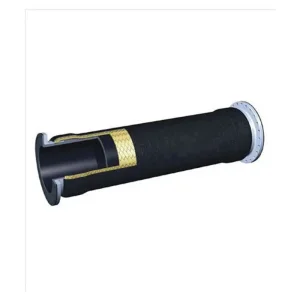
Best Reliable Pipelines for Sediment and Slurry Transport Product, Pricelist
View Product & Quote
High-Quality Advanced Pipeline Float System for Secure Subsea Installations Supplier, Factories
View Product & Quote
ODM Pipe Floats for Floating Water Pipelines and Marine Support Systems Manufacturers, Manufacturer
View Product & Quote
High-Quality Pipe Floats for Floating Pipeline Support and Water Transfer Product, Company
View Product & Quote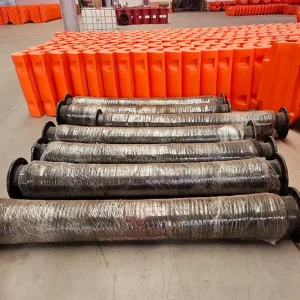
Custom Heavy-Duty Rubber Pipelines for Efficient Water and Slurry Transport Supplier, Products
View Product & Quote
Custom Mooring Buoy for Marinas, Harbors and Offshore Anchorage Systems Manufacturers, Quotes
View Product & Quote
ODM Pipe Floats With Cable Troughs - Reliable Buoyancy and Cable Protection Products, Factory
View Product & Quote
OEM Innovative Pipeline Float System for Reliable Deepwater Support Companies, Quotes
View Product & QuoteDirect Communication with Flotation Engineers
Eliminate non-technical intermediaries. Your hydro inquiry goes directly to our senior molding and marine structural engineers in Binzhou, Shandong. We deliver hydrodynamic drag estimates, buoyancy calculations, AutoCAD layout drawings, and container loading simulations within 24 hours.
RFQ Technical Specification Checklist
Include these key parameters in your request to receive a certified buoyancy calculation & FOB/CIF quotation within 24 hours:
- [1] Total span width across waterway (m)
- [2] Peak river current / tidal flow velocity (m/s)
- [3] Targeted debris profile (plastics, algae, heavy logs)
- [4] Submerged draft depth required (300mm to 2000mm)
- [5] Navigational lighting & IALA color marking requirements