
Industrial Flotation & Marine Pipeline Portfolio
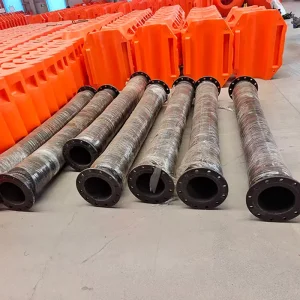
Precision-engineered buoyancy units manufactured with virgin HDPE resins, high-density closed-cell polyurethane foam cores, and galvanized/stainless connection hardware.


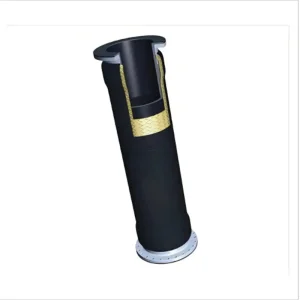
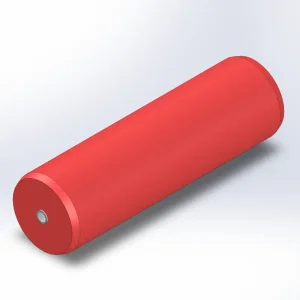
Global Evolution of Marine Pipeline Flotation Systems
Marine dredging, offshore reclamation, and mine tailing management require ruggedized, chemically inert flotation units. The global shift away from corroding welded steel drums to seamless rotomolded Polyethylene (PE) pipe floats represents an irreversible technical transition across international waterways.
Historical steel floats demanded persistent blast-cleaning, epoxy re-coating, and frequent cathodic protection to survive aggressive marine and brackish salinity. Modern EPC contractors prioritize UV-stabilized Linear Low-Density Polyethylene (LLDPE) engineered with closed-cell polyurethane foam fill, driving maintenance overhead down to near-zero across 15+ year lifespans.
Port expansions across North America, Europe, and Australasia impose non-negotiable marine ecotoxicity guidelines. Modern pipeline floats must be totally non-toxic, impervious to leaching, and chemically resilient against aromatic hydrocarbons, ensuring no harmful microplastics or degraded polyurethane enters delicate coastal water columns.
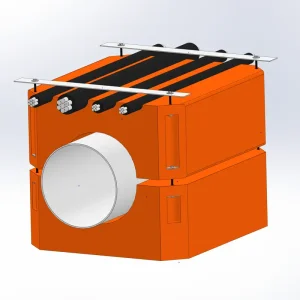
Modern land reclamation schemes deploy multi-utility conduits. Next-generation pipeline floats integrate molded troughs for high-voltage booster pump power cables, telemetry fiber optics, and real-time slurry density monitoring systems, eliminating external hazard lines subject to tidal snagging and vessel impact.
What Tier-1 Marine Contractors Demand from Factory Quotes
Procurement officers and maritime consulting engineers do not purchase float catalogs; they purchase hydrodynamically validated buoyancy guarantees, structural wall-thickness uniformity, and guaranteed export delivery windows.
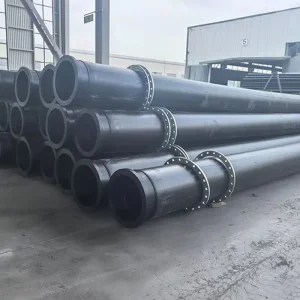
A standard outer pipe diameter (e.g., HDPE SDR11, SDR17, or carbon steel) requires snug contact tolerances. Premium floats utilize micro-grooved or ribbed inner cavities preventing axial slippage under rough axial sea swells without crushing thin-walled HDPE transport pipes.
When outer shells suffer accidental puncturing from heavy dredge rock or vessel collisions, the interior core must not take on water. Tier-1 specs enforce closed-cell polyurethane (PU) foam with 35–45 kg/m³ density exhibiting less than 1% water absorption by volume under prolonged hydrostatic submersion.
Marine engineers reject cheap zinc-plated fasteners. Factory quotes must explicitly itemize Grade 8.8 hot-dip galvanized bolts or marine-grade 316 stainless steel assemblies complete with heavy-duty backing plates, nylon locking nuts, and EPDM vibration-dampening washers.
Buoyancy Sizing for High-Density Slurry Pipelines
An undersized float system results in pipeline submersion, hydrodynamic drag amplification, and sudden pipeline rupture during peak slurry solids concentration.
Total Net Buoyancy ≥ (W_pipe + W_slurry + W_fittings) × 1.30A safety factor of 1.25 to 1.30 ensures that exactly 25% to 30% of the pipe diameter stays stably above the waterline (freeboard), minimizing vortex-induced vibration (VIV).
- Slurry Density Factor: Calculations must use peak discharge density (typically 1.35 to 1.65 t/m³ for iron sands or heavy silt).
- Hydrostatic Offset: Accounts for weight of flanges, joint couplers, backing rings, and auxiliary cable lines.
- Tidal & Wave Loading: Ensures steady freeboard stability under aggressive sea swells up to Beaufort force 6.
China Factory 4.0: Supply Chain Resilience & Production Scale
Based in Binzhou, Shandong—China's premier high-density polyethylene polymer fabrication cluster—our manufacturing ecosystem integrates Industry 4.0 automated rotational molding machinery, automated temperature telemetry, and vertically integrated raw material sourcing.
Variable-frequency drive rotation along dual axes with real-time electronic pyrometry ensures uniform shell thickness across stress-concentrated radii and bolt slots.
Interchangeability guaranteed: Every split half-float matches any opposite shell from identical production batches, eliminating on-site confusion during fast-paced assembly.
Direct logistics proximity to Qingdao and Tianjin ports guarantees swift, containerized ocean departures (40HQ high-cube nesting), mitigating project demurrage risks.
Bulk access to high-viscosity virgin petrochemical polymer feeds provides unyielding cost resilience, insulating foreign EPCs from volatile intermediary price shocks.
Localized Deployment Scenarios: Extreme Marine & Inland Environments
From high-salinity Persian Gulf ports to high-altitude Andean mining tailings dams, pipeline float requirements diverge dramatically based on ambient chemistry and hydrodynamics.
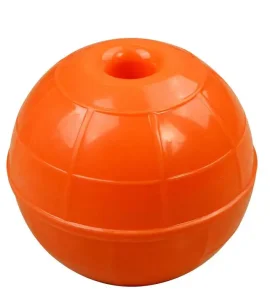
Trailing Suction Hopper Dredgers (TSHD) discharging dense sand through floating pipelines encounter continuous prop-wash, wave action, and tidal cycles. Bright safety-orange UV8-stabilized PE shells withstand scouring impact from support tugs while signaling navigational clearance to active vessel channels.
Tailings ponds in copper, gold, and iron mining involve slurry pH swings from 2.0 to 12.0 combined with heavy mineral densities. Seamless rotomolded polyethylene is completely resistant to chemical degradation, avoiding the localized pitting that catastrophically destroys metallic or low-grade fiberglass floats.
High-salinity reject brine lines in reverse osmosis desalination projects require steady outfall dispersion away from fragile shorelines. Pipeline floats keep submerged diffuser discharge lines buoyant during maritime positioning, lowering underwater crane time and diver deployment costs.
Heavy-Duty Discharge & Marine Infrastructure Lineup
Discover our complementary dredging hardware, including tie-in subsea buoyancy systems, slurry transfer lines, navigation markers, and multi-berth mooring buoys.
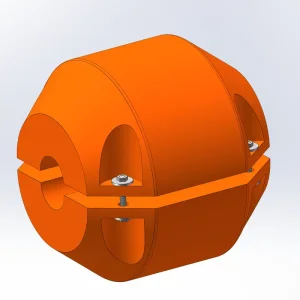



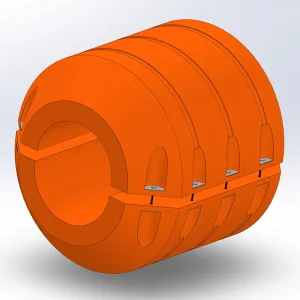

Technical Knowledge Base & Sourcing FAQ
Detailed answers to critical engineering, manufacturing, and procurement inquiries encountered during pipeline float system integration.
Quality hinges on three pillars: resin integrity (100% virgin LLDPE with UV8+ inhibitors rather than recycled regrind that embrittles under solar exposure), shell thickness uniformity via CNC rotational temperature regulation, and closed-cell polyurethane foam density (≥35 kg/m³) that maintains structural buoyancy even if skin rupture occurs.
Spacing is governed by allowable pipe bending moments and slurry weight. Floats are typically installed in continuous pairs or spaced with an engineered pitch (e.g., one float per 1.5m to 3.0m). Excess spacing causes pipeline sagging, inducing catastrophic localized stress at flange connections and accelerating internal abrasive wear at trough nodes.
To receive an accurate technical quotation within 24 hours, furnish: outer diameter of discharge pipe (OD in mm or inches), pipe raw material and SDR wall rating, maximum slurry specific gravity (t/m³), project location (inland calm lake vs. offshore wave environment), auxiliary cable weight, total line length, and target port of destination (CIF/FOB terms).
Our manufacturing standard comes with a full structural warranty covering 18 months post-handover or 12 months in-commissioning. Designed with premium antioxidant and UV stabilizers, Juhua rotational-molded pipeline floats boast an operational service life exceeding 10 to 15 years in high-salinity equatorial maritime applications.
Connect Directly with Juhua Flotation Engineers
Eliminate distributor markups and engineering misalignments. Submit your project requirements directly to our Binzhou design office for full buoyancy analysis and container loading schematics.