
Primary Flotation & Marine Containment Units
Engineered to handle intense hydrodynamic loading, variable-density slurry discharge, and corrosive marine deployment.
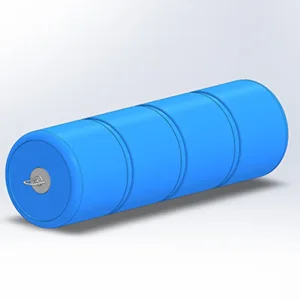
OEM Reliable Floating Barriers for Pollution Control and Water Safety Supplier, Manufacturers
View Specifications
Custom Custom Mooring Buoy for Marina Berths and Offshore Supplier, Manufacturer
View Specifications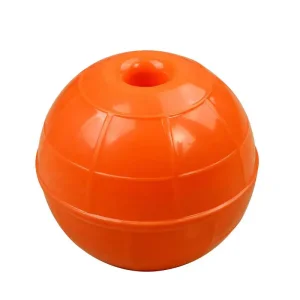
ODM Heavy-Duty ABS Float Ball for Water Engineering Projects Suppliers, Quotes
View Specifications
ODM Reliable Pipe Floats for Marine Projects Supplier, Manufacturer
View Specifications
Custom Pipe Floats for Floating Pipeline Stability in Water Transfer and Industrial Projects Companies, Factory
View Specifications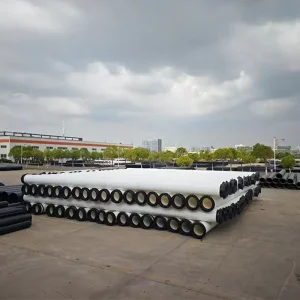
ODM High-Density Pipeline for Efficient Liquid and Gas Transport Manufacturers, Factories
View Specifications
High-Quality Versatile Floating Boat Pontoon for Water Projects Products, Company
View Specifications
High-Quality Water Boat Pontoon Floating – Stable and Modular Floating Platforms Supplier, Products
View SpecificationsIndustrial White Paper: High-Integrity Slurry & Rubber Discharge Systems
A comprehensive engineering evaluation of fluid dynamics, abrasion mitigation, elastomer compounds, and rotomolded polyethylene buoyancy stabilization in high-volume marine dredging.
Executive Engineering Overview
In modern offshore land reclamation, mining tailings management, and harbor channel maintenance, standard piping often succumbs to premature structural failure due to hydrodynamic fatigue, cyclic surge hammer, and extreme aggregate abrasion. Integrating high-tensile rubber discharge elements with precision-molded Virgin LLDPE pipe floats forms an ultra-resilient conveying corridor capable of absorbing continuous wave action while maintaining an uninterrupted discharge velocity.
Dynamic Flex Stress Absorption
Unlike rigid steel corridors, high-grade synthetic and natural rubber liners blended with high-tensile fabric/steel cords accommodate 3D directional twisting from tidal surges, drastically minimizing flange stress concentration points.
Optimized Slurry Rheology
Smooth internal elastomer matrices prevent localized eddies and boundary layer turbulence, minimizing abrasive particle impingement from coarse sand, gravel, coral fragments, and dense mine tailings.
Thermal & Chemical Stability
Polyethylene float shells formulated with UV-8 stabilizers and closed-cell polyurethane cores withstand extreme marine salinity, chemical leachates, and temperatures ranging from -40°C to +60°C without plastic deformation.
Manufacturing Supremacy: The Chinese Industrial Ecosystem Advantage
How state-of-the-art Chinese rotational molding and elastomer vulcanization clusters deliver unmatched cost efficiency, precision scalability, and rapid global supply logistics.
Vertically Integrated Raw Supply
Situated in leading petrochemical hubs such as Shandong, domestic manufacturing leverages direct pipelines to virgin polymer grades, UV stabilizers, and custom compounding, eliminating third-party markups and raw-material batch volatility.
Advanced Automation & Speed Control
Production lines utilize variable-frequency speed controls, electronic automatic temperature recording, and digital heating cycle algorithms, ensuring uniform wall thicknesses and avoiding localized weak points or residual thermal stress.
Rigid Tolerance Interchangeability
Standardized mold tooling enables identical split-shell geometry across consecutive production years. Replacement buoyancy collars and rubber sections integrate seamlessly with existing in-service marine discharge lines.
Macro Industry Solutions & Global Procurement Requirements
Addressing mission-critical fluid discharge challenges across oceanic engineering, reclamation corridors, and international EPC project contracts.
| Sector Domain | Operational Challenge | Technical Deployment | Buoyancy & Material Factor |
|---|---|---|---|
| Port & Harbor Deepening | Heavy boat traffic, continuous swell, cyclic sand abrasion. | Heavy-duty discharge hoses coupled with high-visibility pipeline floats and marine navigation buoys. | Freeboard target: 25% OD elevation. Shell: UV-stabilized virgin PE. |
| Coastal Land Reclamation | Miles-long lines, high slurry specific gravity (1.6-2.0 g/cm³), strong currents. | Staged pipeline floats with high-compression PU foam fillings, reinforced steel flange tie-ins. | Reserve buoyancy ratio: 1.25x – 1.35x total weight load. |
| Mining Slurry & Tailings | Acidic/alkaline transport, toxic tailings pond containment, high solids load. | Wear-resistant thick rubber lining, cable-trough buoyancy modules for instrumentation tracking. | High chemical resistance (pH 2-12), ABS/PE dual impact shells. |
| River Desilting & Flood Bypass | Shallow draft variations, tight river bends, floating organic debris. | Segmented rubber hose links for flexible articulation paired with interlinked debris containment booms. | Modular clamp halves, quick bolt-on stainless 316 hardware. |
Procurement Vetting & Traceability
Global EPCs demand full mill test certificates (MTCs), density verification tests, hydrostatic burst pressure guarantees for rubber hoses, and UV aging chamber data for polymer shells prior to issuing Letters of Credit (L/C).
Optimized Packing & Freight Volume
Float halves are designed with nested taper geometries to maximize container cube utilization in standard 40ft HQ shipping containers, reducing transoceanic landed costs per linear meter of pipeline.
Lifecycle Warranty & On-Site Support
Comprehensive guarantees spanning 18 months post-handover or 12 months in active water deployment, supported by direct technical liaison with pipeline sizing engineers for installation spacing and anchoring protocols.
Engineering Buoyancy Calculation Methodology
Mathematical modeling to avoid catastrophic pipeline submersions during variable density fluid discharge.
The Operational Load Equilibrium Formula
A critical oversight in dredge pipeline engineering is specifying flotation based on clean water specific gravity (1.0 g/cm³). When the pump impellers introduce high-density tailings, dredged silt, or slurry with high rock content, the internal weight can surge by 60% to 100%, dragging improperly sized lines to the ocean floor.
- Wmedium(slurry): Must reflect true site sediment core density (typically 1.3 to 1.85 metric tons/m³).
- Csafety (Safety Reserve Margin): Must be engineered between 1.2 and 1.3 (providing 20% to 30% surplus reserve buoyancy).
- Equilibrium Freeboard Goal: Exactly 20% to 25% of the floating pipe diameter should remain visible above the waterline during maximum steady-state pumping.
Technical Clarifications & Procurement FAQ
Essential guidance on specifying, deploying, and maintaining heavy-duty discharge lines and flotation modules.
Deepwater Support, Pipelines & Mooring Solutions
Engineered for high load stability, subsea positioning, heavy fluid transport, and secure open-water vessel berthing.

Custom Pipeline Float For Subsea Tie-In And Controlled Positioning Products, Quotes
View Specifications
ODM Custom Mooring Buoy for Vessel Berthing, Marina Use and Offshore Anchorage Companies, Pricelist
View Specifications
Custom Deepwater Pipeline Support Float – Modular and Reliable Supplier, Manufacturers
View Specifications
High-Quality Durable Floats for Safe and Efficient Pipeline Support Manufacturers, Products
View Specifications
ODM Mooring Buoy For River Terminals And Workboat Berths Product, Quotes
View Specifications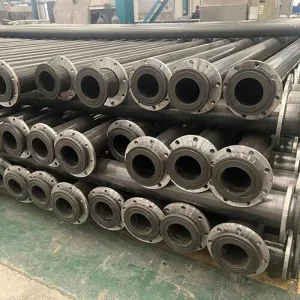
Best Durable Pipeline for Efficient Fluid Transport Supplier, Products
View Specifications
Best Polyethylene Mooring Buoy – Reliable Floating Solutions for Modern Marine Projects Suppliers, Company
View Specifications
Best Heavy-Duty Pipeline Float System for Subsea Installations Manufacturer, Products
View SpecificationsRequest Buoyancy Analysis & Sizing Proposals
Connect directly with technical staff in Binzhou, Shandong. We provide comprehensive buoyancy calculations, wall thickness recommendations, and container stuffing plans customized to your project specifications.
Core Specification Checklist
Submitting complete line parameters ensures prompt engineering turnarounds within 24 hours:
- Outer diameter (OD) & pipe wall thickness rating
- Conveyed slurry SG (specific gravity) and solids fraction
- Deployment environment (Nearshore tidal, riverine, or deepwater)
- Color coding, solar topmarks, and cable trench inclusions