
Advanced Marine Float Systems & Engineered Buoyancy Products
Manufactured under strict ISO 9001:2015 quality oversight in Binzhou, Shandong. These heavy-duty flotation modules provide verified hydrodynamic stability, zero water intrusion, and extreme kinetic impact damping.


Engineering Fundamentals of Resilient Soft Mooring Buoys
Moving beyond conventional rigid steel buoys: How resilient polyurethane coatings, closed-cell thermoset foam matrices, and internal load-transfer mandrels prevent vessel hull impact damage and catastrophic cyclic fatigue in high-energy marine environments.
Non-Marring Elastomeric Armor
Traditional steel mooring buoys cause extensive gelcoat abrasion, denting, and paint striping when vessel hulls drift into anchorages during dead calm or rapid tidal reversals. Soft mooring buoys utilize a high-density, hot-sprayed polyurethane or rotational elastomeric skin (thickness ranging from 6mm to 18mm) with high tear resistance (>45 kN/m) and 400% elongation at break, completely eliminating vessel contact liabilities.
Closed-Cell Unsinkable Core
The interior flotation core consists of 100% closed-cell, cross-linked polyethylene (PE) or expanded rigid polyurethane (PUR) foam with a typical density of 35 to 45 kg/m³. Unlike hollow steel or blow-molded floats, our core cannot absorb seawater even if catastrophic puncture occurs from sharp ship propellers, debris collisions, or offshore service vessel impacts. Operational buoyancy retention remains at 100% across the design life.
Structural Through-Mandrel Integrity
Mooring loads are never transferred through the buoyant polymer shell. A central, heavy-walled structural steel mandrel (Q235B or Q355B structural steel, hot-dip galvanized to ISO 1461 standards with zinc thickness ≥85 µm) directly connects the bottom anchor catenary to the top mooring eye or quick-release mooring hook. This design withstands Proof Test Loads (PTL) exceeding 250 kN to 1,200 kN without structural deflection.
The Hydrodynamic Sizing Protocol (Semantic Buoyancy Formula)
In offshore marine engineering, sizing a mooring buoy solely against calm-water displacement leads to premature sub-surface submergence during storm surges and extreme current vectors. Buoyancy design must maintain a dynamic Reserve Buoyancy Margin (RBM) calculated as: Reserve Buoyancy (kN) = Total Gross Displacement - [Mooring Chain Suspended Weight (in seawater) + Vessel Hawser Down-Tension Vector + Maximum Biofouling Surcharge (approx. 15-25 kg/m²)] ≥ 40% Net Displacement. This ensures the buoy retains sufficient freeboard to remain clearly visible to radar and lookout personnel at all sea states.
| Evaluation Parameter | Juhua Soft Polyurethane/PE Buoy | Traditional Welded Steel Buoy | Standard Blow-Molded PVC Buoy |
|---|---|---|---|
| Hull Impact Energy Absorption | Extreme (>75 kJ/m² deformation damping, no denting) | Zero (Causes paint stripping, denting, structural hull breaches) | Moderate (Risk of low-temperature brittle bursting) |
| Corrosion & Degradation Resistance | 100% chemically inert to seawater, crude oils, and UV-15 | Requires regular drydock grit-blasting & sacrificial zinc anodes | High susceptibility to UV embrittlement and plasticizer loss |
| Failure Mode Under Puncture | Safe Fail: 100% closed-cell foam prevents water entry | Catastrophic: Weld fracture causes flooding and complete sinking | Total loss of internal pressure and immediate collapse |
| Dry Weight vs. Net Buoyancy Ratio | Ultra-lightweight (~1:4 deadweight to net lift efficiency) | Extremely heavy (~1:1.5 deadweight ratio, requires heavy cranes) | Lightweight (~1:5, but strictly limited to low loads <5 kN) |
| Maintenance & Lifecycle OPEX | Virtually zero maintenance over 15–20 years operating lifecycle | High recurring OPEX (drydocking every 3–5 years for recoating) | Frequent replacement cycles every 2–4 years |
Strategic Manufacturing Advantages of Our Chinese Production Base
Operating from the West Industrial Park in Huimin County, Binzhou City, Shandong Province, Shandong Binzhou Juhua Rubber & Plastic Co., Ltd. integrates advanced polymers, massive rotomolding infrastructure, and global logistics efficiency.
Complete Shandong Petrochemical Supply Chain
Binzhou sits at the core of China's premier petrochemical and polymer processing cluster. Direct regional procurement of virgin LLDPE/HDPE resins (from Sinopec and PetroChina) and specialized cross-linked polyol formulations eliminates supply bottlenecks, ensuring certified raw material purity, molecular consistency, and competitive factory-direct pricing without distributor markups.
Large-Scale Multi-Axis CNC Rotomolding
Our workshop houses high-capacity open-flame and rock-and-roll rotational molding machines capable of fabricating single-piece seamless buoy hulls up to 3,500 mm in diameter. Computerized temperature tracking ensures homogeneous wall thickness distribution (+/- 0.5mm), eliminating thermal stress concentration points common in manual or low-grade casting operations.
Tier-1 Export Logistics: Qingdao & Tianjin Ports
Positioned just hours away from the world-class deepwater container and breakbulk terminals of Qingdao Port and Tianjin Port, our logistics department arranges rapid customs clearance, flat-rack container consolidation for oversized buoys, and roll-on/roll-off (RoRo) ship handling for turnkey EPC delivery across 80+ nations.
Macro Trends & Next-Generation Buoyancy Innovations
The offshore mooring industry is shifting rapidly. Increased storm frequencies, the expansion of floating offshore wind energy, and digital maritime mandates are driving major evolutions in buoy design.
IoT-Integrated Smart Telemetry
Modern port infrastructure requires real-time situational awareness. Next-generation soft mooring buoys incorporate integrated GPS tracking, load-cell tension sensors, tilt/inclinometers, and solar-powered AIS Class B transponders that beam real-time hawser load data directly to port VTS operations centers via 4G/Satellite networks.
Floating Offshore Wind Tie-Ins
As deepwater floating offshore wind installations (FOWT) expand across the North Sea, Atlantic, and East Asia, soft pick-up buoys and pre-laid mooring line installation buoys are replacing steel units to support massive synthetic polyester and Dyneema mooring lines without chaffing or localized fiber crushing.
Eco-Responsible Polymer Formulations
Stringent IMO and MARPOL environmental regulations are mandating non-toxic, biocide-free anti-fouling skins. Juhua is pioneering ultra-smooth fluoropolymer-modified surface treatments that prevent barnacle, algae, and tubeworm adhesion mechanically without leaching harmful heavy metals (TBT/copper) into marine ecosystems.
Extreme Dynamic Energy Absorption
Larger container vessels (up to 24,000 TEU) generate massive surge forces against terminal berthing zones. Soft mooring buoys act as dynamic springs within the mooring spread, absorbing peak kinetic snatches through elastic shell compression and protecting subsea gravity anchors from premature breakout.
Localized Engineering Applications & Macro-Project Solutions
From shallow congested harbors to cyclonic offshore energy basins, our custom-engineered soft mooring buoy systems adapt to precise geotechnical and oceanographic boundary conditions.
Commercial Port Multi-Berth Anchorages & Turn Basins
In busy commercial berths and municipal harbor turn basins, vessel traffic density is exceptionally high. Tugs, pilot launches, and mooring craft constantly maneuver adjacent to anchored vessels. Soft mooring buoys offer non-marking surfaces that absorb glancing collisions from tug bows without piercing hulls or damaging vessel propulsion azimuth drives. Bright IALA-compliant pigmentation (safety yellow, marine red, green) provides high optical visibility day and night.
Offshore SPM / CALM Terminal Offloading Support
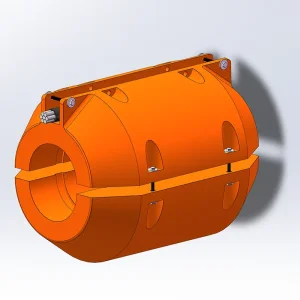
Single Point Mooring (SPM) and Catenary Anchor Leg Mooring (CALM) crude oil terminals rely on resilient soft pick-up buoys and floating hose support buoys. These units maintain the floating offloading hose string in a smooth catenary curve, preventing kink points and fatigue failures during shuttle tanker connect and disconnect operations in heavy open-ocean swells.
Deep-Sea Industrial Aquaculture Grid Mooring
Modern submersible open-ocean fish farms and mussel aquaculture systems require high-buoyancy soft tension buoys to suspend perimeter anchor grids. Unlike rigid floats that crack under relentless wave flexing, our rotational PE/PUR soft buoys flex elastically with wave swells, dampening peak mooring line tensions and preventing grid cage collapse during seasonal typhoons.
Capital Dredging & Pipeline Floating Discharges
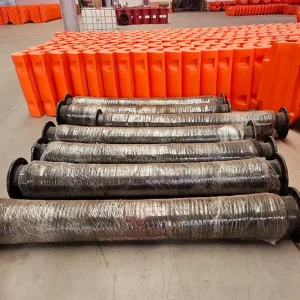
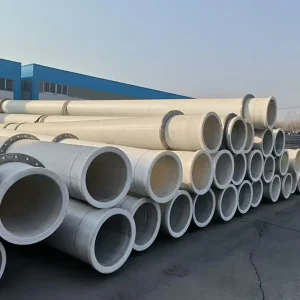
During harbor dredging operations, cutter suction dredgers (CSD) and trailing suction hopper dredgers (TSHD) require high-load anchor handling buoys and intermediate riser buoys. These buoys support heavy armored rubber slurry lines and submerged HDPE discharge pipes across shifting tidal currents, preventing the line from grounding on reefs or navigation channel shoulders.
Enterprise Procurement Criteria & Technical RFQ Guidelines
Procuring marine mooring equipment demands rigorous adherence to international classification standards. Below is our engineering checklist for port authorities, marine EPC contractors, and terminal procurement directors.
Classification Standards Alignment
All Juhua soft mooring buoys and navigational flotation hardware comply with the strict recommendations of the International Association of Marine Aids to Navigation and Lighthouse Authorities (IALA). Material specifications conform to ASTM D1693 (Environmental Stress Crack Resistance), ISO 1461 (Hot Dip Galvanization), and PIANC Working Group guidelines for maritime anchor moorings.
Critical RFQ Sizing Parameters
To receive an exact hydrodynamic calculation and certified quotation within 24 hours, buyers should provide: (1) Design vessel displacement (DWT); (2) Water depth (HAT & LAT); (3) Wind/Current/Wave velocity vectors (50-year return storm condition); (4) Target reserve freeboard (mm); (5) Connection geometry (Pad-eye, Quick Release Hook, Cruciform bollard, Through-chain hawse pipe).
Full Inspection & Material Traceability
Every commercial production batch undergoes non-destructive ultrasonic skin thickness scanning, closed-cell foam density testing, tensile load pull-testing (up to 1,500 kN test bed), and 100% water tightness pressure testing. Material Test Reports (MTR 3.1) and Third-Party Inspection certificates (BV, DNV, SGS, CCS) are provided upon contract dispatch.
Frequently Asked Questions: Mooring Buoy Engineering & Sizing
Direct technical answers formulated by our naval architects and polymer materials specialists.
What distinguishes a "Soft" Mooring Buoy from a standard steel or rigid rotomolded buoy?
A soft mooring buoy features an impact-damped exterior construction—either a thick elastomeric polyurethane skin over an energy-absorbing closed-cell foam matrix, or a flexible rotational polyethylene outer skin that cushions physical contact with vessel hulls. Unlike steel buoys that dent ship plates, strip marine coatings, and risk sinking if their hull welds breach, a soft buoy absorbs kinetic contact, cannot mar gelcoat or paint, and will never sink even if punctured.
How does the internal steel mandrel handle extreme mooring catenary tension?
The buoy's flotation shell and foam core are isolated from axial mooring forces. Tension is borne by an internal heavy-duty central structural steel pipe or solid shaft (mandrel) passing through the axis of the buoy. This mandrel features welded load-distributing flanges, integrated padeyes, or chain hawse locks hot-dip galvanized to ISO 1461. Mooring chain pull forces are transmitted directly down to the anchor ground tackle, ensuring the polymer foam shell experiences only hydrostatic compression.
How is the required net buoyancy calculated for high-current offshore moorings?
Total buoyancy must support the combined deadweight of the buoy, the submerged weight of the suspended catenary anchor chain at Highest Astronomical Tide (HAT), maximum biofouling growth weight, and the dynamic vertical downward pull component created by vessel hawser surge during peak tidal currents. We recommend maintaining at least 35% to 50% reserve buoyancy above the waterline in worst-case 50-year storm conditions to maintain visual and radar conspicuousness.
What is the expected operating lifespan in tropical, high-UV marine locations?
Juhua soft mooring buoys are manufactured using virgin polymer compounds compounded with UV-15 class hindered amine light stabilizers (HALS) and antioxidant additives. The material withstands severe UV radiation environments (such as the Persian Gulf, Red Sea, Southeast Asia, and Equatorial Latin America) for 15 to 20+ years without polymer chain embrittlement, chalking, or loss of mechanical impact strength.
Can the buoy be customized for specific hawser configurations and quick-release hooks?
Yes. We offer fully bespoke rotational and steel fabrication tooling. Configurations include: Central Through-Chain Hawse Pipe (allowing continuous anchor chain passage with top-deck chain stopper locks), Pad-Eye to Pad-Eye structural mandrels, Cruciform Mooring Bollards, Double Shackle Swivels to prevent line twist, and integrated mounting platforms for radar reflectors, LED marine solar lanterns, and AIS transponders.
What is your warranty policy and quality assurance documentation?
We provide a comprehensive marine warranty starting from customer handover up to 18 months post-delivery or 12 months post-installation. Every shipment is accompanied by complete mill test certificates for steel components, polyurea/PE resin compliance sheets, third-party hydro-static test reports, and an individual factory inspection checklist verified by QA engineers before dispatch.
Commercial Marine Navigation, Mooring & Pipeline Buoyancy Range
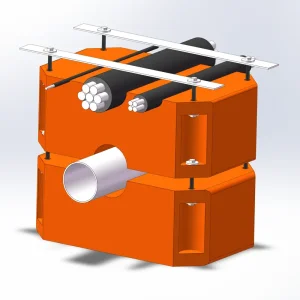
Explore our extended range of rotationally molded pipe floats, marine navigation aids, offshore mooring assemblies, and modular water pontoons engineered for industrial maritime infrastructure.



Request a Certified Hydrodynamic Buoyancy Analysis
Our naval architecture and rotational molding engineers review your project bathymetry, current profiles, and hawser tension parameters within 24 hours. Contact our Shandong engineering headquarters directly: