Featured Offshore & Slurry Flotation Systems
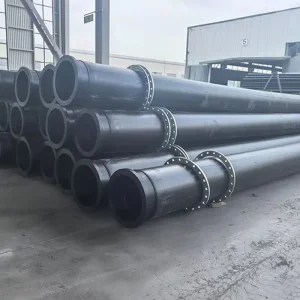
Direct manufacturer supply for standard dredging discharge lines, armored suction hoses, and specialized underwater pipeline tie-in buoyancy modules.



The Commercial Architecture of Global Suction Hose Flotation
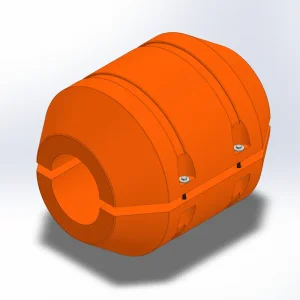
Modern trailing suction hopper dredgers (TSHD), cutter suction dredgers (CSD), and high-density industrial tailings bypass projects demand precision buoyancy engineering. A suction hose operates under cyclical negative internal pressure combined with dynamic wave-action hydrodynamic drag.
Global Dredging Escalation
Global sea-trade expansion and coastal defensive engineering have driven unprecedented capital investments into port deepening, estuarine desilting, and land reclamation across Southeast Asia, the Middle East, and northern Europe. Suction hose floats are no longer passive plastic rings; they represent mission-critical components preventing line kinks and premature carcass failure under severe tidal surge.
Rotomolding Chemical Synthesis
Virgin High-Density Polyethylene (HDPE) polymer resins compounded with Class 8 UV inhibitors (such as Tinuvin 783) provide exceptional environmental stress crack resistance (ESCR > 1,000 hrs). Closed-cell crosslinked polyurethane (PUR) injection at ≥35 kg/m³ density guarantees total buoyancy retention even if the outer shell suffers hull impact from maritime workboats.
Life-Cycle Cost Reduction
Traditional fabricated steel buoyancy tanks suffer catastrophic galvanic pitting in high-salinity seawater, incurring intense sandblasting and re-coating costs. Engineered polyethylene suction floats exhibit zero electrolytic corrosion, withstand diesel, mineral acids, and slurry abrasion, and deliver a service life exceeding 12–15 years without operational recoating cycles.
Chinese Manufacturing Efficiency & Technical Execution
Operating from the specialized petrochemical and heavy industrial corridor of Lizhuang Town, Huimin County, Binzhou, Shandong, our facility integrates raw pellet compounding, computerized mold kinematics, and turnkey container load optimization to give global EPC contractors an undisputed commercial and operational edge.
Variable-Frequency Rotational Kinematics
Our dual-axis bi-directional arm carousels use variable-frequency speed regulation and multi-zone closed-loop infrared sensor monitoring. This eliminates the wall thinning on tight corners commonly seen in conventional heating cycles, guaranteeing structural integrity across all structural bolt-down flanges.
Integrated CNC Mold Standardisation
By producing tool dies via 5-axis aerospace aluminum casting, every half-shell exhibits precision dimensional repeatability (±1.5mm on diameter). Flotation modules sourced 5 years apart mate together on the same suction line without gap variations, localized pinch stress, or loose bolt misalignment.
Container Nesting & Freight Optimization
Floats feature engineered nested stacking geometry. By separating matching halves during overseas container stowing (40HQ / 45HC), our packing engineers increase volumetric container efficiency by up to 38%, slashing ocean freight surcharges per net kg of offshore buoyancy delivered to Rotterdam, Dubai, or Singapore.
| Nominal Inner Diameter (ID) | Float Outer Diameter (OD) | Standard Length (mm) | Net Buoyancy Capacity (kg) | Recommended Service Target |
|---|---|---|---|---|
| 200 mm (8 inch) | 500 mm | 800 mm | 110 – 140 kg | Tailings bypass, river intake lines |
| 350 mm (14 inch) | 800 mm | 1,100 mm | 380 – 450 kg | Lake desilting, sand reclamation |
| 500 mm (20 inch) | 1,100 mm | 1,300 mm | 850 – 1,050 kg | Cutter suction dredger discharge lines |
| 700 mm (28 inch) | 1,400 mm | 1,800 mm | 1,900 – 2,300 kg | Heavy armored marine suction hoses |
| 900 mm (36 inch) | 1,800 mm | 2,200 mm | 3,800 – 4,500 kg | Harbor deepening, mega-hopper suction lines |
Localized Application Scenarios: Offshore to Tailings Ponds
Buoyancy is an active structural counterweight that resists hydraulic buckling, tidal flexure, and solid settle accumulation. Below are five proven field deployment methodologies.
Cutter Suction Head Articulation
Deployed immediately behind the ladder gantry of cutter dredgers, suction hose floats prevent armored flexible rubber hoses from dragging on the seabed or forming sharp S-bends during tidal elevation changes, eliminating flow cavitation.
High-Density Mining Tailings
Transporting tailings slurry with a specific gravity >1.45 kg/L creates massive vertical loads. Our floats are sized using specific gravity algorithms to keep 25% to 30% of the pipe diameter above the water surface, preventing sub-surface sink-ins.
Turbulent Estuary Navigational Fairways
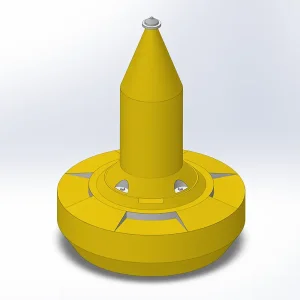
Molded in chromatic warning orange and yellow complying with IALA maritime navigation standards, fitted with 3M retro-reflective sheeting and optional solar flash beacons, ensuring zero collision risks from nocturnal harbor transit traffic.
Industry Trends & EPC Sourcing Directives
Procurement directors and maritime engineering managers are shifting away from standalone component buying toward integrated flotation packages engineered against hydrodynamic models and finite element analysis (FEA).
IoT-Sensored Buoyancy Modules
Next-generation dredging tenders increasingly specify embedded RFID and pressure/strain sensors within the pontoon matrix to monitor real-time axial tension, wave slamming stress, and localized pipe settling remotely from the dredger bridge.
Cable-Integrated Conduit Floats
Modern cutter suction dredge configurations require simultaneous power, signal fiber optics, and discharge line support. Floats designed with integrated top and lateral cable troughs eliminate trailing umbilical entanglements and external umbilical float costs.
Standardized Fastener Metallurgies
Global project engineers increasingly reject mild galvanized steel fasteners due to rapid marine galvanic degradation. Our export supplies standardize on Grade 304, Grade 316, or Super Duplex stainless steel bolt assemblies complete with self-locking nylon ring nuts.
Frequently Asked Technical Questions (FAQ)
Authoritative engineering explanations based on empirical tests across dredging yards, port expansions, and industrial tailings operations.
What is the standard formula to calculate required buoyancy for suction hoses?
Total buoyancy must exceed total combined operational weight: Required Buoyancy = (Weight of Pipe/Hose + Weight of Full Slurry Medium + Flange Hardware Weight) × 1.20 to 1.30 (Reserve Margin). Dredging suction slurry often reaches specific gravities of 1.3 to 1.6 kg/L. Sizing against clear water (1.0 kg/L) will cause the pipeline to sink once heavy dredging begins.
How does polyurethane (PUR) closed-cell foam prevent waterlogging if the outer shell is punctured?
We inject two-component liquid polyurethane foam that reacts to form a closed-cell matrix (>92% closed-cell ratio) at a density of 35 to 45 kg/m³. If the polyethylene shell is punctured by a workboat collision, marine debris, or propeller strike, the closed cells prevent capillary water ingress. The float loses less than 1.5% net buoyancy over years of continuous submersion.
How are suction hose floats secured against axial slippage on flexible rubber hoses?
Flexible suction hoses expand under surge pressure and contract under vacuum. To prevent pontoon slippage without cutting into the outer rubber cover, our half-shells are molded with internal anti-slip ridges or stepped shoulder collars that lock against the hose's built-in rubber ribs or steel rings. Heavy-duty molded rubber anti-friction gaskets can also be integrated inside the clamping bore.
What is the official factory warranty coverage and quality assurance framework?
Our rotomolded flotation units carry a comprehensive factory warranty: valid for 18 months from the date of port-of-destination handover or 12 months after on-site commissioning, whichever occurs first. Every batch is certified with raw material melt-flow index (MFI) reports, environmental stress-crack tests, tensile yield tests (≥21 MPa), and foam density verification.
Comprehensive Marine Infrastructure Solutions
Explore our complete lineup of rotomolded marine products, navigation markers, barrier floats, and pipeline support modules.