
High-Integrity Pipeline Floats & Heavy-Duty Offshore Marine Buoys
Engineered by Shandong Binzhou Juhua Rubber & Plastic Co., Ltd. for extreme hydraulic dredging, coastal navigation, slurry pumping, and terminal mooring operations worldwide.
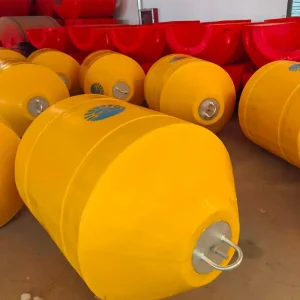
Best Custom Mooring Buoy for Boat Berths, Harbors and Offshore Stations Manufacturers, Pricelist
Technical Specs & RFQ
Best Pipe Floats for Stable Water Transfer and Marine Pipeline Support Supplier, Pricelist
Technical Specs & RFQ
Best Polyethylene Mooring Buoy – Reliable Floating Solutions for Modern Marine Projects Suppliers, Company
Technical Specs & RFQ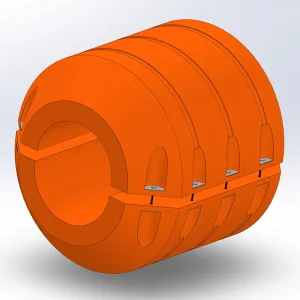
ODM High-Buoyancy Floats for Marine Projects Suppliers, Pricelist
Technical Specs & RFQ
ODM Mooring Buoy for Marina Berths, Vessel Anchorage and Offshore Mooring Systems Suppliers, Manufacturers
Technical Specs & RFQ
ODM Foam-Filled Mooring Buoy for Marinas and Offshore Anchorages Company, Factories
Technical Specs & RFQ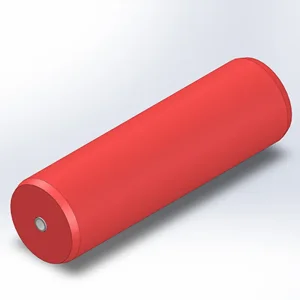
Custom Floating Barrier Systems for Effective Water Safety and Pollution Control Product, Factories
Technical Specs & RFQ
High-Quality Offshore Polyethylene Mooring Buoy – Safe, Durable and Maintenance-Free Floating Mooring System Companies, Factories
Technical Specs & RFQHydrodynamic Flotation Mechanics, Polymer Matrix Dynamics & Structural Loading
In modern offshore dredging, capital harbor expansions, and hydraulic mining transport, floating pipeline stability dictates the uninterrupted efficiency of the entire discharge circuit. Hydraulic transport pipelines conveying high-viscosity slurries, crushed gravel, sharp coral silts, and dense mineral tailings operate under aggressive hydrostatic and hydrodynamic regimes. Unlike static marine structures, a dredge discharge pipeline floats within a complex coupled hydrodynamic boundary layer influenced by tidal rip currents, localized breaking swells, wind sheer forces, and internal dynamic slurry surges.
Shandong Binzhou Juhua Rubber & Plastic Co., Ltd. (known globally as Juhua / Giant Rubber) engineers custom ODM dredging pipe floats utilizing high-density virgin Linear Low-Density Polyethylene (LLDPE) reinforced with masterbatch carbon-black UV-inhibitors and weather-stabilizing hindered amine light stabilizers (HALS). The rotational molding crystallization process ensures complete isotropic molecular orientation, eliminating the localized micro-stresses and weld seams inherent to fabricated steel pontoons or thermoformed thermoplastics.
Our rotomolded shells exhibit exceptional tear resistance and impact toughness exceeding 22 kJ/m² (Charpy notched test according to ISO 179). Even in direct encounters with floating marine debris, tug impacts, or coral reef grounding during low tides, the virgin PE outer envelope resists crack propagation and stress corrosion cracking (ESCR > 1000 hours per ASTM D1693 Condition B, 10% Igepal).
Naval Architecture Sizing Principle: The Dynamic Slurry Flotation Equation
A fatal error frequently encountered in dredging procurement specifications is sizing pipeline buoyancy based solely on an empty HDPE or steel pipe displacing clear seawater. Juhua application engineers mandate calculation based on fully loaded operating conditions under maximum specific gravity (SG), accounting for fitting mass, marine biofouling growth, and wave slamming crest factor:
Where:
• K_safety = 1.20 to 1.30 (Reserve Freeboard Index: guarantees ≈ 25% to 30% pipe diameter remains above the static waterline).
• W_slurry = (π / 4) × (Inner Diameter)² × Pipeline Length × ρ_slurry × g
• ρ_slurry ranges from 1.35 t/m³ (coarse sand) up to 1.85 t/m³ (heavy iron ore tailings).
- Calculation verified against slurry density surges (up to 1.90 SG)
- Wave run-up and dynamic pitching moments modeled per Pierson-Moskowitz
- Prevents pipeline sag and annular bending fatigue at flanged rubber tie-ins
- Interlocking anti-slip internal ribbing locks pipeline outer diameter tightly
In-Situ Closed-Cell Polyurethane Foaming Physics
The interior cavity of each Juhua float shell is injected under computer-calibrated metering with two-component high-pressure Polyurethane (PU) foam. The chemical reaction generates an expanded closed-cell microstructure (>95% closed cell content according to ASTM D2856) with a core nominal density between 35 kg/m³ and 45 kg/m³.
This closed-cell density profile performs two critical functions: first, it bonds intimately with the internal PE shell wall, creating a rigid composite sandwich structure capable of absorbing cyclic wave impacts without delamination; second, should the outer shell suffer localized puncture or mechanical rupture caused by collision, the closed-cell matrix repels water ingress (water absorption < 1.0% by volume per ASTM D2842), preventing pipeline submersion and catastrophe during open-sea dredging.
| Performance Parameter | Juhua Rotomolded PE Dredge Floats | Traditional Welded Steel Floats | Extruded EPS / Open Pontoons |
|---|---|---|---|
| Corrosion Resistance in Marine Seawater | Impervious (0% Corrosion) | Severe Rust / Needs Recoating | Chemically Unstable |
| Impact & Slamming Energy Absorption | High Elastic Recovery (PE Shell) | Permanent Denting / Weld Rupture | Cracking / Structural Fracture |
| Internal Core Integrity | Closed-Cell Rigid PU (38-42 kg/m³) | Hollow Air Chamber (Sink Risk) | Fragmenting EPS Bead Matrix |
| Weight Ratio & Handling Logistics | Ultra-Lightweight / Easy Rigging | Heavy (Requires Large Crane Barges) | Lightweight |
| Design Service Life | 15 – 20+ Years Maintenance-Free | 3 – 5 Years (Ongoing Blasting/Paint) | 1 – 3 Years |
China Factory 4.0: Supply Chain Resilience, Smart Tooling & Interlocking Precision
The manufacturing infrastructure of Shandong Binzhou Juhua Rubber & Plastic Co., Ltd., located in the West Industrial Park of Lizhuang Town, Huimin County, Binzhou, Shandong Province, exemplifies the Industry 4.0 transformation of heavy-duty polymer conversion. With over 20 years of dedicated rotomolding operations and an engineering team exceeding 100 skilled technicians, the Juhua manufacturing facility operates computerized multi-axis rotational molding machines with bi-directional variable-frequency speed control and continuous thermal feedback loops.
In conventional rotational molding, erratic oven temperatures result in wall thickness variances, internal bubbles, and dimensional distortion across the pipe saddle contact zone. Juhua's synchronized electronic automatic temperature measurement system continuously senses internal mold skin temperatures throughout the multi-stage heating, gelation, curing, and controlled forced-air cooling cycles. This thermal regulation guarantees uniform wall thickness within ±0.5mm tolerances across diameters from 200mm up to 1200mm (or customized project sizes up to 2000mm outer diameter).
Variable-Frequency Speed Regulation
Bi-axial multi-arm rotational carousels program independent major- and minor-axis rotation ratios. This dynamic speed programming directs the molten resin melt evenly into intricate clamp pockets, bolt counterbores, and high-stress outer ribbing geometries.
Interchangeability & CNC Tooling
Standardized, CNC-machined split-mold patterns eliminate mismatch variations. Every top half and bottom half of a Juhua float shell is 100% interchangeable across batches, enabling fast on-site clamp assembly and zero-delay field replacements on operating dredge lines.
Shandong Maritime Logistics Hub
Positioned within Shandong's high-tech industrial cluster, Juhua leverages integrated raw material polymerization facilities and direct heavy-freight expressways to Qingdao Port and Tianjin Port, maintaining deep supply chain resilience and accelerated vessel shipping schedules.
By enforcing an unyielding production principle—quality first, reputation first, service first—every batch of dredge floats, navigation buoys, mooring markers, and floating barrier pontoons undergoes rigorous dimensional verification, ultrasonic wall thickness gauging, hydrostatic submergence testing, and core-foam density validation prior to container loading.
Macro Industry Engineering Solutions Across Five Global Sectors
From extreme ocean swells to corrosive mining effluent, Juhua modular flotation systems provide tailored buoyancy solutions configured to exact pipeline dynamics.
1. Capital Port & Harbor Channel Dredging
Cutter Suction Dredgers (CSD) and Trailing Suction Hopper Dredgers (TSHD) require high-visibility, ultra-buoyant discharge lines to convey dredged channel sediment ashore. Juhua pipe floats feature molded international safety-orange/yellow pigmentation, reflective tape recesses, and smooth hydrodynamic drag-reducing contours that resist strong crosscurrents in busy navigation channels.
2. Coastal Land Reclamation & Island Building
Long-distance sand discharge pipelines spanning multiple kilometers over open-water bays demand unyielding buoyancy continuity. Our floats are matched directly with heavy-wall HDPE discharge pipes, steel dredge lines, and flexible rubber hoses, maintaining continuous hydrodynamic alignment and dampening destructive bending moments at tidal shore crossings.
3. Tailings Dam Slurry & Mining Hydro-Transport
Mining operations in copper, gold, bauxite, and iron ore extraction produce highly abrasive, chemically aggressive slurries with specific gravities exceeding 1.6 to 1.85. Juhua engineers floats with reinforced clamp walls and chemical-resistant PE formulations that resist acidic or alkaline tailings pond liquors (pH 2 to pH 12) without chemical degradation.
4. Cable-Supporting & Offshore Subsea Tie-Ins
Modern offshore dredging and marine civil projects routinely transmit high-voltage power cables, hydraulic control umbilicals, and fiber-optic telemetry along the floating discharge line. Juhua designs specialized pipe floats equipped with molded cable-troughs and secondary fastening saddles, preventing umbilical pinching and electrical chafing under dynamic wave motion.
5. Water Intakes, Floating Barriers & Pollution Control
Beyond slurry transfer, Juhua manufactures modular floating barrier systems and silt curtains for hydroelectric dam intakes, reservoir trash interception, and coastal oil/silt containment. The rotomolded floats are interconnected with galvanized or stainless chains, forming an unyielding physical boom that deflects floating debris while allowing free water flow.
6. Bespoke Marine Pontoon & Mooring Anchoring Systems
Leveraging deep rotational molding engineering, our production lines manufacture custom-engineered offshore mooring buoys, navigation channel buoys, and floating boat pontoons with internal steel reinforcement structures, central tension through-rods, and high-tensile mooring eyes compliant with IALA and PIANC maritime safety standards.
Technology Roadmap & Future Outlook: The Smart Digital Dredge Pipeline (2025–2035)
As offshore dredging advances into deeper waters, harsher sea states, and unmanned smart dredging fleets, pipeline flotation hardware must evolve from passive mechanical pontoons into intelligent, connected sub-systems. Juhua's advanced R&D engineering division is actively pioneering three architectural frontiers:
IoT-Integrated Flotation Telemetry
Embedding low-power NB-IoT and LoRaWAN sensor capsules directly within the float's rotomolded shell. Real-time sensors measure localized freeboard submergence, internal core temperature, and dynamic acceleration. This continuous telemetry detects pipeline slurry settlement or internal sand plugs before catastrophic pipeline sinking occurs.
Bio-Circular & Recycled Polymers
Aligning with global marine decarbonization mandates, Juhua is testing post-consumer ocean-bound polymers and bio-attributed LLDPE matrices. By combining recycled polymers with advanced nano-graphene compounding, future float models achieve identical UV stability and Charpy impact resilience while drastically lowering the product's embodied carbon footprint.
CFD-Optimized Hydrodynamic Geometries
Utilizing high-performance computational fluid dynamics (CFD) modeling to sculpt drag-reduction profiles on the underside of pipeline floats. By suppressing Vortex-Induced Vibrations (VIV) in high-current river mouths and open estuaries, mooring anchor drag loads are decreased by up to 28%, significantly extending overall line stability.
Procurement Engineering: RFQ Specifications, Fastener Integrity & Compliance Guarantees
Procurement directors and maritime engineering estimators face substantial financial exposure when ordering non-standard flotation products. An undersized float shell or subpar fastener grade can lead to offshore pipeline structural failures, dredger standby costs (often exceeding $50,000 per day for large cutter dredgers), and environmental regulatory penalties.
To eliminate procurement risk, Juhua delivers full-stack commercial and engineering compliance guarantees tailored to international EPC and dredging consortium workflows:
Exact Engineering RFQ Matrix
Every proposal is generated directly from your project parameters: pipe outside diameter (OD), wall thickness/SDR, slurry specific gravity, fluid flow velocity, wave height (Hs), and local tidal current velocity. Our technical department issues 3D CAD drawings and complete buoyancy calculations prior to mold fabrication.
Certified Fastener Metallurgy
Float halves are clamped together with marine-grade fasteners. Customers can specify Hot-Dip Galvanized Grade 8.8 steel or Marine Grade Stainless Steel (AISI 304 or AISI 316) bolts, nuts, and oversized load-distributing washers designed to eliminate stress-concentrated pull-through on bolt recesses.
Warranty & Lifecycle Protection
Our comprehensive international warranty commences upon cargo handover to the project investor and extends up to 18 months post-handover, or 12 months from the certified site commissioning date, ensuring complete coverage across installation and initial slurry pumping trials.
Advanced Flotation, Heavy Pipelines, Flexible Hoses & Mooring Buoys
Complete project-ready components engineered for harsh coastal and offshore infrastructure, retaining maximum buoyancy and structural safety.
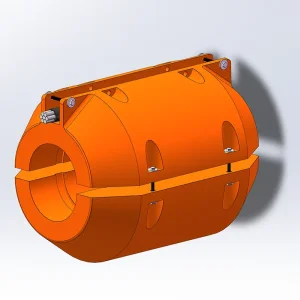
OEM Advanced Cable-Supporting Pipe Floats for Marine Projects Products, Factories
Technical Specs & RFQ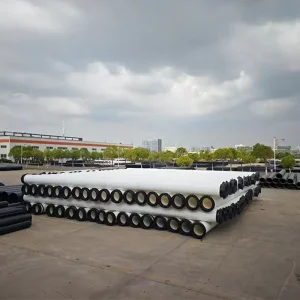
ODM High-Density Pipeline for Efficient Liquid and Gas Transport Manufacturers, Factories
Technical Specs & RFQ
ODM Rotomolded Surfboard – Durable, Safe, and Low-Maintenance Water Sports Solution Manufacturers, Pricelist
Technical Specs & RFQ
ODM Ocean-Grade Navigation Buoys for Safe Maritime Operations Products, Factory
Technical Specs & RFQ
ODM Floating Barrier Systems for Water Safety and Project Efficiency Manufacturer, Company
Technical Specs & RFQ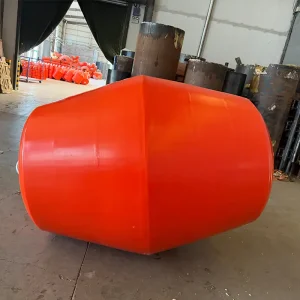
High-Quality Mooring Buoy with Reinforced Connections for Marine Projects Product, Companies
Technical Specs & RFQ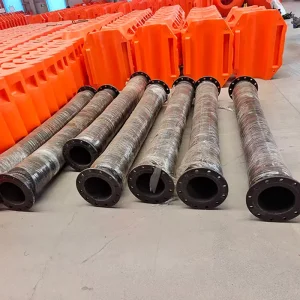
High-Quality High-Performance Rubber Hoses for Water and Slurry Transport Suppliers, Factories
Technical Specs & RFQ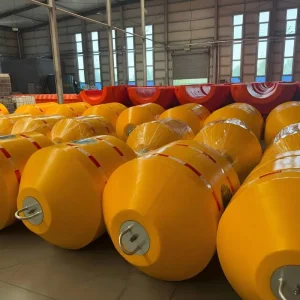
High-Quality Mooring Buoy for Commercial Berths, Marinas and Offshore Holding Areas Manufacturers, Products
Technical Specs & RFQFrequently Asked Technical & Operational Engineering Questions
Direct, highly rigorous technical answers addressing naval buoyancy mathematics, installation physics, commissioning protocols, and long-term marine reliability.
Direct Marine Engineering Sizing Consultation & Factory Sourcing
Speak directly with our senior application engineering desk at Shandong Binzhou Juhua Rubber & Plastic Co., Ltd. We provide rapid CAD drawings, naval buoyancy calculation sheets, and customized packing proposals within 24 hours.