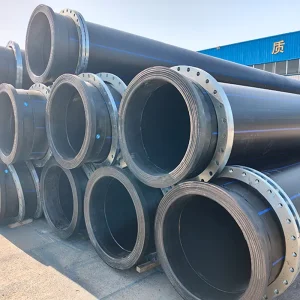
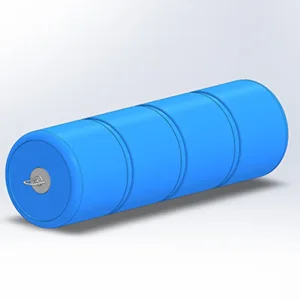
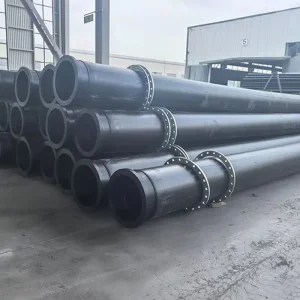
Engineered Floating Barrier & Pipeline Architecture
Explore our precision-moulded pipeline floats, heavy-duty flotation cells, and hydrodynamic boundary solutions ready for international offshore commissioning.


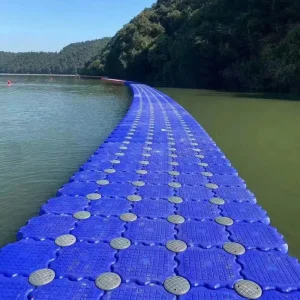
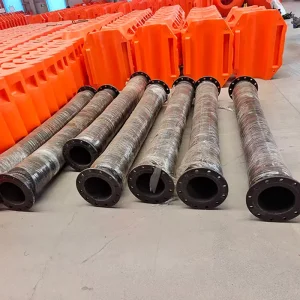



Global Enterprise Procurement Dynamics for Floating Barrier Infrastructure
How Tier-1 marine EPCs, municipal environmental ministries, and hydro-power conglomerates mitigate offshore hydraulic risks through advanced rotational polyethylene moulding.
Hydraulic Force Deflection & Dynamic Loads
Modern coastal and inland water installations require barrier systems engineered using finite element analysis (FEA). Polyethylene modular barriers must absorb up to 45 kN dynamic surge forces, dissipating wave energy rather than transmitting sheer stresses to anchor points.
Severe Environment Polymer Rheology
Standard plastics degrade under concentrated UV and maritime salt sprays. Our ODM barrier formulas integrate UV8 to UV16 stabilizers paired with virgin LLDPE resins, ensuring continuous tensile durability exceeding 15 to 20 years across equatorial and Arctic conditions alike.
Macro Industrial Solutions
Beyond surface debris capture, modern barriers serve as silt containment curtains, security perimeters for naval bases, and critical safety booms for hydroelectric spillways, protecting penstocks from clogging by floating timber and debris aggregates.
Comparative Analytical Matrix: ODM Polyethylene vs. Steel & Conventional Floats
Rigorous performance benchmarks verifying why rotomoulded high-impact polyethylene has replaced outdated metal and hollow blow-moulded solutions worldwide.
| Evaluation Parameter | Juhua ODM Rotomoulded PE Barrier | Traditional Welded Steel Floats | Standard Extruded PVC / Drums |
|---|---|---|---|
| Corrosion & Salinity Resistance | ✔ Absolute (Inert to Saltwater/Acids) | High rust risk; requires recoating every 24 mos | Brittle degradation under chemical exposure |
| Internal Core Filling | ✔ Hydrophobic Closed-Cell PU Foam | Hollow interior (Catastrophic sink risk on puncture) | Air-filled or low-density expanded EPS beads |
| Impact Resistance (Shore D) | Shore D 66–68 (Elastic impact dispersion) | Permanent denting / weld seam rupture | Subject to stress cracking under cyclic fatigue |
| UV Stability Metric | UV16 Class Grade (ASTM D2565 Verified) | Coating chalks; metal expansion causes failure | Yellowing, cracking within 24–36 months |
| Expected Service Life | 15 – 25 Years (Zero Maintenance) | 5 – 8 Years (High maintenance overhead) | 2 – 4 Years (Frequent structural replacements) |
Technological Roadmap: The Evolution of Intelligent Hydro-Barriers
Bridging traditional mechanical water containment with real-time sensory data and automated boundary surveillance.
IoT Mooring Tension Telemetry
Integration of wireless load cells within ODM barrier shackles to transmit live anchoring load metrics, warning offshore operators of excess current surges or debris accumulation before mechanical link failure occurs.
Self-Sustained Photovoltaic Lighting
Embedded monocrystalline PV elements within topmark navigation barrier segments to enable continuous autonomous IALA safety lighting across remote reservoir channels and open water boundaries.
Bio-Polymer Compound Blends
Advanced development of low-carbon, marine-neutral polymer formulations that actively deter macro-fouling barnacles and algae without leaching toxic biocides into municipal drinking water reservoirs.
Hydrodynamic Drag Optimization
Computational Fluid Dynamics (CFD) designed buoyant profiles reducing water drag by up to 28%, significantly lessening anchor drag weights and lowering procurement ballast costs across high-velocity rivers.
International Regulatory Accordance & Port Delivery Logistics
Comprehensive engineering certification ensuring rapid custom clearance, installation compliance, and environmental clearance across global EPC installations.
Certified Testing Standards
All raw polyethylene and closed-cell polyurethanes adhere to ASTM D1693 (Environmental Stress Crack Resistance), ISO 178 flexural modulus, and strict European REACH environmental chemical thresholds for potability.
Customs & Regional Packaging
Modular interlocking nesting geometries optimize 40HQ maritime container stuffing, cutting ocean freight costs by up to 35%. Complete mill test certificates, certified drawings, and customs HS-code dossiers supplied with every consignment.
Field Commissioning Guidance
Direct remote technical support from professional flotation engineers. Detailed bathymetric mooring analysis, calculated scope-to-depth anchor ratios, and shackle torque specifications ensure foolproof deployment by local contractors.
Frequently Asked Questions on ODM Floating Barriers & Pipeline Buoyancy
Essential guidance for procurement directors, dredging managers, and municipal civil engineers.
Industrial Marine Flotation & Specialized Mooring Infrastructure
Complete product portfolio covering navigation markers, offshore anchoring buoys, municipal bypass floats, and high-performance fluid transport conduits.