
High-Efficiency Offshore Flotation & Marine Transfer Systems
Explore our foundational line of rotomolded buoyancy bodies, mooring buoys, and heavy-duty marine pipe infrastructure available for ODM procurement and contract manufacturing.
-
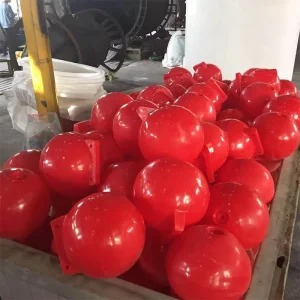
Best PE Float Ball – Durable Buoyancy Solution for Water Projects Products, Quotes
-
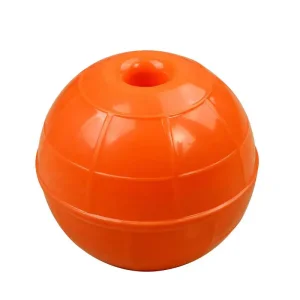
ODM Heavy-Duty ABS Float Ball for Water Engineering Projects Suppliers, Quotes
-
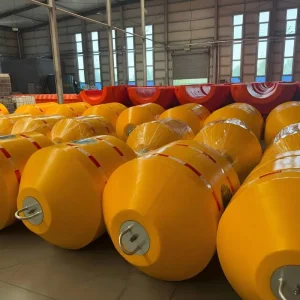
OEM Offshore Mooring Buoy for Safe Vessel Anchoring and Marine Infrastructure Company, Factories
-
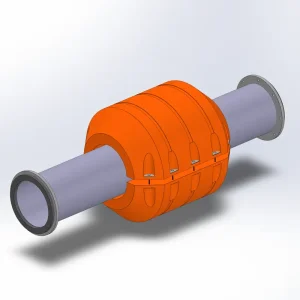
ODM High-Performance Floats for Efficient Pipeline Operations Manufacturers, Products
-

High-Quality Durable Floating Barriers for Water Protection Projects Product, Pricelist
-

Custom Custom Pipe Floats for Floating Pipeline Buoyancy and Water Transfer Systems Product, Quotes
-
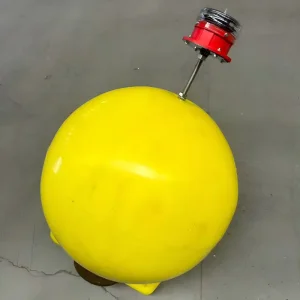
ODM High-Visibility Floating LED Ball for Marine and Freshwater Safety Manufacturers, Pricelist
-
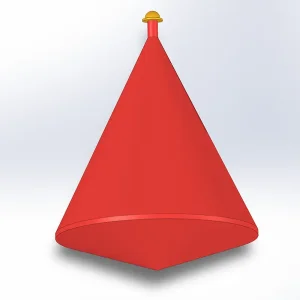
High-Quality High-Visibility Marine Buoys for Safe Offshore Operations Pricelist, Factory
Evolutionary Trends in Marine Floating Rubber Hose Engineering
As offshore reclamation, capital harbor expansion, and deep-sea mining transition into harsher hydrodynamic regimes, elastomeric floating pipelines are outperforming rigid steel-float configurations in cycle fatigue and dynamic shock absorption.
Integrated Closed-Cell Syntactic Foam
Traditional floating pipe assemblies depended heavily on bolt-on pontoon bodies that could shatter or slip under cyclic axial tension. State-of-the-art ODM floating rubber hoses integrate concentric cellular elastomeric foam cores vulcanized directly around the reinforcement carcass, maintaining buoyancy even if the outer protective cover incurs localized mechanical puncture.
Advanced High-Strain Polymer Blends
Marine slurry operations handle severely abrasive quartz sand, sharp gravel, and coral rock fragments. Utilizing customized vulcanized inner liners made of synthetic trans-polypentenamer rubber, carboxylated nitrile (XNBR), and pure natural rubber blends yields ultra-low abrasion loss (<0.03 cm³/1.61 km via DIN 53516), quadrupling operating lifetimes over legacy steel elbows.
Wave Motion Dissipation & Dynamic Flexibility
Offshore conditions impose non-linear multiaxial fatigue loads, consisting of torsional twist, cyclic bending stress, and hydraulic surging. Elastomeric floating lines provide continuous bending flexibility up to 90 degrees with zero flow-choking, drastically mitigating axial stresses transferred to trailing cutter suction dredgers (CSDs) and shoreheads.
Global Enterprise Sourcing Criteria for Offshore Rubber Hoses
Tier-1 maritime contractors and port operators require strict mechanical properties, non-destructive burst certifications, and verifiable thermodynamic endurance ratings before approving long-lead procurement.
Pressure & Burst Safety Factors
Working pressures ranging from 10 bar up to 25 bar demand a mandatory 3:1 to 5:1 hydrostatic safety factor under ISO 28017 / CDSA standards to prevent catastrophically disruptive pipeline ruptures during peak dynamic pump cycling.
Anti-Abrasion Compound Purity
Slurry speed in large discharge conduits commonly exceeds 4.5 to 7.0 m/s. EPC specifications enforce raw elastomer compositions free from low-cost recycled carbon adulterants to maintain elongation-at-break performance above 450%.
Buoyancy Reserve Equilibrium
Specifying engineers must design for the fully laden slurry condition (1.6 to 2.3 kg/dm³ bulk density). Baseline specifications demand 20% to 30% positive reserve buoyancy with stable equilibrium freeboard under open-sea wave roll.
Flange Integrity & Vulcanization
End connections must feature fixed or swiveling forged steel flanges (ANSI 150/DIN PN16) integrated completely with the high-tensile fabric reinforcement chords, mitigating shear delamination under turbulent oceanic towing loads.
| Nominal Bore (ID mm) | Working Pressure (bar) | Inner Liner Thickness (mm) | Syntactic Foam Reserve Buoyancy | Standard Length (m) | Recommended Slurry Density |
|---|---|---|---|---|---|
| DN 300 (12") | 15 – 25 Bar | 12 – 18 mm | ≥ 20% Positive Freeboard | 5.8m / 11.8m | Up to 1.8 t/m³ |
| DN 500 (20") | 12 – 20 Bar | 15 – 22 mm | ≥ 25% Positive Freeboard | 5.8m / 11.8m | Up to 2.0 t/m³ |
| DN 700 (28") | 10 – 18 Bar | 18 – 25 mm | ≥ 25% Positive Freeboard | 11.8m / Special | Up to 2.2 t/m³ |
| DN 900 (36") | 10 – 16 Bar | 20 – 30 mm | ≥ 30% Positive Freeboard | 11.8m / Special | Up to 2.3 t/m³ |
Hydrodynamic Buoyancy Reserve Sizing Formula
Never size self-floating dredging conduits based on clear water loads. In dynamic oceanic environments, total buoyant volume must overcome saturated bulk slurry mass and accessory payloads with guaranteed reserve margins:
China Factory 4.0: Supply Chain Resilience & Process Precision
At our Lizhuang, Huimin County production cluster in Shandong, Juhua combines advanced polymer chemistry, variable-frequency speed control, and continuous curing autoclaves to achieve unbeatable lead times and global batch-to-batch repeatability.
Automated Multi-Axis Cord Winding
Robotic winding heads apply high-tensile synthetic cord reinforcement and spring-steel wire helices at micro-controlled angles. This automated precision ensures uniform tensile distribution throughout the carcass, completely eliminating internal shear stress concentrations that cause premature fatigue peeling during wave surge cycles.
Dual-Stage Vulcanization & Temperature Control
Our dedicated large-diameter vulcanizing autoclaves utilize multi-point electronic temperature sensors and variable-frequency steam circulators. By maintaining precise thermodynamic gradients across both the heavy inner liner and the foamed buoyancy jacket, we prevent porosity and ensure maximum chemical bonding between all elastomeric plies.
Integrated Shandong Raw Material Cluster
Operating inside China’s primary chemical and elastomer manufacturing belt grants direct proximity to certified rubber compounding hubs, carbon black refineries, and heavy forge foundries. This vertical consolidation shields international buyers from supply chain shocks, guaranteeing dependable production cycles and competitive landed export costs.
Mission-Critical Applications in Harsh Marine Environments
Engineered to absorb cyclic torsional shear, intense solar radiation, and extreme fluid velocities across key industrial operations around the world.
Coastal Land Reclamation & Megaports
Discharging millions of tons of oceanic dredged fill across coral banks and estuary channels. Floating rubber hoses form the dynamic flexible link between the trailing suction hopper dredger (TSHD) bow coupling, submerged pipeline risers, and the beach landing terminus, dampening swells that would shear rigid steel flanges.
Tailings Disposal in Mining Ponds
Transporting hyper-concentrated, highly acidic tailings slurry across open-pit settling dams and alkaline tailing lakes. The chemical resistance of our formulated compound handles high corrosive fractions, while the integrated foam jacket prevents sinking even during sudden, unpredicted pump-shutdown settle periods.
Harbor Deepening & Navigational Channeling
Maintaining clear maritime berths under continuous vessel cross-traffic and severe tidal currents. High-visibility orange outer wraps combined with integrated solar beacon mounts guarantee rapid visual recognition for passing tugs and support craft, preventing expensive propeller-strike incidents.
Frequently Asked Questions: Marine Floating Rubber Hoses
Comprehensive engineering clarifications addressing slurry dynamics, reserve buoyancy design, non-destructive testing, and turnkey ODM quotation workflows.
Heavy-Duty Dredging Pipelines, Rubber Hoses & Mooring Anchorage
Complementary OEM/ODM conduits, foam-filled mooring buoys, and abrasion-resistant rubber transfer components manufactured for integrated marine dredging lines.
-
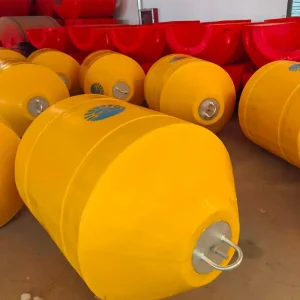
Custom Mooring Buoy for Marinas, Harbors and Offshore Anchorage Systems Manufacturers, Quotes
-
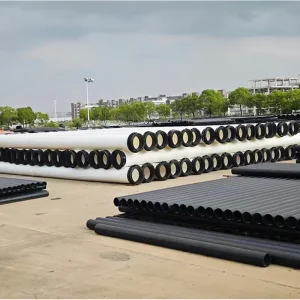
OEM Industrial-Grade Pipeline for Reliable Fluid Transport Companies, Factory
-
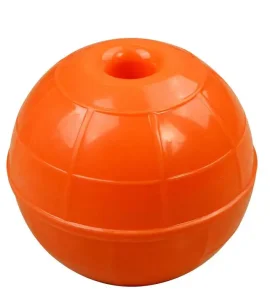
OEM ABS Float Ball – Durable Buoyancy Support for Water Projects Manufacturers, Manufacturer
-
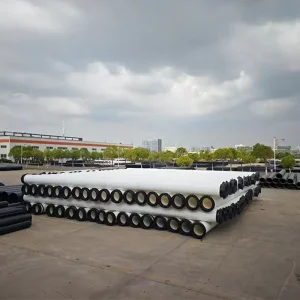
ODM High-Density Pipeline for Efficient Liquid and Gas Transport Manufacturers, Factories
-

ODM Foam-Filled Mooring Buoy for Marinas and Offshore Anchorages Company, Factories
-
OEM Foam-Filled Mooring Buoy for Chain-Connected Berths Product, Companies
-
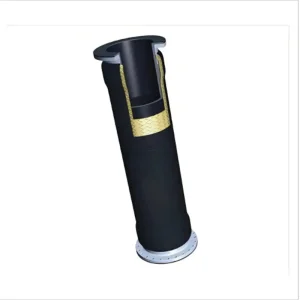
Custom Premium Rubber Hoses for Reliable Water and Slurry Transport Supplier, Products
-
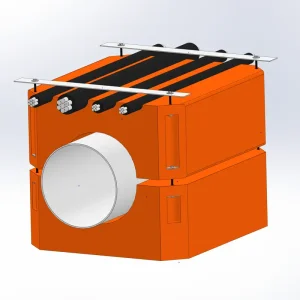
Custom Customizable Floating Pipe Supports with Cable Troughs Company, Pricelist