

Primary Engineering Series
Engineered Polyethylene Buoys & Industrial Floats (Part I)
Rotomolded with virgin UV-stabilised PE and industrial polyurethane cores, custom-contoured for dynamic ocean and inland river projects.

Custom Deepwater Pipeline Support Float – Modular and Reliable Supplier, Manufacturers
Explore Specifications
OEM Advanced Modular Pipe Floats with Integrated Cable Channels Manufacturer, Company
Explore Specifications
ODM Floating Barrier Systems for Water Safety and Project Efficiency Manufacturer, Company
Explore Specifications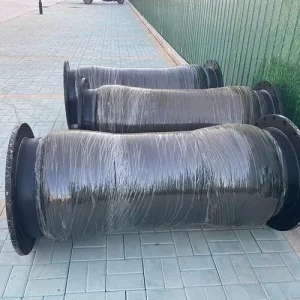
Best Durable Rubber Hoses for Efficient Fluid and Sediment Transport Products, Factory
Explore Specifications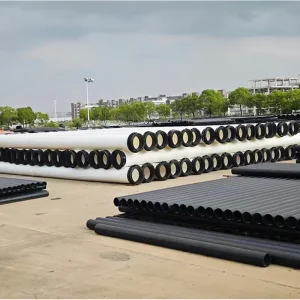
OEM Industrial-Grade Pipeline for Reliable Fluid Transport Companies, Factory
Explore Specifications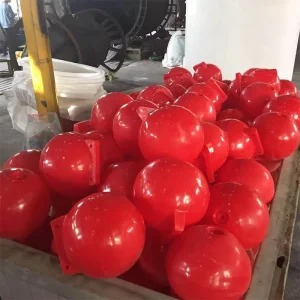
Best PE Float Ball – Durable Buoyancy Solution for Water Projects Products, Quotes
Explore Specifications
ODM Mooring Buoy for Marina Berths, Vessel Anchorage and Offshore Mooring Systems Suppliers, Manufacturers
Explore Specifications
Material Architecture & Rotational Engineering
Engineering Principles of Rotomolded Polyethylene Flotation
An in-depth whitepaper analysis on structural mechanics, multi-axial rotation dynamics, and polymer stability under high dynamic ocean stress.
Continuous Rotomolding & Stress Relief
Unlike injection moulding or blow moulding which induce residual molecular stresses, Juhua uses biaxial high-temperature rotational moulding. Polymer resin powder (virgin LLDPE/HDPE) melts uniformly against precision machined CNC tooling under constant atmospheric pressure, generating seamless, monolithic hulls entirely devoid of weld seams, micro-porosity, and anisotropic stress lines.
Zero Weld Seams
Isotropic Strength
UV8-UV20 Stabilisation
Closed-Cell Polyurethane Hydrophobic Core
The interior cavity of every marine buoy and dredging pipe float is injected with high-density, closed-cell expanding polyurethane foam (density 35–45 kg/m³). In the rare scenario of outer PE skin breach due to severe collision with dredging vessel hulls or offshore rock outcrops, the hydrophobic core restricts water ingress to less than 1.5% by volume, ensuring complete zero-sink buoyancy retention.
35-45 kg/m³ Core
Zero Ingress Margin
Collision Energy Absorber
Internal Structural Tie-Rods & Fasteners
Mooring buoys and high-capacity floating barriers integrate hot-dip galvanized (or 316 marine-grade stainless steel) central tension shafts. The mooring load transmits directly along the axial structural steel skeleton, shielding the outer rotomolded polyethylene skin from tensile deformation, shear cracking, or fatigue-induced cyclic buckling during severe sea state turbulence.
HDG Q235B / SS316
Axial Load Isolation
Anti-Corrosion Proof
Engineering Calculation Metric
Pipeline Buoyancy Margin Calculation Protocol
Standard offshore engineering requires that pipeline buoyancy must account for full operational slurry density (typically 1.3 to 1.6 t/m³ in sand-dredging regimes), rather than clear water baselines.
- Operational Rule: Buoyancy reserve must range between 120% and 130% of dynamic wet load.
- Freeboard Target: Ensures 25% of pipe diameter remains safely elevated above waterline under peak wave heights.
// Dynamic Buoyancy Sizing Formula
B_net = (W_pipe + W_slurry + W_hardware) × Safety_Factor
Where:
• W_slurry = V_internal × ρ_sediment (ρ ≥ 1.45 kg/L)
• Safety_Factor = 1.25 to 1.30 (Dynamic Marine Tide)
• Target Reserve Freeboard ≥ 0.25 × D_outer
B_net = (W_pipe + W_slurry + W_hardware) × Safety_Factor
Where:
• W_slurry = V_internal × ρ_sediment (ρ ≥ 1.45 kg/L)
• Safety_Factor = 1.25 to 1.30 (Dynamic Marine Tide)
• Target Reserve Freeboard ≥ 0.25 × D_outer
| Performance Characteristic | Juhua Advanced Rotomolded PE | Traditional Welded Steel Buoys | Fiberglass Reinforced Plastic (FRP) |
|---|---|---|---|
| Saltwater Corrosion Vulnerability | 100% Inert (Zero oxidation/rusting indefinitely) | Extreme (Requires recurring cathodic anodes & coating) | Medium (Osmotic blistering risks over time) |
| Collision & Impact Elasticity | High elastic recovery, absorbs dynamic kinetic shock | Permanent denting, weld splitting, risk of hull flooding | Brittle fracture, surface micro-cracking upon impact |
| Maintenance & Repainting Overhead | Zero maintenance; mass-pigmented UV stabilised shell | High cost; sandblasting and maritime repainting needed | Moderate; gel-coat crack repair and re-polishing |
| Weight & Crane Logistics | Ultra-lightweight (~1/4 of steel weight), low vessel draft | Extremely heavy, requires heavy-lift sea crane vessels | Moderate weight, requires careful rigging to prevent cracks |
| Working Lifespan (Marine Splash Zone) | 15 – 25+ Years | 5 – 8 Years (without continuous sandblast/recoat) | 8 – 12 Years |
Multi-Sector Deployment
Macro-Industry Solutions: Offshore, Port, Mining & Eco-Management
From deep-sea port maintenance to hazardous mining tailings management, our modular polyethylene flotation architectures provide unmatched reliability.
Ports, Harbors & Capital Dredging
Modern mega-dredgers (TSHD and CSD) discharge abrasive seabed sediment at severe hydraulic pressure. Our clamped dredging pipe floats support slurry lines up to 1200mm OD, while IALA-compliant navigation buoys secure transit channels, eliminating accidental maritime collisions during around-the-clock dredging operations.
Mining Tailings & Slurry Transport
Mineral processing plants discharge abrasive, acidic, or alkaline tailings across tailings storage facilities (TSFs). Juhua's chemical-resistant PE floats and reinforced high-abrasion rubber hoses transport mineral slurries with high specific gravities (up to 1.8), resisting corrosive reagents that quickly corrode steel float drums.
Hydroelectric Dams & Trash Debris Booms
Protect intake turbines and penstocks from floating timber, industrial trash, and aquatic biomass. Our linked floating barrier systems combine high-impact cylindrical floats with underwater high-strength nets, operating under extreme river current velocities to block debris without restricting normal hydraulic water discharge.
Offshore Aquaculture & Renewable Energy
Offshore floating solar arrays (FPV) and deep-sea fish pens demand stable, modular flotation modules capable of withstanding cyclic wave-induced fatigue. Juhua's custom rotomolded pontoon structures and anchoring buoys provide durable buoyancy for subsea electrical cable tie-ins and offshore platforms.
Industry 4.0 Manufacturing Ecosystem
China Factory 4.0: Scale, Supply Chain Resilience & Lead-Time Advantage
Combining automated thermal-controlled rotomoulding cells, vertical material sourcing, and certified testing lines to meet large-scale global procurement demands.
Variable-Frequency Digital Thermal Profiling
Consistent wall thickness is the core metric of quality in rotational moulding. Our automated machines monitor cavity temperatures in real time via multi-point infrared sensors, adjusting rotational RPM and heat exposure automatically. This guarantees nominal float skin thickness with less than 3% tolerance deviation across entire production batches.
Standardised Tooling & Mold Interchangeability
With an extensive inventory of precision CNC aluminium and steel molds, Juhua manufactures interchangeable half-shells for standard pipe outer diameters (from 110mm to 1200mm+). When dredging contractors need replacement modules years later, every newly molded shell matches the exact curvature and bolt-hole spacing of the original pipeline installation.
Integrated Port Logistics & Packing Efficiency
Based in Binzhou, Shandong—adjacent to Qingdao and Tianjin maritime logistics hubs—we package floats using nesting profiles and protective palletization schemes. This reduces container dead space by up to 35%, substantially cutting ocean freight costs for international contractors sourcing full 40HQ container shipments.
Buyer Procurement Guide
Global Enterprise Sourcing Architecture: What Dredging & Marine Engineers Require
A systematic framework for procurement officers, marine consultants, and project engineers to specify and verify rotomolded flotation systems.
1. Hydrodynamic & Dimensional Matching
Confirm the outer diameter of the discharge pipe (HDPE, steel, or rubber hose). An undersized float shell leads to excessive mechanical clamping stress and pipeline indentation; an oversized shell causes longitudinal slippage during pipeline flexure. Juhua machines custom elastomer anti-slip gaskets to secure exact axial retention.
2. Specific Gravity & Slurry Composition
Specifying pure water buoyancy calculations for dredging lines causes pipelines to submerge once sand, tailings, or coral slurry flows through. Procurement packages must indicate the precise sediment dry density and slurry concentration to establish the mandatory 20% to 30% safety buoyancy reserve.
3. Mooring & Anchor Tension Loads
For navigation and mooring buoys, provide wave spectrum data (significant wave height Hs), surface current velocity (knots), and total mooring chain scope. These dynamic parameters determine the cross-sectional gauge of the central tension steel shaft and internal stress plates needed to prevent cyclic shear failure.
4. Cable & Auxiliary Line Channels
Modern industrial and dredging pipelines often carry three-phase power cables, automated hydraulic sensor conduits, or fresh-water lines. Sourcing pipe floats with integrated, pre-moulded cable troughs eliminates the need for secondary clamp attachments, reducing installation hours on the water.
Next-Generation Marine Tech
Technology Roadmap: Smart IoT Telemetry & Circular Polymers
Exploring the engineering transition from passive rotomolded floats to intelligent, sensor-equipped marine aids and bio-circular polymers.
IoT Buoyancy Telemetry & Smart Sensors
Next-generation Juhua ODM buoys feature integrated LPWAN (LoRaWAN / NB-IoT) and satellite transceivers powered by micro solar cells. These sensors monitor mooring line tension, roll-and-pitch dynamics, water temperature, and GPS coordinates in real time, automatically alerting operators if a buoy drifts or drags anchor during severe storms.
Chemically Recycled & Ocean-Bound Polymers
In response to international decarbonization targets and ESG procurement frameworks, our R&D division is qualifying molecularly depolymerized ocean-bound PE blends. These resins match the tensile yield strength, elongation at break (>400%), and UV resistance of virgin polymers, reducing carbon footprints across marine construction projects.
Additive Self-Healing Surface Nano-Coatings
To resist stubborn marine fouling in tropical waters (such as heavy barnacle clustering and macroalgae attachment that add dead-weight to buoys), our current development program incorporates non-biocidal silicone-fluoropolymer additives directly into the PE outer matrix, preventing micro-organism adhesion while avoiding toxic copper leachates.
Quality Assurance & Field Support
Localized Support, Engineering Warranty & Compliance Protocols
Ensuring compliance with international maritime design guidelines and EPC contractor warranty benchmarks.
IALA Maritime Conformity
Navigation buoys and marine floating markers are designed to comply with International Association of Marine Aids to Navigation and Lighthouse Authorities (IALA) recommendations E-108. Colors (red, green, yellow, cardinal black bands) are UV-compounded to retain chromatic coordinates under high-salinity UV exposure.
18-Month Handover Warranty
Our industrial warranty begins when the buyer hands over the goods to the asset owner and concludes 18 months post-handover, or 12 months after field installation—whichever comes first. This protects contractors during commissioning and test-pumping phases.
Factory Acceptance Testing (FAT)
Every production batch undergoes comprehensive pre-shipment testing: hydrostatic leak immersion checks, ultrasonic wall thickness verification across 16 radial points, and tensile drop-impact testing at sub-zero temperatures (-20°C) to simulate high-latitude operations.
Engineering Commissioning Support
From advising on bolting torque sequences for galvanized bolt assemblies to calculating spacing layouts along wave-exposed discharge pipelines, Juhua's engineering support team works directly with field teams to prevent operational failures.
Complete Offshore Matrix
Engineered Polyethylene Buoys & Industrial Floats (Part II)
Additional heavy-duty flotation modules, navigation buoys, and mooring platforms built to match your project drawings.

Custom Pipe Floats for Stable Pipeline Support and Reliable Floating Systems Quotes, Factory
Explore Specifications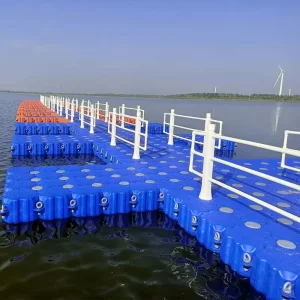
Custom Premium Floating Boat Pontoon for Safe and Stable Water Platforms Products, Quotes
Explore Specifications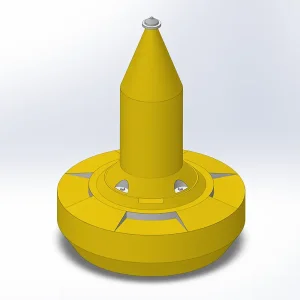
Custom High-Performance Marine Buoys for Safe and Efficient Waterways Manufacturers, Pricelist
Explore Specifications
High-Quality Reliable Pipe Floats with Cable Troughs for Efficient Marine and Pipeline Operations Quotes, Factory
Explore Specifications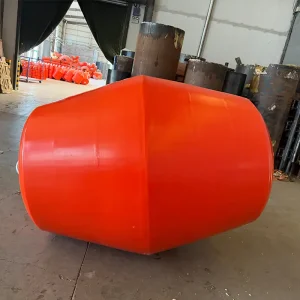
Best Foam-Filled Polyethylene Mooring Buoy for Reliable Marine Anchoring Supplier, Suppliers
Explore Specifications
Custom Custom Pipe Floats for Floating Pipeline Buoyancy and Water Transfer Systems Product, Quotes
Explore Specifications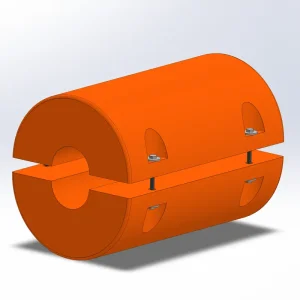
Best Pipe Floats for Floating Pipeline Support and Water Transfer Projects Suppliers, Factory
Explore Specifications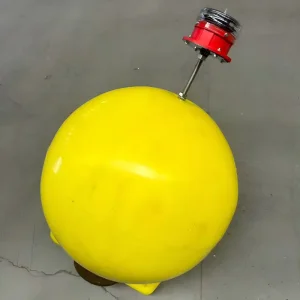
ODM High-Visibility Floating LED Ball for Marine and Freshwater Safety Manufacturers, Pricelist
Explore Specifications
Technical Clarity
Frequently Asked Questions on Polyethylene Flotation
Detailed engineering answers covering buoyancy calculations, seawater compatibility, warranty terms, and custom manufacturing capabilities.
What are pipeline floats?
Pipeline floats, also referred to as dredge floats or modular buoyancy units, are precision clamp-on bodies manufactured from rotationally moulded polyethylene. Mounted in pairs around discharge and slurry pipelines (HDPE, steel, or rubber hoses), they keep fluid-transfer systems stably buoyant, longitudinally aligned, and clearly visible during dredging, mining, and water diversion projects.
How do I calculate how many floats I need for my pipeline?
Total float buoyancy must safely exceed the aggregate weight of the pipeline, all connecting accessories (bolts, flanges, rubber joints), and the conveyed medium at peak operational concentration. As an industry rule of thumb, engineers require 20% to 30% surplus buoyancy over the submerged working load, keeping roughly 25% of the pipe diameter above the water surface to accommodate wind and wave motion.
Are polyethylene floats suitable for long-term seawater use?
Yes. Polyethylene (PE) is inherently chemically inert, resisting saltwater corrosion, UV degradation, biological attachment, and marine chemical exposure. Unlike traditional steel float drums, PE will never rust, pit, or require periodic sandblasting and cathodic anode replacement, making it the preferred long-term solution for marine and coastal operations.
How long is the standard warranty period?
Our formal commercial warranty takes effect on the date the buyer officially hands over the delivered goods to the investor/owner. The warranty remains valid for 18 months post-handover, or 12 months after the installation date—whichever threshold is reached first—protecting your operations across the full commissioning lifecycle.
What technical parameters are needed for an accurate float specification?
To provide an accurate technical proposal, please share: pipe outer diameter (OD), pipe material and wall thickness (SDR rating), conveyed medium and its maximum slurry specific gravity, total pipeline length, installation environment (sheltered river, reservoir, deep port, or open offshore), required freeboard height, custom color/marking requirements, and destination delivery port.
Can floats, mooring buoys, and barriers be customized to customer drawings?
Yes. Every float shell can be custom-contoured to match non-standard pipe dimensions. We also formulate custom UV resin colors, mould brand logos directly into the shell, integrate auxiliary cable channels, and fabricate custom internal steel load shafts. Our in-house engineering and tooling workshops build bespoke rotational moulding molds directly from client CAD or 3D STEP files.