High-Performance Pipeline Floats & Engineering Solutions
Explore our precision-engineered rotomolded polyethylene buoyancy modules, industrial slurry pipeline floats, and specialized fluid management systems built for high mechanical stress.
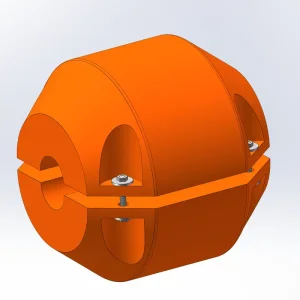
ODM Pipe Floats for Pump Discharge and Water Transfer Lines Manufacturers, Company
View Specifications
OEM Heavy-Duty Pipeline Float for Stable Floating Pipeline Systems Company, Factory
View Specifications
High-Quality Durable Pipe Floats for Safe Operations Products, Company
View Specifications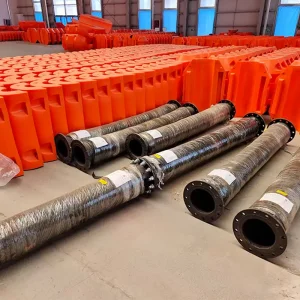
Custom Heavy-Duty Rubber Hose for Marine and Water Management Projects Suppliers, Manufacturers
View Specifications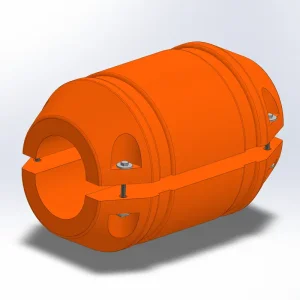
Custom Durable Pipe Floats for Reliable Marine Operations Suppliers, Manufacturers
View Specifications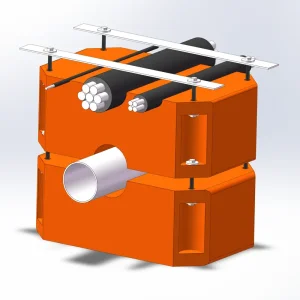
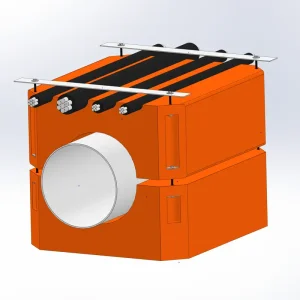
OEM Advanced Modular Pipe Floats with Integrated Cable Channels Manufacturer, Company
View Specifications
ODM Pipe Floats for Floating Water Pipelines and Marine Support Systems Manufacturers, Manufacturer
View Specifications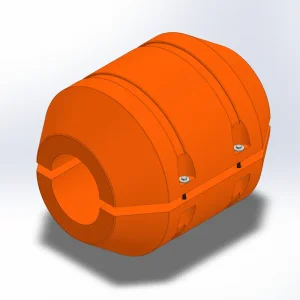
High-Quality Durable Floats for Safe and Efficient Pipeline Support Manufacturers, Products
View SpecificationsPolyethylene Ball Plastic & Flotation Metallurgy Alternative
A rigorous examination of polymer rheology, rotational molding physics, and closed-cell polyurethane core dynamics for extreme maritime and industrial fluid applications.
Virgin Polymer Integrity & UV-20 Formulations
Unlike repurposed or regrind thermoplastics prone to micro-fissuring, our OEM ball plastic modules utilize certified virgin Linear Low-Density Polyethylene (LLDPE) and High-Density Polyethylene (HDPE). Chemically compounded with UV-8 to UV-20 hindrance amine light stabilizers (HALS), our spherical products resist solar degradation up to 20,000 operational daylight hours in tropical, hypersaline, and high-ozone equatorial territories.
High-Density Closed-Cell PU Foam Core
Hollow floating spheres face critical risks of puncture-induced waterlogging. Our automated high-pressure polyurethane foaming lines inject thermoset closed-cell PU foam at densities calibrated from 35 kg/m³ to 45 kg/m³. Even under severe mechanical impacts from surface vessels or dredge debris that compromise the outer thermoplastic skin, moisture absorption remains under 1.2% by volume, guaranteeing permanent buoyancy stability.
Environmental Stress-Crack Resistance (ESCR)
Formulated to withstand harsh surfactants, acid tailings, and petroleum fraction skims, our polyethylene matrix achieves an ASTM D1693 ESCR exceeding 1,000 hours in condition B (10% Igepal CO-630). By executing precise biaxial rotation speed controls and electronic thermometric cycle tracking, thermal stress concentrations during mold cooling are completely eliminated.
OEM Ball Plastic Pricelist & Cost Architecture Matrix
Comprehensive cost breakdown for procurement directors, EPC contractors, and marine engineers evaluating spherical flotation and industrial shade-ball volume tiers.
| Outer Diameter (OD) | Wall Thickness | Internal Core Type | Net Buoyancy (kg) | MOQ (Units) | Reference FOB Price (USD) | Recommended Applications |
|---|---|---|---|---|---|---|
| 100 mm (4") | 2.5 - 3.5 mm | Hollow Air Sealed | 0.45 kg | 10,000 | $0.28 - $0.45 / pc | Reservoir Shade, Evaporation Control |
| 200 mm (8") | 3.5 - 5.0 mm | Hollow / High-Impact | 3.80 kg | 2,500 | $1.85 - $2.60 / pc | Algae Control, Acid Mist Mitigation |
| 300 mm (12") | 4.5 - 6.0 mm | EPS / Closed-Cell PU | 12.50 kg | 1,000 | $5.80 - $8.20 / pc | Floating Demarcation, Water Intakes |
| 400 mm (16") | 5.5 - 8.0 mm | PU Foam (38 kg/m³) | 29.00 kg | 500 | $14.50 - $19.80 / pc | Marine Safety Barriers, Solar Mooring |
| 600 mm (24") | 8.0 - 12.0 mm | High-Density Rigid PU | 102.00 kg | 200 | $42.00 - $58.00 / pc | Navigation Markers, Dredge Anchor Float |
| 800 mm (32") | 10.0 - 14.0 mm | PU Core + Internal Frame | 245.00 kg | 100 | $110.00 - $145.00 / pc | Heavy Offshore Slurry Hose Suspension |
| 1200 mm (48") | 12.0 - 18.0 mm | Marine Grade Rigid PU | 820.00 kg | 30 | $360.00 - $480.00 / pc | Harbor Mooring, Subsea Tie-In Modules |
Custom Tooling & High-Volume Tier Discounts
Volume scale drives tooling amortization down to zero. For project contracts exceeding 20,000 hollow units or 1,000 large-format polyurethane foam-filled spheres, CNC cast aluminum mold development charges are 100% absorbed by our factory. Real-time resin parity formulas are locked against ICIS polymer indexes for long-term contract predictability.
China Factory 4.0: Supply Chain Resilience & Velocity
Located in the heart of Shandong's chemical and polymer engineering hub, our automated factory sets the global standard for rotomolding cycle efficiency, quality assurance, and export throughput.
Continuous Carousel Rotomolding
Our multi-station carousel rotational molding lines utilize automated variable-frequency rotation balancing and independent dual-axis thermostatic control chambers. This eliminates the shell thickness deviations (within ±0.3mm tolerance across 360 degrees) typical of primitive rocking-oven factories, maximizing burst strength under hydrostatic pressures.
Automated In-Line Foam Metering
Two-component polyol and isocyanate reaction injection is regulated through computerized Coriolis mass flow meters. Automated purge cycles and vacuum-assisted mold vents eliminate air pockets and voids inside our ball plastic flotation spheres, guaranteeing uniform density throughout the 100% core matrix.
Upstream Petrochemical Collocation
Situated within Shandong's chemical refinery industrial corridor, our raw material supply chain benefits from bulk rail shipments of Sinopec and PetroChina virgin LLDPE/HDPE polymers. By avoiding spot-market broker markups and interprovincial transit delays, our production lead times are 30% faster than regional competitors.
Standardized Interchangeable Tooling
All pipeline float split-halves and modular spherical units are manufactured using master-grade CNC machined aluminum tooling blocks. This strict dimensional control ensures that replacement halves manufactured five years later fit existing pipelines and mooring frames without on-site mechanical modifications.
Mission-Critical Engineering Deployments
From extreme gold and copper mine tailings ponds to open-ocean reclamation and municipal reservoirs, our OEM plastic sphere systems solve urgent global water challenges.
1. Reservoir Evaporation & Algae Control
In arid mining and agricultural basins, millions of floating ball plastic spheres (black carbon-stabilized HDPE) create a continuous self-assembling cover over open water bodies. This suppresses up to 90% of solar-driven water evaporation, prevents hazardous sunlight-activated bromide-to-bromate conversion, and halts photosynthesis to eliminate costly toxic blue-green algae blooms.
2. Acid Tailings & Hazardous Mist Mitigation
Electrowinning refining tanks and hazardous tailing retention impoundments in copper and gold mining operations produce toxic acidic mists. Our chemical-resistant hollow and liquid-filled plastic balls form a flexible blanket over acidic solutions, slashing airborne aerosol emissions by 95% while permitting continuous immersion of cathode plates.
3. Floating Solar (FPV) & Offshore PV Arrays
As floating photovoltaic farms scale across reservoirs and coastal estuaries, durable mooring balls and hydrodynamic perimeter buoys are required to absorb cyclical shear waves and anchor dynamic cable loops. Our rotational-molded spherical buoys provide stable 360-degree buoyancy offsets that safeguard high-voltage subsea inverter cables against fatigue snapping.
4. Dredging Reclamation & Heavy Slurry Transport
Capital dredging and port deepening require long floating pipelines handling high-density abrasive slurries (1.3 to 1.8 t/m³). Sized according to strict Archimedean hydrodynamic criteria, our pipeline floats and support balls ensure a steady 25% freeboard margin, preventing line submersions caused by sudden internal solids settling during pump interruptions.
5. Port Security & Hydroelectric Debris Booms
Hydroelectric power dam intakes and high-security port boundaries demand continuous physical barrier systems. By linking our ultra-heavy-wall spherical PE units with grade-80 galvanized marine chains and internal tension plates, our floating trash barriers intercept floating timber, floating trash, and unauthorized watercraft without snagging or sinking.
Technological Roadmap: The Future of Smart Marine Plastics
Pioneering advancements in multi-spectrum sensor integration, graphene-reinforced polymers, and zero-biocide nano coatings for ocean sustainability.
IoT-Enabled Smart Floating Spheres
By 2026, our factory will scale production of connected buoyancy balls equipped with integrated LoRaWAN, NB-IoT, and satellite telemetry modules. Encapsulated in watertight internal resin cavities, these autonomous nodes transmit real-time telemetry including water temperature, pH, conductivity, dissolved oxygen, and GPS coordinate shifts for pipeline integrity monitoring.
Graphene-Reinforced Thermoplastics
Our material physics laboratory is completing qualification of graphene-doped LLDPE composites. Adding 0.25% graphene nanoplatelets yields a 45% improvement in tensile strength and a 60% boost in puncture resistance, allowing a 25% reduction in overall wall thickness and raw resin weight with zero loss in mechanical field integrity.
Circular Economy & Bio-Based Polyethylene
In accordance with upcoming EU Ecodesign directives, we have formulated non-fossil bio-HDPE derived from sugarcane ethanol, as well as 100% ocean-bound recycled polymer programs with full carbon offset documentation. These green flotation products match virgin polymers in mechanical ESCR performance while reducing product carbon footprints by 65%.
Localized Support & International Compliance Assurance
Built to meet the stringent certifications required by international maritime, hydro-engineering, and environmental regulatory authorities.
ISO 9001, 14001 & ISO 45001
Every lot manufactured in our factory adheres to ISO 9001 Quality Management and ISO 14001 Environmental Protection protocols. Traceability barcodes link every delivered unit directly to raw resin melt flow index (MFI) inspection logs and foam expansion calibration records.
RoHS & REACH Compliance
Zero hazardous heavy metals, lead-free color pigments, and phthalate-free stabilizers ensure full authorization for sensitive potable drinking water reservoirs and marine wildlife reserves, verified by third-party SGS/TUV testing certifications.
IALA & PIANC Alignment
Our marine navigation buoys and channel marker balls conform to the International Association of Marine Aids to Navigation and Lighthouse Authorities (IALA) chromaticity standards for Red, Green, and Yellow navigation markers, delivering high marine daymark visibility.
Container Packing Optimization
Our engineers calculate high-density nesting and interlocking stack patterns for standard 40ft High Cube containers. For large-diameter spherical units, modular semi-spherical flanged designs maximize volume fill, reducing ocean freight costs per unit by up to 40%.
Buoyancy Reserve Sizing & Hydrodynamic Formulation
Essential mathematical formulas and practical methodology for project procurement engineers sizing pipeline floats and spherical modules.
Archimedes Buoyancy Equation
Fnet = (Vdisplaced × ρfluid) - Wtotal
Where Vdisplaced represents the outer volume of the plastic ball or float, ρfluid is the ambient liquid density (1.000 t/m³ fresh water, 1.025 t/m³ seawater, or up to 1.450 t/m³ chemical slurries), and Wtotal comprises the empty weight of pipe, internal fluid volume, and coupling hardware.
The 25% Freeboard Safety Rule
Never size flotation modules for an empty pipe. Sizing must be performed using the maximum anticipated slurry density plus a 20% to 30% reserve buoyancy factor. This guarantees that one quarter of the pipeline or float diameter remains continuously above the surface, stabilizing the floating line against roll resonance and cross-current pitching.
Fast Sizing RFP Checklist
To receive an expedited factory quotation within 12 hours, ensure your RFQ packet specifies: 1) Outer diameter (OD) and wall thickness; 2) Specific gravity of transported medium; 3) Waterway dynamics (current velocity, wave height); 4) Foam-filled vs. hollow requirement; 5) Color coding and destination seaport.
Frequently Asked Questions: OEM Ball Plastic & Factory Sourcing
Authoritative technical answers to common queries regarding plastic ball manufacturing, pricelists, custom tooling, and marine warranty coverage.
Q: What determines the pricing in your OEM Ball Plastic Pricelist?
Polyethylene ball pricing is driven by three key factors: raw resin commodity price (indexed to ICIS virgin polymer benchmarks), unit outer diameter/wall thickness which dictates cycle cooling times in the oven, and the inclusion of closed-cell rigid polyurethane foam. Hollow balls cost significantly less per unit than PU foam-filled units, which feature superior structural resilience and permanent anti-sink properties.
Q: Can hollow plastic balls sink if the outer shell is punctured?
Hollow balls rely entirely on outer shell hermeticity. If cracked by severe collisions or firearm vandalism, water will displace internal air, causing them to sink. For critical industrial, offshore dredging, and navigation installations, we recommend our closed-cell polyurethane foam-filled spheres (density 35–45 kg/m³). Even if the outer PE skin is perforated, the closed-cell matrix prevents water ingress, preserving net buoyancy.
Q: How do your UV-stabilized plastic spheres perform in desert/tropical climates?
Our OEM plastics are dry-blended with high-performance UV-8 to UV-20 hindrance amine light stabilizers (HALS). This prevents photo-oxidative degradation caused by intense ultraviolet radiation. In regions like the Middle East, Australia, and equatorial Africa, our products provide an operational lifespan exceeding 10 to 15 years without embrittlement or surface chalking.
Q: What is the standard tooling lead time for custom OEM ball designs?
For custom diameters, internal thread inserts, or unique bolt-together spherical flanges, our CNC aluminum tooling workshop completes 3D design verification and mold manufacturing in 14 to 21 business days. Initial prototype test samples are rotomolded, foam-filled, and CMM dimensionally checked before starting volume manufacturing.
Q: What is the factory warranty period on pipeline floats and buoys?
Our standard manufacturer warranty begins on the date the client hands over the installation to the project owner and runs for 18 months from that handover milestone, or 12 months from on-site water commissioning, whichever occurs first. Extended 5-year and 10-year pro-rata warranties are available for high-spec engineering projects.
Q: Are polyethylene floats and balls resistant to chemical tailings and crude oil?
Yes. High-density polyethylene exhibits exceptional chemical inertness. It is completely immune to galvanic and electrolytic corrosion, resistant to salt water, and impervious to concentrated inorganic acids, bases, and hydrocarbon surface sheens typically encountered in mining ponds and petrochemical marine terminals.
Specialized Buoyancy, Mooring & Navigational Spheres
Review our specialized rotomolded mooring buoys, water boat pontoons, LED navigation markers, and deepwater subsea modules manufactured for global deployment.
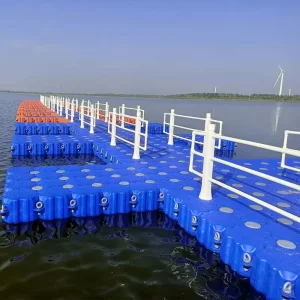
Custom Premium Floating Boat Pontoon for Safe and Stable Water Platforms Products, Quotes
View Specifications
ODM Polyethylene Mooring Buoy for Harbors and Floating Facilities Manufacturers, Pricelist
View Specifications
OEM Pipe Floats For Reservoir Intake And Temporary Bypass Lines Quotes, Pricelist
View Specifications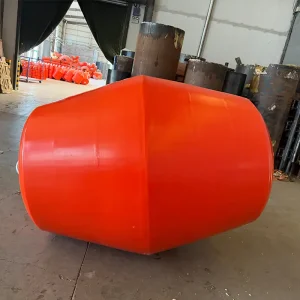
Best Foam-Filled Polyethylene Mooring Buoy for Reliable Marine Anchoring Supplier, Suppliers
View Specifications
OEM Pipeline Float for Floating Pipeline Systems and Water Transfer Projects Manufacturers, Factories
View Specifications
Best Modular Subsea Pipeline Float – Reliable Deepwater Support Manufacturer, Factories
View Specifications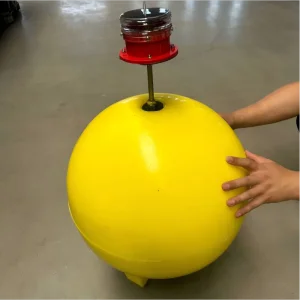
High-Quality LED-Equipped Floating Ball for Safe and Efficient Water Operations Factory, Factories
View Specifications