High-Performance Floating Pipeline Infrastructure
Verified buoyancy hardware manufactured to ISO standards, engineered for extreme hydrodynamic resistance and abrasive offshore dredging applications.

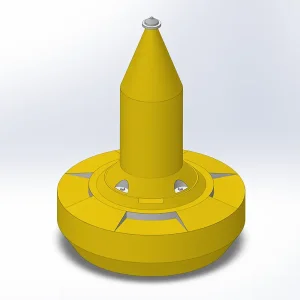
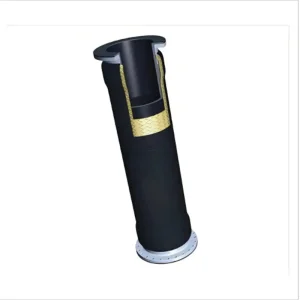
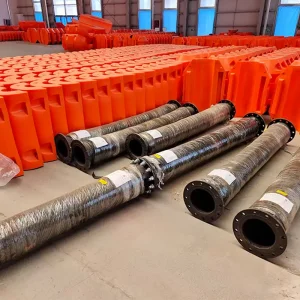

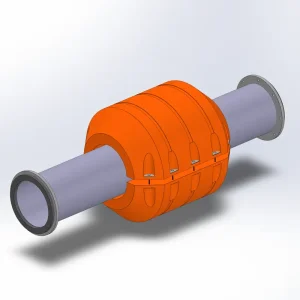
Rotomoulding Excellence & Structural Authority
Shandong Binzhou Juhua Rubber & Plastic Co., Ltd. (Juhua / Giant Rubber) pioneers intelligent thermal manufacturing, zero-stress polymeric structural designs, and custom buoyancy integration across global marine ecosystems.
Hose Float Collar Market Trajectory & Technical Demands
Modern offshore slurry discharge, marine capital dredging, and floating hydrocarbon transfer require engineered buoyancy solutions designed to withstand severe cyclic stresses without catastrophic failure.
Transition from Steel to Polymeric Rotomoulding
Historical marine pipelines relied on welded steel pontoon floats, which suffered from galvanic saltwater corrosion, localized stress fractures, and extreme maintenance downtime. Modern engineering mandates rotational moulded virgin LLDPE/HDPE shells with UV-stabilized molecular chains.
- Elimination of oxidation, marine pitting, and cathodic protection requirements
- Zero rust leakage contaminating fragile nearshore maritime ecosystems
- Energy-absorbent elastomeric outer shells reducing collision shockwaves
Demands of High-Density Tailings & Slurry
Global mining operations and mega-harbor reclamation projects convey high-specific-gravity slurries (up to 1.6 - 2.0 t/m³). Underestimating the slurry density inside the discharge hose causes submerged dragging, violent line whips, and seabed abrasion.
- Dynamic reserve buoyancy thresholds exceeding 120% to 130%
- Controlled center-of-gravity engineering to prevent pipeline inversion
- Seamless integration with flexible rubber hoses undergoing bending radii
OEM/ODM Precision Dimensional Tolerance
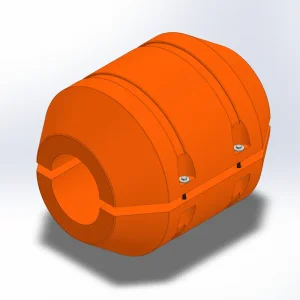
Global EPC contractors reject loose collar fits that slip during hydrodynamic tidal action. Modern OEM supply mandates custom internal diameters molded to clamp precisely over the expanded outer diameter of flanged rubber hoses and HDPE conduit sleeves.
- Internal anti-slip friction grooves locking against pipe longitudinal slip
- Standardized modular split-halves allowing 100% interchangeable field spares
- High-tensile, hot-dip galvanized or Marine Grade 316 fastener assemblies
Macro Industry Engineering & Buoyancy Calculation Logic
Safe ocean transport requires exact hydrodynamic balancing. Inadequate buoyancy margins lead to line submersion, increased dragging resistance, and catastrophic failure under ocean swell cycles.
Ports & Commercial Navigational Channels
Maintenance dredging near active container docks cannot afford wandering lines or unlit obstructions. Hose float collars stabilize high-pressure rubber discharge hoses while maintaining precise navigational clearance and freeboard height.
Offshore Tailings & Land Reclamation
Reclaiming industrial islands requires continuous slurry delivery across several nautical miles. Our modular buoyancy units distribute bend stress evenly, eliminating localized kinks where flexible rubber joins rigid steel or HDPE pipeline sections.
Integrated Cable & Sensor Routing
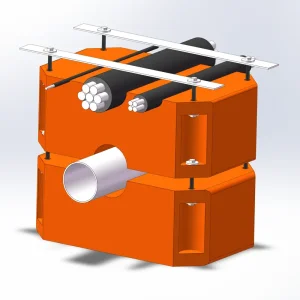
Modern offshore operations require real-time pressure, flow, and sonar monitoring. Juhua engineers custom float collars featuring integrated cable troughs that isolate delicate power and data lines from physical pinch-points and wave impact.
Certified Engineering Formula for Dynamic Pipeline Sizing
Designing an offshore float collar system must never be based solely on dry pipe weight. True working condition calculations incorporate high-density medium conveyance, wave slam factors, and hydrostatic pressure resistance.
Where ρslurry accounts for actual mineral solids (typically 1,300 to 1,800 kg/m³ for dredging mud/sand), and Ksafety represents our recommended reserve buoyancy coefficient of 1.20 to 1.30. This ensures exactly 25% to 30% of the collar diameter remains above the water line, maintaining hydrodynamic tracking and visual warning for surface navigation.
Localization Support, Quality Assurance & Technical Roadmap
Meeting strict marine governance standards through rigorous destructive testing, closed-cell internal core filling, and an advanced technology roadmap for zero-carbon offshore operations.
Quality Inspection & Closed-Cell Integrity
Every float collar manufactured at Juhua undergoes rigorous wall-thickness ultrasound profiling and electronic thermal curve verification. Internal cavities are injected with high-density polyurethane foam (≥ 35-45 kg/m³) with a closed-cell ratio > 92%, preventing water infiltration even if the outer polyethylene skin is breached by heavy collision.
Global Logistics & Installation Compliance
International shipping efficiency is central to capital reduction. Juhua's split-half nesting designs maximize 40-foot HQ container cubic space. We provide complete technical data packages, marine installation guidelines, torque ratings for marine-grade bolts, and 24/7 technical hotline access for project engineers in over 80 countries.
Future Roadmap: Smart IoT & Bio-Circular Resins
Our ongoing R&D is setting tomorrow's marine flotation standards. Juhua is piloting IoT-enabled buoyancy collars equipped with self-powered solar RF tracking beacons, strain sensors for pipeline stress detection, and post-consumer circular cross-linked polyethylene blends that reduce offshore project carbon footprints without sacrificing yield strength.
Frequently Asked Questions on Hose Float Collars
Direct technical answers addressing dynamic buoyancy ratios, chemical resilience, installation torque, and custom OEM manufacturing processes.
Integrated Buoyancy & Mooring Fleet Systems
Engineered for seamless compatibility across diverse hydraulic water-transfer and deep-water mooring installations.