
High-Stability Pipeline Floats & Offshore Buoyancy Solutions
Manufactured from premium UV-stabilised virgin PE using computerized rotational moulding, ensuring homogeneous shell integrity, extreme impact damping, and unyielding hydro-stability.
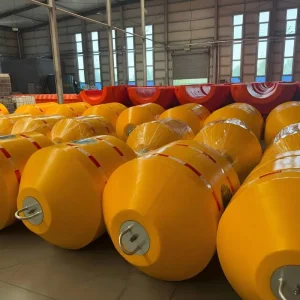
OEM Offshore Mooring Buoy for Safe Vessel Anchoring and Marine Infrastructure
Explore Specification
High-Quality Water Boat Pontoon Floating – Stable Modular Floating Platforms
Explore Specification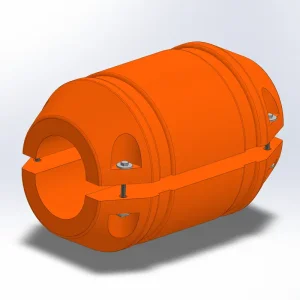
Custom Pipe Floats for Floating Pipeline Stability in Water Transfer & Industrial Projects
Explore Specification
High-Quality Mooring Buoy for Commercial Berths, Marinas and Offshore Holding Areas
Explore Specification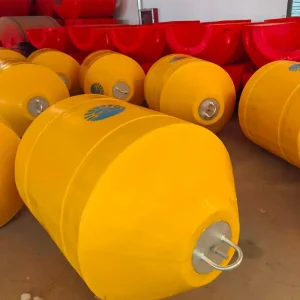
Custom Mooring Buoy for Marinas, Harbors and Offshore Anchorage Systems
Explore Specification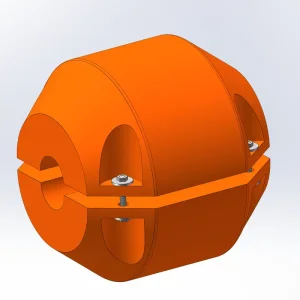
ODM Pipe Floats for Pump Discharge and High-Volume Water Transfer Lines
Explore Specification
High-Quality Durable Pipe Floats Engineered for Safe Operations in Harsh Estuaries
Explore Specification
ODM Polyethylene Mooring Buoy for Harbors and Commercial Floating Facilities
Explore SpecificationThe Paradigm Shift in Hydraulic Dredging & Marine Flotation Systems
Decoupling Operational Risk Through Advanced Polymer Science, Hydrodynamic Form Factors, and Computer-Controlled Rotomolding Engineering.
From Corrosive Steel to Polyethylene
Historical dredging relied on cylindrical welded sheet-steel pontoons that demanded continuous grit-blasting, anti-fouling recoating, and sacrificial cathodic protection. Modern reclamation demands rotational-molded high-density polyethylene (HDPE/LLDPE). PE pontoons eliminate corrosion entirely, resist marine borer penetration, and absorb wave-impact kinetic energy without catastrophic permanent plastic deformation.
Closed-Cell Polyurethane Non-Sinkable Cores
The primary hazard in offshore slurry pumping is flotation failure through shell perforation caused by rock debris or collision with support tugs. Juhua modular floats are pressure-injected with high-density polyurethane (PU) rigid foam (density ≥ 35-40 kg/m³). Featuring >95% closed-cell structure, the buoyancy core maintains zero water absorption even if the outer shell suffers acute tearing, preventing line submersion.
UV20+ Weathering Protection Additives
Exposed dredging discharge lines in the Middle East, South America, and Southeast Asia confront solar irradiance exceeding 220 kLy/year. Our material formulations compound high-grade antioxidant stabilizers and multi-spectrum Hindered Amine Light Stabilizers (HALS UV-8/UV-20). This preserves elongation-at-break values above 400% after 15,000+ hours of continuous tropical outdoor exposure.
Enterprise Sourcing Challenges & Industrial Solutions
Addressing the critical supply-chain vulnerabilities, offshore dredging down-time risks, and dynamic mechanical stresses faced by EPC contractors and fleet directors.
Pain Point: Pipeline Slippage & Axial Creep Under Surge
Industrial Analysis: When dredger slurry pumps surge or stop, hydraulic water hammer and longitudinal wave forces cause standard smooth-bore floats to slide along steel or HDPE pipelines. Clumping at connection flanges leads to severe pipe buckling and catastrophic bending moments.
The OEM Solution: Juhua incorporates precision-molded internal anti-slip friction grooves, elastomer compression gaskets, and high-tensile hot-dip galvanized (or SS316) fastener assemblies. Bolt-clamping forces are distributed uniformly across the pipe circumference, preventing axial migration without ovalizing the inner slurry conduit.
Pain Point: Exorbitant Freight Cubage & Container Demurrage
Industrial Analysis: Flotation modules are bulky, low-density cargo. Sourcing un-optimized cylindrical floats leads to massive air shipment costs, underutilized 40-foot High Cube (40HC) ocean shipping containers, and unpredictable project delivery delays.
The OEM Solution: Engineered split semi-circular interlocking geometry. Two symmetrical halves nest perfectly within standardized marine pallets and maritime containers. By streamlining outer mold radii and configuring modular stack heights, Juhua elevates container volumetric space utilization by up to 34%, dramatically lowering per-unit landed freight cost.
Pain Point: Non-Standardized Spares & Dimensional Variance
Industrial Analysis: Dredging contractors frequently source replacement floats across different batches only to discover mismatched bolt hole pitch centers, inconsistent wall thickness, or irregular outer diameters that disrupt pipe draft calculations.
The OEM Solution: CNC-machined cast-aluminum rotational molds and electronic automatic cycle control. Juhua guarantees dimensional tolerance repeatability within ±1.5mm across thousands of modules, ensuring total interchangeable plug-and-play installation for field maintenance teams.
Pain Point: Rapid Environmental Cracking Under Aggressive Slurry
Industrial Analysis: Mining tailings and contaminated silt contain heavy hydrocarbons, dynamic acids, and heavy metals that trigger Environmental Stress Crack Resistance (ESCR) failure in sub-standard regrind plastic shells.
The OEM Solution: 100% pure virgin linear low-density polyethylene (LLDPE grade M6040/UR644) resin. Tested to ASTM D1693 Condition B (>1000 hrs zero micro-fracturing), guaranteeing seamless resistance to corrosive chemical tailings and saline tidal washes.
Buoyancy Sizing Formula & Hydrodynamic Design Margins
A rigorous engineering approach to calculate pipeline buoyancy, draft equilibrium, and safety reserve ratios under dynamic slurry slurry velocities.
Fundamental Pipeline Buoyancy Equilibrium Formulation
Dredging pipeline buoyancy calculations must never be configured based on clean water or empty pipes. The total buoyancy force must overcome the combined submerged weights under peak specific gravity slurry transfer conditions:
Where B_net represents the required gross displacement volume (m³), W_slurry incorporates design slurry density (typical ρ_s = 1.35 to 1.70 t/m³), and SF_reserve is the required hydrodynamic safety factor (typically 1.25 to 1.35, providing 25% to 35% visible freeboard above the nominal waterline).
| Pipe Outer Diameter (OD) | Float Internal Diameter (ID) | Outer Diameter × Length | Net Buoyancy Rating (Pair) | Recommended Slurry Density | Primary Industrial Application |
|---|---|---|---|---|---|
| Φ 200 mm (8") | 200 mm ± 2mm | Φ 500 mm × 800 mm | ≈ 110 kg | ≤ 1.35 t/m³ | Harbor Marina Dredging |
| Φ 315 mm (12") | 315 mm ± 2mm | Φ 850 mm × 1100 mm | ≈ 450 kg | ≤ 1.45 t/m³ | Riverbed Desilting |
| Φ 450 mm (18") | 450 mm ± 3mm | Φ 1100 mm × 1300 mm | ≈ 920 kg | ≤ 1.50 t/m³ | Port Expansion Lines |
| Φ 630 mm (24") | 630 mm ± 3mm | Φ 1400 mm × 1600 mm | ≈ 1,950 kg | ≤ 1.60 t/m³ | Offshore Land Reclamation |
| Φ 800 mm (32") | 800 mm ± 4mm | Φ 1750 mm × 2000 mm | ≈ 3,600 kg | ≤ 1.65 t/m³ | Cutter Suction Discharge |
| Φ 1000 mm (40") | 1000 mm ± 4mm | Φ 2200 mm × 2200 mm | ≈ 6,200 kg | ≤ 1.75 t/m³ | Heavy Tailings Mining |
Computerized Rotational Moulding & Quality Control
Continuous process intelligence ensuring homogeneous crystalline wall thickness, internal stress mitigation, and maximum cryogenic impact tolerance.
Variable Frequency Biaxial Motion
Multi-axis rotational machines automatically calibrate primary and secondary axis RPM to drive molten resin seamlessly into complex corner radii, achieving uniform 8mm to 18mm wall thickness.
Thermal Sensor Feedback Control
Infrared pyrometers and internal chamber thermistors govern the peak internal air temperature (PIAT), preventing thermal degradation while guaranteeing complete resin curing and molecular entanglement.
High-Pressure Injected PU Foaming
Polyurethane components are metered via computerized robotic mixing heads. Controlled foam expansion creates a uniform closed micro-cellular structure bonded permanently to the inner PE skin.
Cryogenic Dart Impact Testing
Routine test coupons undergo falling-dart impact resistance checks at -40°C (ASTM D5628), assuring shatter-proof ductile performance in harsh sub-zero Siberian or arctic mining operations.
International Regulatory Standards & EPC Integration
Full conformance with global maritime guidelines, ISO management systems, and stringent environmental sustainability mandates.
Maritime & Port Authorities (PIANC / IALA)
Our marine navigation buoys, pipeline marker floats, and floating barriers are configured strictly according to IALA (International Association of Marine Aids to Navigation and Lighthouse Authorities) colorimetry guidelines and PIANC dredging pipeline working group recommendations, guaranteeing safety of navigation in active commercial sea channels.
ISO 9001 / 14001 / OHSAS 18001
All manufacturing nodes operate under ISO-certified protocols. Raw resins undergo incoming melt flow index (MFI) and density verification, followed by lot-tracked ultrasonic non-destructive thickness validation. Complete Mill Test Certificates (MTC) and Third-Party Inspection (TPI via SGS, BV, or Lloyd's Register) are available on demand.
Eco-Stewardship & Closed Carbon Loops
Manufactured using fully recyclable, non-leaching polyethylene devoid of volatile plasticizers or heavy metal pigments. Our flotation systems comply with RoHS and REACH regulations, safeguarding sensitive coral reefs, mangrove estuaries, and pristine municipal drinking reservoirs from ecotoxic degradation.
Technological Roadmap & Smart Telemetry Buoyancy Systems
Bridging the gap between heavy hydraulic infrastructure and digital offshore asset management.
IoT-Enabled Submersion & Draft Sensors
Under development: Next-generation dredging float shells with integrated embedment recesses for low-power LoRaWAN and NB-IoT pressure transducers. These transmit real-time freeboard depth data to dredger bridge SCADA consoles, warning operators of localized sand deposition, internal silt settlement, or pipeline plugging before line sinkage occurs.
Integrated Cable & Hydraulic Quick-Troughs
Modern cutter suction operations demand auxiliary umbilical power cables, hydraulic pilot lines, and optical fiber lines running concurrently along the discharge line. Juhua modular floats feature pre-molded top utility conduits that isolate electric lines from seawater abrasion without requiring external strapping.
Circular Bio-Circular Polyethylene Alloys
Aiming for net-zero carbon infrastructure, our R&D team is testing second-generation bio-attributed polymers synthesized from renewable feedstocks. These maintain identical tensile yield and Charpy impact strengths as fossil-based LLDPE while cutting carbon footprints by 42% per ton of buoyant material produced.
Frequently Asked Questions: Dredging Buoyancy Engineering
Direct technical answers addressing installation mechanics, buoyancy calculations, durability, and global logistics.
Q What primary parameters determine the float sizing for slurry lines?
Accurate specification requires: (1) Pipe Outside Diameter (OD) and material (HDPE, steel, or rubber hose); (2) Pipe dry weight per meter; (3) Slurry specific gravity (ranging from 1.15 for light silt to 1.75 for heavy iron tailings); (4) Water density (freshwater 1.0 t/m³ vs ocean saltwater 1.025 t/m³); and (5) Wave/current profile of the job site. Sizing should target a minimum 25% reserve buoyancy above the pipe centerline.
Q Why is rotomolded polyethylene superior to steel pontoons in marine applications?
Polyethylene never oxidizes, corrodes, or rusts in saline waters. It does not require annual anti-fouling recoating or cathodic zinc anodes. Additionally, PE possesses exceptional elastic flexural recovery, meaning it can absorb collisions from service workboats without denting, puncture, or seam cracking that typically causes steel pontoons to flood and sink.
Q How does polyurethane foam core affect long-term float safety?
The closed-cell polyurethane foam injected into Juhua floats functions as a secondary safety barrier. Even in the rare event of a severe projectile breach or deep hull rupture, the >95% closed-cell structure prevents water ingress. The float preserves over 98% of its original rated buoyancy, keeping the discharge pipeline safely aloft and preventing catastrophic bend fatigue.
Q How are modular pipe floats secured to prevent axial sliding?
Floats are supplied in symmetrical pairs bolted together with high-tensile galvanized or stainless steel (SS304/SS316) fasteners. The internal diameter is precision-matched to the pipe OD. In high-surge or flexing offshore pipelines, specialized rubber friction sleeves or integrated internal anti-slip ribs are utilized to mechanically grip the pipe surface and resist axial hydrodynamic thrust.
Q What is the standard commercial warranty and expected field service life?
Juhua provides a formal commercial warranty extending 18 months from the date of handover to the project investor or 12 months from the active installation date (whichever expires first). In typical coastal dredging environments, our UV20-stabilized polyethylene modules exhibit an operational service life of 10 to 15+ years across multiple successive project redeployments.
Q Can buoyancy modules be customized for cable conduits and instrumentation?
Yes. Juhua specializes in full OEM/ODM toolmaking. We produce customized molds featuring integral cable troughs, solar buoy lighting mounts, lifting lugs, and transducer brackets. Custom exterior color coding (safety yellow, marine red, navigational green, or caution orange) is blended directly into the virgin resin matrix during compounding.
Advanced Marine Flotation & Dredging Infrastructure Portfolio
Integrate robust dredging discharge lines, submarine tie-in floats, high-pressure slurry hoses, and navigation buoys directly from the OEM manufacturer.

Custom Deepwater Pipeline Support Float – Modular and Reliable Supplier
Explore Specification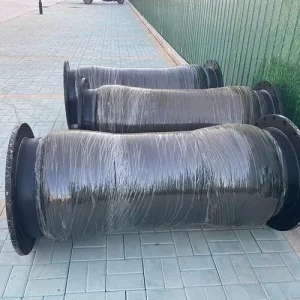
Best Durable Rubber Hoses for Efficient Fluid and Sediment Slurry Transport
Explore Specification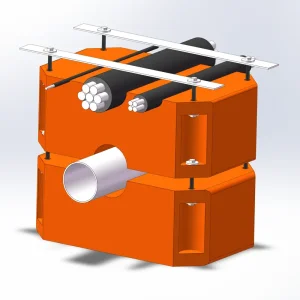
OEM Advanced Modular Pipe Floats with Integrated Cable Channels
Explore Specification
ODM Mooring Buoy for Marina Berths, Vessel Anchorage and Offshore Systems
Explore Specification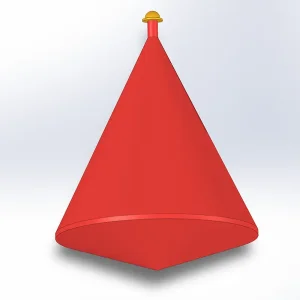
Best Precision Marine Buoys for Safe and Efficient Coastal Navigation
Explore Specification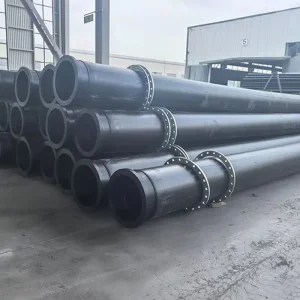
Best Heavy-Duty Pipeline for Safe and Efficient Hydro Slurry Transport
Explore Specification
Custom Pipe Floats for Stable Pipeline Support and High-Pressure Systems
Explore Specification
Best Reliable Floating Barrier Solutions for Water Protection and Silt Control
Explore SpecificationRequest an Engineered Buoyancy Calculation & Factory Quote
Connect directly with our senior rotational moulding engineers in Shandong, China. Submit your pipe OD, wall thickness, slurry density, and project site conditions for a comprehensive CAD layout and volumetric shipping plan within 24 hours.