20+
Years Engineering Expertise
100+
Dedicated Tech Specialists
80+
Export Destination Markets
1,000+
Mould Systems Installed
Featured Marine Assemblies
High-Efficiency OEM Dredging Floats & Marine Systems
Engineered with cross-linked LLDPE polymer outer shells and hydro-resistant internal structural foam to withstand wave shear, chemical corrosion, and abrasive marine environments.
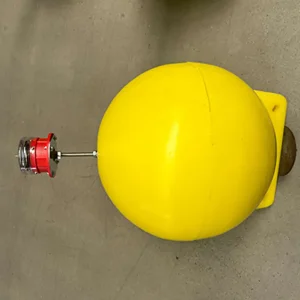
ODM Floating Ball with LED Light – Reliable Marine Navigation and Safety Manufacturer, Pricelist
Request Specification & Quote
Custom Pipe Floats for Stable Pipeline Support and Reliable Floating Systems Quotes, Factory
Request Specification & Quote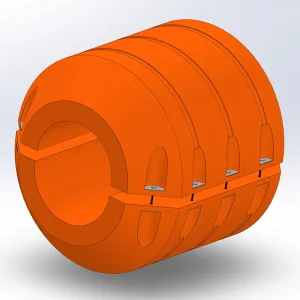
OEM Reliable Marine Pipe Floats for Pipeline Efficiency Manufacturer, Products
Request Specification & Quote
ODM High-Buoyancy Floats for Marine Projects Suppliers, Pricelist
Request Specification & Quote
Custom Custom Pipe Floats for Floating Water Pipeline and Marine Support Projects Suppliers, Manufacturers
Request Specification & Quote
Best Pipe Floats for Stable Water Transfer and Marine Pipeline Support Supplier, Pricelist
Request Specification & Quote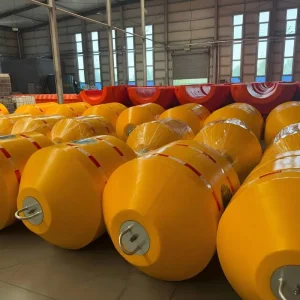
High-Quality Mooring Buoy for Commercial Berths, Marinas and Offshore Holding Areas Manufacturers, Products
Request Specification & Quote
Macro Solutions & Market Intelligence
Global Industrial Demand & Procurement Dynamics
Analyzing key hydrodynamic stress factors, cross-border EPC requirements, and operational risk mitigation for modern slurry transfer and subsea infrastructure.
Port Dredging & Navigation Preservation
Global port deep-water expansions demand discharge lines that endure relentless tidal shifts and commercial vessel traffic. Our UV-stabilized virgin polymer modules prevent catastrophic line sinking, shielding high-cost steel or HDPE discharge mains against fatigue fracturing.
Mining Tailings & Slurry Hydraulics
High-density mineral tailings transport in Australia, Chile, and Africa cannot tolerate buoyancy miscalculations. We calculate exact volumetric displacement accounting for abrasive heavy minerals (SG > 1.4) ensuring pipelines maintain optimal 25% dry freeboard reserve.
Severe Environment Land Reclamation
Mega-scale coastal reclamation requires non-stop pumping through severe open-sea swells. Symmetrical rotational moulding eliminates residual stress lines, guaranteeing zero shell embrittlement under continuous cyclic wave pounding and intense tropical sun exposure.
Hydrodynamic Buoyancy Reserve Equation
Proper buoyancy sizing prevents catastrophic sagging, dredging flow constriction, and joint fatigue failure under maximum hydraulic loading.
Factors incorporated: Pipe dry tare weight, pumped medium specific gravity (ρ), marine hardware mass, wave slam coefficient, and marine fouling margins.
B_total ≥ (W_pipe + (V_internal × ρ_slurry) + W_hardware) × SF (1.25 ~ 1.30)
• Standard Freeboard Requirement: 25% OD clear of surface
• Slurry Specific Gravity Range: 1.25 – 1.65 t/m³
• Core: Water-tight Closed-Cell Polyurethane Foam (≥38 kg/m³)
• Standard Freeboard Requirement: 25% OD clear of surface
• Slurry Specific Gravity Range: 1.25 – 1.65 t/m³
• Core: Water-tight Closed-Cell Polyurethane Foam (≥38 kg/m³)
Engineering Whitepaper
Rotomolding Innovation & Future Technology Roadmap
How Juhua implements variable-frequency control, thermodynamic consistency, and next-generation polymer composites for heavy marine infrastructure.
Phase I: Material Science
Cross-Linked LLDPE Matrix
Deploying specialized high-density resins treated with anti-aging, UV-8 stabilizing agents that resist accelerated photochemical breakdown under intense equatorial exposure.
Phase II: Manufacturing
Automated Thermal Profiling
Electronic closed-loop infrared thermometry controls heating cycles within ±1.5°C, ensuring uniform outer shell wall thickness without structural thin spots.
Phase III: Mechanical Design
Anti-Torque Bolt Recesses
Integrated fastener pockets protect high-tensile galvanised/stainless steel hardware from wave friction, eliminating shearing loads across pipeline flex points.
Phase IV: Smart Fleet
IoT Hydro-Buoyancy Sensor Cells
Developing telemetry-ready buoyancy modules that monitor submerged depth, impact force, and internal water ingress via low-power satellite and LoRaWAN bands.
Operational Certainty
Global Logistics, Compliance & Localized Support
Ensuring frictionless delivery, maritime standard compliance, and guaranteed interchangeable field spares across 80+ countries.
ISO 9001 & Maritime Testing
Every production batch undergoes hydro-pressure testing, puncture resistance evaluation, and ultrasonic wall measurement. Fully certified for ASTM D1693 environmental stress crack resistance (ESCR).
Container Nesting & Shipping Cost Reduction
Floater halves are geometrically engineered to nest inside standard 40ft High Cube containers, boosting container volume utilization by up to 35% and drastically lowering freight overhead.
Interchangeability & Emergency Spares
Standardized CNC-tooled precision moulds guarantee that replacement units produced years apart fit existing pipelines without modification, safeguarding continuous marine operations.
Knowledge Base & Technical Consultation
Frequently Asked Questions on Pipe Floats & Marine Flotation
Detailed technical responses straight from our chief hydraulic engineers and rotomolding production supervisors.
What is the specific composition of the float shell and internal core?
The external shell is rotationally molded from high-grade virgin Linear Low-Density Polyethylene (LLDPE) enhanced with UV inhibitors (UV-8 rating) and chemical stabilizing agents. The interior is fully filled with high-density closed-cell polyurethane (PU) rigid foam (density ≥38-45 kg/m³). Even if the outer shell suffers severe mechanical penetration during dredging collisions, the hydrophobic closed-cell foam prevents water ingress, preserving buoyancy.
How does Juhua calculate proper pipe floater spacing and load?
Our engineers calculate the overall load combining dry pipe weight, maximum transported slurry weight (using wet slurry specific gravity up to 1.6 t/m³), and the mass of couplings and bolts. We then apply an engineering safety factor of 1.25 to 1.30 (25% to 30% surplus buoyancy), ensuring approximately one-quarter of the pipe diameter remains visible above the waterline to cushion hydrodynamic bending from cross-currents and ocean swell.
Why is rotomolded polyethylene superior to welded steel pontoons?
Steel pontoons are susceptible to galvanic seawater corrosion, paint cracking, and localized seam weld fatigue, requiring costly periodic repainting and cathodic replacement. Polyethylene is chemically inert, non-corroding, impervious to marine bio-growth adhesion, lightweight for lower crane requirements, and absorbs dynamic impacts without permanent deformation or puncture risk.
What warranty and operational life cycle are standard for your floaters?
Our standard contractual warranty extends for 18 months from buyer handover to site investors or 12 months post-installation commissioning, whichever expires first. In normal environmental operating conditions (-40°C to +60°C), our UV-treated polyethylene float shells consistently provide an operational working lifespan exceeding 10 to 15 years.
Can you provide custom cable troughs and internal subsea tie-in brackets?
Yes. OEM customization is our core manufacturing strength. We regularly mould longitudinal cable pass-through channels directly into float bodies to house submerged power cables, hydraulic supply conduits, or fiber-optic monitoring lines, securing them against snagging and ocean surface wear.
What key data must buyers submit to obtain a certified project quote?
To produce an exact engineering quotation, we require: pipe outer diameter (OD), pipe wall thickness and substrate (HDPE, steel, or rubber hose), pumped medium density, maximum expected wave/current velocities, total discharge length, destination port, and custom requirements (e.g., retro-reflective strips, customized RAL colors, or 316 stainless steel fastening hardware).
Complete Hydro Dynamic Solutions
Specialized Floatation, Mooring & Hydro Barrier Systems
Explore our extended series of subsea tie-in modules, rotomolded boat pontoons, multi-berth mooring buoys, and heavy-duty rubber discharge hoses.
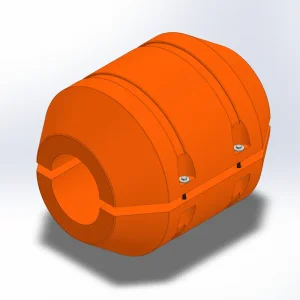
Custom Pipeline Float For Subsea Tie-In And Controlled Positioning Products, Quotes
Request Specification & Quote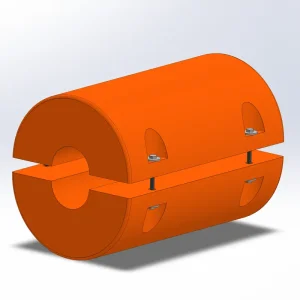
Best Pipe Floats for Floating Pipeline Support and Water Transfer Projects Suppliers, Factory
Request Specification & Quote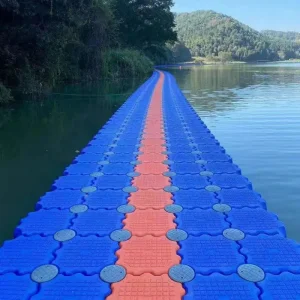
High-Quality Versatile Floating Boat Pontoon for Water Projects Products, Company
Request Specification & Quote
ODM Mooring Buoy for Secure Vessel Anchoring and Stable Marine Mooring Systems Manufacturers, Manufacturer
Request Specification & Quote
ODM Custom Mooring Buoy for Vessel Berthing, Marina Use and Offshore Anchorage Companies, Pricelist
Request Specification & Quote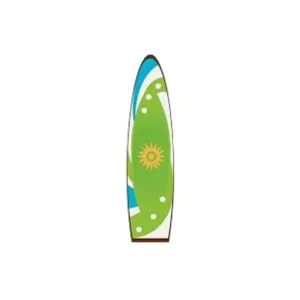
ODM Rotomolded Surfboard – Durable, Safe, and Low-Maintenance Water Sports Solution Manufacturers, Pricelist
Request Specification & Quote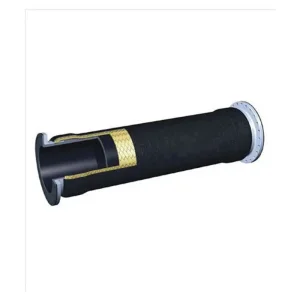
High-Quality Heavy-Duty Rubber Hose for Water and Marine Projects Supplier, Factories
Request Specification & Quote