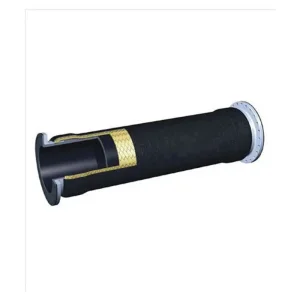
Precision Flotation Modules & Buoyancy Systems
Engineered rotomolded pontoon floats, buoys, and pipeline protection elements manufactured to withstand aggressive sea states and high-slurry flow rates.
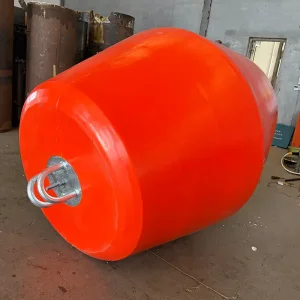
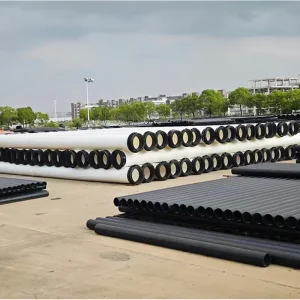
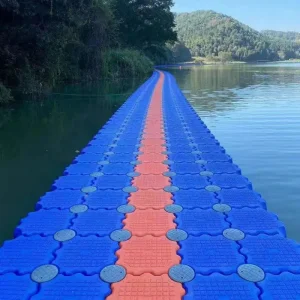



The Global Commercial Landscape of Pontoon Flotation Systems
How maritime infrastructure, offshore energy transitions, and coastal resilience projects are driving demand for rotationally molded PE buoyancy architecture.
Escalating Marine Infrastructure Demand
Global capital expenditure in port expansions, navigational safety modernization, and land reclamation across Southeast Asia, the Middle East, and Latin America has created unprecedented demand for resilient, zero-corrosion modular pontoons capable of operating under 24/7 hydrodynamic stress.
Material Paradigm Shift: Steel to Polymer
Traditional fabricated steel pontoons suffer from catastrophic galvanic corrosion, requiring costly sacrificial anodes and hazardous dry-dock repainting. Global operators are permanently transitioning to high-molecular-weight UV-stabilized Polyethylene (PE) hulls injected with closed-cell polyurethane foam.
Expansion of Aquaculture & Renewables
Offshore fish farming grids and floating photovoltaic (FPV) solar farms require extreme buoyancy stability and environmental neutrality. Rotomolded pontoon floats deliver non-toxic, chemical-free marine flotation solutions certified for sensitive pristine marine ecosystems.
China OEM Factory Efficiencies: The Juhua Manufacturing Edge
How automated rotational moulding, localized chemical supply chains, and advanced metrology deliver unbeatable value and mechanical consistency.
Variable-Frequency Temperature Control
Our facility in Lizhuang Town, Binzhou, Shandong utilizes modern rotomolding lines equipped with variable-frequency speed controls and electronic automated thermal pyrometers. This eradicates uneven wall thinning, ensuring uniform polymer thickness along sharp radii and high-stress points.
High-Density Polyurethane (PU) Core Injection
Inside the rugged PE outer skin, our pressurized polyurethane foam dispensing systems ensure high-density closed-cell fills (32 kg/m³ to 45 kg/m³). Even in the catastrophic event of an external collision breach, the closed-cell matrix prevents water absorption, maintaining near-100% reserve buoyancy.
Interchangeability & Tooling Standardization
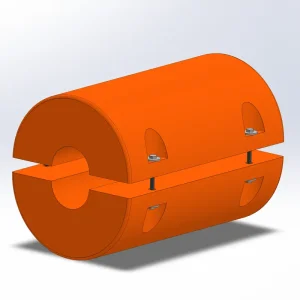
Thanks to precision CNC-machined cast aluminum moulds, every float half matches exact geometric tolerances. Whether sourcing replacement shells or scaling up an existing dredging discharge line, operators achieve perfect alignment and seamless clamp-on integration.
| Performance Characteristic | Juhua OEM Rotomolded Pontoon Floats | Fabricated Structural Steel Floats | Conventional Fiberglass (FRP) Modules |
|---|---|---|---|
| Corrosion & Saltwater Resistance | Permanent immunity (Zero rust, no recoating needed) | High susceptibility (Requires cathodic protection & epoxy) | Prone to osmotic blistering and resin cracking |
| Impact Resistance (Elastic Deformation) | Exceptional (Absorbs vessel bumper impacts without denting) | Permanent plastic deformation (Denting, seam rupture) | Brittle fracture on dynamic rock/berth collisions |
| Service Life Expectancy | 15 to 25+ Years (Formulated with UV8/UV12 stabilizers) | 5 to 8 Years (Dependent on continuous maintenance) | 8 to 12 Years (Degrades under severe tropical UV) |
| Weight-to-Buoyancy Ratio | High efficiency (Enables single-crane installation) | Very low efficiency (Heavy deadweight requires marine cranes) | Moderate efficiency |
| Total Cost of Ownership (TCO) | Lowest (Maintenance-free over extended operational runs) | Extremely high due to dry-dock inspections & repainting | Moderate-to-high repairs over marine lifecycle |
Mission-Critical Applications in Diverse Global Terrains
Engineered to handle extreme environmental stressors from tropical salt spray to arctic freeze-thaw cycles and high-viscosity industrial slurries.
Capital Dredging & Port Expansion
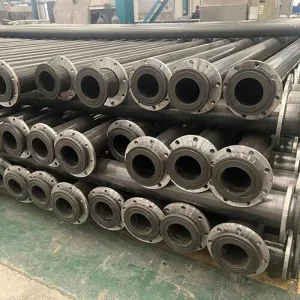
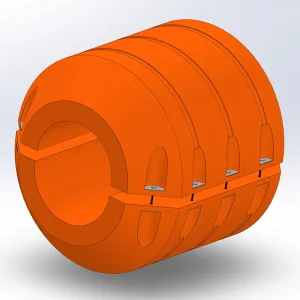
Dredging pipelines convey highly abrasive gravel, crushed coral, and sand slurries. Juhua pontoon pipe floats provide reliable clamp-on buoyancy to withstand lateral hydraulic forces, swell currents, and rough wave action while keeping dredge discharge lines floating cleanly with ideal freeboard.
Mining Tailings & Acidic Effluent Transport
Open-pit gold, copper, and iron ore extraction involves transferring toxic or highly acidic tailings into settling ponds. Virgin polyethylene skins are chemically inert across pH ranges from 1 to 14, resisting aggressive acid mine drainage (AMD) and harsh chemicals without structural degradation.
Municipal Reservoirs & Security Booms
For dam spillway security, hydro intake intake protection, and surface debris management, floating barriers built from linked pontoon cylinders arrest trees, trash, and silt curtains. Integrated cable pathways enable simple integration of mooring ropes and perimeter hazard beacons.
Emerging Technology Trends & International Sourcing Norms
Smart IoT navigation, sustainable polymer recycling, and the engineering standards driving multi-million-dollar government and private tenders.
1. Integration of Smart Telemetry & Sensor Arrays
The modern marine industry is quickly outgrowing passive floats. Today’s major dredging conglomerates and terminal operators demand intelligent buoyancy units. Juhua supports custom recessed compartments to house solar micro-panels, IALA-standard LED channel lanterns, AIS transponders, water-quality probes, and GPS boundary sensors to track anchor drift in real time.
2. Rigorous EPC Pre-Qualification Criteria
Global Engineering, Procurement, and Construction (EPC) contractors no longer accept unverified factory claims. Sourcing specifications stipulate: full virgin resin traceability certifications (PE100 / LLDPE), UV aging test reports verifying ASTM D2565 compliance, tensile break tests via ASTM D638, and finite-element hydrostatic load simulation records for deep-sea and violent swell exposures.
Engineering Buoyancy Calculation Benchmark for Discharge Lines
A critical failure mode in slurry discharge pipelines is undersized buoyancy under full hydraulic density. Project engineers should always verify sizing based on maximum working conditions rather than fresh water or empty pipe states:
Maintaining a 25% to 30% safety margin ensures that approximately 1/4 of the pipeline remains exposed above the waterline, preventing submergence under heavy cross-current drag, sediment settling during pump shut-downs, or dynamic tidal chop.
Technical & Commercial Procurement Q&A
Clear, direct answers addressing pipeline compatibility, mechanical customisation, and export logistics.
What raw materials are utilized in manufacturing Juhua pontoon floats?
We exclusively utilize premium-grade, virgin high-density or linear low-density polyethylene (HDPE/LLDPE) combined with integrated UV stabilizers (UV8 to UV12 class). The shells are rotational molded without joints or seams. The interior is pressurized and filled with 35–45 kg/m³ closed-cell polyurethane (PU) foam that creates a watertight core.
How do you guarantee interchangeability between different production batches?
Our tooling relies on high-precision, CNC-milled cast aluminum and steel moulds with fixed index pins. During production, electronic temperature gauges maintain exact oven dwell times, eliminating batch-to-batch thermal shrinkage variations. This guarantees that replacement halves bolt smoothly onto existing deployed pipes without site rework.
Can you provide custom wall thicknesses and internal cable channels?
Yes. As an OEM/ODM source factory, we adjust the polyethylene powder charge to increase shell wall thickness from standard 6–8mm up to 14–18mm for ultra-heavy open-ocean applications. We can also integrate longitudinal cable troughs to securely route 3-phase pump power lines or data conduits alongside the dredge discharge pipe.
What fastener hardware is supplied with clamp-on pipe pontoon sets?
Standard orders include heavy-duty Grade 4.8 or 8.8 hot-dip galvanized (HDG) threaded bolts, self-locking nylon nuts, and oversized pressure-dispersing washers. For severe tropical ocean and offshore mining duties, we routinely upgrade hardware sets to AISI 304 or AISI 316 marine-grade stainless steel.
What is the standard warranty period and export lead time?
Our standard warranty covers 18 months from delivery or 12 months after on-site commissioning. Thanks to continuous operations at our dedicated facility in Binzhou, standard pipeline floats ship within 10 to 20 days. Custom-tooling or OEM prototype projects are delivered in 25 to 35 business days.
Explore Engineered Marine Lines & OEM Dredging Solutions
Review additional matched floats, robust pipelines, mooring buoys, and heavy-duty delivery systems configured for international shipping.