
20+
Years Engineering Expertise
80+
Global Regions Exported
100%
Rotomolded Wall Uniformity
1,000+ m²
Dedicated Production Base
Primary Engineering Series
Sludge, Slurry & Marine Flotation Systems
Engineered for maximum hydrodynamic efficiency, abrasive silt transfer, and offshore durability under relentless marine conditions.

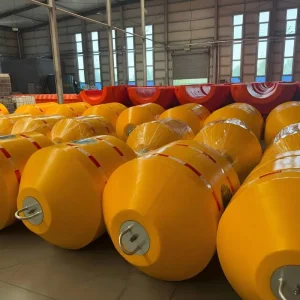
OEM Foam-Filled Mooring Buoy for Chain-Connected Berths Product, Companies
View Product Specs
High-Quality High-Visibility Marine Buoys for Safe Offshore Operations
View Product Specs
ODM Durable Cable-Integrated Pipe Floats for Submerged Infrastructure
View Product Specs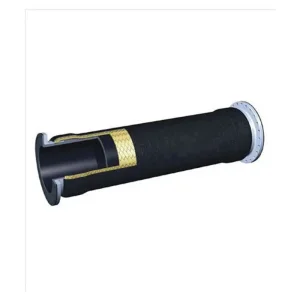
Best Reliable Pipelines for Sediment and Slurry Transport
View Product Specs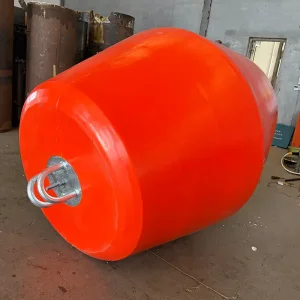
High-Quality Mooring Buoy For Aquaculture Grids & Floating Platforms
View Product Specs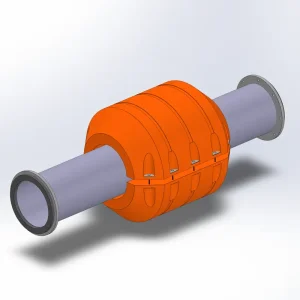
ODM High-Performance Floats for Efficient Pipeline Operations
View Product Specs
Best Offshore Mooring Buoy for Secure Vessel Anchoring Systems
View Product Specs
Global Engineering Context
Macro-Industry Solutions: Fluid Dynamic Resilience
Tackling high-viscosity hydro-transportation, corrosive tailings, and municipal sludge through precision elastomeric composite engineering.
Advanced Polyurethane & SBR Liners
Industrial sludge and abrasive mining slurries cause severe frictional wear. OEM custom hoses feature internal liner matrices formulated with ultra-high-molecular-weight polyethylene (UHMWPE) and vulcanized synthetic SBR rubbers, mitigating interior scour by over 340% compared to unlined steel pipe.
This macro-level durability directly shields dredgers, pumps, and downstream process separators from unplanned downtime caused by liner delamination or pipe blowout.
Dynamic Radial Burst Attenuation
Pulsating pressures from reciprocating positive-displacement pumps generate severe water-hammer effects. Our OEM heavy-duty hose construction integrates multi-ply high-tensile spiral steel wire cords encased in specialized cushioning compounds.
This layout ensures a continuous 4:1 safety design factor, preventing catastrophic bursting during cyclical surge spikes across long-distance sediment lines.
Total Hydrodynamic Line Integration
By interfacing flexible rubber sludge hoses directly with rotationally molded PE floats, engineering teams eliminate flex-fatigue shear at pipeline joints. The hydrodynamic buoyancy envelope maintains stable 25-30% dry freeboard even when conveying dense sand, fly-ash, and municipal cake.
This holistic system architecture prevents pipeline sagging and catastrophic oceanic or estuarine benthic dragging.
Commercial Ecosystem
Global Commercial & Industrial Realities
How maritime infrastructure, resource extraction, and urban environmental mandates are reshaping industrial hose requirements worldwide.
Tier-1 Port Expansions
Navigational deepening in major European and Asian mega-ports demands high-throughput dredging hoses capable of passing sharp flint, coral rubble, and contaminated harbor silt without structural cracking.
Mining Tailings Disposal
Stricter global tailings safety regulations compel mining majors across Oceania and South America to implement zero-spill floating sludge transfer lines, requiring continuous pipe wear monitoring and anti-kink flexural integrity.
Ecological De-Siltation
Inland water basins and hydroelectric reservoirs are executing massive sediment clearing to combat storage capacity loss, driving intense global procurement for UV-stabilized, non-leaching rotomolded float and hose assemblies.
Municipal Sludge Dewatering
Urban wastewater facilities require chemical-resistant flexible suction and discharge lines that withstand chlorinated effluents, methane outgassing, and aggressive organic digestates during secondary clarification.
Field Deployment Scenarios
Localized Application Engineering
Engineered adaptations for demanding environmental dynamics, salinity gradients, and mechanical stress profiles.
Estuarine & Open-Sea Dredge Discharge
Open maritime swells inflict extreme torsional, tensile, and wave-induced shear stress on sludge discharge channels. Using OEM built-in vulcanized steel flanges and flexible hose connectors ensures smooth articulative motion.
Complementary clamp-on polyethylene floats support the total submerged ballast without inducing point-loading creases on the pipeline structure.
Chemical & Industrial Pond Desorption
Industrial containment lagoons feature high temperatures, volatile acidic leachate, and corrosive chemical sediment. Standard steel pipelines corrode within months.
Specialized inner EPDM rubber membranes combined with seamless UV-stabilized rotational polyethylene outer bodies deliver 100% chemical passivity, zero internal scaling, and uninterrupted transfer across decanting ponds.
Riverine De-Silting & Flood Bypass
Inland waterways face acute operational limits: shallow drafts, strong seasonal currents, and intense localized riverboat traffic. Our cable-integrated pipe floats with heavy-duty sludge hoses provide low hydrodynamic drag profiles.
The integrated top-channel cable troughs facilitate clean routing of power and telemetry cables directly to floating cutter-suction dredgers without messy deck tethers.
Quality & Regulatory Framework
Compliance, QA Testing & Localized Technical Support
Ensuring complete risk mitigation for EPC contractors and marine asset operators worldwide.
ISO & PIANC Conformance
All marine buoys, rotomolded floats, and flexible sludge transfer lines adhere strictly to ISO 9001 quality management benchmarks and PIANC maritime navigational guidelines. Every component provides full traceability from certified polymer pellets to completed assembly.
Hydrostatic Proof Pressure Checks
Every OEM rubber hose lot undergoes rigorous factory hydrostatic proof testing at 1.5x to 2x rated working pressure, accompanied by electrical continuity checks to ensure zero static accumulation during fast hydrocarbon or organic slurry transfer.
Automated Wall Thickness Control
Using variable-frequency electronic rotomolding ovens with automated infrared temperature monitoring guarantees uniform shell wall thickness across our buoyant bodies, eliminating localized thin-spot failure modes permanently.
Rapid On-Site EPC Commissioning
Our experienced field engineers provide full technical documentation, finite-element buoyancy simulation charts, and on-site alignment guidance to assist port operators with flawless project startup.
Strategic Roadmap
Technology Roadmap: Smart Buoyancy & Composite Polymers
The forward trajectory of our R&D pipeline: from intelligent wear sensors to carbon-neutral marine polymers.
Phase I: Current Innovation
IoT-Embedded Wear Sensors
Integrating inductive wear-detection wire layers inside the rubber carcass of sludge hoses. When internal abrasive abrasion reaches 75% of liner depth, telemetry signals inform operators before any fluid leak occurs, enabling scheduled preventive maintenance.
Phase II: Near-Term Engineering
Bio-Based & Recycled Polyethylenes
Formulating maritime-grade rotomolding shells using up to 40% certified chemically-recycled ocean-bound polymers without sacrificing tensile impact strength, environmental stress-crack resistance (ESCR), or ultraviolet resilience under tropical sunshine.
Phase III: Future Horizon
Self-Regulating Smart Buoyancy
Developing variable-displacement buoyancy bodies featuring automated pneumatic chamber balancing. Systems monitor slurry specific gravity in real-time, automatically adjusting ballast to keep the discharge line positioned smoothly at optimal hydrodynamic elevation.
Engineering Help Desk
Frequently Asked Technical Questions
Immediate engineering clarity regarding pipeline calculations, material properties, and warranty standards.
What is the standard sizing rule for floating sludge pipelines?
The baseline engineering formula requires Total Float Buoyancy ≥ (Dry Pipe Weight + Saturated Conveyed Medium Weight + Couplings/Hardware) × 1.2 to 1.3. Sizing for an empty pipe is a critical error; you must use the maximum design density of the slurry (often 1.3 to 1.6 t/m³) to guarantee a continuous 25% safety freeboard above waterline.
Why is rotomolded polyethylene superior to steel flotation pontoon cans?
Unlike carbon steel shells that suffer rapid rust, weld cracking, and marine bio-fouling, UV-stabilized high-density virgin polyethylene (HDPE) shells are chemically inert, rustproof, and immune to seawater corrosion. They do not require sandblasting or toxic anti-fouling coatings, reducing lifecycle maintenance costs to virtually zero.
What are the formal warranty terms for global dredging supplies?
Warranty coverage activates on the date the buyer officially commissions and transfers equipment to the project investor, extending for 18 months post-handover or 12 months after on-site installation, whichever expires first. Defective shells or lining failures are backed by direct factory engineering replacement support.
Can pipeline floats be integrated directly with dredging power cables?
Yes. We manufacture customized rotomolded pipe floats equipped with integral cable troughs molded along the top arch. This enables dredger electrical feeds, auxiliary hydraulic lines, and fiber-optic positioning cables to run securely along the floating line without requiring external clamps or loose buoys.
Complete Equipment Range
Heavy-Duty Discharge & Marine Barrier Catalogue
Comprehensive containment, slurry pipelines, and flexible dredging connections engineered for demanding offshore service.
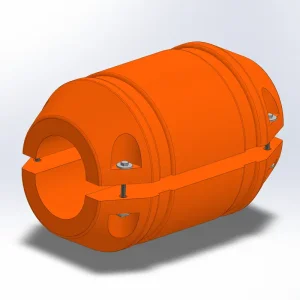
ODM Reliable Pipe Floats for Marine Projects Supplier
View Product Specs
High-Quality Heavy-Duty Rubber Hose for Water & Marine Projects
View Product Specs
High-Quality Reliable Pipe Floats with Integrated Cable Troughs
View Product Specs
Custom Pipe Floats for Floating Pipeline Water Transfer Stability
View Product Specs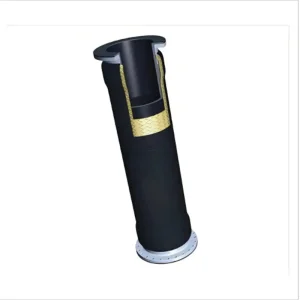
Custom Premium Rubber Hoses for Water & Slurry Transport
View Product Specs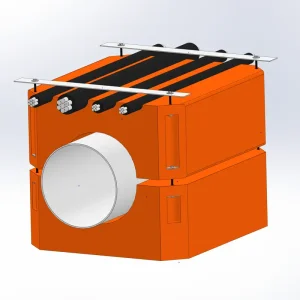
Customizable Floating Pipe Supports with Dedicated Cable Troughs
View Product Specs
Reliable Floating Buoys for Coastal Navigation & Offshore Projects
View Product Specs