High-Integrity Slurry Pipe Flotation & Marine Line Systems
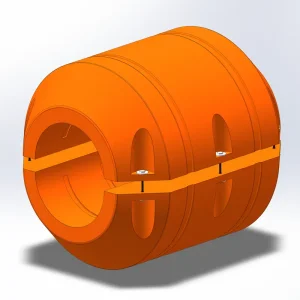
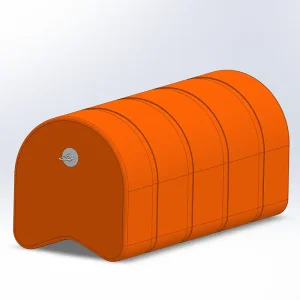
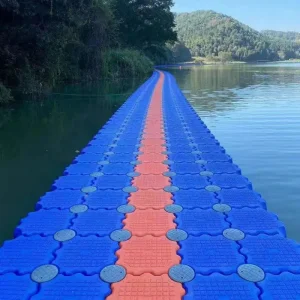
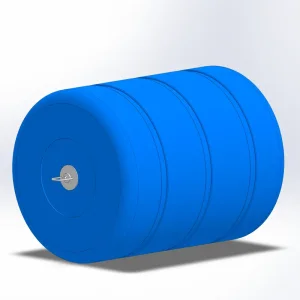
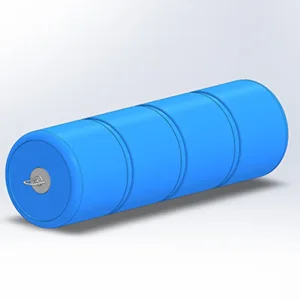
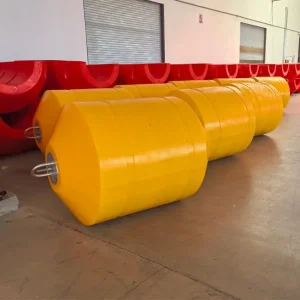
Rotationally molded closed-cell PU-filled polyethylene flotation sleeves and marine modules engineered to support abrasive slurry lines, offshore transfer, and coastal desiltation pipelines.
The Global Commercial & Industrial Landscape of Slurry Piping
Escalating demands in deep-channel dredging, mega-scale port expansion, iron ore tailings transport, and marine mineral beneficiation demand radical improvements in hydraulic abrasion mitigation and hydrodynamic pipeline flotation.
Hydraulic Slurry Severity
Global mining operations and capital dredging contractors transport dense, multi-phase solid-liquid slurries under severe laminar and turbulent flow conditions. Slurry specific gravity (SG) frequently ranges from 1.15 in light estuarine silts up to 1.75–1.90 in heavy iron ore and copper flotation tailings.
This immense mechanical mass induces severe Coulomb friction and boundary-layer particle impingement, accelerating mechanical scouring and localized pipe wall thinning along discharge channels.
Hydrodynamic Marine Loading
Floating slurry lines operate at the unpredictable boundary between atmospheric weathering and marine hydrodynamic forces. Conduits face continuous cyclic fatigue, ocean wave-induced bending moments, strong cross-currents, and tidal variances.
Conventional rigid steel flanged pipelines suffer premature stress cracking, galvanic seawater corrosion, and hazardous weld shearing without precision-molded buoyancy modules providing dynamic compliance.
The TCO Decoupling Imperative
Modern engineering, procurement, and construction (EPC) conglomerates are actively decoupling Total Cost of Ownership (TCO) from initial capital outlay (CapEx). Unplanned line ruptures or sinking pipelines cause exorbitant downtime, environmental fines, and vessel standby penalties.
Specifying factory-direct OEM rotomolded PE flotation systems paired with ultra-high molecular weight polyethylene (UHMWPE) or synthetic rubber discharge hoses significantly prolongs mean time between replacement (MTBR).
China OEM Slurry Pipe Manufacturing Efficiency & Supply Chain Resilience
Anchored in Binzhou, Shandong—the global epicenter of advanced polymer processing—Shandong Binzhou Juhua Rubber & Plastic Co., Ltd. (Giant Rubber) leverages high-yield rotational molding infrastructure and robotic precision to scale world-class slurry piping systems.
Variable-Frequency Closed-Loop Rotomolding Technology
Our Huimin manufacturing facility utilizes high-precision automated carousels with multi-axis variable-frequency speed controls. Electronic infrared non-contact thermal sensors monitor mold envelope heating curves in real time. This technical rigor eliminates molecular density variations, air entrapment voids, and internal thermal stress concentrations across thick polymer wall segments.
The resulting linear low-density and high-density polyethylene (LLDPE/HDPE) outer shells deliver extraordinary environmental stress crack resistance (ESCR > 1,000 hours under ASTM D1693 condition B) and impact resistance exceeding 25 kJ/m² at sub-zero marine temperatures (-20°C to -40°C).
Standardized Tooling & Spares Interchangeability
Every float body half-shell is fabricated within CNC-machined aerospace-grade aluminum molds. This guarantees identical radius geometries, bolt-flange hole centers, and anti-slip ribbed profiles batch after batch.
International contractors procuring replacements benefit from 100% interchangeability, eliminating site-side modifications or misalignment against operational pipe ODs.
High-Density Polyurethane Core In-Situ Foaming
Float cavities are filled via automated multi-stream high-pressure polyurethane injection stations. We formulate closed-cell polyurethane foam with an ultra-fine core density of 38 to 45 kg/m³ and ≥ 95% closed-cell content.
Even if the outer polyethylene casing suffers ballistic puncture, jagged rock gouging, or dredge impact during catastrophic maritime collisions, the float shell absorbs less than 2% water by weight, preserving reserve flotation and preventing pipeline submersions.
Integrated Shandong Raw Material Cluster Velocity
Situated within China's petrochemical manufacturing corridor, our supply chain ensures uninterrupted allocation of virgin marine-grade PE resins compounding masterbatches enriched with Ciba Tinuvin 783 hindered amine light stabilizers (HALS) and carbon black.
This localized supply density reduces prototype tooling cycles from months to under 14 days and slashes export logistics cycles to major container gateways including Qingdao, Tianjin, and Shanghai.
Slurry Pipeline & Flotation Engineering Matrix
A multi-attribute empirical comparison between legacy slurry conveyance pipelines and modern composite/polymer systems under high solids slurry loading conditions.
| Conveyance Attribute | UHMWPE Slurry Pipe | Rubber-Lined Carbon Steel | Basalt/Ceramic Lined Steel | HDPE PE100 Standard Pipe |
|---|---|---|---|---|
| Abrasion Loss Rate (Dry Sand Abrasion) | 0.21 mm/1000h (Lowest) | 0.65 mm/1000h | 0.28 mm/1000h (Brittle spall) | 0.89 mm/1000h |
| Specific Weight / Density (g/cm³) | 0.94 - 0.96 (Lightweight) | 7.85 + rubber (~8.1) | ~6.2 (Heavy) | 0.95 - 0.96 |
| Manning Roughness Coefficient (n) | 0.007 - 0.009 (Low Pumping Loss) | 0.012 - 0.014 | 0.011 - 0.013 | 0.009 - 0.011 |
| Scaling & Wax Adhesion Tendency | Extremely Low (Non-polar surface) | Moderate to Low | Low | Very Low |
| Seawater Galvanic Corrosion | Immune (100% Non-metallic) | High if external paint degrades | High on outer steel envelope | Immune |
| Bending Flexibility & Joint Compliance | High (Elastic deflection) | Rigid (Requires swivel joints) | Zero (Prone to tile fracturing) | Very High |
| Buoyancy Module Requirement | Standard Buoyancy Cuffs | Extra Heavy-Duty Flotation | Extreme High-Volume Flotation | Standard Buoyancy Cuffs |
Hydrodynamic Buoyancy Reserve Engineering Calculations
A fatal field error in floating pipeline deployment is sizing buoyancy units exclusively based on water-filled or dry empty pipeline weights. Slurry lines carrying mine tailings or dredged gravel contain substantial dynamic fluid mass that drastically shifts waterline equilibrium.
          B_net = V_float × ρ_water × g − [ W_shell + W_foam + W_hardware ]

          Reserve Factor (R_f) = ∑ B_net / [ (W_pipe + (π/4 × ID² × L × ρ_slurry) + W_accessories) × g ] ≥ 1.25 ∼ 1.35
Where ρslurry represents the dynamic bulk density of the mineral suspension (often up to 1,600 – 1,850 kg/m³ in heavy tailings). An engineered float assembly must sustain a positive net freeboard of at least 25% to 30% of total outer diameter (Douter) above static sea level to prevent submerged vortex-induced vibrations (VIV) and surface drag instability under 2.5 m wave conditions.
Mission-Critical Application Scenarios for Slurry Systems
Field installations where rigorous material performance, hydrostatic integrity, and buoyant stability dictate plant availability and project profitability.
Capital Dredging & Navigational Harbor Expansion
During the dredging of mega-berth deepwater channels, cutter suction dredgers (CSD) excavate abrasive coral, silica sand, and consolidated clays. The slurry is pumped via long discharge lines across kilometers of open waters to land reclamation zones.
Our rotomolded pipeline floats encase flexible discharge lines, preventing pipe sagging, bottom scouring on shallow reefs, and line kinks while maintaining high visibility for commercial shipping lanes.
Tailings Dam Management & Mineral Slurry Lines
Gold, iron ore, and copper processing facilities rely on continuous tailings discharge from thickening plants into remote impoundment dams. Tailings contain aggressive chemical reagent residues, fine sharp particle fractions, and high acid/alkaline extremes (pH 2 to pH 12).
UV-stabilized PE pipeline floats and heavy-duty wear conduits float across settling lakes without suffering environmental stress cracking or chemical oxidation.
Subsea Pipeline Tie-In & Deepwater Towing
In offshore hydrocarbons, underwater aggregate mining, and offshore wind power trench backfilling, subsea tie-in pipeline floats provide controlled modular net buoyancy during seabed deployment, lowering tension loads on crane winches and avoiding localized structural buckling.
Inland River Silt Reclamation & Hydraulic Bypass
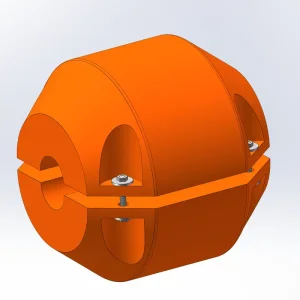
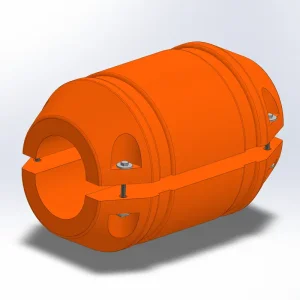
River desiltation and reservoir sediment management require modular floating lines that navigate complex shore bends and fluctuating seasonal water tables. Quick-clamp bolt systems on our modular PE floats permit rapid line realignment without heavy drydock infrastructure.
Coal Ash Transport & Industrial Effluent Management
Coal-fired thermal utilities and metallurgical refineries generate fly ash slurry lines that induce intense thermal variations and calcium precipitation. Our smooth bore piping systems preserve high flow coefficients and minimize scaling accumulations over years of continuous cycling.
Technological Frontiers in Slurry Pipeline Architecture
Strategic advancements reshaping industrial wear materials, remote structural sensing, and environmental circularity within the global marine pipeline industry.
Smart Slurry Piping & IIoT Wear Sensors
Integration of passive ultrasonic transducers and conductive polymer carbon-nanotube strip grids inside the bottom 120° invert wear-zone of slurry conduits. These telemetry units interface with dredge SCADA systems to project remaining wall thickness in real time, preventing catastrophic breaches.
Hydrodynamically Sculpted Float Bodies
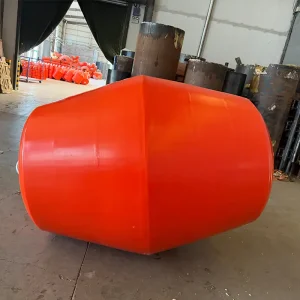
Moving away from blunt cylindrical configurations toward biomimetic teardrop and elliptic cross-sections that reduce oceanic drag coefficients (Cd) by up to 32%. This slashes mooring line tension loads and lowers fuel consumption for dynamic positioning support tugs.
Circular Polymers & Marine Microplastic Abatement
Transition toward 100% recyclable, high-purity metallocene-catalyzed polyethylene formulations that eliminate toxic halogenated additives. Shells exhibit extraordinary abrasion toughness to prevent microplastic shedding when exposed to suspended sand scour.
Global EPC Procurement Criteria: Auditing a Flotation Factory
A comprehensive quality assurance and vendor qualification checklist for procurement managers, offshore superintendents, and civil port project directors.
1. Resin Certification & Traceability
Verify that incoming polyethylene resins have verifiable Mill Test Certificates confirming MFI (Melt Flow Index) stability, density compliance (ASTM D1505), and uniform antioxidant dispersion. Avoid regrind blends for marine service shells.
2. Shell Wall Thickness Uniformity
Audit rotational molding furnace logs. Demand ultrasonic non-destructive thickness mapping across mold parting lines, corner radii, and bolt pockets where localized shell thinning typically compromises structural load capacity.
3. PU Foam Closed-Cell Integrity
Inspect cross-sectional test cuts of cured polyurethane foam blocks. Confirm minimum 92% closed-cell structure and uniform cohesion with the outer PE skin. Poor foaming creates internal voids that allow moisture saturation.
4. Marine Fastener Metallurgy
Specify corrosion-resistant connection hardware: Grade 316 / 316L stainless steel, or hot-dip galvanized Class 8.8 high-tensile steel with Dacromet coatings to prevent stress corrosion cracking (SCC) under marine salt-spray fog.
Technical Slurry Pipeline & Flotation Q&A
In-depth responses to critical design calculations, material constraints, and commissioning inquiries encountered by dredging contractors and plant operators.
How do you calculate the precise buoyancy required for high-density mining slurry pipelines?
Accurate buoyancy sizing requires totaling the operational mass: the dry pipeline weight (steel, rubber, or UHMWPE), flange/coupling hardware, dynamic cable or hose weights, and the full internal volume of slurry calculated at maximum operational specific gravity (ρslurry, often 1.35 to 1.85 SG for minerals). Marine flotation systems require a buoyancy factor of 120% to 130% of this total submerged weight. This design preserves a 25% freeboard height, mitigating wave cresting loads, cyclic fatigue, and accidental line sinking during pump startup surges.
Why are rotationally molded polyethylene floats preferred over traditional welded steel buoyancy tanks?
Welded steel floats are vulnerable to galvanic oxidation in marine saltwater, weld crack fatigue caused by wave motion, internal waterlogging, and require costly recoating maintenance. Conversely, rotationally molded polyethylene floats are completely rustproof, chemically inert, UV-stabilized, and absorb maritime collisions with elastic recovery. Filled with closed-cell polyurethane foam, our PE floats cannot sink even if punctured by sharp aggregate or collision impacts.
What flow velocity limits should be observed for UHMWPE and HDPE slurry pipelines to minimize scouring?
While polyolefin pipelines exhibit up to 4 to 8 times the abrasion resistance of unlined carbon steel, optimal hydraulic slurry transport velocity must stay above the critical settling velocity (Vc, usually 2.0 to 2.8 m/s depending on grain size distribution d50) to prevent pipe invert bed deposition, but below 5.5 m/s. Velocities exceeding 6.0 m/s trigger quadratic wear acceleration from heavy sharp grit fractions.
What is the standard warranty period and expected working lifespan of Juhua marine pipeline floats?
Standard contractual warranty extends for 18 months from the date of final client delivery handover, or 12 months post-installation commissioning, whichever occurs first. However, thanks to heavy-duty UV-stabilization (UV-8 minimum, Tinuvin additive packages) and premium LLDPE/HDPE resins, our flotation shells routinely deliver a service lifespan of 8 to 15+ years in harsh marine and high-UV tropical environments.
How do modular pipe floats prevent longitudinal pipeline slippage during heavy hydrodynamic wave action?
Our pipe float inner diameters are molded with high-friction anti-slip ribs and engineered radial tolerances calibrated to match the outer diameter of dredging HDPE pipes or rubber hoses. When the high-tensile connection bolts are torqued across the clamping flanges, uniform hoop compression locks the module in place. For severe offshore surging, integrated rubber gripping liners or molded stop rings on the pipeline can be supplied.
Heavy-Duty Dredging Hoses, Deepwater Support & Mooring Infrastructure
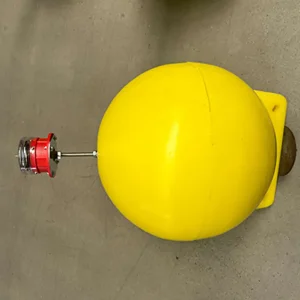
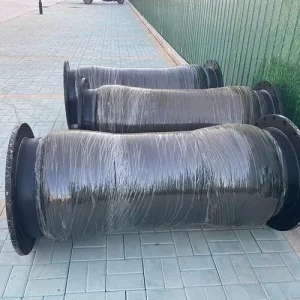
Specialized flotation modules, reinforced sediment discharge lines, and marine mooring assets engineered for demanding subsea installation, pump discharge, and harbor mooring operations.
Connect Directly with Our Flotation & Slurry Pipeline Engineers
Bypass intermediaries. Submit your pipeline outer diameter, slurry density, current velocity, and deployment bathymetry to receive verified 3D CAD step files, buoyant displacement analyses, and export packaging specifications within 24 hours.