
High-Integrity Navigation Buoys for Central European Channels
Premium rotomolded float solutions engineered to deliver uninterrupted channel alignment and maximum hydrographic stability in Alpine freshwater basins and heavy-current riverways.
-
 Heavy-Duty Architecture
ODM Heavy-Duty Marine Buoys for Reliable Navigation & Offshore Safety Manufacturer, Companies
-
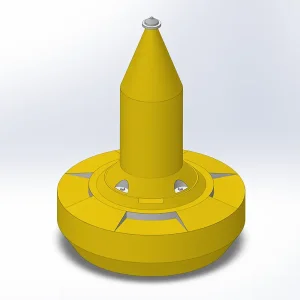 Inland Channel Profiling
Custom High-Performance Marine Buoys for Safe and Efficient Waterways Manufacturers, Pricelist
-
High-Visibility Pigmentation
High-Quality High-Visibility Marine Buoys for Safe Offshore Operations Pricelist, Factory
-
Commercial River Transit
ODM Ocean-Grade Navigation Buoys for Safe Maritime Operations Products, Factory
Inland Waterway Modernization & Alpine Hydro Infrastructure
Austria presents a uniquely demanding deployment theater for marine aids to navigation, defined by strict international inland conventions, rapid alpine currents, and advanced hydro-engineering operations.
Danube Trans-European Corridor (TEN-T)
As an essential segment of the Rhine-Main-Danube waterway, Austria’s 350-kilometer river stretch experiences dense commercial barging. AtoN infrastructure requires strict compliance with CEVNI protocols, high survivability against seasonal flood velocities up to 4.5 m/s, and optimized optical visibility to prevent fairway collisions.
Alpine Run-of-River Hydroelectric Dams
With Austria generating substantial energy from facilities along the Danube, Enns, and Drau rivers (managed by operators like VERBUND), safety floating barriers and exclusion buoys prevent civilian watercraft and hydraulic debris from entering spillways, intake shafts, and turbine conduits.
Alpine Recreational Lake Safety
Major recreational and environmental preservation zones across Lake Constance (Bodensee), Lake Wolfgang, and Lake Wörthersee require non-corrosive, non-leaching rotomolded polyethylene buoys that resist sub-zero freezing cycles, UV degradation, and biological fouling without polluting pristine alpine waters.
How EPCs & River Authorities Evaluate Float Suppliers
Global logistics managers, civil maritime contractors, and port authorities evaluate buoy manufacturers across three mission-critical performance vectors.
Material Integrity & Wall Uniformity
Industrial rotomolding with closed-loop thermal cycle monitoring prevents internal stresses and micro-fractures. Saturated virgin LLDPE/HDPE shells with UV8 to UV20 stabilization guarantee at least 15 years of uninterrupted structural colorfastness without cracking under alpine sun or thermal expansion shifts.
Hydrodynamic Drag Optimization
In high-discharge river channels, blunt buoy profiles create severe hydrodynamic drag, tilting the marker and submerging optical lantern payloads. Advanced conical and modular skirt profiles reduce drag coefficients by up to 35%, ensuring upright ballast equilibrium even during high-water crests.
Telemetry & Sensor Modular Integration
Modern navigational buoys serve as autonomous sensory platforms. Procurement requirements now dictate turn-key integration of solar-recharged LED lanterns, AIS (Automatic Identification System) AtoN Transponders, radar reflectors, and LoRaWAN/NB-IoT water level monitoring modules.
Smart Waterways: Roadmap to Next-Generation AtoN
The transformation of static floating channel indicators into dynamic, digital telemetry nodes across Europe’s major river networks.
Closed-Cell EPS Core
Transition from hollow bodies to high-density 16-20 kg/m³ closed-cell EPS foam filling, eliminating risk of sinking even after high-energy vessel impacts.
Digital Fairway Telemetry
Real-time AIS AtoN Message 21 transmission to river vessel ECDIS systems, providing electronic channel boundaries during severe fog and low water events.
Hybrid Photovoltaic Shells
Conformal solar laminates integrated flush into the poly tower, preventing snow buildup, bird interference, and vandalism while powering heavy sensor loads.
Mooring Tension Diagnostics
Strain gauge sensors within mooring eyes communicating tension via satellite, alerting port teams before mooring chain breakaways happen.
CEVNI, IALA & Austrian viadonau Waterway Adherence
Aids to Navigation operating on the Austrian Danube or sub-Alpine regions must meet stringent European safety, material, and visual consistency benchmarks.
CEVNI Code Alignment
Markings conform strictly to the European Code for Inland Waterways (CEVNI). Red cylindrical can buoys, green conical buoys, and bifurcated channel indicators follow standardized dimensions, retro-reflective banding, and topmark geometrics.
Mooring & Current Calculations
Each deployment quote includes static hydrodynamic modeling based on water velocity, tidal/seasonal swell depth, catenary anchor chain weights, and sinker block mass to guarantee stable position keeping under Austrian flood stages.
Traceable Quality & Warranty
Manufactured under ISO 9001 certified rotational molding controls. Factory acceptance testing (FAT) covers wall-thickness ultrasonic checks, colorimetric spectrophotometry, raw PE tensile testing, and standard factory warranty coverage.
Frequently Asked Questions: Marine Buoys in Austria
Essential considerations for sourcing navigation and barrier buoys for Austrian and Central European applications.
Request Your Project Engineering Quote Today
Connect directly with our flotation engineers for buoyancy sizing, CEVNI navigation specifications, and factory-direct Austrian export quotations within 24 hours.
Comprehensive Marine Flotation & Waterway Hardware Catalog
Explore our complete production line of rotationally molded marine buoys, dredging pipe pontoons, water storage systems, and heavy-duty mooring nodes.
-
-
-
Custom Channel AtoN
Custom Reliable Marine Buoys for Safe Waterway Operations Suppliers, Products
-
Standard Fairway Marker
High-Quality Reliable Marine Navigation Buoy for Safe Waterways Manufacturer, Product
-
-

-

-
