
High-Efficiency OEM Marine Barriers (Core Tier 1)
Immediate inventory allocation and customized OEM production runs configured for high-traffic marine corridors, industrial water intakes, and estuary storm containment in Aichi Prefecture.

Nagoya's Maritime Landscape: Demanding High-Integrity Flotation Infrastructure
As Japan’s single largest maritime trade node handling over 200 million tons of industrial and commercial cargo annually, the Port of Nagoya and the greater Ise Bay economic zone operate under stringent oceanographic and regulatory standards.
Port of Nagoya Heavy Logistics
Home to the Meiko Triton bridge corridor and massive automotive, steel, and petrochemical terminals, Nagoya requires containment booms capable of resisting high kinetic impacts from heavy commercial watercraft, sustained hydrodynamic wakes, and continuous tidal surges without hull micro-cracking.
Typhoon & Storm Surge Dynamics
Located in the path of Western Pacific typhoon tracks, Ise Bay is prone to sudden sea level fluctuations, heavy sediment runoff from the Kiso Three Rivers (Kiso, Nagara, Ibi), and floating timber debris. Floating barriers must maintain an engineered freeboard ratio exceeding 35% under extreme 2.5m swells.
Chita Peninsula Intake Security
Thermal power plants, LNG gasification terminals, and petroleum refining complexes flanking Chita Peninsula consume millions of cubic meters of seawater daily for turbine cooling. Floating debris intrusion causes emergency shutdowns costing upwards of $400,000 per hour, making reliable intake barrier grids mandatory.
Shifting Global Demands for Floating Barrier Architectures
Enterprise engineering firms (EPCs) and municipal port authorities are pivoting away from antiquated steel pontoons and hollow uninsulated blow-molded floats in favor of resilient rotomolded polymeric matrices.
Transition to Monolithic Rotomolding
Traditional fabricated metal barriers corrode rapidly in hyper-saline estuary waters, demanding sacrificial zinc anodes and costly dry-dock recoatings. Rotationally molded Linear Low-Density Polyethylene (LLDPE) provides a 100% seamless, stress-free hull with zero joint seams to fracture under hydraulic fatigue.
Hydrophobic Closed-Cell Infill
Catastrophic hull puncturing caused by errant tugboats or heavy marine flotsam historically sinks conventional hollow floats. Factory-filled polyurethane foam with 92% closed-cell structure prevents water logging, maintaining buoyant integrity even when the outer shell is punctured by 30% of its surface area.
TCO & Decarbonized Logistics
Global operators are standardizing on modular floating barriers that fit standard ISO high-cube shipping containers. This minimizes ocean freight carbon emissions, slashes mobilization logistics to Nagoya Port by 65%, and allows 2-man shore crews to install hundreds of meters without floating cranes.
China Factory 4.0: How Precision Rotomolding Empowers Nagoya Procurement
Operating from our modernized industrial complex in Binzhou, Shandong, Shandong Binzhou Juhua Rubber & Plastic Co., Ltd. integrates smart manufacturing to solve the persistent pricing and lead-time constraints of Japanese domestic supply chains.
Variable-Frequency Thermal Molding
Computerized rock-and-roll and bi-axial rotational ovens utilize internal mold wireless pyrometry. This guarantees that wall thickness across corners and structural ribs remains strictly within ±0.4mm, eliminating the thin-wall stress concentrations common in substandard molders.
Automated PU Foam Infill Lines
High-pressure proportioning pumps inject MDI-polyol polyurethane foam at exact core densities (38 to 45 kg/m³). Foam expansivity is cured under controlled thermodynamic conditions to avoid internal shrinkage voids or shell deformation.
Direct Freight Line to Nagoya Port
Situated within rapid logistics proximity to Qingdao Port, our factory dispatches standard containers arriving at Nagoya Container Terminal (Tobishima / Nabeta Piers) within 4 to 6 transit days. Direct CIF pricing bypasses multi-tier Japanese trading company markups, slashing capex by 35–45%.
Engineered Deployment Scenarios in Nagoya & Greater Chubu
Specific marine environmental configurations where our OEM floating barriers, silt booms, and navigation floats protect assets and maintain compliance with Japanese Ministry of Land, Infrastructure, Transport and Tourism (MLIT) protocols.
Port of Nagoya Berth Expansion & Desilting
During trailing suction hopper dredging or clamshell desilting across Nagoya channel fairways, sediment dispersion threatens adjacent commercial waterways. Heavy-duty silt curtains with high-buoyancy HDPE top floats ensure sediment plume containment above 95% efficiency.
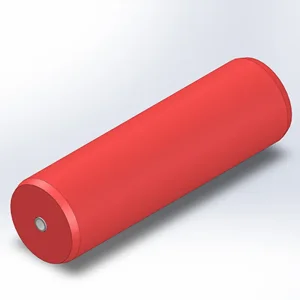
- Recommended Configuration: Cylindrical / Spherical Floater Boom + Geotextile Skirt
- Wave Tolerance: H1/3 up to 1.8m wave action without barrier overtopping
- Anchoring: Self-tensioning seabed deadweight anchors with elastomeric snubbers
Chita & Yokkaichi Cooling Water Intakes
Thermal power complexes and industrial factories draw high volumes of seawater from Ise Bay. High-strength debris interception barriers halt marine macro-debris, drifting jellyfish mats, and urban plastics, preventing intake screen blinding and pump cavitation.
- Recommended Configuration: Interlocking Modular Trash Booms with Top Deflection Screens
- Surface Draft: 400mm Freeboard with 600mm Subsurface Stainless Steel Grid
- Anti-Biofouling: Ultra-smooth fluorocarbon-modified HDPE surface resists barnacle adherence
Shonai & Kiso River Flood Flotsam Interception
High rainstorm volumes send hundreds of tons of timber, root structures, and storm runoff down into Nagoya Harbor. Strategically deployed deflection barriers divert heavy logs directly toward designated retrieval basins before they enter international shipping lanes.
- Recommended Configuration: High-Impact Polyethylene Cylinders with Internal Steel Backbone
- Load Capacity: Continuous pull test rating of 180 kN without hull shearing
- Service Life: UV-stabilized pigments prevent photolytic degradation in direct sunlight
Mikawa Bay Marine Environmental Protection
In semi-enclosed aquaculture, commercial fisheries, and eco-restoration zones in Mikawa Bay, floating barriers demarcate marine conservation zones while blocking floating chemical hydrocarbons and suspended macro-plastics.
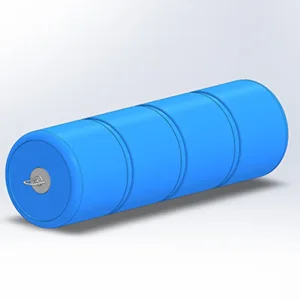
- Recommended Configuration: High-Visibility Yellow Segmented Floating Buoyancy Matrix
- Environmental Safety: Food-grade virgin PE raw materials (RoHS / REACH compliant)
- Modular Linking: Shackle-linked galvanized swivels prevent torsional binding
OEM Floating Barrier Specifications & Indicative Pricing (Nagoya Port Delivery)
Engineered for direct contractor quoting. All modules are fully custom-molded to specification. Prices reflect FOB Qingdao / Estimated CIF Port of Nagoya for 20ft/40ft containerized freight.
| Model / Application | Outer Diameter (mm) | Length (mm) | Wall Thickness (mm) | Net Buoyancy (kg) | Internal Infill | Indicative Price (USD/Unit) |
|---|---|---|---|---|---|---|
| JH-FB-400 (Trash & Debris) Standard Nagoya Canal |
400 mm | 1000 mm | 6.0 – 8.0 mm | 95 kg | Polyurethane 38kg/m³ | $48.00 – $65.00 |
| JH-FB-500 (Industrial Intake) Chita Plant Intake |
500 mm | 1000 mm | 7.0 – 9.0 mm | 160 kg | Polyurethane 40kg/m³ | $75.00 – $98.00 |
| JH-FB-600 (High-Tension Boom) Ise Bay Coastal Defense |
600 mm | 1200 mm | 8.0 – 10.0 mm | 285 kg | Polyurethane 40kg/m³ | $115.00 – $148.00 |
| JH-FB-800 (Harbor Desilting) Heavy Port Dredging |
800 mm | 1500 mm | 9.0 – 12.0 mm | 620 kg | Polyurethane 42kg/m³ | $220.00 – $285.00 |
| JH-SC-1000 (Offshore Silt Barrier) Typhoon-Rated Barrier |
1000 mm | 2000 mm | 10.0 – 14.0 mm | 1320 kg | Polyurethane 45kg/m³ | $410.00 – $520.00 |
* Note: Prices are indicative and subject to resin feedstock fluctuations (Sinopec / ExxonMobil HDPE index), order volume discounts, and custom hardware requirements (e.g., SS316 fasteners vs HDG). Contact our engineering desk for firm CIF Nagoya quotes.
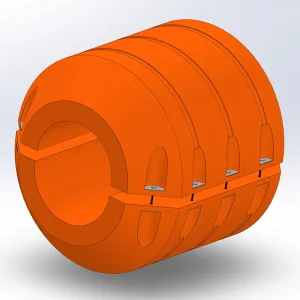
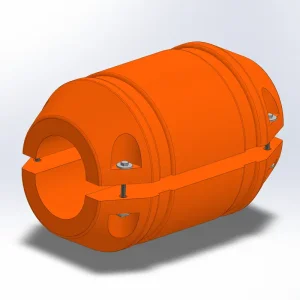
Engineered Pipeline Floats, Pontoon Platforms & Heavy Marine Barriers
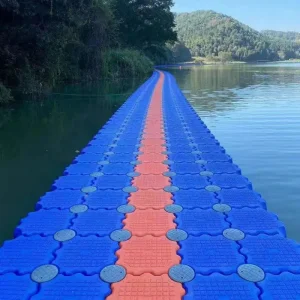
Complete factory portfolio spanning specialized subsea pipeline floats, rotomolded mooring assemblies, modular floating platforms, and heavy-duty maritime barriers engineered for Japanese commercial ports.

Engineering Questions Answered for Nagoya Project Directors
Key operational, logistical, and material certification inquiries addressed directly by our chief flotation design team.
Ready to Optimize Your Nagoya Marine Project Budget?
Connect directly with our senior flotation design engineers. We review bathymetry, current velocity profiles, and pipe payloads to engineer the perfect OEM floating barrier system with confirmed CIF Port of Nagoya pricing.
Send Inquiry Now — Direct Factory Quotation