Primary Solutions
Integrated Flotation, Outfall & Pipeline Hardware Modules
Industrial sewer infrastructure demands high structural buoyancy, hydraulic zero-leak tolerance, and chemical inertness. Explore our core pipeline systems below.
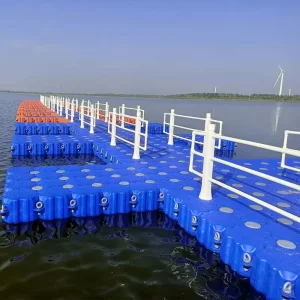
Custom Premium Floating Boat Pontoon for Safe and Stable Platforms
Inspect Specifications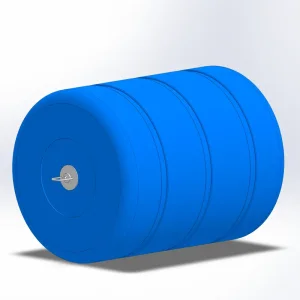
High-Quality Durable Floating Barriers for Water Protection Projects
Inspect Specifications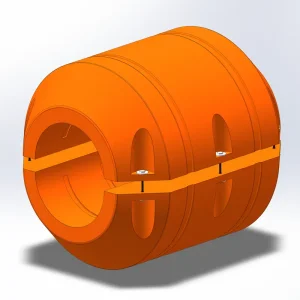
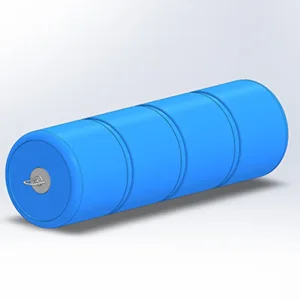
Custom Pipe Floats for Floating Water Pipeline and Marine Projects
Inspect Specifications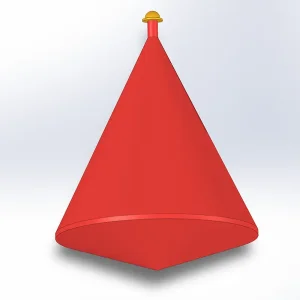
Best Precision Marine Buoys for Safe and Efficient Navigation
Inspect Specifications
Custom Pipe Floats for Floating Pipeline Buoyancy and Transfer
Inspect Specifications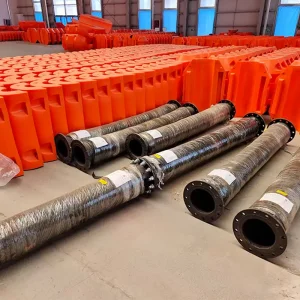
Custom Heavy-Duty Rubber Hose for Marine & Water Management
Inspect Specifications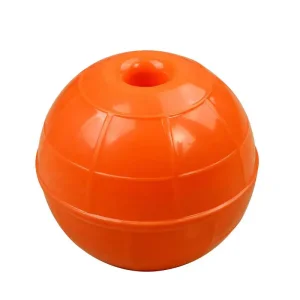
ODM Heavy-Duty ABS Float Ball for Water Engineering Projects
Inspect Specifications
Industry Intelligence
Global HDPE Sewer Pipeline Market & Industrial Status
Modernization of subterranean assets relies on the structural transition from legacy vitrified clay and reinforced concrete to high-density polyethylene (PE100 / PE4710).
Decarbonization & Replacement
Worldwide municipal sewer networks are facing historic rehabilitation cycles. Traditional concrete pipes degrade under biogenic sulfuric acid attack ($H_2S$ sewer gas), generating massive replacement demand where chemically immune solid-wall HDPE and spiral-wound gravity pipes dominate procurement tenders across North America, Europe, and East Asia.
Trenchless Installation Domination
Rapid urban density has made open-trench excavation unviable due to traffic shutdown costs and strict municipal carbon quotas. Horizontal Directional Drilling (HDD), pipe bursting, and slip-lining require fully butt-fused, monolithic tensile-resistant pipe sections, solidifying HDPE as the de facto material of choice over segmented PVC or ductile iron.
Zero-Leakage Mandates
Environmental Protection Agencies worldwide now enforce severe non-compliance fines for sewage exfiltration contaminating municipal groundwater. Butt-fusion heat-welded joints create zero-leakage, homogeneous pipe systems with joint efficiencies that match the parent pipe rating, virtually eliminating root infiltration and joint displacement.
100+ Years
Service Life Under ASTM F714 Design Protocols
Zero Infiltration
Fully Homogenized Heat-Fused Joints
C = 150-155
Hazen-Williams Hydraulic Roughness Factor
pH 1.0 - 14.0
Unsurpassed Acidic & Alkaline Chemical Resistance
Material Engineering White Paper
Engineering Comparative: HDPE vs Traditional Sewer Piping
Structural resilience against subterranean earth loads, ground movement, and internal microbiological degradation requires rigid adherence to ISO 4427, EN 12201, and ASTM F714 standards.
| Performance Vector | High-Density Polyethylene (PE100/PE4710) | Reinforced Concrete Pipe (RCP) | Polyvinyl Chloride (PVC-U) | Ductile Iron (DI) with PU Lining |
|---|---|---|---|---|
| Joint Integrity | Homogeneous butt-fusion / electrofusion (Zero Leakage) | Rubber gasketed bell/spigot (Subject to root intrusion) | Solvent weld or elastomeric ring (Risk of seal drying) | Mechanical gasket joints (Corrosive crevice risk) |
| Microbial Corrosion ($H_2S$) | Immune (Maintains structural wall indefinitely) | Severe degradation (Crown rot via thiobacillus acid) | High resistance (Susceptible to localized scouring) | Requires expensive poly-mortar lining to prevent rust |
| Seismic & Ground Shift | Elastic flexure allows up to 20-25x pipe OD bending radius | Brittle fracture; disjoints under shear movement | Moderate stiffness; fractures under lateral shear load | Rigid body; joint slippage under severe shear stress |
| Hydraulic Coefficient | Manning’s n = 0.009 (Exceptional non-fouling bore) | Manning’s n = 0.013 (High resistance, silt settling) | Manning’s n = 0.010 (Smooth surface profile) | Manning’s n = 0.012 (Degrades over internal wear) |
| Installation Cost Vector | Low: lightweight, long drum coils, trenchless-capable | Very High: heavy crane handling, deep trenches needed | Medium: segmented cuts, continuous bedding required | High: crane dependency, sacrificial anode cathodics |
Field Deployment
Localized Engineering Applications & Installation Methodologies
Engineered HDPE sewer pipelines and complementary marine float systems provide critical resilience across high-stress hydrological topologies.
Municipal Deep-Trench & HDD Crossings
Used extensively in trunk sanitary sewers and force mains under high groundwater tables. Solid-wall HDPE (SDR 11 to SDR 26) handles static earth dead-loads, cyclic dynamic highway wheel-loads (AASHTO H-20), and facilitates deep trenchless installations beneath rivers, expressways, and urban railway hubs without open-cut disruptions.
Subsea Outfalls & Marine Discharge
Treated wastewater effluent disposal relies on massive HDPE pipelines pulled miles offshore. Sinking operations use calibrated concrete ballast collars balanced by rotationally molded polyethylene floats to ensure staged, risk-free seabed landing. The chemical inertia eliminates saltwater encrustation and cathodic rust liabilities.
Industrial Tailings & Corrosive Effluent
Petrochemical complexes, electroplating parks, and mining runoffs carry aggressive volatile chemical compounds. Co-extruded and solid PE100 resins accommodate continuous media exposures from pH 1 through 14 without degradation, while cable-trough buoyancy modules secure pumping telemetry above dynamic tailing retention lagoons.
Future Vision
Technology Roadmap: Smart Sensing & Polyolefin Advances
Next-generation sewer engineering bridges high-performance material chemistry with cloud-based IoT diagnostic tracking to future-proof infrastructure.
PE100-RC High Stress Crack Resistance
Widespread adoption of PE100-RC (Resistance to Crack) materials allows trenchless bedding without specialized sand-backfilling. Unnotched tensile creep tests (FNCT > 8,760 hours) prevent slow crack growth (SCG) caused by point-load stone contact under roadbeds.
Integrated Sensor-Embedded Conduits
Modern extrusion processes incorporate micro-ribs and conductive polymer tracing lines along the outer pipe crown. This facilitates permanent acoustic leak detection, distributed temperature sensing (DTS), and robotized CCTV sonar mapping for predictive sewer asset management.
Circular Multi-Layer Extrusions
Three-layer co-extrusion technology uses recycled certified post-consumer polymer within core walls while maintaining virgin PE100 internal linings and UV-stabilized colored skin layers, cutting cradle-to-grave carbon impacts by up to 45%.
Heavy Infrastructure Line
Deepwater Flotation, Tie-In Assemblies & Specialized Hardware
Complete product listings for advanced dredging, subsea sewer outfall ballasting, and long-range utility pipeline management.
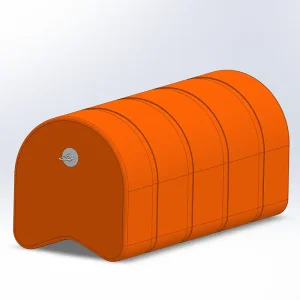
High-Quality Advanced Pipeline Float System for Subsea Installations
Inspect Specifications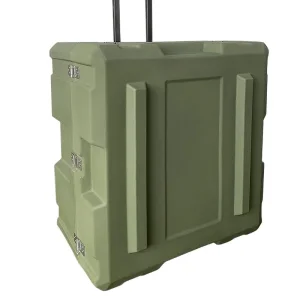
ODM Heavy-Duty Rotomolded Military Airdrop Storage Container
Inspect Specifications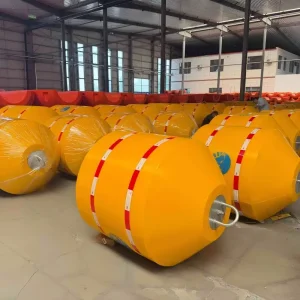
OEM Foam-Filled Mooring Buoy for Chain-Connected Berths
Inspect Specifications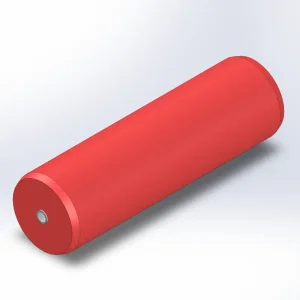
Best Reliable Floating Barriers for Marine & Industrial Protection
Inspect Specifications
Best Modular Subsea Pipeline Float – Reliable Deepwater Support
Inspect Specifications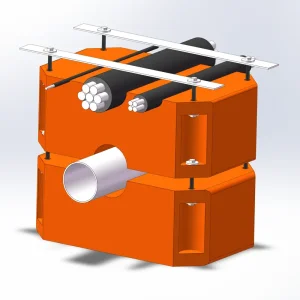
ODM Durable Cable-Integrated Pipe Floats for Submerged Line Works
Inspect Specifications
Custom Pipe Floats for Stable Pipeline Support & Buoyancy Systems
Inspect Specifications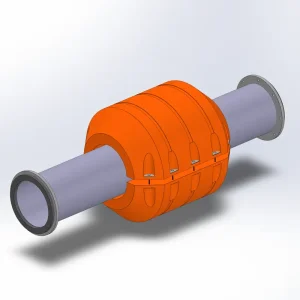
High-Quality Pipeline Float With Modular Buoyancy for Subsea
Inspect Specifications
Consultative FAQ
Engineering Questions & Procurement Insights
Direct solutions to critical pipeline sizing, buoyancy calculations, hydraulic flows, and contract guarantees.
How do engineers size buoyancy modules for marine outfall sinking?
Total buoyancy must balance the structural weight of the pipe string, submerged flange accessories, and the internal slurry or flooding water weight with a calculated safety factor: Total Float Buoyancy ≥ (W_pipe + W_medium + W_accessories) × 1.2 to 1.3. This guarantees roughly one-quarter of the pipe remains clear of water for controlled tow-out before controlled flooding lowers it to the seabed trench.
Why is butt-fused HDPE chosen over gasketed PVC for sanitary sewers?
Butt-fusion welds fuse pipe ends at 200–220°C under precise hydraulic pressure, creating continuous molecular bonding without elastomeric seals. It eliminates joint root intrusions, tree-growth disruptions, and toxic exfiltration into fresh municipal water tables under peak hydrostatic surcharge conditions.
What is the standard industrial warranty framework?
Warranties start on the date the procurement contractor formally hands over completed infrastructure to the municipal or private operator. Coverage extends 18 months from that handover milestone or 12 months after certified mechanical installation, whichever threshold comes first.
How does solid-wall HDPE resist internal scouring from abrasive grit?
Under the standard Darmstadt Rocking Test, PE100 demonstrates an abrasion resistance higher than mild steel, ductile iron, and standard concrete. The high molecular weight polymer matrix absorbs particle impacts elastically, preventing abrasive scouring from slurry, stones, and heavy suspended solids.
What specific details are mandatory for quotation & tool sizing?
Please provide outer diameter (OD), standard dimension ratio (SDR / wall thickness), design internal pressure class (PN rating), slurry or wastewater specific gravity, chemical components (pH, hydrocarbons), burial depth (or immersion freeboard requirements), and delivery destination.
Can pipeline floats, pontoons, and buoys be bespoke-molded?
Yes. Custom rotational molds can be tailored to non-standard pipe outer diameters, integrated internal ballast compartments, cable and sensor wiring raceways, customized high-visibility polyurethane colorings, and polyurethane closed-cell interior foam cores to avoid flooding during outer shell punctures.