

Primary Deployment
High-Integrity Hydrodynamic Buoyancy Units
Engineered for relentless service across severe open-ocean conditions, high-traffic shipping terminals, and demanding mineral discharge lines.
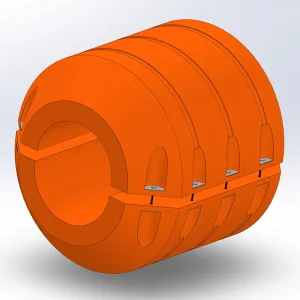
ODM High-Buoyancy Floats for Marine Projects
Explore Product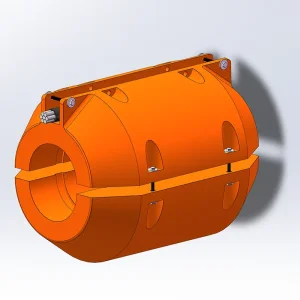
OEM Advanced Cable-Supporting Pipe Floats for Marine Projects
Explore Product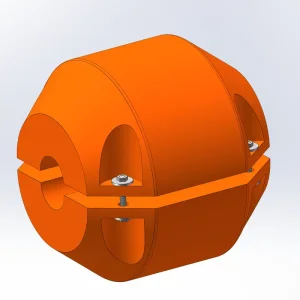
High-Quality Durable Pipe Floats for Safe Operations
Explore Product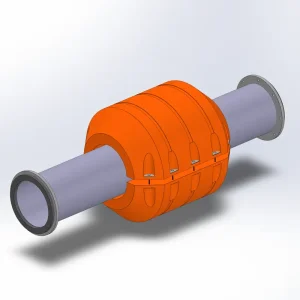
ODM High-Performance Floats for Efficient Pipeline Operations
Explore Product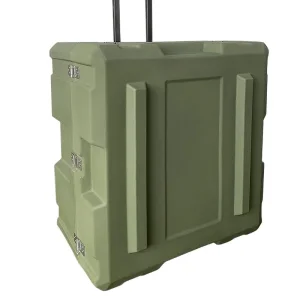
ODM Heavy-Duty Rotomolded Military Airdrop Storage Container
Explore Product
Pipeline Float With Modular Buoyancy for Subsea Installation
Explore Product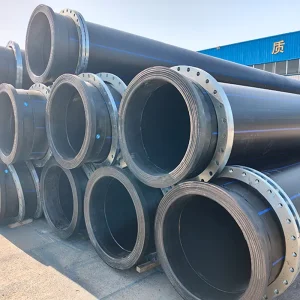
ODM High-Performance Pipeline for Industrial and Municipal Transport
Explore Product
Engineering Physics
The Core Mooring Buoy Purpose in Deepwater Mechanics
Moving beyond basic flotation: understanding dynamic catenary tension management, vessel swing radius optimization, and critical asset protection.
60%
Benthic Impact Reduction
100 kN+
Tension Capacity Margin
25 Yrs
Expected Polymer Life
100%
Non-Corrosive Polymer Core
Kinetic Load Damping
The primary mooring buoy purpose is to introduce an elastic mechanical interface between the vessel hawser and the seabed anchor ground tackle. Rather than subjecting subsea anchor flukes to direct peak heave shock loads, the buoy serves as an energy-absorbing vertical spring, moderating surge motions during typhoon states.
Swing Radius Reduction
Traditional single-anchor chain setups demand vast swinging circles, wasting finite harbor space. Engineered single-point mooring (SPM) configurations eliminate redundant ground tackle footprint, facilitating up to 40% higher vessel packing densities across commercial anchorages and exposed natural ports.
Seabed Ecosystem Preservation
Heavy dragging chains scrape delicate marine benthic flora, destroying coral and sea grass beds. Modern mooring buoys lift the central riser catenary off the bottom, preserving seabed architecture while guaranteeing zero anchor-slip hazards across fragile marine preserves and sensitive shelf environments.
Global Sourcing Trends
Shift From Legacy Steel to Advanced Rotomolded Polymers
How the global marine engineering sector is decommissioning corroding metal buoy hulls in favor of closed-cell polyurethane-filled virgin linear low-density polyethylene (LLDPE).
Zero Cathodic Maintenance
Traditional steel buoys necessitate frequent dry-dock blasting, sacrificial anode replacements, and toxic antifouling recoatings every 24 to 36 months. High-density rotomolded hulls completely sidestep oxidation, resisting saline stress cracking, heavy barnacle accretion, and mechanical hull puncture.
Impact Self-Recovery Kinetics
When service vessels, workboats, or bunker barges strike steel buoys during harsh surge operations, catastrophic hull breach or ship-skin abrasion frequently follows. Rotomolded virgin polymer bodies act as semi-flexible bumpers, absorbing heavy hull impacts without structural cracking or breach of buoyancy.
Modular Core Redundancy
Modern rotomolded marine buoys integrate pressure-injected closed-cell polyurethane (EPS/PU) foam. Even if external skins experience catastrophic high-velocity puncturing from floating flotsam or errant propellers, net buoyancy degradation remains under 2.5%, preventing sinking catastrophes.
| Evaluation Parameter | Legacy Welded Steel Buoys | Juhua Engineered Rotomolded PE | Operational Engineering Benefit |
|---|---|---|---|
| Saltwater Corrosion Vulnerability | Severe (Requires sacrificial zinc anodes) | 100% Non-Reactive / Chemically Inert | Eliminates off-site shipyard drydock intervals |
| Internal Core Structural Fill | Hollow Air Cavity (High sinking risk) | Hydrophobic Closed-Cell PU/EPS Matrix | Unsinkable performance even when punctured |
| Handling Mass & Deployment | Extremely Heavy (Requires massive floating cranes) | Optimized Strength-to-Weight Ratio | Drastically lowers offshore installation crane costs |
| Color Retention & Visual Safety | Subject to chipping, marine flaking, fading | UV8-UV20 Stabilizers homogeneously compounded | Complies with IALA maritime color guidelines for life |
Factory Mastery
Precision Rotomolding Efficiency from Shandong, China
Combining complete supply chain control, proprietary robotic temperature calibration, and high-volume mold tooling to empower international project execution.
Automated Multi-Axis Rotomolding
Shandong Binzhou Juhua utilizes variable-frequency closed-loop carousel molding chambers. Real-time infrared thermal scanning precisely governs resin plasticization cycles, guaranteeing uniform shell thickness across critical stress knuckles and mooring-eye structural junctures.
Centralized Raw Material Sourcing
Located near Sinopec and world-class polymer polymerization plants in northern China, we source ultra-consistent prime polyethylene resins. Integrated bulk compounding guarantees uncompromised quality, pristine UV-stabilizer distribution, and superior impact resistance.
Comprehensive Heavy Mold Inventories
With an extensive catalog of pre-tooled, modular molds covering 400mm float balls up to 3.0-meter deep-draft offshore navigation and mooring hulls, we trim up to six weeks off client lead times, executing rapid deliveries directly through Qingdao port.
Specialized Deployments
Localized Engineering Use Cases Around the World
Adapting mooring buoy architectures to specialized geotechnical, hydrological, and operational environments across global waterways.
Exposed Single-Point Offshore Offloading
Used by deepwater oil, gas, and slurry discharge lines. Mooring buoys maintain hawser buoyancy and float flexible high-pressure conduits directly between subsea manifolds and bulk tankers, eliminating vessel contact with shallow shoreline facilities.
Industrial Dredging Discharge Alignment
Dredge spoils must be pumped kilometers away into disposal areas. Mooring buoys secure terminal discharge vessels and anchor floating pipelines, holding high-pressure dredge lines stationary against lateral river currents and tidal rips.
Eco-Sensitive Marina & Reserve Berthing
Installed across coral reef lagoons, national marine sanctuaries, and municipal yacht docks to prevent catastrophic dragging anchor plow-damage while guaranteeing foolproof storm mooring for private, research, and passenger catamarans.
Specification Protocol
EPC Buyer Procurement Methodology & Buoyancy Calculation
How naval architects and marine procurement officers calculate appropriate net reserve buoyancy to avoid underwater submergence under maximum windage conditions.
Mathematical Buoyancy Dimensioning Formula
Underestimating the dynamic downward vector from tensioned catenary anchor chains is the primary reason mooring buoys are swamped during severe tidal swells. The fundamental equation utilized by our engineers is defined as:
Reserve Buoyancy Required (Bres) ≥ (Wbuoy + Wsubmerged_chain + Tvertical_hawser) × Fsafety
Where Fsafety must never drop below 1.5 for sheltered marina anchorages and 2.0 to 2.5 for offshore exposed sea berths. Furthermore, the hydrodynamic draft under full load must ensure a minimum freeboard of at least one-third of the total buoy diameter to preserve continuous daylight visual acquisition.
Answers & Clarifications
Frequently Asked Questions on Mooring Buoys & Flotation
Direct answers from our senior rotational molding engineers and marine deployment specialists.
What is the primary mooring buoy purpose in coastal engineering?
The mooring buoy purpose is to provide a stable, buoyant floating station anchored firmly to the seabed, allowing commercial vessels, barges, pipelines, and leisure boats to tie off safely. Instead of deploying onboard bottom anchors which can slip or degrade ecosystems, buoys cushion shock loads through an engineered catenary riser assembly while optimizing harbor footprint.
What are pipeline floats and how do they interact with mooring systems?
Pipeline floats, also referred to as dredge pipe floats or buoyancy clamp modules, are engineered polyethylene halves fitted around marine discharge and slurry hoses. In industrial setups, mooring buoys anchor the terminal position of long floating pipeline runs, ensuring stability while floats keep the conduit aligned above or at the water line.
How do you size the buoyancy requirement for heavy slurry pipelines?
Calculate the combined dry weight of the pipeline, steel fittings, cables, plus the full dynamic weight of the conveyed medium (accounting for specific gravities of dredge slurry up to 1.6–1.8 kg/L). Total float buoyancy should deliver a 20% to 30% positive reserve margin so approximately one-quarter of the pipeline diameter stays dry above water.
Are rotationally molded polyethylene floats suitable for long-term open sea use?
Yes. Virgin UV-stabilized high/linear-low density polyethylene (HDPE/LLDPE) is chemically inert, resistant to corrosive seawater, hydraulic oils, and biological accretion. Unlike painted carbon steel, it never rusts, and its flexible shell absorbs docking impacts without denting or catastrophic failure.
What is your standard factory warranty coverage period?
The standard warranty commences when the buyer delivers the equipment on-site and concludes 18 months from the delivery date, or 12 months after completed project commissioning, whichever milestone arrives first. Full documentation and material quality certificates accompany all export shipments.
What parameters are needed to request a formal engineering quotation?
Please share: pipe outer diameter (OD), wall thickness, pipe material, density of the transported medium, total project pipeline run length, site hydrodynamics (wave height, currents, tidal variations), desired buoyancy reserve percentage, target color codes, and preferred port of discharge.
Extended Systems
Precision Flotation, Mooring & Pontoon Assemblies
Factory-certified, high-durability polyethylene systems engineered for ports, aquaculture zones, and international marine infrastructure.
OEM Reliable Marine Pipe Floats for Pipeline Efficiency
Explore Product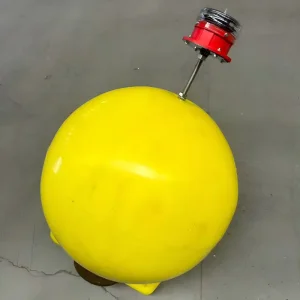
ODM High-Visibility Floating LED Ball for Marine Safety
Explore Product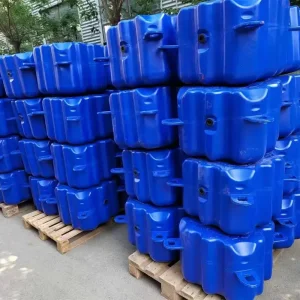
ODM Durable Floating Boat Pontoon for Versatile Water Projects
Explore Product
ODM Custom Mooring Buoy for Vessel Berthing & Anchorage
Explore Product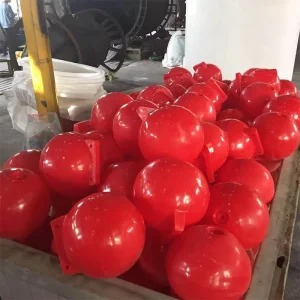
Best PE Float Ball for Safe and Efficient Water Operations
Explore Product
ODM Pipe Floats for Floating Water Pipelines & Marine Support
Explore Product
Custom Pipe Floats – Reliable Buoyancy for Marine Pipeline Projects
Explore Product